
Selecting the right wooden planks for shelf installations requires a careful balance of thickness, width, and unsupported span to prevent unsightly and unsafe sagging. While it is tempting to choose planks based solely on aesthetics, the physical dimensions and material properties directly dictate how much weight a shelf can support over time. To ensure your shelving remains flat and secure, you must evaluate the relationship between the length of the span, the thickness of the timber, and the specific load requirements of your stored items.
Understanding Shelf Sag and Load Limits
To design a reliable shelving system, you must first understand the forces acting upon it. Every shelf supports two distinct types of weight: the dead load and the live load. The dead load refers to the static weight of the wooden plank itself, along with any permanently attached hardware. The live load encompasses the dynamic or temporary weight of the items you place on the shelf, such as heavy books, decorative objects, or home electronics.
When a shelf is subjected to continuous weight, it undergoes physical stress. Over time, even a load well within the initial limits of the wood can cause a phenomenon known as creep. Creep is the slow, progressive, and permanent deformation of a material under constant structural stress. This means a shelf that appears perfectly straight today may gradually bow over several months or years if the load is too high for its span and thickness.
Products mentioned in this guide
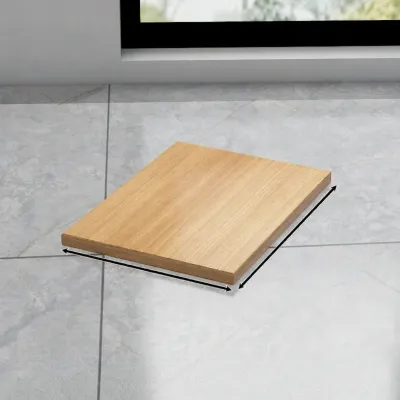
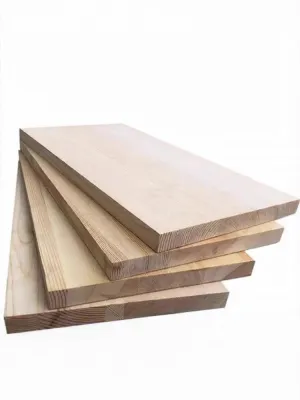
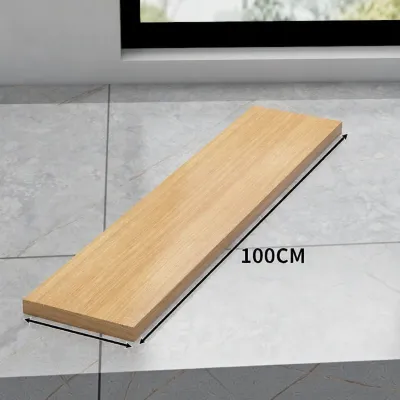
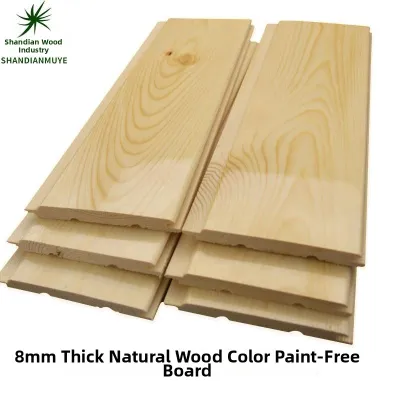
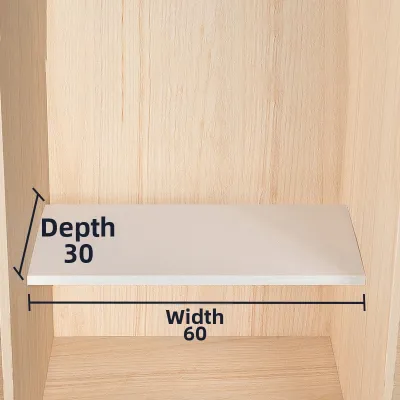
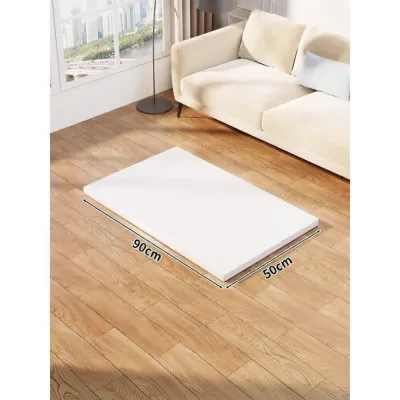
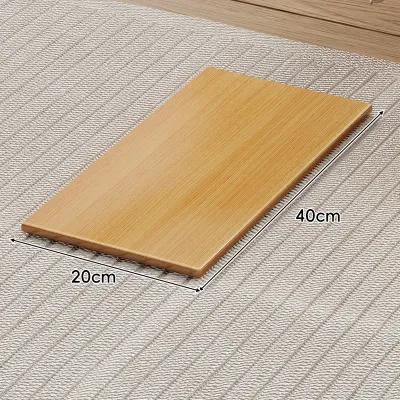
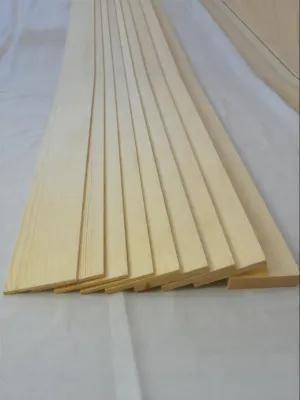
Prices are valid at publication and may change. Please refer to the product page for the latest price.
Monitoring your shelving for early warning signs of structural fatigue can prevent sudden failures. Look closely for visible bowing along the center of the plank, hairline stress cracks forming near the support brackets, or fasteners that appear to be pulling away from the wall. In homes with masonry or drywall partitions, any gaps opening between the shelf bracket and the wall surface indicate that the system is overloaded or improperly anchored.
Key Dimensions: Thickness, Width, and Span
The physical dimensions of wooden planks for shelf projects—specifically thickness, width, and unsupported span—interact mathematically to determine overall resistance to bending. Among these dimensions, increasing the thickness of the plank is the most effective way to boost its structural stiffness. A relatively minor increase in thickness provides a disproportionately large increase in load-bearing capacity, far exceeding the strength gained by simply making the shelf wider or deeper.

Conversely, the unsupported span—the distance between two brackets or vertical supports—has a dramatic impact on shelf deflection. As the span increases, the bending stress at the center of the plank grows exponentially. A plank that easily supports heavy items over a short distance will quickly sag or fail if the support brackets are spaced too far apart. For this reason, managing the span is often more critical than choosing the thickest possible board.
Because wood behavior varies widely based on species and manufacturing methods, you should avoid relying on generic dimensional rules of thumb. Instead, always consult the manufacturer’s official span tables, product labels, or verified structural engineering calculators. These resources allow you to input your exact plank dimensions and expected load to verify whether the setup will resist sagging under real-world conditions.
Wood Species and Material Construction
The internal structure and species of the wood play a decisive role in how well a shelf resists bending. Solid hardwoods, softwoods, and engineered wood products all behave differently under load. Hardwoods generally offer high natural stiffness, while softwoods may require greater thickness or shorter spans to achieve the same load capacity. Engineered options, such as plywood, particleboard, and medium-density fibreboard (MDF), are widely available but have distinct structural characteristics.
Rather than assuming a wood’s strength based solely on its common name or visual grain pattern, you should check the supplier-provided stiffness ratings, such as the Modulus of Elasticity (MOE). The MOE is a reliable physical measure of a material’s resistance to elastic deformation. Engineered boards often feature different MOE values depending on how they are manufactured and finished.
For engineered wood, structural integrity is heavily influenced by grain direction, the number of core layers, and the presence of edge-banding. Plywood, with its cross-laminated veneer layers, resists sagging better than particleboard or MDF of the same thickness. Additionally, applying a solid wood edge-banding to the front and back edges of engineered planks can significantly stiffen the board, helping to prevent long-term bowing.
How to Verify Specs for Your Storage Needs
Before purchasing wooden planks for shelf installations, you must establish a clear framework to verify that your chosen materials match your storage needs. Begin by estimating the total weight of the items you plan to store. For instance, a dense collection of textbooks or heavy kitchenware will require a much higher load capacity than lightweight decorative items. Calculating this expected live load gives you a concrete target for your shelf design.
Next, measure the exact physical space where the shelves will be installed. Take precise measurements of the available span and check for any structural obstructions, such as uneven plaster, wall protrusions, or alcove constraints. In many homes, alcoves may not have perfectly square corners, which can affect how the planks sit on their supports and distribute weight.
Once you have your estimated load and precise measurements, cross-reference these figures with the specific product’s labeled weight capacity and warranty conditions. If the manufacturer does not provide clear load ratings, or if you are planning an unusually heavy installation, seek professional carpentry advice to validate your dimensions before cutting or mounting the timber.
Installation and Support Strategies
Even the highest-quality wooden planks for shelf setups will sag if they are not supported correctly. The choice of mounting hardware directly influences the effective unsupported span of your shelf. Common support options include concealed floating shelf rods, traditional L-brackets, heavy-duty track systems, and vertical dividers. While floating brackets offer a clean, minimalist aesthetic, they typically support less weight than robust, visible L-brackets.
If you need to increase a shelf’s load capacity without purchasing thicker planks, you can implement structural stiffeners. Attaching a solid wood front lip, a back cleat screwed into the wall, or an underside apron can dramatically increase the plank’s resistance to bending. These additions act as structural beams, reinforcing the wood along its longest, most vulnerable axis.
Finally, the overall safety of your shelving depends entirely on how the supports are anchored to your walls. In regions with solid concrete or masonry walls, such as typical high-rise apartments in Singapore, you must use appropriate masonry anchors. For drywall installations, brackets must be secured directly into the structural timber or metal studs. If you are unsure of your wall’s composition or do not have the correct tools, stop the installation and consult a qualified professional to ensure the system is securely anchored.
Frequently Asked Questions (FAQ)
Can I reinforce an existing wooden shelf that has started to sag?
Yes, but you must act quickly to prevent structural failure. First, remove all items from the shelf immediately to eliminate the load and prevent sudden collapse or wall damage. If the wood has not suffered permanent deformation or cracking, you can reinforce it by adding an intermediate support bracket in the center, installing a solid wood stiffener strip along the front or back edge, or flipping the plank over if the design allows. However, if the wood is permanently bowed or shows signs of cracking, you must replace the plank entirely.
Does the finish or paint on a wooden plank affect its strength?
Standard surface treatments like paints, stains, varnishes, and clear coats do not alter the core load-bearing capacity or stiffness of the wood. However, they play an important indirect role in maintaining structural integrity. In humid tropical environments, bare wood can absorb moisture from the air, leading to warping, swelling, and a gradual loss of structural strength. Applying a high-quality, moisture-sealing finish protects the wood fibers from environmental humidity, helping the shelf retain its original shape and strength over time.

Community discussion
Share your experience or ask a question. Comments are reviewed before publication.