
Finding the right umbrella holder for your entryway is more than just a matter of aesthetic preference; it is a practical decision that directly impacts your home’s organization, safety, and floor preservation. In regions with high humidity and sudden tropical downpours, a wet umbrella brought indoors can quickly turn a tidy foyer into a slippery hazard. Choosing the wrong style can lead to cluttered walkways, damaged flooring, or a holder that constantly tips over under the weight of heavy golf umbrellas. By evaluating your specific entryway layout, household size, and flooring material, you can select a storage solution that keeps your home dry and organized.
Assessing Your Entryway Dimensions and Household Capacity
Before browsing online marketplaces or visiting furniture showrooms, you must accurately assess the physical limits of your entryway. Start by using a metal tape measure to determine the available floor space near your main entrance. It is essential to measure not just the open floor area, but also the door swing path. An inward-swinging front door can easily strike a poorly placed umbrella stand, causing scratches to both the door and the holder, or knocking the stand over entirely.
Next, evaluate the wall clearance and walkway width. In compact apartments or homes with narrow corridors, maintaining an unobstructed path is vital for daily comfort and safety. A standard residential walkway should ideally remain at least 90 to 100 centimeters wide to allow people to pass comfortably without bumping into furniture. If your entryway is narrow, any floor-standing furniture will restrict movement, making a wall-mounted option or an ultra-slim holder a much more practical choice.
Products mentioned in this guide
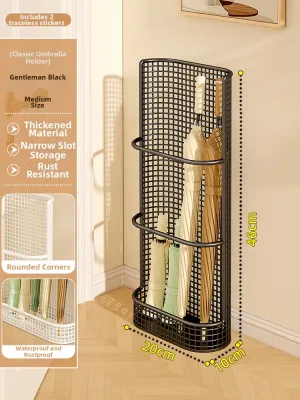
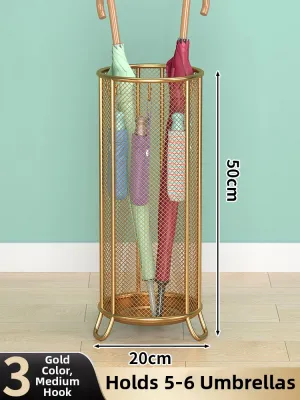
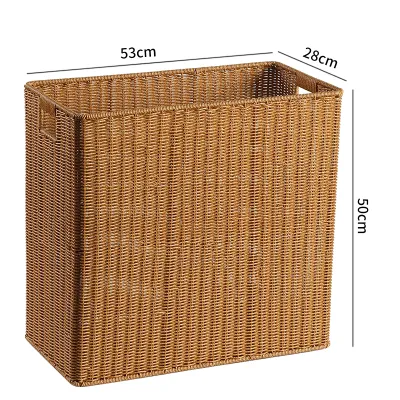
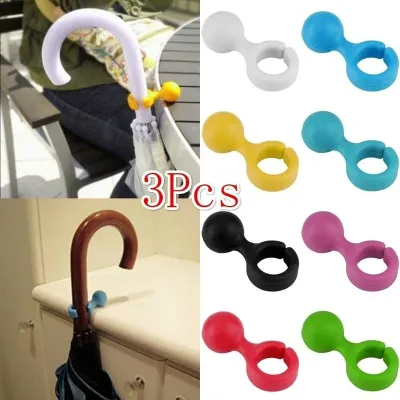
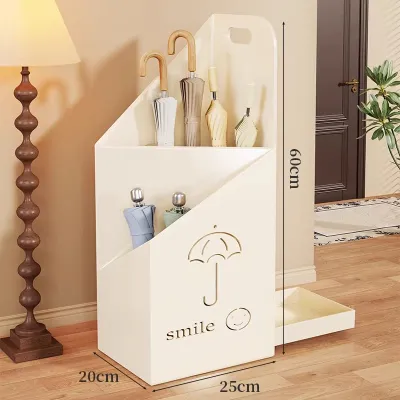
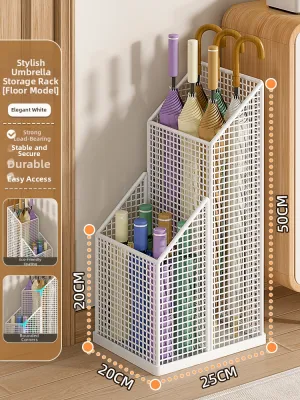
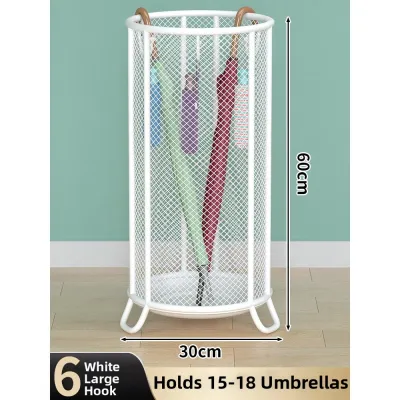
Prices are valid at publication and may change. Please refer to the product page for the latest price.
Household capacity is the next critical factor to calculate. Take note of how many people live in your home and how many umbrellas each person typically uses. During the wet season, a family of four can easily accumulate four to eight wet umbrellas at any given time, including large walking umbrellas and compact folding models. Additionally, consider how often you host guests; having a little extra capacity prevents your entryway from becoming cluttered when visitors arrive with wet gear.
Finally, identify the flooring type in your high-traffic entry zone. Different flooring materials react differently to moisture and standing water. Ceramic tiles are highly durable and water-resistant, but they become incredibly slippery when wet, creating a safety hazard. On the other hand, materials like solid timber, engineered wood, or laminate are highly sensitive to moisture; standing water seeping from a wet umbrella can cause warping, swelling, and permanent discoloration. Understanding your floor’s vulnerability will help you determine how robust your holder’s water containment features must be.
Freestanding Umbrella Stands: Evaluating Flexibility and Stability
Freestanding umbrella stands are a popular choice because they offer excellent flexibility and require no permanent installation. You can easily move them from one side of the door to the other, tuck them away in a closet during dry seasons, or take them with you if you move to a new home. They are highly suited for spacious foyers or open-concept entryways where floor space is not at a premium.

However, because freestanding stands rely entirely on their own base for balance, stability is a major safety consideration. Umbrellas are naturally tall and top-heavy, especially when wet fabric adds extra weight to the upper section. A lightweight plastic or thin metal stand can easily tip over when holding multiple large umbrellas. To prevent this, look for models that feature a heavily weighted base made of materials like cast iron, solid stone, or thick ceramic.
If your household includes young children or active pets, the risk of a stand tipping over increases significantly. In these environments, prioritize stands with a low center of gravity, which is typically achieved through a wide, flared base or a heavy bottom plate. Avoid tall, narrow cylinder designs that have a footprint smaller than their top opening, as these are highly susceptible to being knocked over by a passing child or pet.
When evaluating materials, do not rely solely on generic terms like “stainless steel” or “powder-coated metal” to guarantee durability. Instead, closely inspect the quality of the surface finish. Look for a smooth, thick, and uniform coating without any visible chips, scratches, or exposed metal joints where rust could easily start to form. Moisture from wet umbrellas will quickly exploit any weakness in the protective coating, leading to unsightly rust stains.
Additionally, check the underside of the stand for floor protectors. High-quality freestanding stands should feature soft rubber pads, silicone rings, or felt feet attached to the bottom. These protectors prevent the hard metal, ceramic, or stone base from scratching your tiles or scraping delicate wood finishes when the stand is slid or adjusted during cleaning.
Wall-Mounted Umbrella Holders: Maximizing Narrow Foyers
For homes with exceptionally narrow entryways or limited floor space, wall-mounted umbrella holders offer an elegant and highly efficient solution. By lifting your umbrella storage off the floor, you keep the walkway completely clear and create a more open, spacious feel in your foyer. This style is particularly beneficial in modern apartments where every square centimeter of floor space must be utilized efficiently.
When planning for a wall-mounted holder, you must measure the wall clearance and protrusion limits carefully. Choose a location that is easily accessible but out of the direct path of foot traffic. The holder should not protrude more than 10 to 12 centimeters from the wall to ensure that bags, coats, or shoulders do not accidentally catch on it as people enter or exit the home.
The structural integrity of your wall is a crucial prerequisite for safe installation. You must identify the wall material before purchasing or installing a wall-mounted holder. In many residential buildings, entry walls are constructed from solid concrete, brick, or hollow drywall. Solid concrete and brick walls require a masonry drill bit and plastic expansion anchors to hold screws securely, while drywall partitions require locating wooden studs or using specialized hollow-wall toggle bolts to prevent the holder from pulling out of the wall.
It is also essential to verify the manufacturer’s specified weight capacity for any wall-mounted model. While a dry, compact umbrella is lightweight, multiple large, wet umbrellas can exert significant downward force on the mounting brackets. Ensure that both the holder itself and the wall anchors you use are rated to support at least double the expected weight of your umbrellas when fully saturated with water.
Finally, consider the mounting height and configuration. Some wall-mounted systems consist of two separate pieces: a top ring to hold the handles and a bottom cup to catch water and support the tips. This two-piece design allows you to adjust the distance between the top and bottom components to perfectly match the length of your specific umbrellas, whether you primarily store long walking umbrellas or short, foldable models.
Drip Trays and Integrated Racks: Managing Moisture and Floor Protection
Effective water management is the primary functional duty of any umbrella holder. If a holder allows water to leak onto the floor, it fails to protect your home from moisture damage and slipping hazards. Therefore, evaluating how a holder manages and contains water is just as important as checking its size and style.
When comparing water containment options, built-in drip trays are generally superior to standalone floor mats. A built-in drip tray is integrated directly into the base of the holder, catching water immediately as it runs down the umbrella fabric. Standalone floor mats can catch stray drips, but they often allow water to seep underneath through capillary action, trapping moisture directly against your flooring and causing hidden damage over time.
A well-designed drip tray must balance water containment with proper ventilation and evaporation. If a tray is too deep and completely enclosed, it will trap moisture inside, creating a humid microclimate that prevents the umbrellas from drying quickly. This trapped moisture can lead to stagnant water, unpleasant musty odors, and the growth of mold or mildew on both the holder and the umbrella fabric. Look for designs that feature open-air ventilation or slotted sides to encourage natural airflow and rapid drying.
In tropical or warm climates, stagnant water in a drip tray poses an additional risk: it can become a breeding ground for pests. To prevent this, choose a holder with a removable drip tray that is easy to slide out, empty, and clean. If a tray is fixed or difficult to remove, you are much more likely to neglect cleaning it, or you may accidentally spill the collected water onto your floor while trying to tilt the entire stand to empty it.
Establish a simple, routine maintenance schedule for your drip tray. During rainy periods, make it a habit to empty the tray daily and wipe it dry with a clean cloth. Once a week, wash the tray with mild soap and water to prevent the buildup of dirt, mineral deposits, and bacteria, ensuring your entryway remains fresh and hygienic.
Selection Matrix: Matching Holder Styles to Your Home Profile
To help you finalize your decision, use the following comparison matrix to match the different umbrella holder styles to your specific home layout, household size, and installation preferences.
| Holder Type | Ideal Entryway Layout | Household Capacity | Installation Effort | Key Advantage |
|---|---|---|---|---|
| Freestanding Stand | Spacious foyers, wide entryways, open-concept layouts | High (6+ umbrellas, including large golf styles) | None (ready to use out of the box) | Highly flexible; easy to relocate or store away during dry seasons |
| Wall-Mounted Holder | Narrow corridors, compact apartments, limited floor space | Low to Medium (2 to 4 compact or standard umbrellas) | Medium (requires drilling, wall anchors, and leveling) | Keeps floor space completely clear; modern, minimalist appearance |
| Drip Tray / Integrated Rack | Any layout with moisture-sensitive flooring (wood, laminate) | Medium to High (depends on specific model size) | Low to Medium (depends on freestanding or wall-mounted style) | Superior water containment; prevents slipping hazards and floor damage |
Before making your final purchase, go through this pre-purchase checklist to verify that your chosen umbrella holder will fit your home perfectly:
- [ ] Have you measured the exact floor space or wall area where the holder will be placed?
- [ ] Does the door swing path clear the proposed location of the holder by at least 10 centimeters?
- [ ] If choosing a wall-mounted model, have you identified your wall material (concrete, brick, or drywall)?
- [ ] Does the holder have sufficient capacity to store your household's maximum number of active umbrellas?
- [ ] Is the base or drip tray made of a rust-resistant material or treated with a high-quality protective coating?
- [ ] Are there soft floor protectors on the bottom of the stand to prevent scratching your entryway floor?
- [ ] Is the drip tray easily removable for quick emptying and routine cleaning?
Installation, Safety, and Upkeep Guidelines
Proper installation and regular maintenance are essential to ensure the longevity of your umbrella holder and to prevent accidental damage to your home. When installing a wall-mounted holder, always carefully read and follow the manufacturer’s instructions. Use the exact drill bit size specified for your wall anchors, and avoid over-tightening the screws, which can strip the wall anchors or crack plastic mounting brackets.
For freestanding stands, practice safe weight distribution. Always place heavier, longer umbrellas toward the center of the stand rather than leaning them all on one side. This keeps the center of gravity balanced and prevents the stand from tipping over when loaded. If your stand has separate compartments for long and short umbrellas, utilize them correctly to keep the weight evenly distributed.
Conduct routine safety and upkeep checks at least once every few months. Inspect wall-mounted holders to ensure the mounting screws have not become loose and the brackets are not sagging under the weight. For metal stands, check the joints, seams, and interior base for any early signs of rust or paint chipping. If you spot any rust, gently sand the area and apply a small touch-up of rust-resistant paint to prevent it from spreading.
If you are unsure about your wall’s structural integrity, or if you encounter difficulties during installation—such as drilling into hard concrete or tiled walls—stop the DIY process immediately. It is always safer to consult a qualified professional handyman who has the specialized tools and experience to mount the holder securely without damaging your walls, plumbing, or electrical wiring.
Frequently Asked Questions (FAQ)
Can I use a coat rack with an integrated umbrella holder?
Using a coat rack with an integrated umbrella holder is an excellent, space-saving solution for larger entryways, as it combines multiple storage functions into a single piece of furniture. However, you must pay close attention to weight distribution and stability. Hanging heavy coats or bags on one side of the rack while leaving the umbrella holder empty can make the entire unit top-heavy and highly prone to tipping over. To ensure safety, choose a model with an exceptionally wide, heavy base, and always distribute your coats and umbrellas evenly around the frame.
How do I prevent a freestanding umbrella stand from tipping over?
To prevent a freestanding umbrella stand from tipping, always place longer, heavier golf umbrellas in the center of the stand rather than leaning them against the outer edges. You can also increase the stability of a lightweight stand by adding weight to the bottom; placing a few heavy, polished, non-porous decorative stones inside the base tray is an attractive and effective way to lower the center of gravity. Finally, ensure the stand is placed on a completely flat, level surface and positioned away from high-traffic pathways where it could be easily bumped by family members or pets.

Community discussion
Share your experience or ask a question. Comments are reviewed before publication.