
Finding the right umbrella holder for a compact Housing & Development Board (HDB) flat entryway requires balancing spatial efficiency with practical moisture management. In Singapore’s tropical climate, sudden downpours make a reliable umbrella storage solution essential, yet the typical HDB foyer offers very little floor area. The ideal holder must keep wet umbrellas organized, prevent water damage to sensitive flooring like vinyl or laminate, and fit seamlessly into tight corners or wall spaces without obstructing daily foot traffic. By focusing on structural design, material durability, and precise spatial measurements, you can select a holder that keeps your entryway dry and clutter-free.
Assessing Your Entryway Space and Constraints
Before purchasing any storage accessory, you must carefully evaluate the physical dimensions of your entryway. Start by measuring the available floor footprint, paying close attention to the width and depth of the zone immediately adjacent to your main door. In many HDB layouts, the entryway shares space with shoe cabinets, household shelter doors, or narrow corridors, leaving only a small sliver of usable floor. You must also measure the door swing path of both your main wooden door and the outer metal gate to ensure that a freestanding or wall-mounted holder will not block their movement or cause scratches.
High-traffic entryways are prone to tripping hazards, especially when family members are rushing in and out. A protruding umbrella holder in a narrow hallway can easily be knocked over, potentially damaging the holder, your umbrellas, or your flooring. To mitigate this risk, identify “dead zones” such as the narrow gap behind an open door, the space between a shoe cabinet and the wall, or the corner adjacent to the household shelter.
Products mentioned in this guide
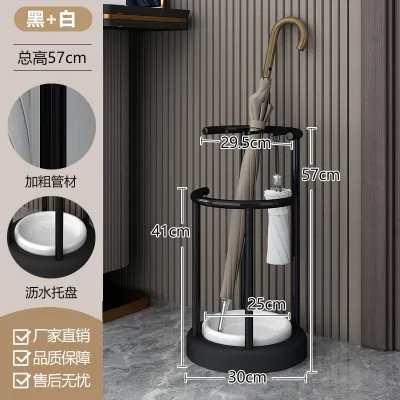
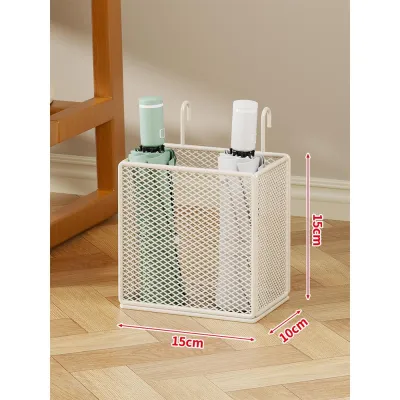
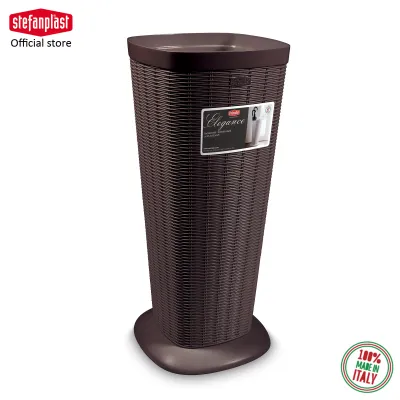
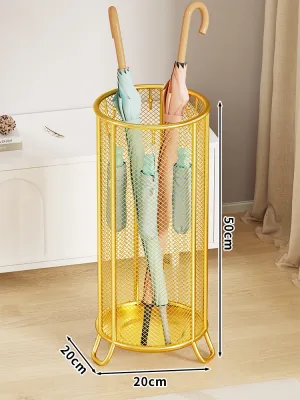
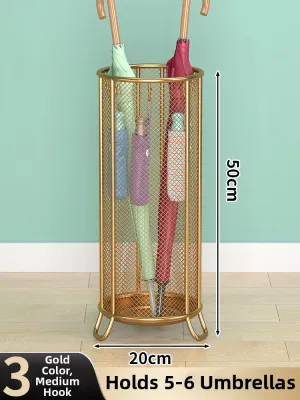
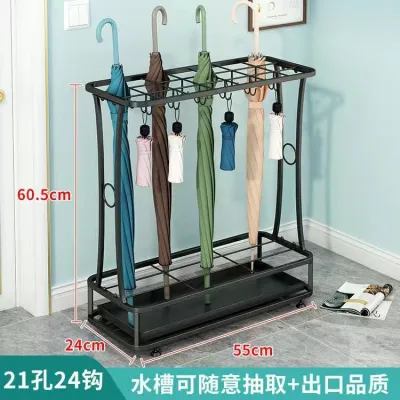

Prices are valid at publication and may change. Please refer to the product page for the latest price.
If you are considering placing your umbrella holder outside your main door in the common corridor, you must consult local building and town council regulations. The Singapore Civil Defence Force (SCDF) maintains strict fire safety guidelines regarding corridor obstructions to ensure safe evacuation routes during emergencies. Generally, a minimum clear escape passage of 1.2 meters must be maintained at all times. Placing any furniture, including umbrella racks, in a way that reduces this clearance or blocks access to dry risers and hose reels is a violation of safety codes. Always verify your specific town council’s bylaws before utilizing the external corridor for storage.
Space-Saving Umbrella Holder Types for Compact Layouts
Compact umbrella holders generally fall into two structural categories: wall-mounted (or door-attached) systems and slim freestanding units. Each design utilizes vertical space differently to minimize the physical footprint on your entryway floor. Choosing between them depends on whether you prefer a zero-floor-space solution or a flexible, mobile organizer that can be repositioned as needed.

The primary trade-off when selecting a compact design involves balancing storage capacity, structural stability, and floor footprint. Extremely slim or lightweight holders take up minimal space but may struggle to support multiple heavy golf umbrellas without tipping. Conversely, highly stable, heavy-duty holders often require a wider base, which consumes valuable floor area. Understanding these structural dynamics allows you to choose a configuration that matches your household’s daily umbrella usage without overwhelming your foyer.
Wall-Mounted and Over-the-Door Options
Wall-mounted and door-attached umbrella holders are excellent zero-floor-space solutions for entryways where every square centimeter of ground is already occupied. These systems typically consist of separate upper and lower brackets that can be positioned at varying heights to accommodate both long walking umbrellas and short folding ones. For HDB flats, the heavy metal door of the household shelter presents a unique opportunity; magnetic umbrella holders can cling securely to these steel surfaces without requiring any drilling or permanent modifications.
If you plan to mount a holder on a standard concrete wall, you must evaluate the installation requirements and wall material compatibility. Concrete walls require masonry drilling, wall plugs, and screws to ensure a secure hold. For renters or those who prefer a non-invasive installation, heavy-duty adhesive brackets are available, though their performance depends heavily on the surface texture. Adhesives adhere best to smooth, non-porous surfaces like ceramic tiles or glass, whereas painted concrete or textured wallpaper may fail under the weight of wet umbrellas.
When evaluating wall-mounted options, always check the manufacturer’s specified weight limits and the integration of the drip tray. Because these units are suspended, a full load of wet umbrellas can exert significant downward force. Furthermore, the drip tray must be easily detachable from the wall brackets so you can empty collected rainwater without spilling it onto your walls or floor.
Slim Freestanding and Corner Designs
For entryways where wall mounting is impractical or restricted by rental agreements, slim freestanding and corner-shaped holders offer a highly functional alternative. These designs are engineered with a narrow, elongated, or triangular footprint that slides neatly into unused corners or sits flush against a wall. Because they do not require permanent installation, they can be easily moved during cleaning or relocated to different parts of the home.
The primary engineering challenge for a slim freestanding holder is maintaining base stability and a low center of gravity. Because umbrellas—especially large golf models—are top-heavy, a narrow-profile holder must have a weighted base to prevent it from tipping over when loaded. When browsing product specifications, look for models that feature heavy resin, cast iron, or weighted steel bases. Anti-slip rubber pads on the bottom of the base are also crucial, as they provide traction on smooth tiled floors and prevent the holder from sliding when umbrellas are inserted.
To maximize vertical storage without widening the physical footprint, many modern freestanding holders utilize multi-tier configurations or internal dividers. These design features allow you to store long umbrellas in the main compartment while providing dedicated hooks or upper shelves for compact folding umbrellas. This vertical separation ensures that smaller items do not get lost at the bottom of the holder and remain easily accessible.
Essential Features to Check Before Buying
A high-quality umbrella holder must do more than simply hold your umbrellas upright; it must actively manage moisture to protect your home. The drip tray is the most critical component for indoor wet-weather management. Ensure the tray has sufficient depth to contain water from multiple saturated umbrellas without overflowing. A removable drip tray is highly recommended, as it allows you to carry the collected water directly to the sink for disposal, minimizing the risk of spills on your entryway floor. Easy-to-clean trays prevent the buildup of stagnant water, which can lead to unpleasant odors, mold growth, and potential mosquito breeding.
Material selection plays a vital role in the longevity of your holder, particularly in Singapore’s hot and humid climate. Metal holders must feature a robust, rust-resistant finish, such as powder coating or stainless steel construction, to withstand constant exposure to wet umbrellas. If you select a plastic, resin, or diatomaceous earth holder, inspect the joints and structural seams for sturdiness. Diatomaceous earth inserts are highly absorbent and dry quickly, but they must be kept clean and occasionally dried in a well-ventilated area to maintain their porous, moisture-wicking properties.
Finally, verify that the holder’s internal dimensions and compartment layouts accommodate your specific collection of umbrellas. A holder designed exclusively for slim, folding umbrellas will not fit a wide-canopy golf umbrella, while a deep, open cylinder can make short folding umbrellas difficult to retrieve. Look for versatile designs that incorporate built-in hooks, loops, or dual-height compartments to keep both long and short umbrellas organized and accessible.
Evaluating Brands and Retail Options
When shopping for an umbrella holder in Singapore, you will encounter a wide range of brands, from specialized Japanese home organization labels known for minimalist, space-saving designs to general furniture retailers and local home decor brands. Specialized organization brands often focus heavily on maximizing utility in tight spaces, offering clever magnetic or ultra-slim configurations. General furniture retailers, on the other hand, frequently provide budget-friendly, classic designs that blend easily with broader home decor themes.
To avoid purchasing a holder that is either too large for your entryway or too flimsy for your needs, always verify the actual product dimensions and weight capacities from official product listings rather than relying on generic marketing descriptions. Online marketplaces and ecommerce platforms offer a vast selection, but product photos can sometimes be misleading regarding scale. Carefully read the technical specifications, noting the exact width, depth, and height, and compare these figures against the measurements you took of your entryway.
Additionally, consider the brand’s customer support, return policies, and warranty terms. Purchasing from established local retailers or official brand stores on major ecommerce platforms often provides greater peace of mind, as they typically offer straightforward return processes if the product arrives damaged or does not match the advertised specifications. Checking customer reviews specifically for feedback on structural stability and material quality can also help you make an informed decision.
Maintenance and Drip Management for Indoor Use
Proper maintenance of your umbrella holder is essential to ensure a hygienic, dry, and safe entryway. In Singapore, where dengue prevention is a national priority, managing standing water is critical. You must empty and dry the drip tray immediately after every rain event. Stagnant water left in a dark entryway corner provides an ideal breeding ground for Aedes mosquitoes. Regularly washing the drip tray with mild soap and water will also prevent the accumulation of dirt, mold, and mildew, keeping your entryway smelling fresh.
For metal holders, routine care is necessary to preserve the protective rust-resistant coating. Wipe down the entire frame with a dry microfiber cloth after use, paying close attention to the joints, screws, and base where water tends to pool. Avoid using abrasive scrubbers or harsh chemical cleaners, as these can scratch the powder-coated finish and expose the underlying metal to moisture and rust. If you notice minor scratches, applying a small amount of clear rust-inhibiting paint can help prevent corrosion from spreading.
Over time, even high-quality holders may show signs of wear, such as cracked plastic trays, loose joints, or peeling coatings. It is important to monitor the condition of your holder and replace it if it can no longer safely contain water or support the weight of your umbrellas. A leaking drip tray can silently ruin expensive laminate, vinyl, or parquet flooring, leading to warping, discoloration, and costly repairs. Investing in a timely replacement protects your home’s interior surfaces and maintains a tidy, welcoming entrance.
Frequently Asked Questions (FAQ)
Can I leave an umbrella holder outside my HDB door in the common corridor?
While it may be tempting to keep wet umbrellas entirely outside your flat, placing an umbrella holder in the common corridor is subject to strict safety regulations. The Singapore Civil Defence Force (SCDF) mandates that common corridors must maintain a minimum clear escape passage of 1.2 meters to ensure safe evacuation during emergencies. Additionally, individual town councils have specific bylaws regarding corridor use; some strictly prohibit any personal items, while others allow limited storage as long as safety clearances are met. Placing a holder outside can also expose your umbrellas to theft or damage from the elements. To ensure compliance and safety, it is generally best to keep your umbrella holder inside your entryway or verify the exact guidelines with your town council before placing anything in the common corridor.
How do I prevent a slim freestanding umbrella holder from tipping over?
Preventing a slim freestanding holder from tipping over requires careful weight distribution and attention to product specifications. When loading the holder, always place heavier, longer umbrellas in the center or toward the back of the unit, and distribute the weight evenly if the holder has multiple compartments. Avoid overloading one side, which can easily disrupt the center of gravity. When shopping, look for models that explicitly feature a weighted base, such as those made with heavy steel, cast iron, or resin. You can also enhance stability by placing the holder firmly against a wall or wedging it securely into a corner. Adding self-adhesive anti-slip rubber pads to the bottom of the base not only protects your floor tiles from scratches but also provides extra grip to keep the holder stable when umbrellas are inserted or removed.
Community discussion
Share your experience or ask a question. Comments are reviewed before publication.