
Finding the right shoe storage in a compact Singapore apartment is not about choosing the most stylish piece, but about matching the physical footprint of the rack to your home’s exact layout constraints.
Whether you are navigating a tight entryway in a newly renovated BTO flat or trying to maximize a small bedroom, the ideal shoe rack must align with your wall structure, door clearances, and floor space. By evaluating your specific spatial limits, you can choose between wall-mounted, slim freestanding, under-bed, or over-door styles to keep your footwear organized without cluttering your living space.
Assessing Your Apartment's Available Space
Before browsing online marketplaces or visiting furniture showrooms, you must establish the hard spatial limits of your home. Start by measuring the exact floor footprint where you plan to place the rack. Use a metal measuring tape to record the width, depth, and height of the designated area, keeping in mind that even a few millimeters of discrepancy can prevent a cabinet door from opening fully.
Products mentioned in this guide
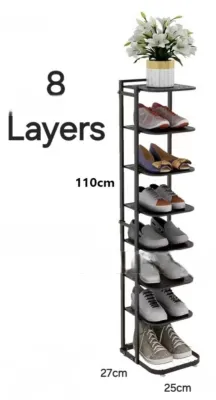
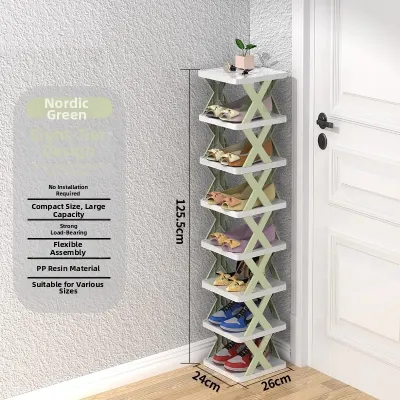
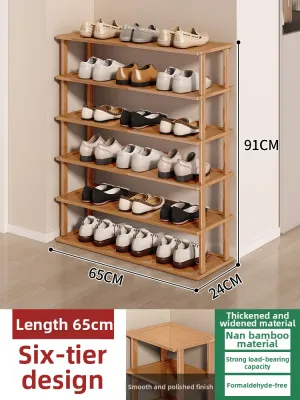
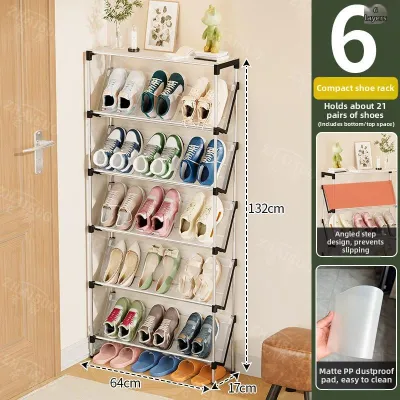
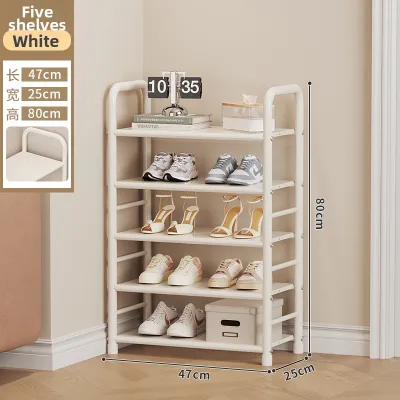
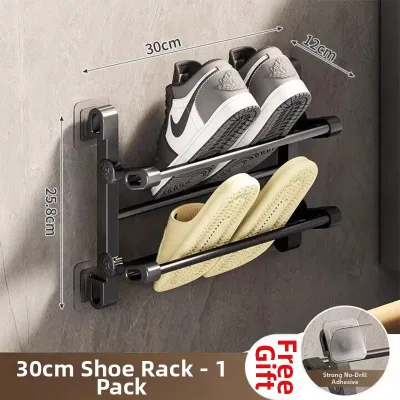
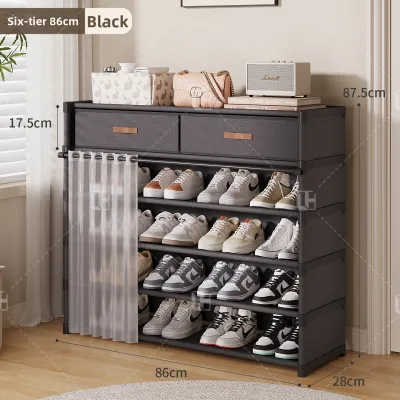
Prices are valid at publication and may change. Please refer to the product page for the latest price.
Pay close attention to door swing paths and walkway clearances. An entryway shoe rack should never impede the swing of your main door, gate, or adjacent room doors. Measure the arc of these doors when fully opened to ensure there is comfortable clearance for a person to stand and move past without bumping into the furniture.
Look for underutilized zones that can be converted into functional storage. These include the narrow alcove behind an open door, the empty space beneath a bed frame, or high vertical wall sections that do not interfere with daily foot traffic. Identifying these zones early allows you to select a style that capitalizes on otherwise wasted volume.
In Singapore, public housing estates have strict guidelines regarding shared corridors. If you plan to place any storage outside your main door, you must consult the local housing authority and town council regulations. Fire safety guidelines set by the Singapore Civil Defence Force (SCDF) require a minimum clear escape passage to ensure safe evacuation during emergencies.
Do not forget to account for architectural details like baseboards, skirting boards, and uneven flooring. A skirting board can prevent a tall, slim cabinet from sitting flush against the wall, creating an unstable gap at the back. Measure the height and thickness of your skirting boards, and check if the floor slopes slightly, as this will affect the stability of freestanding units.
Matching Shoe Rack Styles to Layout Constraints
Wall-mounted shoe racks are highly effective for narrow entryways because they keep the floor completely clear. By elevating your footwear, these units create an illusion of more space and make floor cleaning much easier. However, because they rely entirely on wall support, you must verify your wall material and ensure you have the necessary drilling permissions before installation.

Slim freestanding shoe cabinets, often featuring tilting drawers, are designed specifically for shallow alcoves and tight corridors. These units typically have a shallow depth, allowing them to sit unobtrusively against a wall. While they excel at saving floor space, their tall and narrow profile makes them prone to tipping, meaning they must be secured to the wall for safety.
Under-bed storage containers utilize the hidden volume beneath your bed frame, making them an excellent choice for seasonal footwear or shoes you do not wear daily. To use this style successfully, you must measure the vertical clearance between your floor and the bottom of the bed frame. Additionally, because dust accumulates quickly under beds, look for containers with tight-fitting lids or zippered fabric covers to protect your shoes.
Over-door organizers are highly practical for bedrooms or utility closets where floor and wall space are non-existent. These hanging pockets or wire racks utilize the vertical plane of standard doors. Before purchasing, check the clearance between the top of your door and the frame to ensure the hanging brackets will not prevent the door from closing, and verify that the door hinges can handle the added weight of multiple pairs of shoes.
Installation Prerequisites and Safety Checks
A secure installation is critical to prevent accidents and damage to your home. When planning to mount a shoe rack, you must identify whether your wall is made of solid concrete, brick, or drywall. Solid concrete walls, common in structural columns and structural walls of local apartments, require a hammer drill and masonry anchors, whereas drywall partitions require specialized toggle bolts or hollow-wall anchors.
For tall, slim freestanding cabinets, anchoring the unit to the wall is a non-negotiable safety step. This is particularly crucial in households with young children or pets who might pull on the drawers or attempt to climb the shelves. Most manufacturers include anti-tip hardware; always follow these instructions carefully and secure the bracket into a wall stud or solid masonry.
If you opt for an over-door organizer, inspect the condition of your door hinges and frame. Standard interior doors are often hollow-core and may sag over time if subjected to excessive, uneven weight. Distribute the weight of your shoes evenly across the organizer, placing heavier footwear like boots or leather shoes near the bottom to minimize stress on the upper hinges.
Never force an installation if you encounter resistance or structural uncertainty. If you are unsure about drilling into a wall due to hidden electrical conduits or water pipes, or if you suspect your building’s management rules prohibit certain modifications, stop immediately. Consulting a qualified handyman or professional installer can prevent costly structural damage and ensure your storage remains safe and stable.
Common Space-Matching Mistakes to Avoid
One of the most frequent errors is ignoring the physical space required to access your shoes. A slim cabinet might fit seamlessly in a narrow hallway when closed, but once you tilt the drawers open, it can completely block the walkway or strike an adjacent wall. Always calculate the total depth of the unit when its doors or drawers are fully extended.
Another common pitfall is choosing a fixed-shelf design without considering the height variations of your footwear collection. High heels, ankle boots, and high-top sneakers require significantly more vertical clearance than flat sandals or slip-ons. Opt for shoe racks with adjustable or removable shelves so you can customize the interior layout to match your actual shoe collection.
Do not assume that all products labeled “slim” or “compact” share the same dimensions. Product descriptions can be misleading, and a rack that is slim in depth might be excessively wide or tall for your specific nook. Always compare the manufacturer’s exact product specifications against your physical measurements rather than relying on visual estimates from online product photos.
Finally, ensure your shoe storage does not block essential household infrastructure. Avoid placing racks directly in front of electrical distribution boards, fiber termination points, water meters, or ventilation grilles. Keeping these areas accessible ensures you can easily reach utility controls during maintenance or emergencies without having to dismantle your storage setup.
Frequently Asked Questions (FAQ)
Can I install a wall-mounted shoe rack in a public housing corridor?
In Singapore, the common corridor outside your public housing flat is shared property managed by the local Town Council. While some minor items may be permitted depending on your specific estate’s bylaws, you must check the local housing authority guidelines before installing any permanent or semi-permanent fixtures. The Singapore Civil Defence Force (SCDF) strictly enforces fire safety regulations, which mandate that a minimum clear escape path of 1.2 meters must be maintained at all times. Wall-mounted racks that obstruct this pathway or hinder emergency evacuation are strictly prohibited and subject to removal.
How do I protect my shoes from dust in an open-entryway rack?
Open-entryway shoe racks are highly convenient for daily use, but they expose your footwear to dust, humidity, and ambient dirt. To protect your shoes, consider using clear plastic storage boxes with ventilation holes, which keep dust out while allowing you to see the contents. Alternatively, you can drape a breathable fabric cover over the rack or choose a model that features built-in doors or fabric roll-up flaps. Establishing a regular cleaning routine—such as wiping down the shelves weekly and rotating shoes you do not wear often into closed bedroom storage—will also help maintain your footwear in Singapore’s humid climate.

Community discussion
Share your experience or ask a question. Comments are reviewed before publication.