
Maximising the entryway of a compact Singapore apartment requires smart, vertical storage solutions that do not compromise on floor space. A rotating shoe cabinet offers an elegant, high-capacity alternative to traditional wide consoles, utilizing a 360-degree spinning mechanism to keep footwear accessible yet neatly hidden. However, choosing the right unit for a tight HDB or condominium foyer involves more than simply matching the cabinet’s static width to an empty corner. You must carefully calculate dynamic rotation clearances, assess structural stability, and ensure the unit integrates seamlessly with your home’s daily traffic flow and safety requirements.
Measure Your Entryway and Calculate Rotation Clearance
To avoid buying a cabinet that blocks your front door or scrapes against the wall, you must distinguish between its static footprint and its dynamic rotation diameter. The static footprint is the physical space the cabinet occupies when it is stationary and aligned parallel to the wall. The rotation diameter, however, is the maximum diagonal width of the unit as it spins. Because a square or rectangular cabinet sweeps out a circular path when rotated, its diagonal measurement is always significantly larger than its width or depth.
For example, a cabinet with a width of 40 cm and a depth of 40 cm will have a diagonal rotation diameter of approximately 56.6 cm. This means you must secure a clear, unobstructed circular zone of at least 57 cm in diameter for the cabinet to spin freely without striking adjacent surfaces. Before purchasing, use the following steps to map out your space:
Products mentioned in this guide
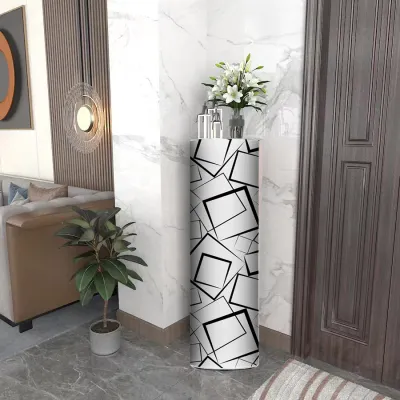
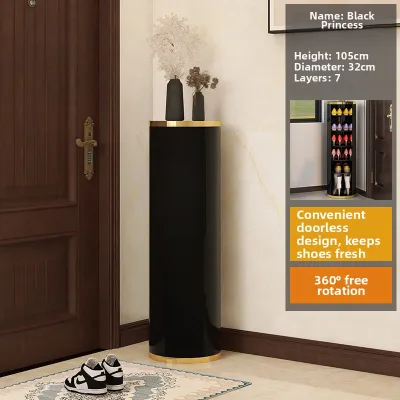
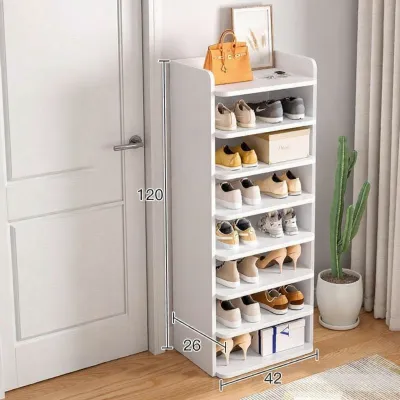
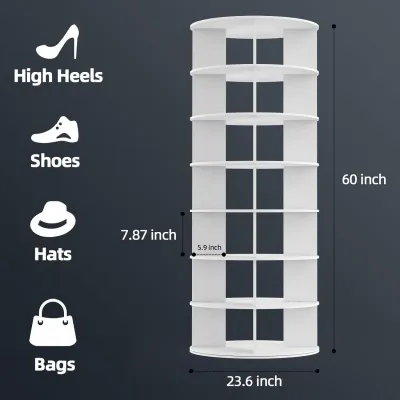
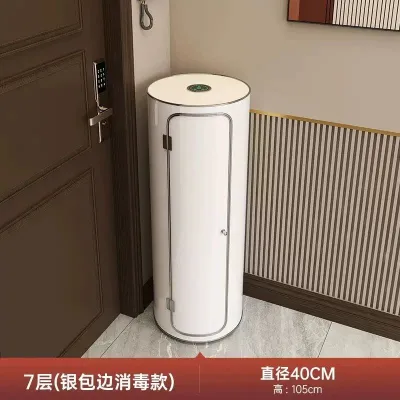
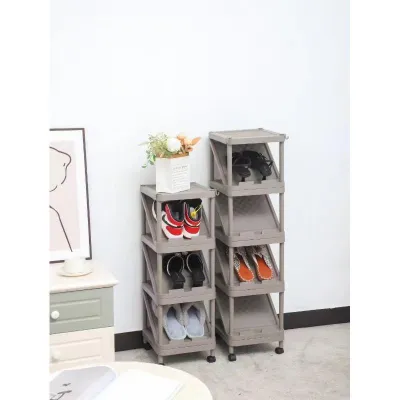
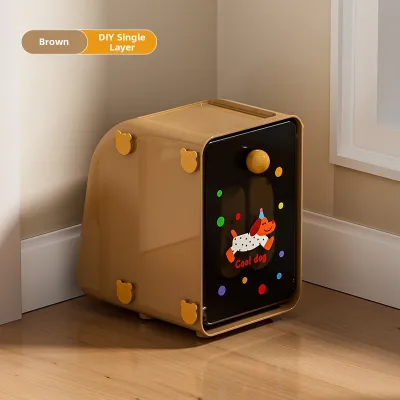
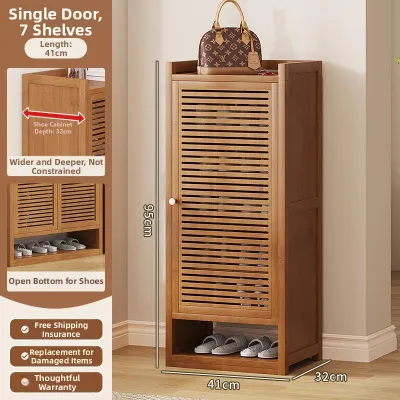
Prices are valid at publication and may change. Please refer to the product page for the latest price.
- Static Footprint vs. Rotation Diameter: Measure the exact width and depth of the floor area where the cabinet will sit, then calculate the diagonal (or check the manufacturer's specified rotation diameter) to ensure the spinning path is completely clear.
- Door Swing and Corridor Clearances: In many HDB flats and executive condominiums, the main entrance door swings inward, creating a sweep radius that must remain unobstructed. Open your front door fully and measure the distance from the door edge to the proposed cabinet location. Additionally, if placing a unit near an external entryway, check Town Council guidelines to ensure you maintain the mandatory minimum clear escape path (typically 1.2 meters) for emergency evacuation.
- Overhead Obstructions: Look upward to check for low-hanging structural beams, false ceilings, surface-mounted light fixtures, or wall-mounted distribution board (DB) boxes. A tall rotating cabinet must clear these obstacles comfortably. Verify that the cabinet's height and rotation path will not block access to your DB box door, which must remain easily accessible for electrical maintenance.
- Doorway and Lift Access: Before ordering a tall, pre-assembled unit, verify that its finished dimensions can easily fit through your apartment's main doorway and your building's passenger lift doors during delivery.
Match Cabinet Height and Tiers to Your Shoe Collection
The storage capacity of a rotating shoe cabinet is determined by its height, the number of tiers, and the internal shelf configuration. While manufacturers often advertise capacity in terms of the number of pairs a unit can hold, these estimates are typically based on standard-sized flat shoes or sandals. In reality, your household’s actual shoe sizes and styles will dictate how much usable space you have. Larger shoe sizes (such as men’s UK 10 or EU 44 and above) require deeper shelves, and bulky footwear like high-top sneakers, platform heels, or boots will occupy significantly more vertical space than flat slip-ons.

To maximize efficiency, prioritize rotating cabinets that feature adjustable or removable shelves. Fixed-tier systems often leave wasted vertical space above low-profile shoes while failing to accommodate taller footwear. Removable shelves allow you to customize individual tier heights, adapting the interior layout as your collection changes. Before buying, measure the height of your tallest daily-wear shoes and compare these measurements against the cabinet’s internal tier spacing specifications.
There is a direct trade-off between a cabinet’s height and its physical stability. Taller units (such as those exceeding 1.5 meters) offer impressive vertical storage capacity on a minimal footprint, making them highly attractive for tight foyers. However, as height increases, the unit’s center of gravity rises, particularly when the upper shelves are loaded with heavier shoes. To prevent the cabinet from becoming top-heavy and prone to tipping, it must feature a wide, heavily weighted base. When evaluating tall models, check the manufacturer’s specifications for base weight and load capacity per tier, and plan to store your heaviest footwear on the bottom shelves to maintain a low center of gravity.
Check Stability and Rotating Shoe Cabinet Design Features for Tight Spaces
In a compact foyer, safety and smooth operation are paramount, especially if the household includes children or elderly family members. Because a rotating shoe cabinet must spin freely, standard wall-anchoring methods that secure the main body of a traditional cabinet directly to the wall are often impractical. Instead, look for units designed with a heavy, solid metal or weighted engineered wood base that lowers the overall center of gravity. Some advanced models utilize a dual-structure design: an inner rotating column housed within a fixed outer frame. This configuration allows you to anchor the outer frame securely to the wall while the internal shelves spin freely, providing the ultimate combination of safety and functionality.
The quality of the rotation mechanism is another critical factor that determines the cabinet’s longevity and ease of use. High-quality ball-bearing turntables or heavy-duty swivel joints ensure quiet, effortless rotation. A jerky or stiff mechanism requires more force to turn, which can cause the entire cabinet base to shift slightly over time, potentially scratching delicate flooring materials like vinyl, laminate, or polished marble. Before finalizing your choice, look for specifications detailing smooth-glide bearings or noise-reduction rings, and check care instructions to see if the mechanism requires periodic lubrication.
Slim-profile designs are highly advantageous in narrow entryways. Cylindrical or multi-sided (octagonal or hexagonal) rotating cabinets are particularly effective because they minimize sharp corners that can snag clothing or bruise passing residents. A rounded or faceted profile allows the cabinet to sit closer to walls and door frames, maximizing the available walkway when the unit is at rest. When comparing designs, consider how the cabinet’s aesthetic finish integrates with your foyer. While some materials are marketed as scratch-resistant or moisture-proof, you should always verify the manufacturer’s care instructions and check the quality of the protective finish or laminate seals, especially in Singapore’s humid climate.
Avoid Common Sizing and Placement Mistakes
One of the most frequent installation oversights is failing to account for skirting boards (baseboards). Most Singapore apartments feature skirting boards along the base of the entryway walls, which typically project 1 to 2 cm outward from the wall surface. If you measure your entryway space only at waist height, you may find that the cabinet cannot sit flush against the wall at floor level. This forced gap pushes the entire unit forward, shifting its rotation axis and potentially causing the spinning corners to scrape against adjacent walls or block door openings. Always measure the available floor width and depth from the face of the skirting board rather than the bare wall.
Wall protrusions and hardware can also interfere with the cabinet’s rotation path. Even if the cabinet body clears the wall itself, it may collide with protruding door handles, light switches, intercom panels, or wall-mounted artwork during a full 360-degree spin. Walk through the rotation path physically or use a cardboard template cut to the cabinet’s maximum rotation diameter to test the clearance of all wall-mounted fixtures.
Finally, ensure that the placement of the cabinet does not disrupt the natural flow of traffic or violate safety standards. The entryway is a high-traffic zone where family members put on and take off shoes daily. If the rotating cabinet requires you to stand in an awkward position or blocks the main path when open, it will quickly become a daily frustration. Maintain a comfortable buffer zone around the unit to allow at least one person to stand, spin the cabinet, and access their shoes without obstructing the main apartment entrance or exit routes.
Frequently Asked Questions (FAQ)
Can I anchor a rotating shoe cabinet to the wall?
Yes, but the anchoring method depends entirely on the cabinet’s design. If you have a fully rotating model where the entire outer shell spins, direct wall anchoring is not possible as it would lock the rotation mechanism. For these units, you must rely on a heavily weighted base or specialized safety tethers that allow for controlled movement. Alternatively, you can choose a fixed-frame rotating cabinet, where the outer cabinet remains stationary and is anchored securely to the wall, while only the internal shelf column rotates. Always consult the manufacturer’s installation manual to ensure any anchoring method is compatible with your specific model.
How much extra buffer space do I need around the cabinet?
It is highly recommended to add a buffer of at least 5 to 10 cm beyond the manufacturer’s stated maximum rotation diameter. This extra clearance accounts for minor floor unevenness, prevents your fingers from getting pinched against the wall during rotation, and ensures that slightly overhanging shoes do not scrape against adjacent surfaces. Additionally, this buffer accommodates any minor shifting of the unit’s base that may occur over time with regular use.
Community discussion
Share your experience or ask a question. Comments are reviewed before publication.