
To choose the right firmness level for a Seahorse foldable mattress, you must balance your body weight, primary sleeping position, and intended usage scenario. Generally, a firm or medium-firm rating is ideal for back and stomach sleepers, as well as daily users who need to prevent “bottoming out” against the floor. Side sleepers and lighter individuals typically benefit from a medium or medium-soft feel that provides pressure relief for the shoulders and hips. Because foldable mattresses are thinner than standard beds, selecting the correct firmness is critical to maintaining spinal alignment and ensuring long-term comfort.
How Foldable Mattress Firmness Differs from Standard Beds
Standard mattresses (10 to 12 inches thick) feature distinct comfort layers on top and deep support cores underneath. This allows the top layer to feel soft while the deeper layers prevent your body from sinking too far. In contrast, a foldable mattress typically ranges from 2 to 5 inches in thickness. This thinner profile compresses much faster under body weight, meaning the boundary between surface comfort and structural support is highly compressed.
The folding hinges or creases in a tri-fold design introduce physical gaps in the mattress core. These hinge points can alter how weight is distributed across the surface. If a foldable mattress is too soft, the foam near the joints can separate or compress excessively under the heaviest parts of your body, such as the hips, leading to an uneven sleeping surface and spinal misalignment.
Products mentioned in this guide
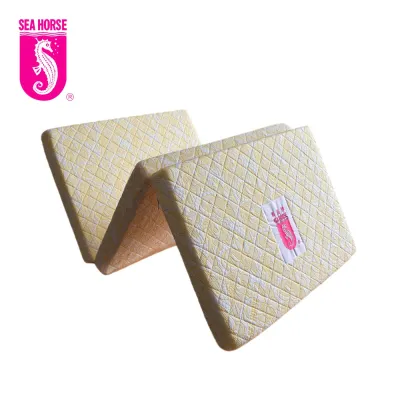
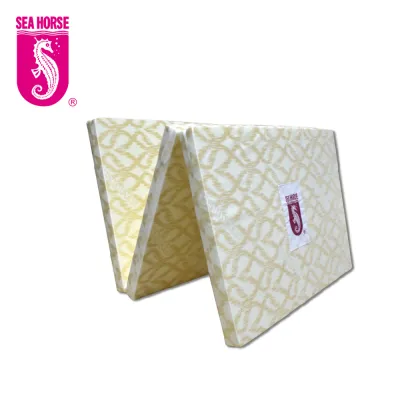
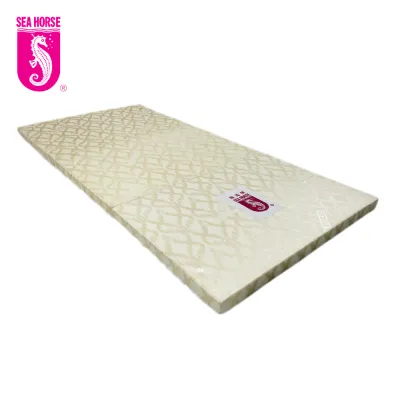
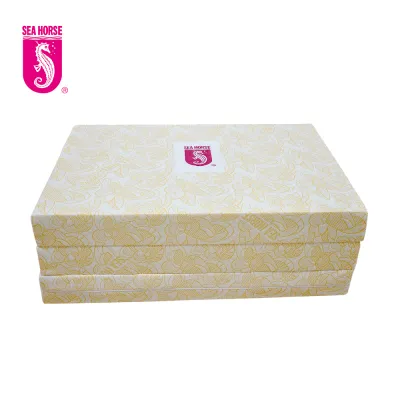
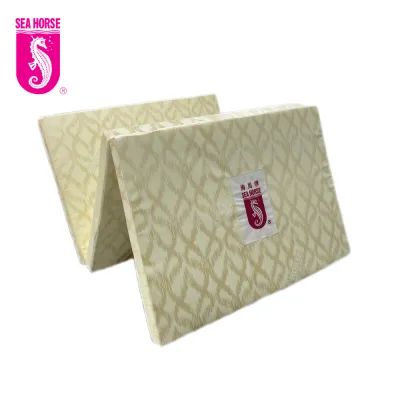
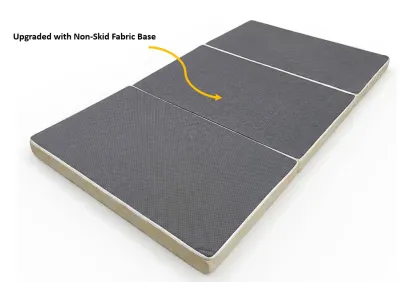
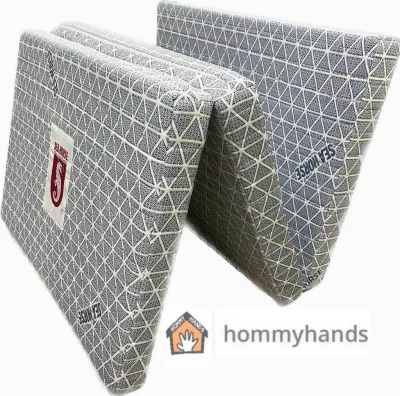
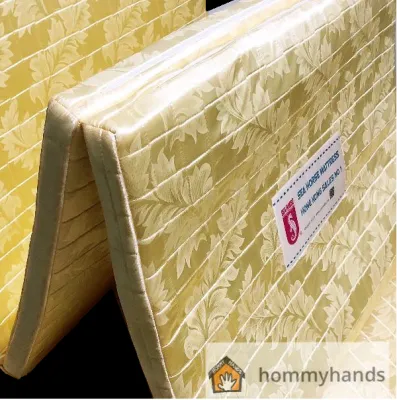
Prices are valid at publication and may change. Please refer to the product page for the latest price.
When a mattress is too soft or thin for a sleeper’s weight, the foam compresses completely, causing the sleeper to feel the hard floor or bed frame underneath. This is known as bottoming out. Because foldable models have less material to absorb pressure, matching the firmness and thickness to your physical profile is the single most important factor in preventing joint pain and ensuring a restful sleep.
Self-Assessment: Match Your Body Type and Sleep Position
Assessing Body Weight and Pressure Distribution
Your body weight determines how much force you exert on the mattress, which directly influences how firm the mattress will feel to you. Lighter sleepers, typically those weighing under 60 kilograms, do not exert enough downward force to compress firm or high-density foams. On an exceptionally firm foldable mattress, a lighter sleeper may feel as though they are resting on a rigid board, leading to tension in the shoulders and lower back. For these individuals, a medium or medium-soft option is generally more appropriate to allow for subtle contouring.

Conversely, heavier sleepers, particularly those weighing over 80 kilograms, require firmer, high-density materials to distribute their weight evenly. On a thin foldable mattress, a soft or medium-soft foam will yield too easily under a heavier frame, causing the hips to sink deeply and forcing the spine into an unnatural curve. High-density polyurethane foam or compact, resilient structures are essential to provide the upward resistance needed to keep the body elevated and prevent bottoming out.
To establish a baseline, you can use a general weight-to-firmness framework. Sleepers under 60 kg often prefer a medium-soft to medium feel; those between 60 kg and 80 kg typically find their balance with a medium to medium-firm mattress; and sleepers over 80 kg almost always require a firm or extra-firm mattress to guarantee adequate support on a foldable platform.
Aligning Firmness with Your Primary Sleep Position
Your sleeping posture dictates where pressure points accumulate and how your spine must be supported. Side sleepers require a mattress that can accommodate the wider curves of the shoulders and hips. If the surface is too firm, these areas will experience high pressure, leading to numbness, tossing and turning, and morning stiffness. A medium to medium-soft foldable mattress allows these prominent joints to sink just enough to keep the spine straight while relieving localized pressure.
Back and stomach sleepers need a completely different support profile. When lying on your back or stomach, your center of gravity lies around the pelvis and abdomen. If the mattress is too soft, your midsection will bow downward into the mattress, creating a hammock effect that strains the lower back muscles and ligaments. A firm surface is necessary to keep the pelvis level with the shoulders, preserving the natural curvature of the spine throughout the night.
Combination sleepers, who shift between their back, side, and stomach, face the challenge of finding a single surface that accommodates all positions. For these sleepers, a medium-firm foldable mattress serves as a versatile compromise. It offers enough surface give to cushion the shoulders when on the side, while retaining the structural integrity needed to support the hips and torso when rolling onto the back or stomach.
Adjusting for Your Usage Scenario and Living Space
Floor vs. Raised Frame: The foundation beneath your foldable mattress plays a significant role in how firm it feels. Placing a foldable mattress directly on a hard tile or wooden floor provides zero shock absorption from below, making the mattress feel noticeably firmer than if it were placed on a flexible slatted frame. If you plan to use the mattress primarily on the floor, choosing a slightly thicker model (at least 3 to 4 inches) with a firm or medium-firm rating is essential to insulate your body from the cold, unyielding ground and prevent your joints from pressing against the floor.
Frequency of Use: Consider how often the mattress will be slept on. In compact Singapore apartments, foldable mattresses are frequently used as daily beds to maximize floor space during the day. For daily use, you must prioritize a high-density, firm mattress that can withstand constant compression without sagging prematurely. If the mattress is intended solely for occasional overnight guests, a medium firmness is generally the safest choice, as it accommodates a wider range of body types and sleeping preferences without being too extreme for any single guest.
Climate and Airflow: Singapore’s hot and humid tropical climate directly affects sleep comfort and material performance. Very soft, deep-sinking memory foams tend to wrap closely around the body, trapping body heat and restricting airflow, which can lead to uncomfortable, sweaty nights. To maintain a comfortable sleeping temperature, look for firmer, high-resilience polyurethane foams that keep you resting on top of the mattress rather than sinking into it. This maximizes the surface area exposed to room air circulation and pairs well with breathable, moisture-wicking mattress covers.
Translating Your Needs to Seahorse Mattress Specifications
When browsing Seahorse foldable mattresses, you must carefully examine the product specifications to match them with your self-assessment. Look closely at the material composition listed on the product label or online description. Seahorse is widely known for its high-density foam formulations, which offer excellent durability and support. Verify whether the model uses high-resilience polyurethane foam or a specialized compact foam core. Pay close attention to the total thickness; for adult use, a thickness of 3 to 4 inches is generally the minimum required to ensure the chosen firmness level performs as intended.
Understanding manufacturer terminology is key to making an accurate choice. In the bedding industry and within Seahorse’s product lines, terms like “orthopedic,” “back care,” or “hard foam” indicate an exceptionally firm surface designed to minimize sinkage and support spinal alignment. On the other hand, terms such as “plush,” “soft,” or “comfort layer” point to a softer surface feel. If you require a balanced feel, look for models described as “dual-use” or “reversible,” which often feature a firm side and a slightly softer, cushioned side, allowing you to adjust the feel simply by flipping the mattress.
Before finalizing your selection, always verify the exact folded dimensions and physical weight of the mattress. Because foldable mattresses are designed for portability, you must ensure that the folded unit can easily fit into your designated storage spaces, such as wardrobes, under-bed drawers, or utility closets. Additionally, check the weight of the mattress to confirm that you can comfortably lift, fold, and move it around your home without physical strain.
Verifying Your Choice and Checking Purchase Terms
To ensure you select the perfect firmness, visit a physical showroom if possible to conduct an in-store test. Rather than simply pressing the mattress with your hand or sitting on the edge, lie down on the display model in your primary sleeping position for at least 10 to 15 minutes. This allows your body heat and weight to settle into the foam, giving you a realistic representation of how the mattress will support your spine and joints during a full night’s sleep.
Before making your purchase, carefully review the retailer’s return policies, sleep trial conditions, and warranty terms. Foldable mattresses may be subject to different warranty conditions than standard, non-folding beds due to the wear and tear associated with frequent folding and unfolding. Ensure you understand whether the warranty covers foam sagging or joint separation, and check if there is a return or exchange window in case the firmness level does not suit your body after a few nights of use.
Finally, consult the manufacturer’s care instructions to maintain the mattress’s structural integrity and hygiene. To preserve the intended firmness and prevent uneven wear, plan to rotate the mattress end-to-end regularly. In Singapore’s humid climate, it is also highly recommended to air out the mattress in a well-ventilated room or near a window periodically to release trapped moisture and prevent the foam from softening prematurely.
Frequently Asked Questions (FAQ)
Is a foldable mattress supportive enough for daily use?
Yes, a high-quality, firm foldable mattress can provide sufficient support for daily use, but it generally has a shorter lifespan than a standard, thick pocket-spring bed. Because foldable mattresses are thinner, their foam layers experience higher concentrated stress from daily body weight. To make a foldable mattress viable for daily sleeping arrangements, you should select a model with a thickness of at least 4 inches and a firm or extra-firm density. This ensures the mattress can support your weight consistently over time, maintaining spinal alignment and preventing the foam from sagging or bottoming out prematurely.
How does room humidity affect foldable mattress firmness and care?
High humidity, which is common in Singapore, can cause certain polyurethane foam materials to absorb moisture from the air, making them feel temporarily softer and reducing their supportive qualities. Over time, trapped moisture can also lead to mold, mildew, and unpleasant odors. To protect the firmness and hygiene of your foldable mattress, use a breathable, water-resistant mattress protector. Additionally, ensure the room is well-ventilated, utilize a dehumidifier or air conditioning when possible, and regularly prop the mattress up in an open position to allow air to circulate freely through all sections.

Community discussion
Share your experience or ask a question. Comments are reviewed before publication.