
Selecting the perfect firmness for a foldable mattress requires balancing your primary sleep posture with the physical limits of a portable bed. Unlike standard mattresses that feature thick comfort layers and deep pocket springs, a foldable mattress relies on a streamlined, space-saving design. This compact build means that your body weight, sleeping position, and the floor surface directly influence how firm the mattress feels.
Understanding how to match your sleep style with the right density ensures you maintain proper spinal alignment throughout the night. Whether you are setting up a guest bed in a Singapore HDB apartment, preparing a play area, or looking for a daily space-saving sleeping solution, choosing the correct firmness prevents morning aches and prolongs the lifespan of your mattress.
Quick Guide: Matching Firmness to Your Sleep Position
To find your ideal baseline, start with your primary sleeping position. Side sleepers generally require a medium-soft to medium feel to cushion the shoulders and hips, preventing painful pressure points. Back sleepers benefit from a medium to medium-firm surface that supports the lower back while allowing the hips to settle naturally. Stomach sleepers need a firm to extra-firm mattress to keep their pelvis from sinking, which protects the lower spine from hyperextension.
Products mentioned in this guide
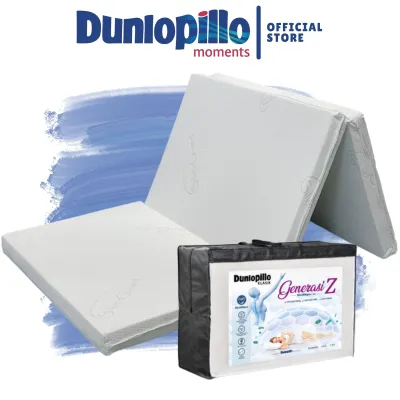
![[1-2 day delivery] Foldable Foam Mattress 3-Fold Mattress](https://img.lazcdn.com/g/ff/kf/Se38f308a460b4ba3aef73a3da6703c621.jpg_400x400q80.jpg_.webp)
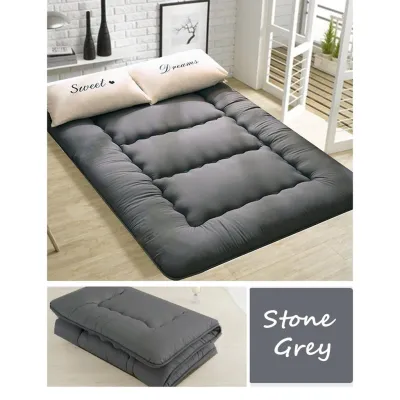
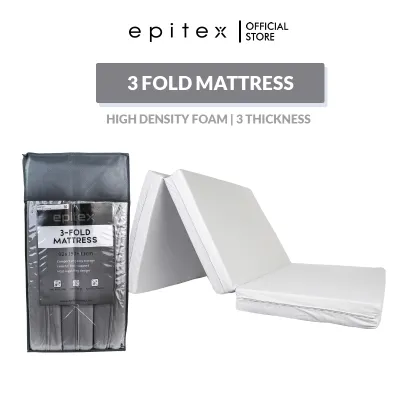

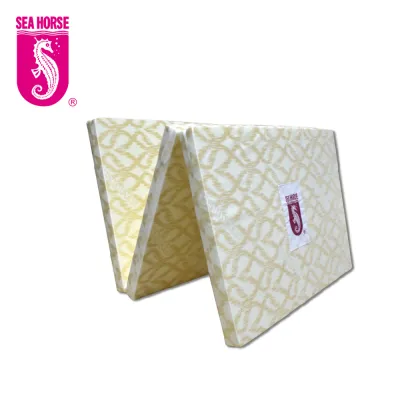
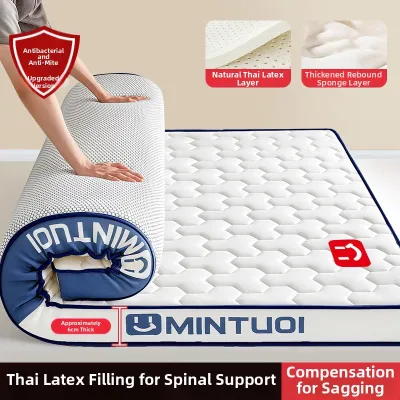
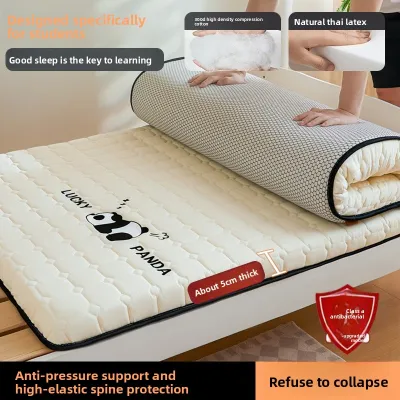
Prices are valid at publication and may change. Please refer to the product page for the latest price.
However, because a foldable mattress is significantly thinner than a standard mattress, a typical “medium” feel will compress much more rapidly under your body weight. This means you cannot rely solely on standard mattress firmness scales. You must adjust your choice by considering how deeply you will sink into the foam, your body weight, and the type of surface you place the mattress on.
How Foldable Mattress Firmness Differs from Standard Beds
Standard mattresses measure anywhere from 25 to 35 centimeters in height, allowing manufacturers to layer plush memory foam, transition foam, and high-support pocketed coils. In contrast, a typical foldable mattress is usually between 5 and 15 centimeters thick. Because of this restricted depth, there is very little room for a separate transition layer between the soft surface foam and the hard support core or the floor beneath.

This structural difference directly impacts how firmness is perceived. On a thin foldable model, a mattress labeled “medium” can easily feel like a “soft” bed because you quickly compress through the comfort layer and meet the resistance of the floor. This compression makes the mattress feel harder than expected, or conversely, provides zero support if the foam collapses entirely.
The materials used also dictate this behavior. Polyurethane foam (poly-foam) is the most common material in foldable mattresses, ranging from low-density utility foam to high-density furniture-grade foam. Memory foam is sometimes added as a thin top layer for contouring, but a pure memory foam foldable mattress is rare because memory foam lacks the structural integrity to keep you off the floor on its own. Latex or latex-like synthetic foam offers a highly resilient, bouncy alternative that distributes weight evenly and resists sagging.
When shopping, look past subjective marketing terms like “plush,” “cloud-like,” or “orthopedic.” Instead, evaluate the manufacturer’s technical specifications. Pay close attention to the overall thickness and the foam density, which is measured in kilograms per cubic meter (kg/m³). High-density foam (typically 30 kg/m³ or higher) offers a much more stable, supportive medium or firm feel that holds its shape over time, whereas low-density foams will flatten quickly under load.
Diagnose Your Sleep Profile: Position and Body Type
Your sleeping position dictates where your body exerts the most pressure on the mattress. To prevent spinal misalignment and chronic joint pain, the mattress must yield at your body’s widest points while remaining firm enough to support your lighter zones.
Side Sleepers
When you sleep on your side, your shoulders and hips bear the vast majority of your body weight. To keep your spine in a straight, horizontal line, these two areas must sink comfortably into the mattress. A medium-soft to medium foldable mattress is generally ideal for this profile, as it provides the necessary contouring to relieve pressure on the shoulder joints and hip bones.
However, using a thin foldable mattress presents a unique challenge for side sleepers. If the mattress is too soft or too thin (under 10 centimeters), your hips and shoulders will push straight through the foam and hit the hard floor underneath—a painful phenomenon known as bottoming out. To prevent this, side sleepers should select a foldable mattress with a minimum thickness of 10 to 15 centimeters that utilizes high-density, responsive foam. This configuration offers pressure relief without sacrificing support.
Back Sleepers
Back sleepers require a balanced sleeping surface that preserves the natural “S” curve of the spine. If the mattress is too soft, your pelvis will sink too deeply, flattening your lumbar curve and straining your lower back muscles. If the mattress is too firm, it will not contour to your shape, leaving an empty gap between your lower back and the mattress surface, which leads to muscle tension and morning stiffness.
For optimal lumbar support, back sleepers should target a medium to medium-firm foldable mattress. A thickness of 10 centimeters is usually sufficient for average-weight back sleepers, provided the core consists of high-density support foam. This ensures your hips are cradled slightly while your spine remains fully supported in a neutral position.
Stomach Sleepers
Stomach sleeping is the most demanding position for spinal alignment. When you lie on your stomach, your entire midsection exerts downward pressure on the bed. If the mattress has too much give, your hips will sink deeply into the foam, bowing your lower back inward and putting severe pressure on your lumbar vertebrae.
To avoid this spinal hyperextension, stomach sleepers need a firm to extra-firm foldable mattress. The surface must be rigid enough to keep your pelvis elevated and aligned with your shoulders. Furthermore, stomach sleepers should avoid thin, soft foldable mattresses entirely, as they offer virtually no resistance against pelvic sinkage. Look for a dense, firm foam construction of at least 10 to 12 centimeters to keep your body on a flat, healthy plane.
Combination Sleepers
If you regularly rotate between your side, back, and stomach throughout the night, you are a combination sleeper. Your primary need is a versatile, highly responsive mattress that adapts quickly to your movements. A medium to medium-firm foldable mattress is the most balanced option, offering enough cushion for side sleeping while maintaining enough resistance for back and stomach positions.
When choosing a foldable mattress for combination sleeping, prioritize materials with high resilience. Standard memory foam tends to conform slowly and trap you in a “sinkhole,” making it difficult to roll over. Instead, look for high-resilience polyurethane foam or latex-hybrid foldable models. These materials bounce back instantly, allowing you to change positions effortlessly without disrupting your sleep cycle.
Adjusting for Body Weight and the "Bottoming Out" Risk
While your sleeping position provides a helpful baseline, your body weight is the ultimate deciding factor in how a foldable mattress actually performs. Because these mattresses are thinner than standard beds, weight distribution determines whether you will experience the dreaded “bottoming out” effect. Bottoming out occurs when your body weight completely compresses the foam layers, leaving you sleeping directly against the hard floor or bed frame.
To avoid this issue, adjust your firmness selection based on your weight category:
- Lighter Sleepers (Under 60 kg): If you fall into this category, you exert less downward force on the mattress. You can safely choose softer, more contouring foldable mattresses without the risk of bottoming out. Thinner profiles of 5 to 8 centimeters are often perfectly adequate for lighter individuals.
- Average-Weight Sleepers (60 to 80 kg): You should follow the standard position-based guidelines closely. A mattress thickness of 10 centimeters is the recommended baseline to ensure proper support and pressure relief across all sleeping positions.
- Heavier Sleepers (Over 80 kg): Heavier individuals exert substantial pressure on foam. If you sleep on your side or back, a standard medium mattress will likely compress completely. To maintain spinal alignment, you should opt for a firm or extra-firm rating, and prioritize a mattress thickness of at least 12 to 15 centimeters.
Before making a purchase, always verify the manufacturer’s stated weight capacity or maximum load limits. Selecting a mattress designed to support your weight profile prevents premature sagging and ensures the foam continues to provide adequate spinal support.
How Your Sleeping Surface Changes the Firmness Feel
The surface on which you place your foldable mattress plays a massive role in how firm it feels under your body. Because foldable mattresses are thin, the underlying base acts as an extension of the mattress’s support core.
If you place your foldable mattress directly on a hard floor, such as tile, concrete, or hardwood, the mattress will feel significantly firmer than it would on a flexible frame. The floor provides zero upward flex, forcing the foam to absorb 100% of your body weight. This can make a medium mattress feel like a firm one. Conversely, if you place the mattress on a slatted bed frame or a sprung base, the slats will give slightly under pressure, softening the overall feel and providing a more forgiving surface for your joints.
Your choice of sleeping surface also has critical health and maintenance implications, particularly in humid climates like Singapore. When a mattress is placed directly on the floor, body heat and sweat can trap moisture underneath the foam. Without proper airflow, this dark, warm space becomes a breeding ground for mold, mildew, and dust mites. Many homes in Singapore feature tiled or vinyl flooring, which can feel quite cold or trap condensation when a warm body sleeps on a mattress placed directly on top. This is known as the dew point effect, where moisture condenses at the base of the mattress.
To protect your health and maintain your mattress, always consult the manufacturer’s care instructions regarding floor use. If you sleep with the mattress on the floor, make it a habit to fold it up and lean it against a wall during the day. This simple maintenance step allows air to circulate freely around the foam, preventing moisture buildup and keeping your sleeping environment clean and hygienic. Alternatively, consider using a low-profile slatted base or a breathable tatami mat to act as a protective barrier.
How to Test and Verify Your Foldable Mattress Choice
Evaluating a foldable mattress cannot be done in just a few minutes. To truly verify if you have chosen the right firmness, you must test the mattress in your home over several consecutive nights. Your muscles and spine require time to adjust to a new sleeping surface, especially if you are transitioning from a traditional thick bed.
When testing the mattress, pay close attention to how your body feels when you wake up. Morning stiffness, lower back tension, or tingling in your arms and shoulders are clear indicators that the firmness level is incorrect. To check your spinal alignment, have a partner look at your posture while you lie in your typical sleeping position. Your spine should form a straight, neutral line from your neck down to your tailbone.
Keep in mind that compressed, roll-packed foldable mattresses do not exhibit their true firmness immediately upon unboxing. The compressed foam requires 24 to 72 hours to fully expand, draw in air, and release any harmless manufacturing odors (off-gassing). Avoid judging the mattress’s support level on the very first night; allow it to fully decompress first.
Finally, review the retailer’s return policies, trial periods, and warranty terms before purchasing. Because mattresses are personal hygiene products, many companies have strict return conditions. You will often need to keep the mattress in pristine, stain-free condition, or use a waterproof mattress protector during the trial period, to qualify for a return or exchange if the firmness does not suit your needs.
Frequently Asked Questions (FAQ)
Can I use a mattress topper to change the firmness of my foldable mattress?
Yes, you can use a mattress topper to adjust the feel of your foldable mattress, but only in one direction. If your current foldable mattress is too firm and causing joint pain, adding a soft memory foam or latex topper can provide the necessary pressure relief. However, a topper cannot make a soft or sagging mattress firmer. If your mattress is too thin or soft, causing you to bottom out, adding a topper will not solve the problem; your body weight will simply push both the topper and the mattress down to the floor.
Is a foldable mattress firm enough for daily use?
A high-quality, high-density foldable mattress can be firm and supportive enough for daily use, provided it has a thickness of at least 10 to 15 centimeters. These thicker, firmer models are engineered to withstand regular compression without sagging. However, thin or low-density models (under 8 centimeters) are not suitable for everyday use by adults, as the foam will degrade rapidly under daily stress. For daily sleeping arrangements, always verify that the manufacturer explicitly rates the mattress for everyday use rather than occasional guest or camping use.
Community discussion
Share your experience or ask a question. Comments are reviewed before publication.