
There is no single “best” Ergoworks chair for everyone; the ideal model depends entirely on your height, weight, daily working hours, desk dimensions, and available floor space. This guide provides a structured decision framework to help you evaluate official specifications, match them to your physical and spatial requirements, and confidently select the Ergoworks office chair that aligns with your home office setup.
By focusing on adjustable features, material performance, and spatial constraints, you can narrow down the options systematically. Rather than relying on generic recommendations, this approach empowers you to use your own measurements and workspace conditions to identify the most compatible model.
Assess Your Home Office Space and Desk Configuration
Before looking at specific chair designs, you must measure the physical boundaries of your workspace. In many Singapore apartments, home offices are integrated into multi-purpose rooms, bedrooms, or compact study nooks. A chair that is too bulky can restrict movement, damage nearby furniture, or fail to fit under your desk when tucked away.
Products mentioned in this guide
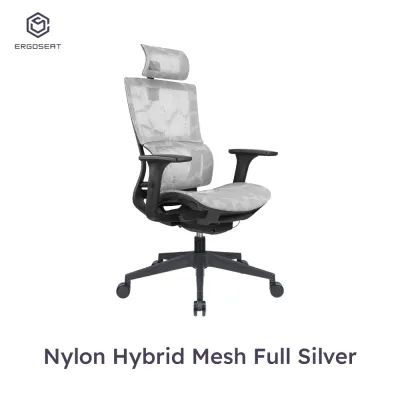
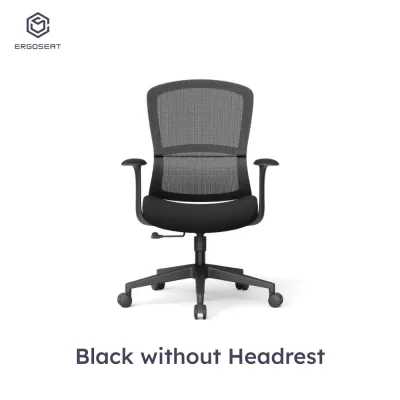
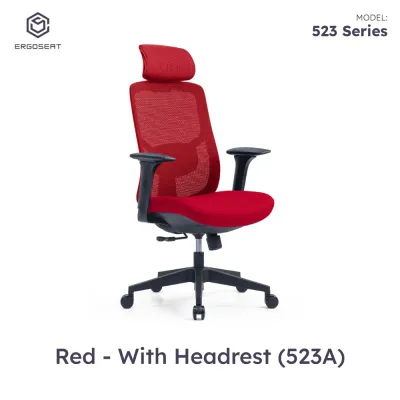
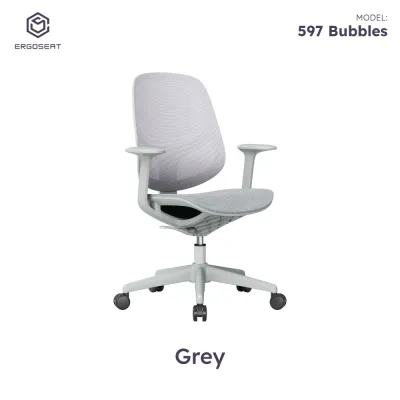
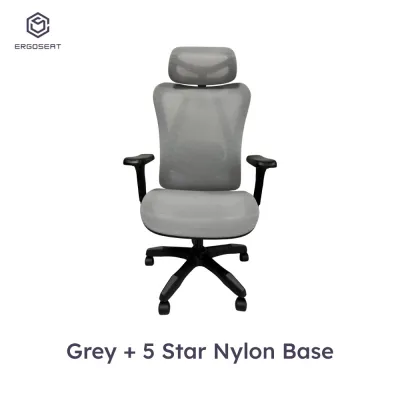
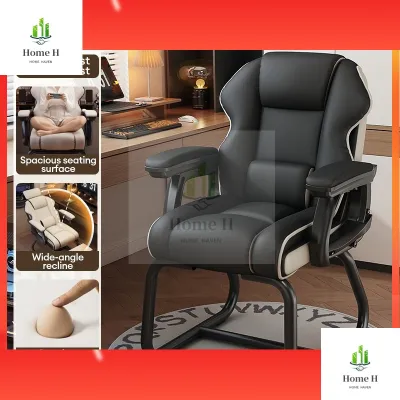
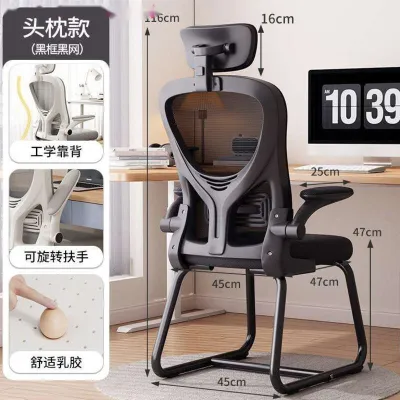
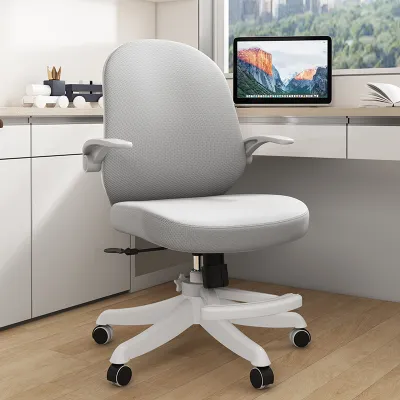
Prices are valid at publication and may change. Please refer to the product page for the latest price.
First, measure your desk’s under-carriage clearance. Note the height from the floor to the lowest point beneath the desktop, including any drawers or support beams. Your chosen chair’s armrests must be able to slide under this edge comfortably. If the armrests are too high or lack sufficient downward adjustability, you will be forced to sit too far from your desk, leading to forward leaning and back strain.
Next, evaluate the floor space required for the chair’s base and swivel radius. Most ergonomic chairs feature a five-star caster base with a diameter ranging from 65 cm to 75 cm. Ensure you have at least 80 cm of clear depth behind your desk to roll backward and stand up without striking walls, wardrobes, or electrical outlets.
Consider your flooring material to determine the correct caster type. Hardwood, engineered timber, vinyl, and polished tile floors are highly susceptible to scratching and scuffing from standard hard nylon wheels. If your home office has these surfaces, look for chairs equipped with soft polyurethane (PU) casters, or plan to purchase a protective floor mat. Conversely, if your workspace is carpeted, harder casters are necessary to ensure smooth rolling and prevent carpet fiber wear.
Finally, verify the delivery pathway. Some premium ergonomic chairs are delivered fully assembled in large, protective boxes. Measure your home’s entryway, hallway widths, and lift doors to ensure the delivery team can transport the chair to your designated room without obstruction.
Match Chair Dimensions and Adjustability to Your Body Type
An ergonomic chair only functions correctly if its adjustability ranges align with your physical proportions. When evaluating different models, cross-reference your personal measurements with the manufacturer’s official specification sheets rather than relying on standard size labels.

Start with seat height and your inseam. To sit ergonomically, your feet must rest flat on the floor with your knees bent at a 90-degree angle, and your thighs parallel to the ground. Measure the distance from the back of your knee to the sole of your foot while wearing your typical working footwear. Compare this measurement to the chair’s minimum and maximum seat height range. If the minimum height is too high, you will need a footrest; if the maximum height is too low, you will experience poor thigh support.
Seat depth is equally critical for spinal alignment. When sitting fully back against the backrest, there should be a gap of approximately two to three fingers between the front edge of the seat pan and the back of your knees. If the seat is too deep, it will press against your calves, restricting circulation and forcing you to slide forward, which deprives your lower back of support. Look for models that feature a sliding seat pan adjustment to customize this depth.
Armrest adjustability directly impacts shoulder and neck comfort. Ideally, your armrests should adjust in height, width, and angle (often referred to as 3D or 4D armrests). This allows you to position them so your elbows rest at a 90-degree angle close to your torso, level with your keyboard, preventing you from shrugging your shoulders or reaching forward.
Ensure the lumbar support mechanism can be adjusted to target your specific spinal curve. The lumbar support should sit snugly in the natural curve of your lower back (the lumbar lordosis). Models with both height and depth-adjustable lumbar supports offer the highest degree of customization.
Lastly, check the manufacturer’s certified maximum weight capacity. This rating is a critical indicator of structural durability and gas lift safety. Ensure your body weight falls well within the certified limit to prevent premature wear of the hydraulic cylinder and mechanical joints.
Evaluate Material and Cushioning for Daily Usage Duration
The materials used in your chair’s seat and backrest affect both long-term comfort and thermal regulation. Because Singapore’s climate is consistently warm and humid, material selection plays a major role in how comfortable you will feel during extended working sessions.
Full-mesh chairs feature woven mesh across both the backrest and the seat pan. This design offers exceptional breathability, allowing air to circulate freely and keeping you cool in rooms without active air conditioning. However, mesh quality varies significantly. High-quality mesh should feel firm and resilient, distributing your weight evenly without sagging over time. Inspect the weave density and check care instructions to ensure the mesh is resistant to stretching and abrasion.
High-density foam cushions, typically upholstered in fabric or leather, provide a different support profile. Foam offers a more substantial, cushioned feel that some users prefer for long-term pressure relief. If you select a foam seat, ensure it uses high-density, molded foam rather than low-grade cut foam, as molded foam retains its shape and supportive properties for years. The downside of foam is heat retention; if you work in a warm room, a foam seat can become uncomfortably warm over several hours.
Pay close attention to the front edge of the seat pan. Look for a “waterfall” edge design, where the front of the seat slopes gently downward. This shape minimizes pressure on the underside of your thighs, protecting the popliteal artery and nerves, which helps prevent leg numbness and fatigue during long sitting sessions.
Consider the durability of secondary touchpoints, such as the armrest pads and headrest. Armrest pads should have a slight yield—such as semi-soft polyurethane—to cushion your elbows without causing pressure points. If the model includes a headrest, verify that it is adjustable in both height and angle so it supports your neck during recline without pushing your head forward during upright work.
Compare Ergoworks Models Using a Decision Matrix
To make an objective decision, compile the specifications of the Ergoworks models you are considering into a structured comparison matrix. This method prevents you from being swayed by aesthetic features and focuses your attention on functional compatibility.
Use the following framework to evaluate your options side-by-side. You can obtain these values directly from the official product listings or by measuring the display models in a showroom:
| Evaluation Criteria | Model A (e.g., Entry-Level) | Model B (e.g., Mid-Range) | Model C (e.g., Premium) |
|---|---|---|---|
| Estimated Price (S$) | Check current retail | Check current retail | Check current retail |
| Seat Height Range | e.g., 42 cm – 52 cm | e.g., 45 cm – 55 cm | e.g., 40 cm – 50 cm |
| Seat Depth Adjustment | Yes / No | Yes / No | Yes / No |
| Armrest Adjustability | Height only (1D) | Height & Depth (2D) | Height, Depth, Angle (3D/4D) |
| Lumbar Support Type | Fixed / Height-Adjustable | Dynamic / Auto-Adjusting | Independent Height & Depth |
| Backrest Recline Angle | e.g., Up to 110° | e.g., Up to 125° | e.g., Up to 135° with lock |
| Base Material | Nylon / Plastic | Reinforced Nylon | Polished Aluminum |
| Warranty Period | e.g., 1 to 3 Years | e.g., 3 to 5 Years | e.g., 5 to 10 Years |
When analyzing your matrix, separate features into “must-have” ergonomic necessities and “nice-to-have” comfort additions based on your budget. For example, if you experience lower back pain, a highly adjustable lumbar support and seat depth slider are non-negotiable “must-haves.” Conversely, an integrated footrest or polished aluminum base may be “nice-to-have” upgrades that do not directly impact your spinal health.
Apply conditional logic to finalize your choice. If your home office space is highly restricted, prioritize a model with a compact base diameter and armrests that can be lowered completely or folded back. If you plan to use the chair for both intensive computer work and relaxed reading or viewing, prioritize a model with a deep recline angle and a tilt-tension control that allows you to adjust the resistance of the backrest to your body weight.
Verify Warranty, Assembly, and Return Policies
An ergonomic office chair is a long-term investment in your health. Before finalizing your purchase, you must understand the post-purchase support, assembly requirements, and return conditions offered by the retailer.
Carefully review the warranty terms. Office chair warranties are often split into different tiers for various components. For example, the structural frame and aluminum base might carry a long warranty, while the gas lift cylinder, mesh fabric, and caster wheels may have shorter coverage periods. Ensure you know exactly what is covered, who handles the service claims, and whether on-site repair is included or if you must transport the chair to a service center.
Confirm the assembly process. Find out if the chair is delivered fully assembled or flat-packed. If it requires assembly, check if the package includes all necessary tools (such as hex keys) and clear instructions. Assembling an office chair typically takes 20 to 45 minutes. Be aware that some components, such as attaching the heavy backrest to the seat mechanism, are much easier and safer to complete with two people.
Finally, read the return policy thoroughly. Because comfort is highly subjective, you may find that a chair feels different after several hours of continuous use at home compared to a brief trial in a showroom. Check if the retailer allows returns or exchanges, the duration of the return window, whether you must retain the original packaging, and if restocking fees or transport charges apply to returned items.
Frequently Asked Questions (FAQ)
Are Ergoworks chairs suitable for petite or tall users?
Yes, but suitability depends entirely on checking the specific adjustment ranges of each model rather than assuming a one-size-fits-all fit. Petite users must pay close attention to the minimum seat height and seat depth. If the seat height cannot lower to 40 cm or less, your feet may dangle, which restricts circulation; in this case, using an external footrest is highly recommended. Tall users should verify that the backrest height is sufficient to support the shoulders and that the seat depth can extend outward to support longer thighs. Always check if the retailer offers alternative gas lift cylinders (such as short or extended travel ranges) to customize the chair’s height limits for outlier body types.
How do I maintain the mesh and moving parts of my office chair?
To maximize the lifespan of your chair and keep it operating smoothly, perform basic maintenance every few months. For mesh backrests and seats, vacuum the fabric gently using a soft brush attachment to remove dust, skin flakes, and pet dander. If spills occur, spot-clean the mesh immediately using a microfiber cloth dampened with warm water and a small amount of mild, pH-neutral soap; avoid harsh chemical solvents, bleach, or abrasive scrubbing brushes, which can fray the synthetic fibers. Periodically inspect the caster wheels and base, clearing away any tangled hair or carpet fibers that restrict rolling. Finally, check the tightness of the main structural bolts under the seat pan and armrests, gently retightening them with a hex key if they have loosened from regular movement. Never apply household lubricants like WD-40 to the gas lift cylinder, as this can damage the internal seals; if the cylinder squeaks or fails to hold tension, contact the manufacturer for authorized service.

Community discussion
Share your experience or ask a question. Comments are reviewed before publication.