
Finding the right ergonomic chair for your home office setup in Singapore requires balancing your physical proportions with your workspace constraints. Choosing between different ErgoTune models comes down to matching your specific height, weight, and daily sitting habits with the adjustability tiers of each chair. By evaluating how you sit, the dimensions of your desk, and the climate of your room, you can select a model that supports your posture throughout long working hours.
Assess Your Body Measurements and Posture Needs
To find a chair that provides genuine ergonomic support, you must start with your own physical measurements. Height and weight are the primary factors that dictate which gas lift range and base structure you require. Before making a purchase, measure your height and weigh yourself, then cross-reference these figures with the manufacturer’s official specifications. A gas lift that is too high or too low will prevent your feet from resting flat on the floor, which can disrupt blood circulation in your legs and place unnecessary pressure on your lower back.
Your primary working postures also dictate the level of adjustability you need in a chair. If your daily routine involves upright typing, you will require a backrest that can be locked in a vertical position to keep your spine aligned. Conversely, if your work involves reading, brainstorming, or taking calls where you prefer to recline, you should look for a model with a flexible recline tension adjustment. This feature allows you to lean back smoothly without feeling like you are falling backward, providing continuous support to your lumbar spine regardless of your angle.
Products mentioned in this guide
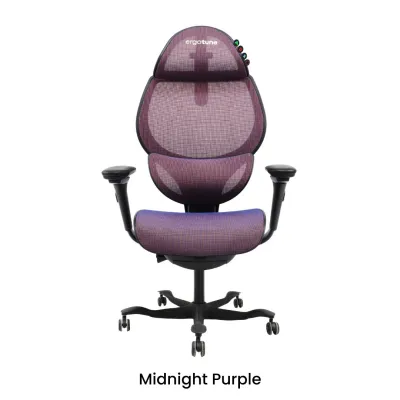
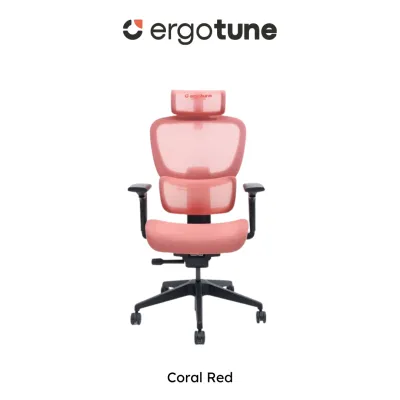
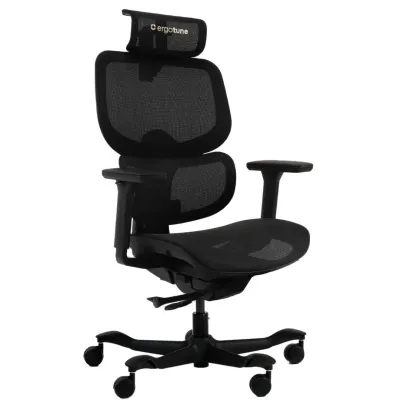
Prices are valid at publication and may change. Please refer to the product page for the latest price.
Armrest adjustability is another critical factor that directly impacts shoulder and neck comfort. When your armrests are not aligned with your desk height and shoulder width, your shoulders will either shrug or sag, leading to chronic tension in your upper back. Measure the distance between your elbows when sitting naturally and compare this to the adjustability range of the armrests. Multi-directional armrests that adjust in height, angle, and width allow you to bring the support close to your body, keeping your elbows at a comfortable ninety-degree angle while typing.
Finally, evaluate your seat depth requirements to ensure proper thigh support. When you sit all the way back in the chair, there should be a small gap—typically about two to three fingers wide—between the front edge of the seat and the back of your knees. If the seat is too deep, it will press against the back of your knees, restricting blood flow and forcing you to slouch forward to find relief. If the seat is too shallow, your thighs will not be adequately supported, placing extra stress on your hips and pelvis. Choosing a model with an adjustable seat slider allows you to customize this distance precisely to your leg length.
Evaluate Your Home Office Space Constraints
An ergonomic chair must not only fit your body but also fit seamlessly into your physical workspace. In Singapore, where home offices are often set up in compact spare bedrooms or study nooks, measuring your desk clearance is essential. Measure the width between your desk legs and the height from the floor to the underside of the desktop. You need to ensure that the chair’s base, armrests, and backrest can slide fully underneath the desk when you are not using it, saving valuable floor space in tight rooms.

Beyond static storage, you must calculate the active floor clearance required for daily movement. A proper ergonomic setup requires space to recline fully and roll back from the desk comfortably without colliding with walls, wardrobes, or adjacent furniture. Measure the clear floor area behind your desk, keeping in mind that a fully reclined chair extends significantly further back than one in an upright position. Ensuring you have at least a one-meter radius of clear space behind your desk will allow for smooth transitions and prevent damage to both your chair and your home’s walls.
The type of flooring in your home office also influences your choice of chair accessories. Standard nylon casters are designed to roll easily, but they can scratch delicate hardwood floors or struggle to glide smoothly on thick carpets. If your home office features vinyl, parquet, or marble flooring, check if you need to purchase specialized soft polyurethane casters or a protective floor mat. A floor mat not only protects your flooring from wear and tear but also provides the right amount of friction to prevent your chair from rolling away too easily when you shift your weight.
Do not forget to account for doorways, hallways, and lift access if you plan to move the chair between rooms or if you live in a high-rise apartment. Measure the narrowest passages in your home to ensure the fully assembled chair can pass through without scraping the door frames. If you live in an apartment building, verify that the packaged box or the assembled chair can fit comfortably inside the passenger lift, especially if you choose a model with a high backrest or a wide five-star base.
Compare ErgoTune Models by Adjustability and Support
When comparing ErgoTune models, the primary differentiators lie in the complexity of their adjustment points and the materials used in their construction. Premium models offer highly customizable mechanisms designed to adapt to a wide range of body shapes, while standard models focus on essential ergonomic features for a more straightforward seating experience. Understanding these differences helps you decide whether to invest in maximum adjustability or opt for a simpler, more streamlined design.
The choice of seating material is particularly important in Singapore’s warm and humid tropical climate. Mesh materials are highly favored for their breathability, as they allow air to circulate freely around your back and thighs, keeping you cool during long working hours without air conditioning. However, you should check the tension and weave quality of the mesh, as some users prefer the plush, immediate comfort of traditional foam or fabric seats. Consider your personal preference for firmness and your room’s ventilation when choosing between these materials.
Additionally, evaluate the post-purchase support, warranty coverage, and assembly requirements associated with each model tier. Premium models often come with extended warranties covering the frame, mesh, and mechanical components, reflecting their heavy-duty construction. Standard models may offer shorter warranty periods but present a more accessible entry point. Reviewing these terms, along with the complexity of the assembly process, will help you set realistic expectations for the lifespan and maintenance of your investment.
Premium Fully-Adjustable Options
Premium fully-adjustable ErgoTune models are engineered for users who require a highly customized seating experience to maintain comfort over long hours. These models typically feature multi-dimensional armrests that can be adjusted in height, depth, angle, and width, allowing you to align them perfectly with your desk and keyboard setup. They also incorporate dynamic lumbar support systems that automatically adjust to the curvature of your spine as you shift positions, providing continuous lower back reinforcement without manual intervention.
In addition to advanced armrests and lumbar support, premium models offer extensive recline ranges with multiple tilt-lock positions. This allows you to transition smoothly from an upright focus posture to a relaxed, reclined position for reading or resting. The inclusion of an adjustable headrest—which can be customized for height and angle—provides crucial support for your neck and upper shoulders, reducing the risk of strain during extended screen time. A seat depth slider is also standard on these models, making them highly adaptable to both shorter and taller users.
These top-tier models are ideal for professionals, gamers, or students who spend eight or more continuous hours at their desks each day. The ability to fine-tune every aspect of the chair means you can adapt it to various tasks, whether you are leaning forward to write, sitting upright to type, or reclining to watch a presentation. While these models represent a larger initial investment, the comprehensive adjustability and robust support are designed to prevent long-term physical fatigue and promote better posture habits.
Standard Ergonomic Options
Standard ergonomic ErgoTune models provide foundational support for users who need a reliable, comfortable chair without the complexity of highly specialized adjustments. These models focus on essential ergonomic features, such as adjustable seat height, basic tilt tension, and fixed or one-dimensional armrests. They are designed to accommodate standard body proportions comfortably, offering a balanced seating experience that covers the core requirements of healthy posture.
For users with moderate work durations—such as those who spend four to six hours at their desk or use their home office primarily in the evenings—a standard model offers excellent value. The simplified adjustment mechanisms mean you do not have to spend time fine-tuning multiple levers to find a comfortable position. The built-in lumbar support is typically fixed or semi-adjustable, providing reliable lower back reinforcement that suits the majority of users within standard height and weight ranges.
The primary trade-off with standard models is the limited customization for unique body types or highly specific posture preferences. If you are exceptionally tall, short, or require precise armrest positioning to avoid shoulder strain, you may find the standard adjustments restrictive. However, for those who fit within average physical dimensions and prefer a straightforward, easy-to-use chair, these models offer a more accessible price point and a simpler assembly process, making them a practical choice for a standard home office setup.
Final Verification Checklist Before Purchase
Before finalizing your purchase, it is crucial to perform a final verification to ensure the selected ErgoTune model will meet your expectations and fit your home perfectly. Start by cross-referencing your personal body measurements with the official size chart and weight limits provided on the manufacturer’s website. Pay close attention to the recommended height ranges for each model, as choosing a chair designed for a different height bracket can compromise the effectiveness of the lumbar support and headrest.
Next, measure your desk height and compare it to the maximum and minimum seat and armrest heights of the chair. Ensure that the armrests can be adjusted to sit flush with your desktop, allowing your arms to transition smoothly from the chair to your keyboard without bending your wrists. If you use a desk with a drawer underneath, verify that the chair’s armrests can clear the bottom of the drawer when you slide the chair in at the end of the day.
Carefully review the return policy and trial period conditions offered by the retailer. Many ergonomic chair brands offer a home trial period, but it is important to check for any restocking fees, return shipping costs, or requirements to keep the original packaging. Understanding these terms beforehand protects you from unexpected expenses if you find the chair is not a perfect fit for your body. Additionally, verify the specific warranty terms for different parts of the chair, such as the mesh fabric, gas lift, and frame.
Finally, check the current stock availability and estimated delivery timelines for your chosen model and color variant. Some configurations may be on backorder, which could delay your setup plans. If you require the chair urgently, confirm whether the delivery includes assembly services or if you will need to assemble the chair yourself upon arrival.
Frequently Asked Questions (FAQ)
Do ErgoTune chairs require professional assembly?
Most ergonomic chairs, including ErgoTune models, are designed for straightforward home assembly and come with the necessary tools and step-by-step instruction manuals. The assembly process typically involves attaching the casters to the base, securing the gas lift, mounting the seat mechanism, and fastening the backrest and armrests. While professional assembly services are often available for an additional fee, most users can complete the setup independently within thirty to forty-five minutes. However, because some components like the seat base and mechanism can be heavy, it is highly recommended to have a second person assist you with lifting and holding the parts in place to ensure a safe and easy assembly process.
How should I clean and maintain the mesh material?
To preserve the structural integrity and appearance of your mesh chair, regular maintenance is essential. Use a vacuum cleaner with a soft upholstery brush attachment once a week to gently remove dust, lint, and skin cells that can accumulate within the mesh weave. For accidental spills or stains, spot clean the area immediately using a clean, damp microfiber cloth and a small amount of mild dish soap or upholstery cleaner. Avoid using harsh chemical solvents, bleach, or abrasive scrubbing brushes, as these can degrade the synthetic fibers of the mesh, weaken its tension, and potentially void your manufacturer’s warranty. Allow the mesh to air dry completely in a well-ventilated room away from direct sunlight before using the chair again.

Community discussion
Share your experience or ask a question. Comments are reviewed before publication.