
Finding the right firmness level for an Epitex foldable mattress depends on matching your primary sleeping position and body weight to the mattress’s thickness and material composition. Because foldable mattresses are inherently thinner than standard pocket-spring or heavy latex beds, they interact much more closely with the surface beneath them. To get the right balance of pressure relief and spinal alignment, you must look beyond generic “soft” or “firm” labels and evaluate how the mattress’s internal layers support your specific physical build.
Assess Your Sleeping Position and Body Type
Your sleeping posture determines where your body exerts the most pressure on a mattress, while your weight dictates how deeply you compress the foam layers. For side sleepers, the shoulders and hips act as primary pivot points that sink deepest into the bed. If a foldable mattress is too firm, these areas experience high pressure, leading to restricted circulation and joint soreness. Side sleepers generally require a medium or medium-soft feel that contours to the body’s natural curves, allowing the shoulders and hips to sink just enough to keep the spine straight.
Back sleepers require a more balanced distribution of support. The primary goal is to maintain the natural curve of the spine, particularly around the lumbar region. A mattress that is too soft will cause the pelvis to sink too deeply, flattening the lower back and straining the surrounding muscles. Conversely, an overly firm surface leaves a gap under the lower back, forcing the muscles to remain tense throughout the night. A medium-firm profile is typically ideal for back sleepers, offering enough surface cushion for comfort while keeping the spine neutrally aligned.
Products mentioned in this guide
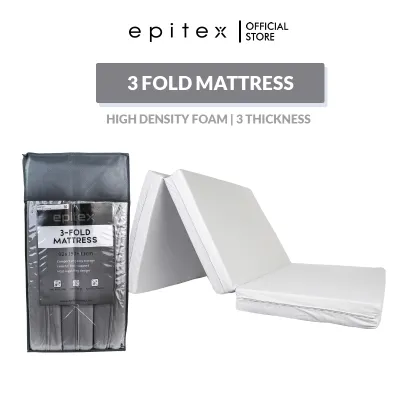
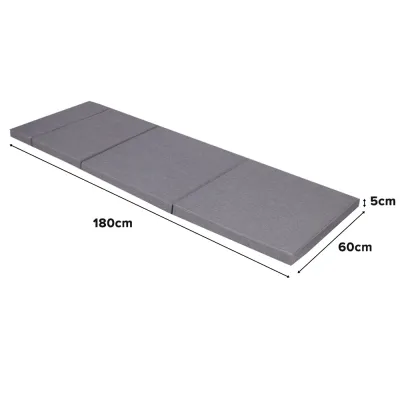
![[1-2 Day Delivery] Foldable mattress with Pillow](https://img.lazcdn.com/g/ff/kf/S0e22f827d6fe4c62b1dc50d9891b6565t.jpg_400x400q80.jpg_.webp)

Prices are valid at publication and may change. Please refer to the product page for the latest price.
Stomach sleepers face the greatest risk of spinal misalignment on a soft mattress. When lying on your stomach, the bulk of your body weight concentrates around your midsection. If the mattress lacks sufficient resistance, your hips will dip below your shoulders and knees, creating an unnatural arch in your lower back. To prevent this hyperextension, stomach sleepers should opt for a firm mattress that keeps the torso elevated and flat.
Your body weight acts as the final modifier in this equation. Lighter individuals (typically under 60 kg) exert less force and may find that even a medium mattress feels quite firm because they do not compress the foam layers. Conversely, heavier individuals (over 80 kg) compress foam much more deeply. If you fall into a heavier weight category, a thin or soft foldable mattress may cause you to “bottom out,” meaning you sink completely through the foam and feel the hard surface underneath. Heavier sleepers should prioritize firmer, high-density options to ensure adequate support.
Understand Foldable Mattress Firmness Dynamics
Foldable mattresses offer excellent space-saving utility, especially in compact living environments where spare rooms double as home offices. However, their physical design alters how firmness is perceived compared to traditional, thick mattresses. Most foldable models range from 2 to 5 inches in thickness. Because there is less material to absorb your body weight, the mattress relies heavily on the support of the surface beneath it.

The base surface you choose has a direct impact on the overall feel of the bed. Placing a foldable mattress directly on a hard tiled or concrete floor will make it feel significantly firmer than placing it on a carpeted floor or a wooden slatted bed frame. The solid floor offers zero deflection, forcing the foam to absorb 100% of the downward pressure. If you plan to use your mattress on the floor for guests or daily use, you may want to choose a slightly softer model than you would for a slatted frame, or ensure the mattress has sufficient thickness to cushion the impact.
Material density is another critical factor in firmness dynamics. High-density polyurethane or memory foam provides better structural integrity and progressive resistance, meaning it gets firmer as more weight is applied. Low-density utility foams may feel soft and comfortable initially but tend to compress completely under load, offering very little actual support. When selecting a foldable mattress, checking the density and material type helps ensure the bed maintains its supportive properties and resists permanent sagging over years of folding and unfolding.
Match Your Profile to Epitex Mattress Specifications
When shopping for an Epitex foldable mattress, translating your personal sleep profile into a concrete product choice requires a careful review of the manufacturer’s specifications. Because there is no universal industry standard for mattress firmness, a “medium” rating from one brand might feel like a “firm” from another. Start by reading the product descriptions and user manuals provided on the official brand website or authorized retail listings. Look for specific terms like “orthopaedic support,” which usually indicates a firmer, high-density foam structure designed for back alignment, or “contouring comfort,” which suggests a softer, pressure-relieving memory foam layer.
Next, verify the physical dimensions and material composition of the mattress. If you are a side sleeper or a heavier individual, look for models that offer at least 3 to 4 inches of thickness. Thinner 2-inch models are generally best suited for temporary use, children, or lighter sleepers who do not require deep contouring. Check if the mattress utilizes a multi-layer design, such as a high-density base foam topped with a softer comfort layer, which provides a balanced “medium-firm” feel suitable for multi-position sleepers.
Finally, always review the retailer’s trial, return, and exchange policies before making a purchase. Because firmness is highly subjective and influenced by your home’s flooring, testing the mattress in a physical showroom is highly recommended. If you are purchasing online through an ecommerce platform, confirm whether the seller offers a comfort exchange window. This allows you to swap the mattress for a different firmness level if your initial choice does not provide the expected level of comfort during the first few nights of use.
Signs Your Current Foldable Mattress Firmness Is Wrong
If you are already using a foldable mattress, your body will provide clear physical signals if the firmness level is mismatched to your needs. Waking up with localized stiffness or dull aches in your shoulders and hips is a classic sign that your mattress is too firm. This indicates that the foam is not contouring to your body’s pressure points, forcing your joints to bear the brunt of your weight throughout the night.
Conversely, waking up with a dull, aching pain in your lower back often points to a mattress that is too soft. When the mattress fails to support your midsection, your spine sags into a curved position, straining the lower back muscles and ligaments. If you find yourself constantly tossing and turning, unable to find a comfortable position, your body is actively trying to relieve the pressure and misalignment caused by an incorrect firmness level.
You can also perform a physical check of the mattress itself. Lie down in your typical sleeping position and pay attention to how the foam behaves. If you can feel the hard floor or bed slats pressing against your hips or shoulders, the mattress is either too thin, too soft, or the foam has degraded over time. If the mattress exhibits a permanent “hammock” dip in the center even when no one is lying on it, the core support has failed, and it is time to replace the mattress or upgrade to a higher-density model.
Frequently Asked Questions (FAQ)
Can I use a mattress topper to adjust the firmness of my Epitex foldable mattress?
Yes, adding a mattress topper is an effective way to adjust the feel of your foldable mattress, particularly if you need to make a firm bed softer. A plush memory foam or latex topper can provide the extra contouring and pressure relief that side sleepers need. However, keep in mind that adding a topper will increase the overall height of your sleeping setup and may make the mattress more difficult to fold and store. Ensure the topper can be easily rolled or folded separately, and verify that the combined setup remains safe and practical for daily folding.
Does the floor surface affect how firm my foldable mattress feels?
The underlying surface has a major impact on the perceived firmness of any thin foldable mattress. Hard surfaces like ceramic tiles, marble, or concrete floors offer no shock absorption, making the mattress feel significantly firmer than it would on a flexible wooden slatted base or a carpeted floor. If you place your mattress directly on the floor, it is also essential to lift and air it out regularly. The lack of airflow beneath the mattress can trap body heat and moisture, leading to mold growth or material degradation over time, especially in humid climates.

Community discussion
Share your experience or ask a question. Comments are reviewed before publication.