
Finding the ideal narrow storage rack for your HDB kitchen or bathroom requires balancing maximum storage capacity with the physical realities of tight, often uneven spaces. While standard gap-filler racks typically range from 10 to 20 centimeters in width, selecting the right size is not as simple as buying the first slim trolley you find online. You must determine the exact dimensions of your gap and subtract essential operational clearances to ensure the rack slides smoothly without damaging your appliances or walls.
How to Measure Your HDB Kitchen and Bathroom Gaps Accurately
To find a narrow storage rack that fits seamlessly into your home, you must start with precise physical measurements. Relying on visual estimation or a flexible sewing tape can lead to purchasing a unit that is either too wide to fit or too small to be useful. Always use a rigid metal tape measure, which remains straight over long distances and provides the accuracy needed for tight spaces.
In Singapore, furniture and appliance specifications are almost universally listed in centimeters or millimeters. To avoid confusion when browsing online marketplaces or local retail stores, record all your measurements in centimeters.
Products mentioned in this guide
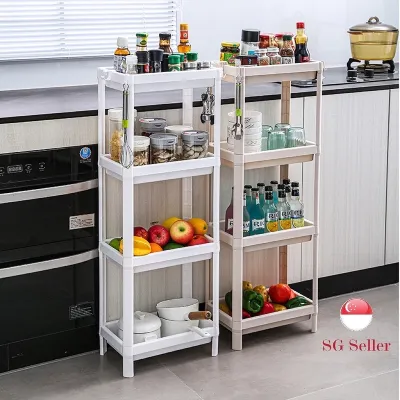
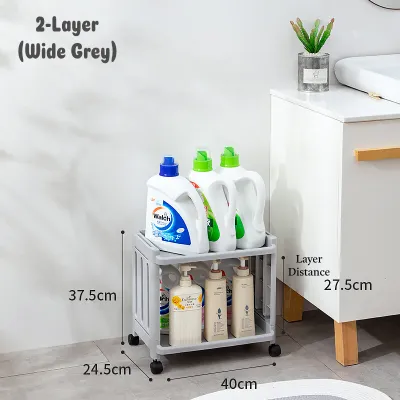
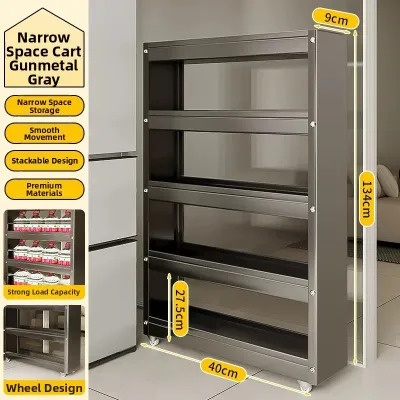
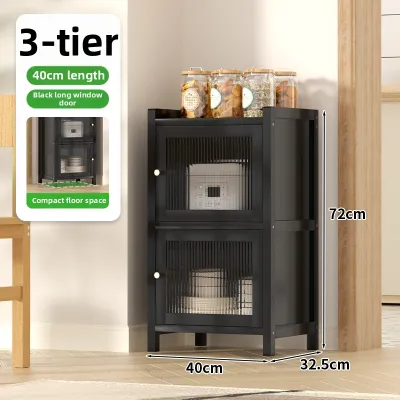
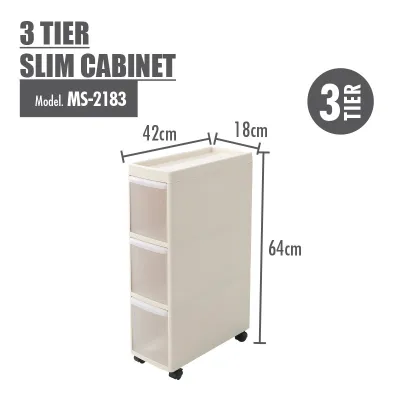
Prices are valid at publication and may change. Please refer to the product page for the latest price.
Begin by measuring the width of the gap at three distinct heights: near the floor, in the middle, and near the top. Concrete walls in HDB flats, as well as tiled surfaces and adjacent wooden cabinets, are rarely perfectly plumb. A gap that measures 16 centimeters at eye level might taper down to 14 centimeters near the floor due to wall bowing or thick tile grout lines. The smallest of these three measurements must serve as your baseline width.
Next, inspect the gap for any hidden physical obstructions. Look closely at the floor level for skirting boards, which typically protrude 1.5 to 2 centimeters from the wall. Check for exposed copper pipes, PVC drainage lines, electrical trunking, wall sockets, or light switches. Any of these elements will reduce the actual usable width of the space, so you must measure the distance from the outermost edge of the obstruction to the opposite surface.
Calculating the Maximum Rack Width with Necessary Clearances
Once you have the absolute minimum physical width of your gap, you cannot simply buy a rack of that exact size. You must calculate the maximum allowable rack width by subtracting necessary operational and safety clearances.

If the storage rack will sit next to a major household appliance, consult the appliance’s user manual for mandatory ventilation clearances. Refrigerators, for example, rely on side or rear ventilation to dissipate heat efficiently. Placing a tightly fitting rack directly against a fridge can restrict airflow, causing the compressor to work harder, increase energy consumption, and potentially shorten the appliance’s lifespan. Similarly, washing machines vibrate and shift slightly during high-speed spin cycles. A narrow rack placed too close to a washing machine will rattle constantly, creating noise and potentially damaging both the rack and the appliance casing.
Even when placing a rack between static surfaces, such as a tiled bathroom wall and a vanity cabinet, you must allow for operational clearance. A buffer of at least 1 to 2 centimeters on each side is highly recommended. This extra space ensures you can pull the rack out and push it back in smoothly without scraping your knuckles, scratching cabinet laminates, or catching on uneven wall tiles.
Finally, consider the swing paths of nearby doors and drawers. Ensure that the depth and placement of the narrow rack do not block the opening arc of your refrigerator door, oven door, kitchen cabinets, or bathroom bifold doors. A rack that fits perfectly inside a gap is of little use if it prevents you from fully opening your fridge to retrieve fresh groceries.
Understanding Common Width Categories for Narrow Storage Racks
Narrow storage racks generally fall into three distinct width categories, each suited for different HDB layout challenges. Understanding these categories helps you quickly filter your options when shopping.
Ultra-narrow racks measure between 10 and 12 centimeters in width. These exceptionally slim units are designed to exploit the tightest gaps in your home, such as the space between a toilet bowl and a bathroom wall, or the tiny sliver of space beside a washing machine. While highly space-efficient, these racks are best suited for small, lightweight items like spice jars, cleaning sprays, toilet rolls, or slim cosmetic bottles.
Standard narrow racks range from 15 to 20 centimeters in width. This is the most common category found in local stores and online marketplaces. These racks offer a practical balance between space-saving design and storage capacity. They are wide enough to hold larger items such as laundry detergent bottles, cooking oil bottles, canned goods, and boxed pantry staples, making them ideal for the gap beside a kitchen counter or refrigerator.
For spaces that require occasional access or have variable dimensions, adjustable or foldable narrow racks are an excellent alternative. Foldable designs allow you to collapse the unit and store it away when not in use, which is particularly useful if the gap houses utility meters, gas valves, or water pipes that technicians need to access periodically. Some modular designs also allow you to adjust the shelf heights or add tiers as your storage needs change.
Key Features to Check for Tight HDB Spaces
Selecting the right width is only the first step; the rack must also function reliably in a compact, high-traffic environment. Evaluating key structural features ensures your purchase remains practical over years of daily use.
Smooth-rolling casters are essential for deep, narrow gaps where reaching items at the back is difficult. Look for durable, multidirectional wheels that allow the rack to glide straight forward and backward without wobbling. If your floor surface is slightly uneven, check if the casters feature locking mechanisms to keep the rack securely in place when not being moved.
You must also verify the depth and height constraints of the rack. A rack that is too deep may protrude into your kitchen walkway, creating a tripping hazard in narrow galley kitchens. Ensure the finished depth of the rack aligns with your kitchen countertops (typically 60 centimeters) or your refrigerator. Additionally, check that the height of the top shelf does not obstruct wall-mounted light switches, electrical sockets, or the opening of overhead cabinet doors.
In damp environments like HDB bathrooms, material selection is critical. High humidity and direct water contact can quickly degrade poor-quality materials. Instead of relying on generic product descriptions, check the manufacturer’s specifications for moisture-resistant finishes. Look for powder-coated steel, high-grade stainless steel, or durable, easy-to-clean PP (polypropylene) plastic. Ensure the shelves have drainage holes or slatted designs to prevent water from pooling, which can lead to mold growth or rust at the joints.
Common Sizing and Placement Mistakes to Avoid
Avoiding common pitfalls during the measurement and selection process will save you the hassle of returning an unusable item.
The most frequent mistake is measuring only the open space at eye level while ignoring the floor-level dimensions. Skirting boards, floor tiles that slope toward drainage outlets, and uneven plastering can significantly narrow the gap near the ground. If you purchase a rack based solely on top-level measurements, you may find that the wheels or base frame cannot clear the skirting boards at the bottom.
Another common error is ignoring the depth of the rack in relation to your daily movement. In tight HDB kitchens and bathrooms, every centimeter of walkway space is valuable. A rack that sticks out even slightly past your cabinets can catch on clothing, bump against your knees, or prevent adjacent drawers from opening fully. Always compare the finished depth of the rack against the depth of the surrounding fixtures.
Finally, avoid overloading tall, narrow storage racks. Because these units have a very narrow footprint relative to their height, they have a higher center of gravity and are naturally more prone to tipping. To ensure stability, check the manufacturer’s load capacity limits and distribute weight wisely. Always place your heaviest items, such as large detergent bottles or heavy cooking oils, on the bottom shelf, and reserve the upper tiers for lightweight items. If the rack feels unstable, consider anchoring it to an adjacent cabinet or wall, or opt for a shorter model to guarantee safety.

Community discussion
Share your experience or ask a question. Comments are reviewed before publication.