
Finding the perfect slim shoe cabinet is a balancing act between reclaiming precious entryway floor space and organizing your footwear collection. To determine the right width, you must measure your available wall space, calculate the number of shoes you need to store, and account for the physical dimensions of your largest footwear. A well-chosen cabinet keeps your home’s entrance tidy while ensuring that doors, walkways, and adjacent storage remain completely unobstructed.
Assessing Your Available Floor Space and Clearance
Before browsing online marketplaces or visiting furniture showrooms, you must establish the maximum physical footprint your entryway can accommodate. Start by measuring the exact width of the wall where you plan to place the cabinet. Be sure to account for skirting boards, door frames, light switches, and any adjacent furniture, as these elements can reduce the actual usable wall width by several centimeters.
Walkway clearance is another critical factor, especially in compact homes like apartments and condominiums where entryways double as main thoroughfares. You need to measure the depth of the cabinet when closed, but more importantly, when the tilt-out compartments are fully extended. Ensure there is still enough space for a person to walk past comfortably without bumping into the open unit or feeling restricted.
Products mentioned in this guide
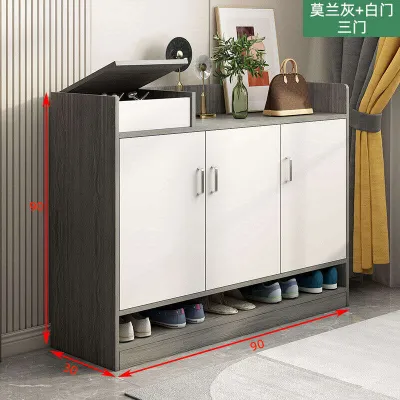
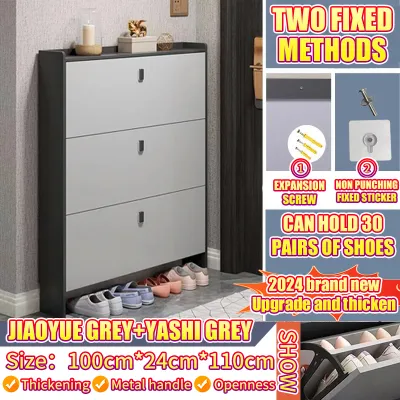
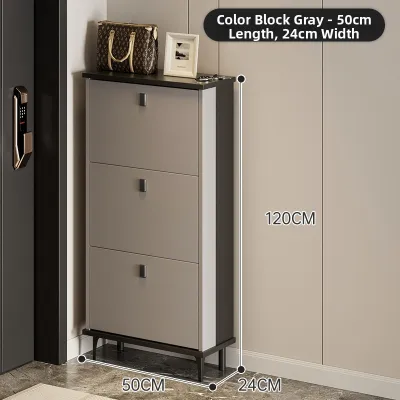
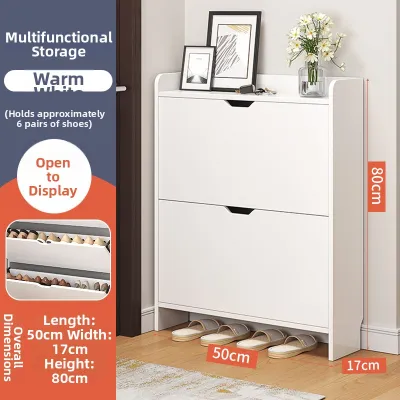
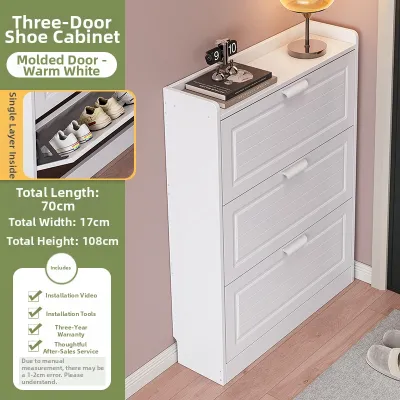
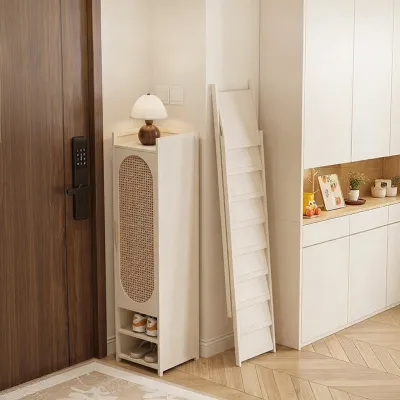
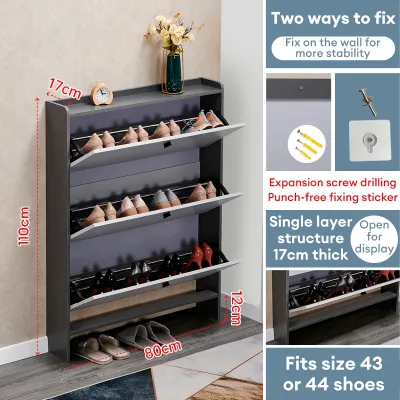
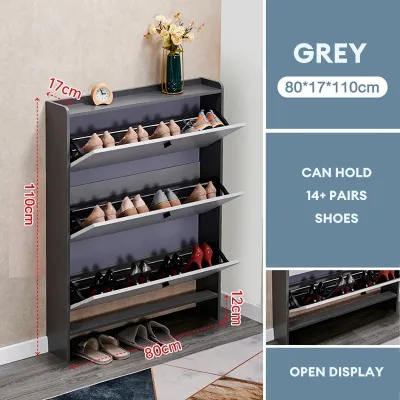
Prices are valid at publication and may change. Please refer to the product page for the latest price.
Additionally, verify the door swing paths of your main entrance door, security gate, or nearby room doors to avoid any physical interference. Blocking these paths can make daily entry and exit frustrating and can even prevent you from moving larger household items in the future. Finally, check for the location of electrical outlets and distribution board boxes along the wall, ensuring they remain accessible and unobstructed for safety.
Estimating Your Shoe Collection Capacity Needs
To choose the right cabinet width, you need a realistic count of the shoes you plan to store in your entryway. Begin by auditing your current footwear collection and separating your daily-wear shoes from seasonal or occasional pairs. This helps you determine the exact capacity required for your primary entryway storage while keeping less-frequently worn shoes in secondary closets.

The bulkiness of your footwear heavily influences how much horizontal space each pair occupies. Flat sandals, slippers, and canvas plimsolls take up minimal width, allowing you to fit more pairs side-by-side. On the other hand, bulky running shoes, high heels, and boots require significantly more vertical and horizontal clearance, which quickly reduces the overall capacity of a standard slim cabinet.
It is always wise to plan for a modest capacity buffer of about ten to twenty percent to accommodate future purchases or guest footwear. If you currently have twelve pairs of everyday shoes, aiming for a cabinet that holds fifteen pairs prevents overcrowding. Overstuffing a slim cabinet forces shoes to overlap, which can damage delicate materials, cause scuffing, and make it difficult to retrieve your shoes quickly.
Matching Cabinet Width to Pair Capacity
Slim shoe cabinets generally fall into standard width tiers, typically ranging from 50cm to over 100cm. A compact cabinet measuring 50cm to 60cm wide usually accommodates two pairs of adult shoes per row, making it ideal for tight corners or single-person households. Mid-sized options around 80cm wide can hold three pairs per row, while wider units of 100cm or more can fit four to five pairs per row, making them suitable for families.
Tilt-out designs are highly popular for narrow spaces because they utilize angled compartments to keep the cabinet’s depth as shallow as 15cm to 24cm. However, because the shoes sit vertically, these compartments often hold fewer pairs per row compared to traditional flat-shelf cabinets of the same width. You must weigh the space-saving benefits of an ultra-shallow depth against the slightly reduced capacity per tier.
If your horizontal wall space is strictly limited, you can compensate by choosing a taller cabinet with more vertical tiers. A narrow 50cm cabinet that stands tall can offer the same storage capacity as a wide, low-profile unit, provided your wall can accommodate the height safely. When going vertical, ensure the height does not block visual pathways, light switches, or wall-mounted decor.
To maximize the usable volume of a slim cabinet, look for models that feature adjustable or removable internal shelves. This flexibility allows you to customize the compartment heights for mixed footwear types, such as creating taller slots for boots and shallower rows for flats. Adjusting the internal layout ensures that no vertical space is wasted and that your entire collection fits neatly.
Essential Safety and Installation Checks
Because slim shoe cabinets have a shallow depth and a high center of gravity, they are inherently prone to tipping forward when loaded with heavy footwear. Always review the manufacturer’s specified weight limits for both individual shelves and the overall unit before purchasing. Exceeding these limits can strain the joints and compromise the structural integrity of the cabinet.
Securing the cabinet to the wall using anti-tip hardware is a critical safety requirement that should never be skipped. Before installation, identify your wall material—such as solid concrete, brick, or drywall—and use the appropriate wall plugs and heavy-duty screws. If you are renting and cannot drill into the walls, you must look for freestanding units with wider base supports, though anchoring remains the safest option.
In humid climates, enclosed shoe cabinets can easily trap moisture, leading to mould growth, unpleasant odors, and damage to leather or suede shoes. Prioritize cabinets with built-in ventilation features, such as slatted doors, open backs, or ventilation cutouts. Additionally, ensure your shoes are completely dry before placing them inside, and consider using moisture-absorbing sachets to maintain a fresh interior environment.
Frequently Asked Questions (FAQ)
Can a slim shoe cabinet fit large men's sneakers?
Large men’s sneakers, typically those above US size 10, can be challenging to fit into ultra-slim tilt-out cabinets due to internal depth limitations. If the cabinet depth is under 20cm, these larger shoes may not fit straight and might need to be placed sideways or at an angle, which reduces the overall capacity of the tier. Before purchasing, measure the exact outer length of your largest shoes and compare it with the manufacturer’s specified internal compartment depth to ensure a proper fit.
How do I prevent a tall, narrow shoe cabinet from tipping over?
The most effective way to prevent a tall, narrow cabinet from tipping is to anchor it securely to the wall using the anti-tip brackets and hardware provided by the manufacturer. Additionally, you should always load the cabinet strategically by placing your heaviest footwear, such as boots and heavy leather shoes, in the bottom compartments to lower the overall center of gravity. Avoid opening multiple tilt-out drawers at the same time, as this shifts the weight forward and increases the risk of tipping.

Community discussion
Share your experience or ask a question. Comments are reviewed before publication.