
Determining the right shoe rack cabinet capacity for your household requires a systematic approach that balances your physical footwear inventory with the actual spatial limits of your home. To find the perfect fit, you must audit your current collection, translate that count into linear shelf space based on shoe footprints, and account for the specific layout and climate of your living space. Relying solely on manufacturer pair estimates often leads to overcrowded shelves and closing difficulties, especially when storing bulky or high-profile footwear.
By taking precise measurements of both your shoes and your entryway, you can select a cabinet that organizes your collection efficiently without obstructing daily foot traffic. This guide provides a practical blueprint to calculate your required storage capacity and choose the ideal cabinet dimensions.
Assess Your Household's Shoe Storage Needs
Before browsing designs or finishes, you must conduct a thorough audit of your household’s actual shoe collection. Guessing your storage needs almost always results in a cabinet that is either too small, leading to overflow clutter, or unnecessarily large, wasting valuable floor space in your entryway.
Products mentioned in this guide
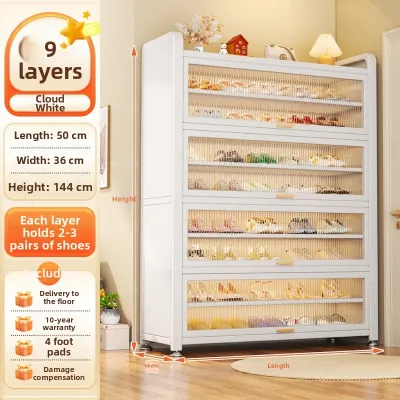
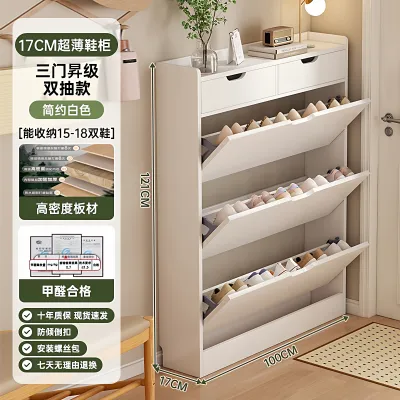
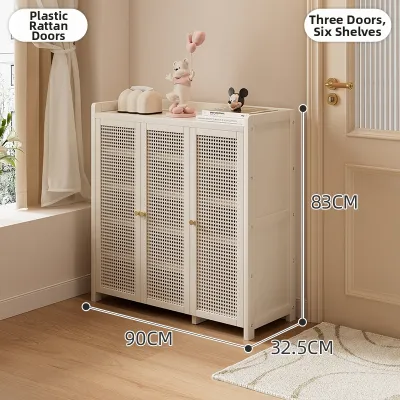
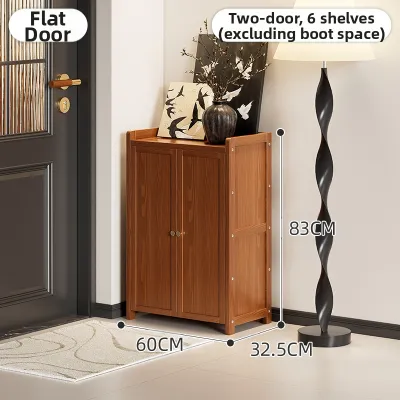
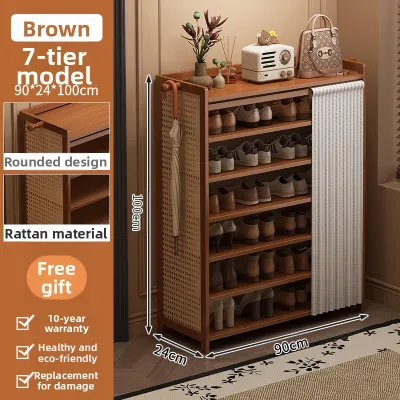
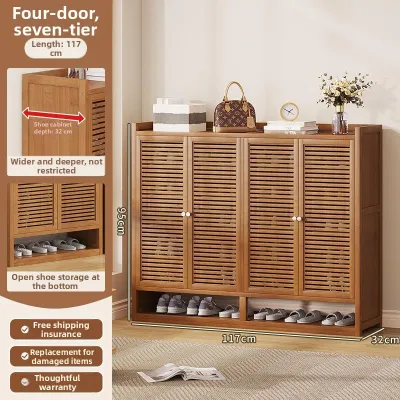
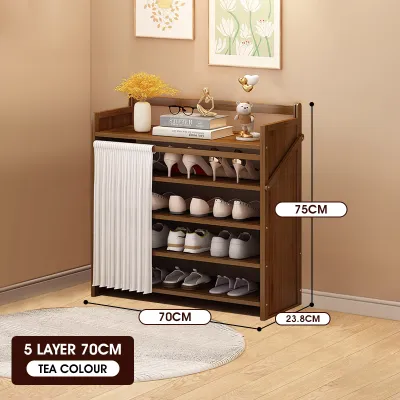
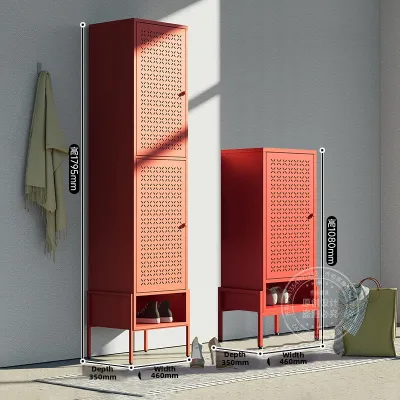
Prices are valid at publication and may change. Please refer to the product page for the latest price.
Calculate Baseline Pairs per Person
To establish a realistic baseline, gather every household member and count the shoes they wear on a regular basis. It is helpful to categorize these into active daily footwear and inactive or seasonal pairs. Active pairs are those worn multiple times a week, which need to be highly accessible near the entrance. Inactive pairs include formal shoes, specialized sports gear, or out-of-season footwear that can potentially be stored in bedroom closets or secondary storage areas.
Use this simple checklist framework to calculate your core daily capacity:
- Daily Work or School Shoes: Multiply the number of school-going children and working adults by 1 to 2 pairs each.
- Casual Sneakers and Flats: Allocate 2 to 3 pairs per person for everyday errands, weekend outings, and general wear.
- Slippers and Sandals: Budget 1 to 2 pairs of lightweight slip-ons per person for quick trips or home use.
Sum these numbers to find your baseline active capacity. For a family of four, a typical baseline often ranges from 16 to 24 pairs of frequently used shoes that require immediate, easy-access storage near the front door.
Account for Specialty and Guest Footwear
Once you have your baseline, you must account for specialty footwear and occasional-use items that consume disproportionate amounts of space. Standard shoe cabinets are designed around flat, low-profile shoes, meaning bulkier items will quickly disrupt your capacity calculations.
Identify how many of the following specialty items need a home in your main cabinet:
- Bulky Athletic Footwear: Hiking boots, basketball high-tops, and thick-soled running shoes take up significantly more physical volume than standard canvas sneakers.
- Formal and High-Heeled Shoes: Stilettos, platform heels, and structured dress shoes cannot be compressed and often require extra vertical clearance.
- Guest Footwear Buffer: Allocate dedicated space for 2 to 4 pairs of guest slippers or visitor shoes to keep your entryway tidy when hosting friends or family.
Add these specialty pairs and your guest buffer to your baseline count. This final sum represents your total target pair capacity, which will serve as the foundation for your cabinet selection.
Translate Shoe Count into Cabinet Capacity and Dimensions
With your total target pair count in hand, the next step is translating that number into physical cabinet specifications. This process requires moving beyond the idealized capacity claims advertised by furniture manufacturers, which often assume tiny or flat shoes packed tightly together.

Estimate Width and Tier Requirements
To determine the actual physical width and number of shelves you need, use the “Linear Centimetre” rule. This method relies on the average physical footprint of adult and child shoes placed side-by-side on a shelf.
- Average Men's Pair: Requires approximately 25 to 28 cm of shelf width.
- Average Women's Pair: Requires approximately 20 to 24 cm of shelf width.
- Average Child's Pair: Requires approximately 15 to 18 cm of shelf width.
To calculate your required shelf width, multiply your target number of pairs by these average widths. For example, if you want to store 4 pairs of men’s shoes and 4 pairs of women’s shoes on a single level, you will need a minimum internal shelf width of approximately 180 to 208 cm.
Since a single horizontal shelf of that size is impractical for most entryways, you must divide this total width across multiple tiers. If you select a cabinet with an internal shelf width of 80 cm, each tier can comfortably hold 3 pairs of adult shoes. To store a total collection of 24 pairs, you will require a cabinet with at least 8 tiers (24 divided by 3). Always verify the internal shelf width rather than the external cabinet width, as cabinet side walls and frame posts can reduce usable shelf space by 3 to 5 cm.
Factor in Shoe Height and Depth
Vertical clearance and shelf depth are just as critical as width. Standard flat shoes and sneakers require a vertical clearance of about 10 to 15 cm between shelves. However, high-tops, mid-calf boots, and high heels demand 18 to 25 cm of vertical space, while tall boots can require 40 cm or more.
Shelf depth determines whether your cabinet doors will close completely. A standard adult shoe (up to US men’s size 10 or EU size 43) measures roughly 28 to 30 cm in length. Therefore, a standard shoe cabinet must have an internal usable depth of at least 32 cm. If members of your household wear larger shoe sizes (such as US men’s size 11 and above) or if you plan to store bulky work boots, you must look for cabinets with an internal depth of 35 to 38 cm. Measure your longest shoe from heel to toe before finalizing any purchase to ensure the doors can shut without crushing the toes or heels of your footwear.
Measure Your Available Space and Check Clearances
Even the most spacious shoe cabinet is useless if it does not fit your entryway or blocks key pathways. You must carefully measure your intended installation spot and evaluate how the cabinet interacts with the surrounding architecture.
Check Entryway and Pathway Dimensions
Start by measuring the maximum width, height, and depth of the wall space where you plan to place the cabinet. In compact apartments or modern condominiums, entryway space is often limited, requiring a careful balance between storage capacity and floor footprint.
- Walking Clearance: Ensure that placing the cabinet leaves a comfortable walking path. In main corridors and foyers, maintain a clear pathway of at least 90 cm to allow residents to walk past comfortably. If you live in Singapore and plan to place a shoe cabinet in a communal HDB corridor (where permitted by your town council), you must strictly comply with Singapore Civil Defence Force (SCDF) fire safety guidelines, which mandate leaving a minimum clear escape passage of 1.2 metres.
- Floor Skirting Boards: Measure the height and depth of your floor skirting boards. Many standard cabinets have flat backs that prevent them from sitting flush against the wall if skirting boards are present. This creates an unstable gap at the back, which can cause the cabinet to tilt forward. Look for cabinets with pre-cut skirting recesses, or factor this 1.5 to 2 cm gap into your depth calculations.
- Delivery and Assembly Access: Before purchasing, verify that the finished cabinet dimensions (or the flat-pack packaging boxes) can fit through your main entryway door, hallway corners, and lift doors. This is especially important for tall, pre-assembled multi-tier cabinets.
Verify Door Swings and Ventilation Needs
Your measurements must also account for the movement of doors and the environmental conditions of your entryway. A cabinet door that collides with your main entrance door is a constant source of frustration and potential furniture damage.
- Door Swing Radiuses: Map out the swing radius of your main front door, nearby room doors, and the cabinet doors themselves. Ensure they do not overlap or block pathways when open. If space is incredibly tight, consider open-shelving shoe racks or cabinets with sliding doors rather than traditional swing doors.
- Ventilation and Airflow: Proper ventilation is crucial, particularly in hot, humid climates like Singapore. Trapping damp, sweaty shoes in an airtight wooden cabinet creates a breeding ground for mold, mildew, and unpleasant odors. To protect your footwear and maintain hygiene, prioritize cabinets designed with slatted doors, louvred panels, open back structures, or built-in ventilation grilles that facilitate continuous air circulation.
Evaluate Cabinet Features That Affect Usable Capacity
The internal design and hardware of a shoe cabinet play a major role in how much of its physical volume is actually usable. Two cabinets with identical external dimensions can have vastly different storage capacities depending on their configurations.
Adjustable vs. Fixed Shelving
Fixed shelving partitions a cabinet into rigid, equal-sized compartments. While structurally stable, fixed shelves often lead to wasted vertical space. For instance, placing low-profile sandals on a shelf with 20 cm of vertical clearance leaves a large pocket of empty air that cannot be utilized.
Adjustable shelving systems feature pre-drilled peg holes along the inner side walls, allowing you to customize the height of each tier. This flexibility offers several practical advantages:
- Space Maximization: You can compress the vertical clearance for flat shoes to 10 cm, freeing up extra vertical space to create a taller 25 cm compartment for boots or heels elsewhere in the cabinet.
- Seasonal Adaptability: You can easily reposition shelves as your footwear needs change, such as creating taller spaces for boots during rainy seasons or travel periods.
- Removable Tiers: If you need to store exceptionally tall items like knee-high boots or umbrellas, you can remove one or two shelves entirely to create a dedicated tall storage column.
Door Mechanisms and Depth Constraints
The type of door your cabinet uses directly impacts both the external space it occupies and the internal depth available for your shoes. Understanding these trade-offs is essential for selecting the right style for your foyer layout.
- Swing Doors: These doors open outward on standard hinges, offering complete, unobstructed access to the entire interior at once. However, they require significant clearance space in front of the cabinet. Because the hinges are mounted on the outer frame, swing doors do not consume any internal shelf depth.
- Sliding Doors: Sliding doors glide horizontally along tracks. They are ideal for narrow hallways because they require zero front clearance to open. However, the sliding track mechanism itself typically consumes 2 to 4 cm of internal cabinet depth. If a sliding door cabinet has an external depth of 35 cm, the actual usable shelf depth may only be 31 cm.
- Tilt-Out / Tipping Drawers: These ultra-slim cabinets feature compartments that drop open diagonally, storing shoes vertically. While they boast an incredibly slim external depth (often just 17 to 24 cm), they drastically restrict the type of shoes you can store. They are generally unsuitable for high heels, bulky ankle boots, or large men's shoes, and they cannot accommodate shoe boxes.
Common Sizing Mistakes to Avoid When Buying a Shoe Cabinet
To ensure your new furniture piece meets your long-term storage needs, avoid these common purchasing pitfalls:
- Relying Solely on External Dimensions: Always check the internal usable width, depth, and height specifications. External measurements include the thickness of the cabinet walls, decorative top molding, and back panels, which can reduce actual storage space by several centimetres.
- Assuming Manufacturer Capacity is Accurate: Manufacturer capacity ratings are almost always based on idealized scenarios using small, flat, low-profile shoes. If your household has a mix of running shoes, boots, and heels, expect the actual capacity to be 20% to 30% lower than the advertised number.
- Ignoring Future Collection Growth: Buying a cabinet that perfectly fits your current shoe count leaves no room for new purchases. Within a year, you may find yourself dealing with overflow clutter. Always plan for a reasonable capacity buffer.
- Overlooking Tip-Over Hazards: Tall, slim shoe cabinets have a high center of gravity and can easily tip forward when multiple heavy drawers or doors are opened simultaneously. For safety, especially in homes with active households, ensure the cabinet includes wall-anchoring hardware and can be securely mounted to your entryway wall.
- Neglecting the Floor Skirting Board Gap: If you do not account for skirting boards, your cabinet will sit away from the wall, leaving an unsightly gap where dust collects and reducing the available clearance space in your entryway.
Frequently Asked Questions (FAQ)
How many pairs of shoes fit on a standard shelf?
The number of pairs that fit on a standard shelf depends on the internal width of the shelf and the size of the shoes. On average, a standard shelf width of 80 cm can comfortably accommodate 3 pairs of adult men’s shoes (approx. 25 cm per pair) or 4 pairs of adult women’s shoes (approx. 20 cm per pair). To estimate the capacity for your specific collection, measure the internal width of the cabinet shelf in centimetres and divide it by the average width of your household’s footwear.
Should I leave extra space for future shoe purchases?
Yes, it is highly recommended to plan for a 10% to 20% capacity buffer when choosing a shoe cabinet. For a household that currently owns 20 pairs of shoes, selecting a cabinet with a realistic capacity of 22 to 24 pairs prevents immediate overcrowding, accommodates new purchases, and provides temporary storage space for guests’ footwear when hosting social gatherings.
Community discussion
Share your experience or ask a question. Comments are reviewed before publication.