
Finding the right storage drawer trolley for your HDB flat requires balancing storage capacity with the reality of compact floor plans. In typical Singaporean bedrooms and living rooms, a trolley with a width of 30 to 40 centimeters and a depth of 40 to 50 centimeters generally fits without disrupting the flow of the room. However, the perfect fit depends entirely on your specific layout, furniture placement, and daily movement patterns.
To make an informed decision, you must look beyond the basic dimensions listed on online marketplaces. A trolley that seems small on paper can easily block a walkway, prevent a wardrobe door from opening, or become a tripping hazard if placed in a high-traffic zone. By systematically measuring your space, accounting for operational clearance, and evaluating your room’s layout, you can select a mobile storage unit that enhances your home organization without cluttering your living area.
Measure Your Available Floor Space First
Before browsing online catalogs or visiting furniture showrooms, you need to establish a precise baseline of your available floor space. Grab a reliable measuring tape and head to the exact spot where you plan to park the trolley, whether that is the narrow gap beside your bed, the space adjacent to your living room sofa, or an underutilized corner near the entryway.
Products mentioned in this guide
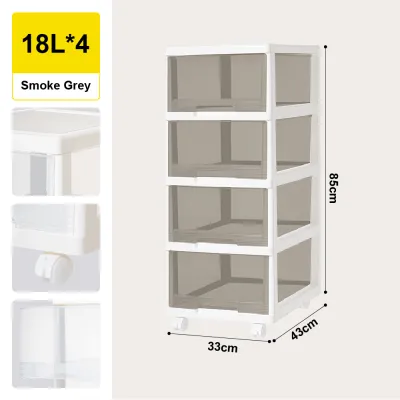
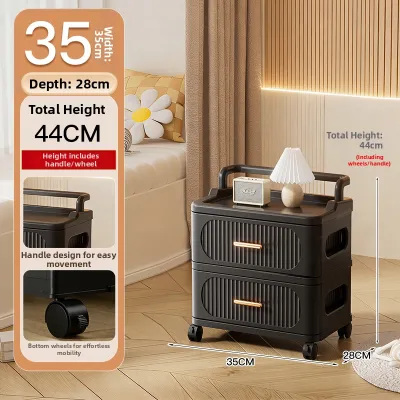
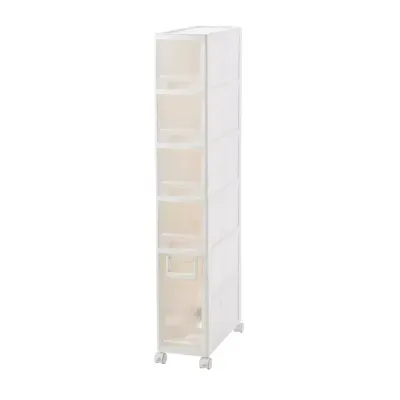
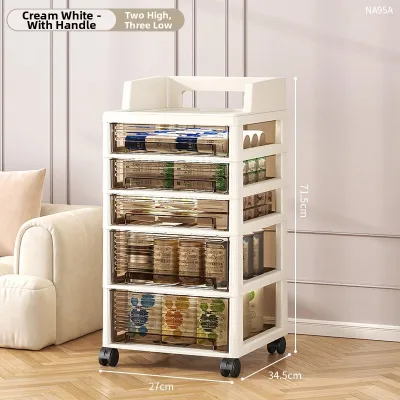
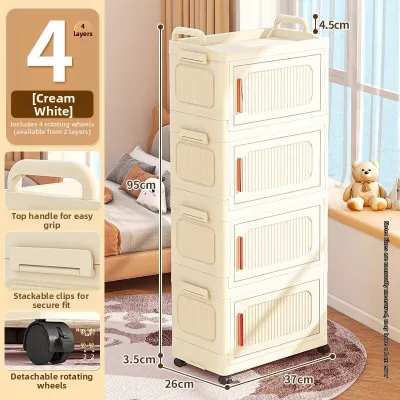
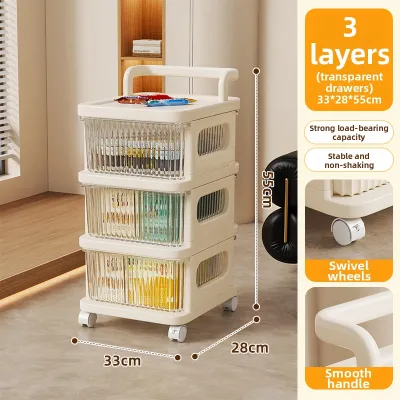
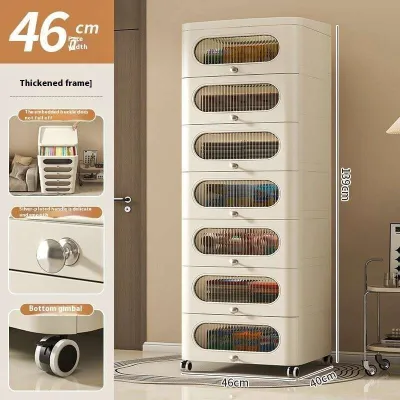

Prices are valid at publication and may change. Please refer to the product page for the latest price.
When measuring the width and depth of the designated area, do not rely on visual estimates. Measure the floor area directly, but also measure the space at the height where the top of the trolley will sit. Walls in HDB flats are not always perfectly plumb, and a tight niche that measures 40 centimeters wide at the floor level might be slightly narrower higher up.
Crucially, you must identify and subtract any fixed obstacles that project from the walls. Skirting boards, electrical power sockets, internet ports, air-conditioning trunking, and low-hanging window sills all reduce the actual usable depth and width of a space. If a power socket is located directly behind the trolley, you will need to leave several centimeters of clearance to accommodate plugged-in cables without bending them excessively.
To prevent confusion and avoid costly ordering mistakes, record all your measurements in a single unit, preferably centimeters or millimeters. Most furniture manufacturers and online retailers list product dimensions in these units. Having a single, consistent set of numbers allows you to make direct, apples-to-apples comparisons with product specifications without having to perform mental math or unit conversions on the fly.
Account for Drawer Clearance and Walkways
A common mistake when buying a storage drawer trolley is only measuring the unit’s static footprint. While the trolley might fit perfectly into a corner when closed, it can quickly become unusable if you do not have enough room to pull the drawers out fully.

To calculate the total operational footprint of the trolley, you must add the full extension length of the drawers to the base depth of the unit. For example, if a trolley is 45 centimeters deep and the drawers slide out by an additional 30 centimeters, you need at least 75 centimeters of clear depth to access your stored items comfortably. Check the manufacturer’s specifications or product manuals to find the exact drawer extension length before making a purchase.
Beyond the physical space occupied by the open drawers, you must also maintain a clear walkway buffer. In a compact HDB bedroom or living room, you need enough space to stand or bend down in front of the trolley while opening the drawers. A good rule of thumb is to preserve a buffer of at least 50 to 60 centimeters between the fully extended drawers and any opposite walls, open doors, or adjacent furniture pieces. This ensures you can access your belongings without feeling cramped or blocking the main path through the room.
Additionally, pay close attention to vertical clearance. Verify that the total height of the trolley, including its wheels or casters, does not obstruct window opening mechanisms, collide with bedside tables, or block the armrests of your sofa. If you plan to park the trolley next to a bed, the top surface should ideally align with or sit slightly lower than the mattress height for easy reach.
Match Trolley Dimensions to Your Room Layout
Once you have your measurements and clearance requirements, you can begin matching the trolley’s proportions to your specific room layout. Different configurations serve different spatial and functional needs, and choosing the right shape can dramatically improve your room’s efficiency.
Narrow and tall trolleys are excellent for maximizing vertical space in tight gaps, such as the sliver of space between a wardrobe and a bedroom wall. These units allow you to store a significant amount of items while occupying minimal floor area. However, tall, narrow designs inherently carry a higher risk of tipping over. To ensure safety, check the stability of the unit and place heavier items in the bottom drawers to lower the center of gravity. Avoid overloading the top drawers, especially if the trolley is placed on a carpeted surface or a slightly uneven floor.
Conversely, wide and low trolleys are highly suited for open wall spaces, under high-clearance desks, or next to low-profile sofas. These units offer a larger, more accessible top surface that can double as a side table for holding drinks, books, or remote controls. Because they have a lower center of gravity, they are generally more stable and easier to maneuver around the room when fully loaded.
When deciding on the depth of the drawers, weigh the trade-off between storage capacity and physical footprint. Deep drawers are ideal for bulky items like extra bed linens, winter wear, or children’s toys, but they require a larger operational footprint. Shallow drawers are better for organizing smaller items like stationery, cosmetics, or electronic accessories, and they typically require less clearance to open fully, making them highly practical for compact HDB layouts.
Check Doorways and Access Points for Delivery
Even the most perfectly sized trolley will cause frustration if it cannot physically enter your home or the target room on delivery day. This is particularly important for pre-assembled furniture or larger multi-drawer units.
Before finalizing your purchase, measure the narrowest points along the delivery path. This includes the width of your HDB main entrance door, bedroom doors, hallway corridors, and even the dimensions of the lift lobby and lift car. If you live in an older HDB estate with narrower door frames, ensuring you have a few centimeters of clearance on either side of the packaged product is vital for a smooth delivery process.
If you are purchasing a flat-packed trolley that requires home assembly, verify the dimensions of the individual shipping boxes. Flat packs are generally much easier to transport through tight doorways and lifts, but you still need to ensure you have a clear, flat area inside your home to assemble the unit safely without damaging your existing walls or floors.
Finally, pay attention to the mobility features of the trolley. If you plan to move the trolley frequently between rooms, confirm the wheel material and caster design. The wheels should be robust enough to roll smoothly over HDB doorway tracks, floor transitions, and uneven thresholds without getting stuck or causing damage. Look for casters with a soft outer coating, such as polyurethane or rubber, which are gentler on delicate indoor flooring.
Frequently Asked Questions (FAQ)
Can a Storage Drawer Trolley Fit Under a Standard Bed?
To determine if a storage drawer trolley can slide under your bed, you must measure the exact vertical distance from the floor to the lowest point of the bed frame. Do not rely on the manufacturer’s standard bed height, as central support legs, floor protectors, or the frame’s undercarriage can significantly reduce the actual clearance.
Additionally, keep in mind that factors like bed skirts, mattress sagging under weight, or under-bed wiring can obstruct the path of a rolling trolley. To ensure smooth operation, choose a low-profile trolley that leaves at least two to three centimeters of breathing room below the lowest obstacle of your bed frame.
Should You Choose Wheels or Fixed Legs for a Small Room?
The choice between wheels and fixed legs depends on how often you plan to move the trolley and your cleaning preferences. Lockable casters offer excellent flexibility, allowing you to roll the trolley out of the way when vacuuming or mopping, and easily reposition it to different parts of the room as your needs change.
On the other hand, fixed legs provide superior stability and often have a visually lighter, more streamlined appearance that can make a small room feel less cluttered. If you choose wheels, verify that the wheel material and diameter are suitable for your specific flooring. Smooth, non-marking rubber or polyurethane wheels are ideal for protecting common HDB flooring materials like vinyl, laminate, or polished tiles from scratches and scuffs.

Community discussion
Share your experience or ask a question. Comments are reviewed before publication.