
Selecting the right storage for a small HDB bedroom in Singapore requires a careful balance between utility and physical space. With standard common bedrooms in modern Build-To-Order (BTO) and resale flats typically measuring between 9 and 12 square meters, floor space is at a premium. When you introduce a queen-sized bed and a wardrobe, the remaining area quickly disappears. Placing a standard, wide chest of drawers in such a room often blocks walkways, restricts movement, and makes the sleeping area feel cramped and chaotic.
To overcome these spatial limitations, the most effective strategy is to shift your storage focus. Instead of expanding horizontally, you must utilize vertical wall space, activate under-utilized areas like the space beneath your bed frame, and keep your primary walkways clear. By choosing highly targeted drawer configurations—such as slim tallboys, modular stackable cubes, or rolling under-bed storage—you can easily double your bedroom’s storage capacity without sacrificing precious floor space. This approach ensures your bedroom remains a restful sanctuary rather than a crowded storage locker.
How to Evaluate Space-Saving Drawer Units
When shopping for a space-saving drawer unit, do not rely solely on the manufacturer’s exterior dimensions. You must evaluate the ratio of the unit’s physical footprint to its actual internal storage volume. Some furniture designs feature thick wooden frames, wide decorative molding, or oversized handles that occupy significant floor space while offering surprisingly shallow drawer interiors. For tight HDB layouts, look for units constructed with slim, durable panels that maximize internal width and depth relative to the external frame size.
Products mentioned in this guide
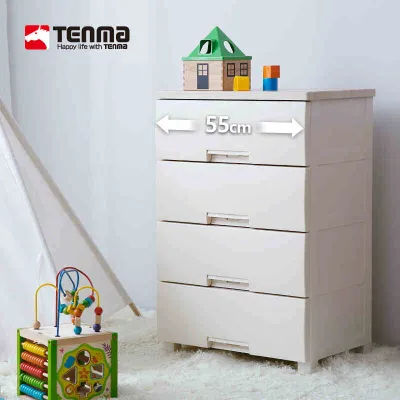
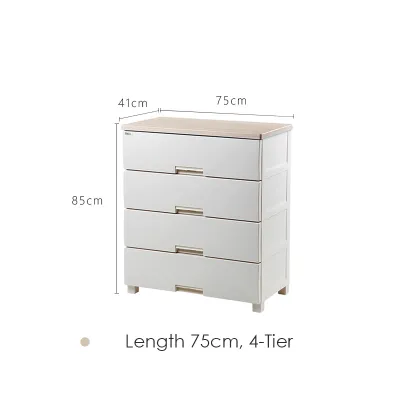
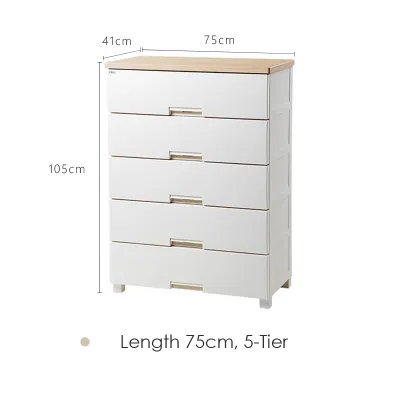
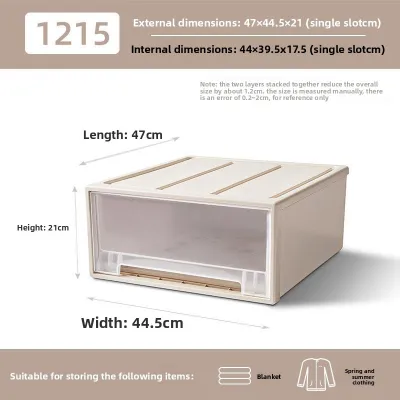
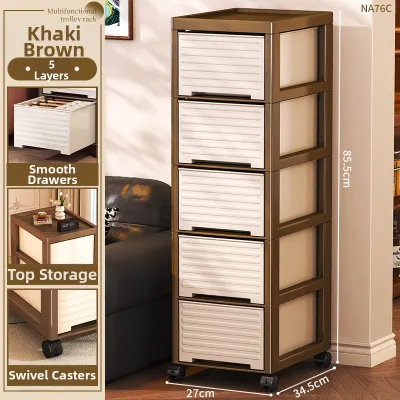
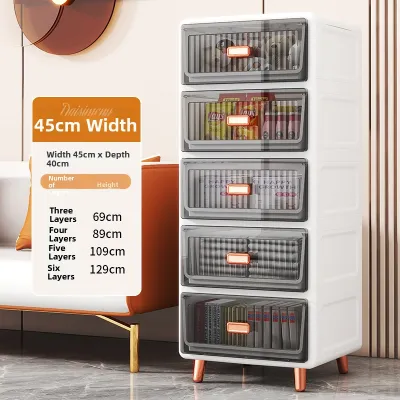
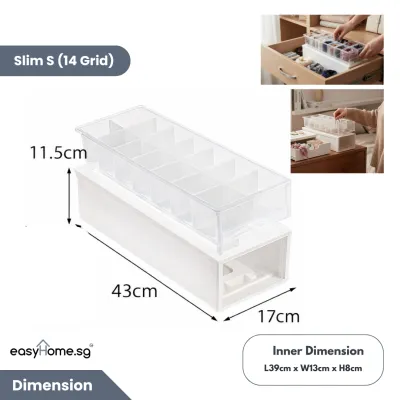
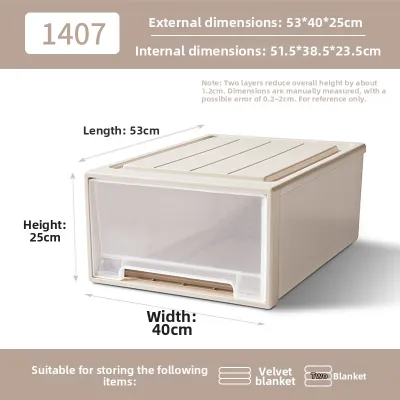
Prices are valid at publication and may change. Please refer to the product page for the latest price.
Calculating the “pull-out zone” is another critical step in your evaluation. A drawer unit is only functional if you can open it fully. If a drawer cabinet is 45cm deep and the drawers extend another 40cm when opened, the unit requires a minimum of 85cm of clear space in front of it just to function. You must also factor in the space required for you to stand, bend, or kneel in front of the open drawer. If this active footprint overlaps with your bed frame or wardrobe doors, the unit will be frustrating to use daily.
To prevent a small bedroom from feeling visually overwhelmed, pay close attention to the visual weight of the furniture. Solid, blocky drawer units that sit flush against the floor block natural light and make a room feel smaller. Instead, prioritize designs with raised legs or wall-mounted, floating configurations. Seeing the continuous bedroom floor beneath the furniture tricks the brain into perceiving a larger space. Additionally, look for drawers with recessed handles, integrated finger pulls, or push-to-open mechanisms to keep the front profile flush and prevent you from snagging your clothes in tight walkways.
Finally, inspect the quality of the drawer hardware and slide mechanisms. In a compact room where furniture is placed close together, smooth and quiet operation is essential. Look for high-quality, full-extension ball-bearing slides that allow the drawer to pull out completely, giving you easy access to items stored at the very back. Avoid cheap plastic rollers that can slip off their tracks or struggle under heavy loads. Soft-close mechanisms are also highly beneficial, as they prevent drawers from slamming shut, reducing noise and preventing vibrations from shaking items placed on top of the unit.
Top Space-Saving Drawer Configurations for Small Rooms
Under-Bed Drawer Storage
Utilizing the empty space beneath your bed frame is one of the most efficient ways to add storage without consuming any additional floor area. When deciding on under-bed storage, you can choose between custom built-in platform beds with integrated drawers or freestanding under-bed drawer units. While built-in platforms offer a seamless look and massive storage capacity, they are permanent, expensive, and cannot be rearranged. Freestanding under-bed drawers offer a highly flexible, cost-effective alternative that you can easily move, clean, or replace if your layout needs change.

Before purchasing freestanding under-bed drawers, you must measure the exact clearance height from your bedroom floor to the lowest edge of your bed frame’s side rails. Do not forget to check for any middle support legs, center rails, or protruding bolts under the bed that could block the drawers from sliding in and out. It is also wise to measure the distance between the bed’s legs to ensure the width of the drawer unit will fit comfortably between them.
Because these drawers sit directly on the floor, the choice of movement mechanism is critical for protecting your flooring. In Singapore, many modern HDB flats feature vinyl, laminate, or polished parquet flooring. Hard plastic wheels can easily scratch, dent, or scuff these surfaces over time. Look for under-bed drawers equipped with smooth-rolling, soft polyurethane or rubber-coated casters. If your bed sits on a low-pile rug, low-friction felt glides may be more suitable to prevent snagging.
Keep in mind that under-bed drawers have specific functional limitations. Because accessing them requires bending down or kneeling, they are not ideal for items you need to reach multiple times a day. Instead, reserve this space for seasonal clothing (such as winter wear for overseas travel), spare bedsheets, extra pillowcases, or shoes. To protect these items from dust accumulation under the bed, choose drawer units that come with fitted lids or fabric covers.
Slim Tallboys and Vertical Chests
When horizontal floor space is limited, vertical chests of drawers—commonly known as tallboys—are an excellent solution. These units stack five to seven drawers vertically on a remarkably small footprint, often measuring as narrow as 30cm to 40cm wide. A slim tallboy can easily slide into tight, otherwise wasted gaps in your bedroom, such as the space between your bed and a built-in wardrobe, or the narrow wall area right next to your bedroom door.
Before buying a vertical chest, you must verify your bedroom’s vertical clearances. Measure your ceiling height and ensure the tallboy will not obstruct the airflow from your wall-mounted air-conditioning unit or interfere with the path of a ceiling fan. You should also check that the height of the unit does not block wall-mounted light switches, power outlets, or window latches.
Due to their narrow bases and tall profiles, vertical chests have a high center of gravity. When multiple drawers are pulled open at the same time, or if heavy items are stored in the upper drawers, the unit can easily tip forward. This presents a serious safety hazard, especially in households with young children or active pets. It is absolutely critical to secure any tallboy to the wall using an anti-tip anchoring kit. If you are renting your HDB flat and your landlord prohibits drilling into the walls, a tall vertical chest may not be the safest choice unless it features a heavily weighted base and you restrict heavy storage to the bottom drawers.
Modular and Stackable Drawer Cubes
Modular drawer cubes offer unparalleled flexibility for small, irregularly shaped HDB bedrooms. These individual, self-contained drawer units can be stacked vertically to create a custom tallboy, arranged side-by-side to form a low-profile TV console, or used individually as minimalist bedside nightstands. This adaptability makes them incredibly useful for filling awkward alcoves or utilizing the space beneath a low window sill.
When stacking modular cubes, you must strictly adhere to the manufacturer’s maximum weight limits to prevent the lower units from warping or collapsing. It is equally important to ensure the cubes feature secure interlocking mechanisms. Look for modular systems that use physical pegs, interlocking grooves, or metal connecting brackets to lock the stacked units together. Simply stacking loose plastic or wooden boxes on top of each other without a securing mechanism is highly unstable, as the top units can easily slide off when you pull a drawer open.
For renters or those who enjoy frequently updating their home decor, modular drawer cubes are an exceptionally practical investment. Because they are lightweight and separate into individual pieces, they are incredibly easy to pack, transport, and reassemble. When you move to a new flat, you can easily reconfigure the same cubes to fit an entirely different room layout, saving you from having to purchase new furniture.
Corner and Wedge Drawer Units
Corners are often the most under-utilized areas in a small HDB bedroom, frequently left empty because standard rectangular furniture cannot fit without blocking adjacent walls or doors. Corner drawer units—featuring L-shaped fronts, triangular backs, or curved designs—are specifically engineered to slide snugly into a 90-degree corner, turning a dead zone into highly functional storage.
While corner drawer units are excellent for maximizing space, they do come with unique internal geometry limitations. Because of their triangular or wedge-shaped backs, the internal drawer space is rarely a perfect rectangle. This makes them poorly suited for storing large, flat, or bulky items like folded bedsheets or stiff winter coats. Instead, they are best utilized for smaller, flexible items such as socks, undergarments, activewear, or electronic accessories and charging cables.
When planning for a corner unit, do not assume your bedroom corners are a perfect 90-degree angle. In many HDB flats, slight plastering variations or minor structural settling can cause walls to be slightly out of alignment. Furthermore, standard wall skirting boards will prevent a flat-backed corner unit from sitting flush against the wall, leaving an awkward gap behind the furniture. To avoid this, carefully measure your corner angles and look for corner drawer units that feature a recessed base or a cut-out back designed to accommodate skirting boards.
Pre-Purchase Clearance & Layout Checklist
To avoid the frustration of purchasing a drawer unit that physically fits in your room but cannot be used comfortably, you must perform a thorough physical layout check before buying. Use this step-by-step checklist to verify that your chosen drawer unit will function perfectly in your specific HDB bedroom layout.
- Verify Walkway Clearance: A comfortable bedroom walkway should be at least 60cm wide to allow you to walk naturally without turning sideways. To test your proposed layout, use blue painter's masking tape to outline the exact footprint of the drawer unit on your bedroom floor. Leave the tape in place for a day or two and walk around the room to ensure you will not constantly bump your shins or feel restricted.
- Calculate the Complete Drawer Extension: Do not just measure the cabinet's depth. You must calculate the total space required when the drawer is fully open. Use this simple formula:
Total Depth Required = Cabinet Depth + Drawer Slide Extension + User Standing/Bending Space (40cm to 50cm)
If your drawer cabinet is 45cm deep and the drawer pulls out 40cm, you need at least 125cm of clear space from the wall to stand and use the drawer comfortably. - Map Out Room Obstacles: Check for potential physical conflicts in your bedroom. Ensure the drawer unit will not block the swing path of your built-in wardrobe doors or the bedroom door itself. Check that a tall chest will not block window panels from opening or prevent you from accessing window latches. Finally, ensure the unit does not cover essential power outlets, light switches, or internet data points that you need to access daily.
- Account for Skirting Boards: Standard HDB flats feature skirting boards along the base of the walls that typically protrude 1cm to 1.5cm. If a drawer unit has a completely flat back with no base cutout, it will be pushed away from the wall, leaving a gap where dust, hair, and small items can fall. Look for furniture with inset legs or a recessed back panel that allows the unit to sit completely flush against the wall.
- Check Delivery Access: Before finalizing your purchase, verify the finished assembly dimensions of the unit. If you are buying a fully assembled tallboy or a heavy wooden chest, ensure it can fit through your HDB flat's main door, down the hallway, and through your bedroom doorway. If your building's lift is small, double-check that the packaged or assembled unit can fit inside the passenger lift to avoid expensive stair-carrying fees.
Styling Drawers to Maximize Visual Space
In a small bedroom, the visual design of your furniture plays a massive role in how spacious the room feels. With the right styling and color choices, you can make a highly functional drawer unit blend seamlessly into your decor, reducing visual clutter and making the room feel bright and airy.
One of the most effective styling techniques is color matching. To make a large drawer unit virtually disappear, select a unit that matches your bedroom wall color. For instance, if your HDB bedroom walls are painted a classic matte white, off-white, or light gray, choosing a drawer unit with a matching matte finish will cause the furniture to recede into the background. This minimizes visual contrast, preventing the room from feeling chopped up or crowded.
As mentioned earlier, choosing furniture with elevated designs is highly beneficial for small spaces. Opt for drawer units with slender, exposed legs rather than solid plinth bases that sit flat on the floor. By exposing the floor underneath the unit, you maintain visual continuity across the room. This trick of the eye makes the floor area feel larger and allows natural light to circulate more freely, instantly brightening dark corners.
Reflective and light-catching surfaces can also help open up a compact bedroom. Consider drawer units with high-gloss finishes, glass fronts, or mirrored drawer panels. In a typical single-window HDB bedroom, these reflective surfaces catch natural daylight and bounce it around the room, making the entire space feel significantly more open and less confined. If you prefer a more organic look, light-colored natural woods like ash, maple, or light oak offer a similar brightening effect without the high-shine finish.
Finally, practice strict top-surface management. The flat top of a drawer unit is highly susceptible to accumulating daily clutter, such as keys, loose change, receipts, and half-empty cups. A cluttered surface instantly makes a small bedroom look messy and cramped. Keep the top of your drawer unit clear of daily detritus. Instead, style it intentionally with one or two purposeful items, such as a small, warm task lamp, a single potted plant, or a neat tray for your daily essentials. Keeping this surface organized and minimalist preserves a sense of calm and order in your sleeping space.
Frequently Asked Questions (FAQ)
Do I need a permit to install built-in under-bed drawers in an HDB flat?
You do not need any HDB permits to purchase or use freestanding under-bed drawers, rolling storage boxes, or standard off-the-shelf platform beds with integrated drawers. However, if you plan to hire a contractor to construct a custom, built-in storage platform that is permanently anchored to the floor or walls, you must ensure the work complies with HDB renovation guidelines. If the installation involves hacking existing walls, altering the flat’s structural elements, or laying heavy concrete floor screed to raise the floor level, you must hire an HDB-licensed contractor and obtain formal HDB approval before any work begins.
What is the standard clearance needed to open a drawer comfortably?
To use a drawer comfortably, you need a clear physical space equal to the depth of the fully extended drawer plus an additional 40cm to 50cm. This extra space ensures that you can stand, bend over, or kneel in front of the drawer without your back or hips hitting your bed frame, wardrobe, or adjacent walls. If your bedroom layout cannot accommodate this clearance, you should avoid standard pull-out drawers. Instead, consider alternative storage solutions such as sliding-door cabinets, open shelving units, or cabinets with tilt-out bins, which require significantly less clearance to access.
Are plastic drawer units suitable for long-term bedroom use?
Plastic drawer units are lightweight, highly affordable, and exceptionally resistant to Singapore’s humid tropical climate, meaning they will never warp, rot, or suffer from mold issues. However, they have significant structural limitations. Under heavy loads—such as thick denim, heavy winter coats, or stacked bed linens—plastic drawers are highly prone to sagging, bending, or slipping off their tracks. They also tend to lack the aesthetic appeal of wood or metal furniture. For long-term bedroom use, it is best to invest in engineered wood, solid wood, or metal-framed drawer units for your main clothing storage, reserving lightweight plastic drawers for closet interiors, utility rooms, or temporary storage needs.
Community discussion
Share your experience or ask a question. Comments are reviewed before publication.