
Finding the right rotating shelf involves balancing storage capacity with physical clearance. Unlike static bookcases, a rotating shelf requires a dynamic footprint—a circular clearance zone that accommodates its widest point as it spins. Choosing the correct size ensures you maximize vertical space without obstructing daily movement or damaging nearby walls. To make an informed decision, you must evaluate the physical dimensions of your room, the rotational sweep of the unit, and the specific layout of your living space.
Measure Your Space and Clearance Requirements
Start by measuring the static floor area where you plan to place the shelf. Use a measuring tape to find the maximum width and depth of the floor space. However, the static footprint of a rotating shelf is only half the equation. Because the unit spins, its corners will extend beyond its static width and depth during rotation.
To calculate the full rotation radius, you must identify the diagonal measurement of the shelf’s base. For a square shelf, the diagonal is always longer than the sides. This diagonal represents the minimum diameter of the clear circle the shelf needs to spin freely. Ensure this circular path is completely clear of walls, baseboards, and adjacent furniture to prevent scraping.
Products mentioned in this guide
![[SG SELLER] Elegant Rotatable Bookshelf - 360-Degree Solid Wood Spinning Storage Organizer for Books Decor and More](https://img.lazcdn.com/g/p/7ce6f36732f6cbfd7998affbb0153bf8.jpg_400x400q80.jpg_.webp)
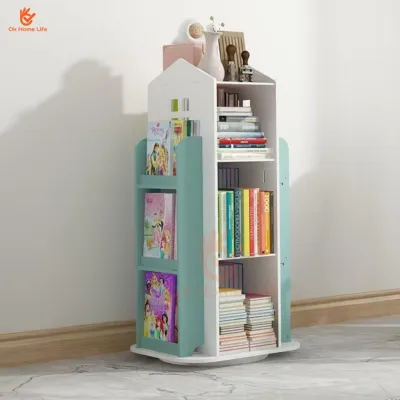
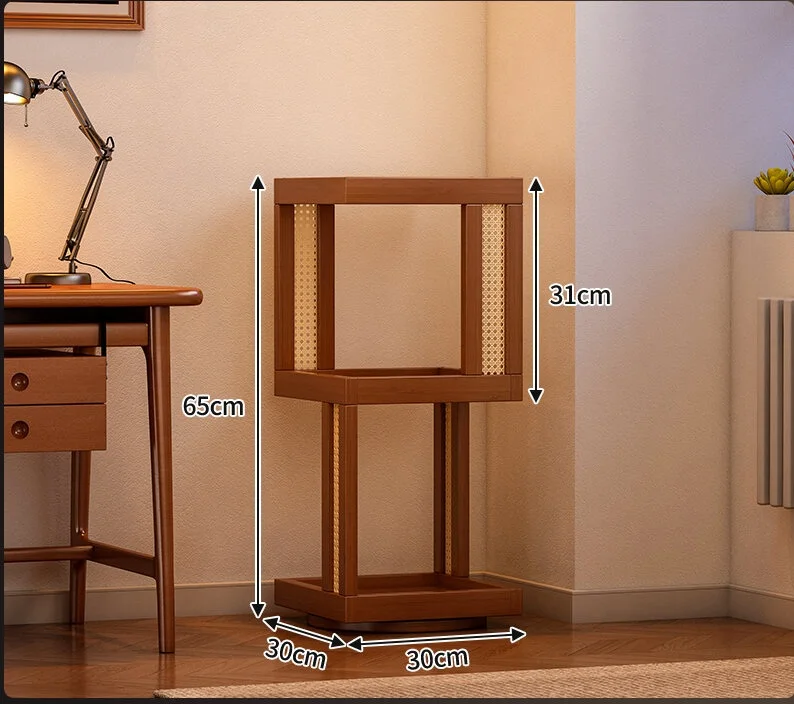
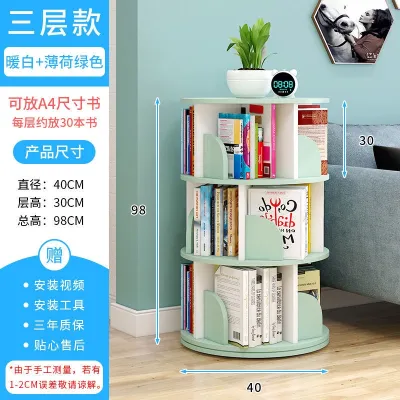
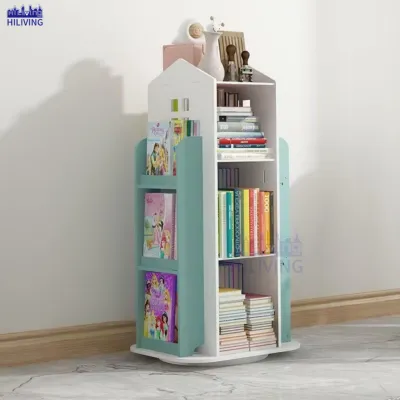
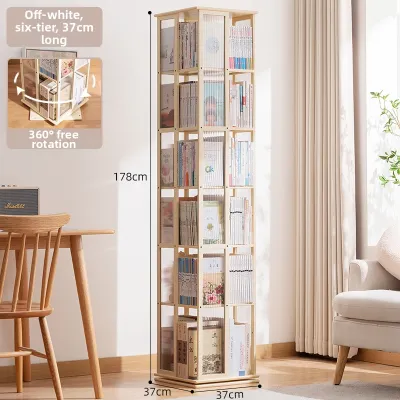
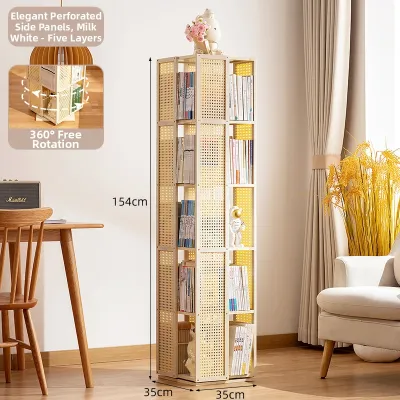
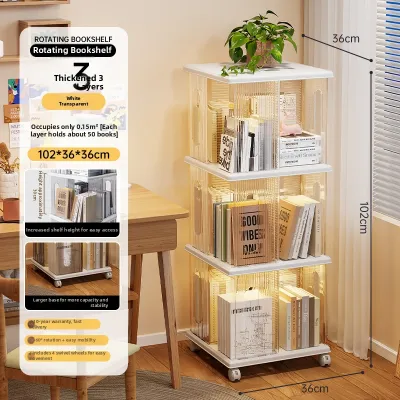
Prices are valid at publication and may change. Please refer to the product page for the latest price.
Next, consider the traffic flow and clearance for other functional elements in the room. A rotating shelf should not impede walking paths, block door swings, or prevent drawers and cabinets from opening fully. Measure the swing paths of nearby doors and wardrobe panels, leaving a comfortable buffer zone so that daily activities remain unobstructed.
Finally, check the vertical clearance of your room. Measure the ceiling height from the exact spot where the shelf will stand, keeping an eye out for overhead obstructions. Low-hanging light fixtures, ceiling fans, air conditioning units, or sloped ceilings can restrict the height of the shelf you can safely install and use.
Match Shelf Dimensions to Common Room Layouts
The ideal dimensions of your rotating shelf depend heavily on its placement within your room layout. For corner placements, you must choose between a square-based shelf and a wedge-shaped or triangular-based unit. While square bases often provide more storage volume per tier, they require a larger rotational clearance from the corner walls. A wedge-shaped base is specifically designed to tuck deeper into a corner, minimizing wasted space behind the unit.

If you plan to place the shelf beside a sofa or a bed, prioritize a narrow and tall profile. This allows the unit to fit into tight gaps without blocking armrests, bedside tables, or light switches. Ensure the height of the lower tiers aligns with the height of your seating or mattress so you can easily reach stored items while seated or lying down.
In small rooms or studio apartments, floor space is at a premium. Here, a compact base with a taller vertical structure is highly effective. By utilizing vertical space, you can store a significant number of books or media files without sacrificing valuable square footage. Look for units that offer adjustable shelving tiers to maximize the density of your storage.
For open floor plans, larger and wider multi-tier rotating shelves can serve as functional room dividers. Placed between a living and dining area, a rotating shelf allows access to books or decorative items from both sides of the room. When using a shelf as a divider, ensure the base is wide and heavy enough to maintain stability without the support of an adjacent wall.
Check Weight Capacity and Stability for Your Items
Before purchasing, carefully review the manufacturer’s specified weight limits for both individual tiers and the entire unit. Rotating shelves rely on central spindles or ball-bearing swivel bases to turn smoothly. Overloading the shelf can strain these mechanisms, leading to stiff rotation, grinding noises, or permanent structural damage.
Maintaining a low center of gravity is essential for the stability of any rotating furniture. Always place your heaviest items, such as large reference books, binders, or heavy decorative pieces, on the lowest tiers. Lighter items, like paperbacks or small accessories, should go on the upper shelves. This distribution prevents the unit from becoming top-heavy and reduces the risk of tipping during rotation.
Examine the construction materials and connection joints of the shelf. A solid wood or reinforced metal base provides a more stable foundation than lightweight particleboard. Check the quality of the swivel mechanism; sealed ball bearings generally offer smoother rotation and better weight distribution than simple plastic turntables.
Always consult the product manual for specific loading instructions and assembly guidelines. If you notice the shelf tilting, wobbling, or binding when you attempt to spin it, immediately stop using the unit. Unload the items and check if the base is level or if the weight distribution needs adjustment.
Avoid Common Sizing and Placement Mistakes
One of the most common mistakes is forgetting to account for the full sweep of the shelf, resulting in scratched walls or blocked drawers. Homeowners often measure only the static width of the shelf and place it flush against a wall, only to find it cannot rotate without scraping the paint.
Another frequent oversight is ignoring the depth of baseboards or skirting boards. These architectural details prevent the base of the shelf from sitting completely flush against the wall, pushing the entire unit several centimeters forward. This shift alters the rotation center and can unexpectedly block walking paths or nearby doors.
Do not overlook the physical space required to assemble the unit. Many rotating shelves are shipped flat-packed and must be assembled horizontally on the floor before being raised upright. Ensure your room has enough open floor space for assembly, and verify that the assembled unit can fit through doorways and lifts if you plan to build it in a different room.
Lastly, choosing a shelf that is too tall for your ceiling height can make the top tiers completely inaccessible or unstable. If you have to stretch or use a step stool to reach the top shelf, the risk of pulling the unit over increases. Keep the top tier within a comfortable reaching height for the primary users of the space.
Frequently Asked Questions (FAQ)
Do rotating shelves need to be anchored to the wall?
Whether a rotating shelf needs anchoring depends on its height, base width, and the manufacturer’s safety guidelines. Tall, narrow units have a higher risk of tipping and generally require anchoring to a wall stud using specialized anti-tip hardware. However, because the shelf must rotate, standard flush-to-wall anchors will not work. You must use anchoring systems designed for rotating furniture, which often involve a central pivot anchor or a tether that allows rotation while preventing forward tipping. Always consult the product manual and use the included safety hardware to secure the unit.
How much extra space do I need around a rotating shelf?
As a general rule, you should add a safety buffer of at least 5 to 10 centimeters beyond the calculated rotation radius of the shelf. This extra space prevents the unit from rubbing against walls or adjacent furniture due to slight shifting over time. Additionally, remember to account for the physical depth of the items you store. If books or binders overhang the edges of the shelves, they will extend the actual rotation radius. To visualize the clearance, map out the full rotation circle on your floor using painter’s tape before finalizing your purchase.

Community discussion
Share your experience or ask a question. Comments are reviewed before publication.