
Choosing the right size for a pull-out book cabinet requires balancing your storage needs with the physical limits of your room. Unlike traditional stationary bookcases, a pull-out book cabinet operates on a dynamic footprint. It requires not only static floor space but also a clear, unobstructed path for the shelves to slide fully outward. To find the perfect fit, you must evaluate three critical dimensions: the static closed footprint, the dynamic fully extended depth, and the vertical clearance. By taking precise measurements and planning for the movement of the tracks, you can maximize your book storage without crowding your living space or blocking essential walkways.
Measure Your Available Space and Clearance
To integrate a pull-out book cabinet seamlessly into your room, start by measuring the physical boundaries of your intended installation area. Use a steel measuring tape to record the wall width, floor depth, and ceiling height. Because walls and floors are rarely perfectly square, take these measurements at three different points: near the floor, in the middle, and near the ceiling. Use the smallest recorded dimension as your maximum limit to ensure the cabinet fits without scraping the walls or ceiling during installation.
Calculating the dynamic clearance is the most critical step for any pull-out storage system. A pull-out cabinet typically slides forward or outward along a track system. This means you must calculate the full extension depth, which is the sum of the cabinet’s static depth, the maximum length of the pull-out track extension, and any handle protrusions. For example, if a cabinet is 40 cm deep and has a pull-out shelf that extends another 35 cm, you need at least 75 cm of completely clear floor space directly in front of the unit. Ensure this extension zone does not overlap with the swing radius of nearby doors, wardrobe panels, or frequently used walkways.
Products mentioned in this guide
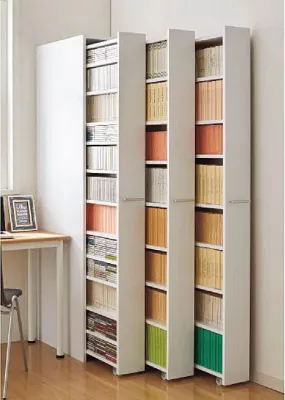
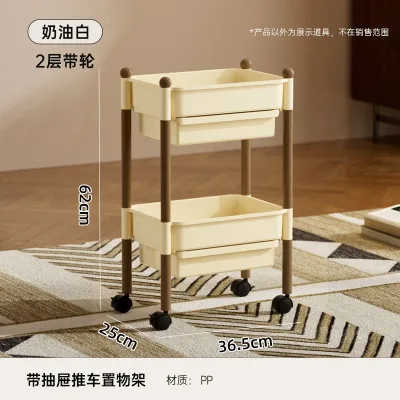
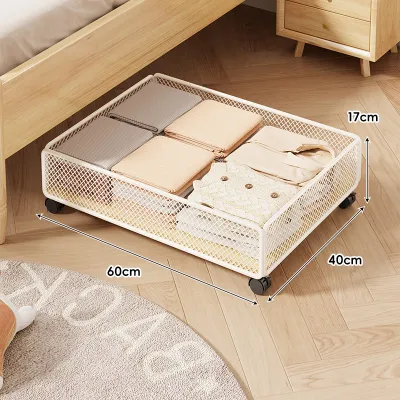
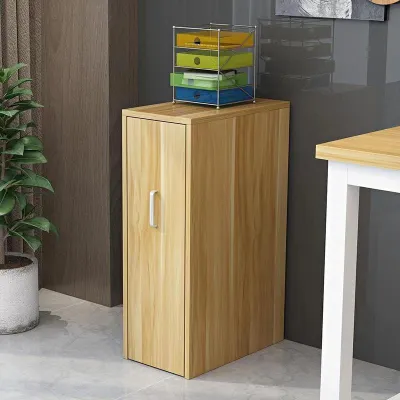
Prices are valid at publication and may change. Please refer to the product page for the latest price.
Additionally, look closely for hidden or low-profile obstructions along the wall and floor. Skirting boards are a common obstacle; they prevent the back of the cabinet from sitting completely flush against the wall, which can misalign the tracks or interfere with top-heavy stability. Note the locations of power outlets, light switches, internet ports, and wall-mounted air conditioning units. If the cabinet covers an outlet, you will lose access to it, and any plugs left in the socket will prevent the cabinet from sliding back fully.
Match Cabinet Dimensions to Your Room Layout
Your room’s layout and overall square footage dictate the ideal proportions of your pull-out book cabinet. In narrow spaces, such as study rooms, home offices, or hallways common in modern apartments, prioritize slim depths and vertical height. A tall, narrow cabinet utilizes unused vertical space while keeping the floor footprint minimal. When planning for a narrow room, verify that the fully extended cabinet still leaves enough clearance for a person to stand and retrieve books comfortably. If the walkway is completely blocked during use, it can create a safety hazard and make browsing your collection frustrating.

For rooms with low ceilings or structural beams, shift your focus toward wider, lower-profile cabinets. A lower height prevents the room from feeling cramped and ensures you do not struggle with tight overhead clearances during assembly. When evaluating low-profile units, check the manufacturer’s specifications to confirm if the pull-out track or slide mechanism requires any top clearance for installation or daily operation. Some systems require you to lift the inner cabinet slightly to hook it onto the tracks, which is impossible if the unit is flush against a low ceiling.
In spacious, open-plan living areas, you have more freedom to choose a larger footprint, but visual balance remains essential. A tiny pull-out cabinet can look lost against a massive wall, while an oversized unit might dominate the room and disrupt the flow of natural light. Aim for a size that complements the scale of your surrounding furniture, such as your sofa or desk. If you are placing multiple units side by side, ensure there is sufficient space to pull out adjacent compartments simultaneously without them colliding or restricting your physical movement.
Check Doorways, Hallways, and Delivery Access
A cabinet can only serve your home if it can actually reach its designated room. Before finalizing your purchase, measure the narrowest points along your home’s delivery route. This includes the main entrance door, internal hallways, bedroom doorways, and any tight corners or staircases. If you live in a high-rise apartment or condominium, do not forget to measure the elevator door width, interior height, and weight capacity. Many delivery failures occur because a fully assembled cabinet cannot clear the low ceiling of a residential lift or navigate a narrow stairwell landing.
Check whether the pull-out book cabinet arrives fully assembled or flat-packed. Flat-packed furniture is generally easier to transport through tight spaces, but you must still verify the dimensions of the largest individual boxes against your entryways. If the cabinet is delivered pre-assembled, compare its exterior dimensions directly with your doorway clearances. Allow for a safety margin of at least 5 cm on all sides to prevent damage to your walls, door frames, and the cabinet itself during transit.
For tight corners and narrow corridors, calculate the turning radius required to maneuver the cabinet. A long, rigid box cannot bend around a sharp 90-degree hallway turn. If your home has restricted access, look for modular pull-out systems that can be transported in smaller, separate sections and joined together inside the room. Planning these logistics in advance prevents costly return fees and delivery disappointments.
Evaluate Weight Capacity and Structural Stability
Books are exceptionally heavy when packed together, making weight capacity and structural stability paramount for pull-out cabinets. Because the center of gravity shifts dramatically when a shelf is pulled outward, a poorly balanced cabinet can easily tip forward. Always check the manufacturer’s specified weight capacity for both the individual shelves and the entire pull-out mechanism. Exceeding these limits can warp the shelves, bend the metal tracks, and cause the sliding mechanism to bind or fail entirely.
To prevent dangerous tip-over accidents, tall or top-heavy pull-out book cabinets must be secured to the wall. Review the manufacturer’s installation requirements for anti-tip wall anchors before buying. These anchors must be drilled into solid wall studs or concrete walls; plasterboard or drywall alone may not provide sufficient holding power for a fully loaded, extended cabinet. If you are renting your home and cannot drill into the walls, you may need to limit your search to shorter, wider cabinets with a lower center of gravity that do not require wall anchoring.
The quality of the base structure and sliding tracks directly influences how the cabinet handles weight over time. Look for heavy-duty, ball-bearing drawer runners or floor-guided track systems designed for high-load capacities. A high-quality track ensures that even when the cabinet is filled to capacity with heavy hardcover books, it slides smoothly without sagging, shaking, or scraping your flooring. Inspect the base construction to ensure it is rigid enough to distribute the weight evenly across the floor.
Common Sizing Mistakes to Avoid
One of the most frequent mistakes when buying a pull-out book cabinet is failing to account for the full extension distance and handle protrusion. Homeowners often measure the static depth of the cabinet but forget that the unit needs to slide out completely to access the rear shelves. If you have a handle or pull tab on the front of the cabinet, add its depth to your measurements. A handle that sticks out even 2 or 3 cm can block a nearby door from opening or catch on your clothing in a tight walkway.
Another common oversight is ignoring the thickness of skirting boards. Skirting boards run along the base of the wall, preventing the cabinet from sitting flush. This creates a gap at the back of the cabinet, which can throw off your depth calculations by 1 to 2 cm. This gap can also make it difficult to align and secure wall anchors properly. To avoid this, look for cabinets with a base cutout that accommodates skirting boards, or factor the skirting board thickness into your overall floor space measurements.
Finally, avoid overestimating the required shelf depth. While deep shelves might seem ideal for maximizing storage, they can make it difficult to retrieve books if they are stacked two rows deep. For standard novels and paperbacks, a shelf depth of 15 to 20 cm is usually sufficient. Deeper shelves are only necessary for large art books, binders, or encyclopedias. Choosing a cabinet with an excessively deep profile unnecessarily increases the static footprint and the required pull-out clearance, wasting valuable floor space in your room.
Frequently Asked Questions (FAQ)
How much extra space do I need behind a pull-out book cabinet?
You should generally allow a clearance of at least 1 to 2 cm behind the cabinet to accommodate wall unevenness, skirting boards, and anti-tip mounting hardware. If your cabinet uses a rear-mounted track system or requires ventilation to prevent moisture buildup in humid climates, check the manufacturer’s installation manual for specific clearance guidelines. Ensuring this small gap prevents the cabinet frame from rubbing against the wall and damaging your paint.
Can I install a pull-out book cabinet on a carpeted floor?
Installing a heavy pull-out cabinet on carpet can be challenging because the soft fibers can cause the cabinet to tilt, misaligning the sliding tracks. If you must place it on carpet, check the manufacturer’s guidelines regarding floor compatibility. You may need to place a rigid, level base board under the cabinet to distribute the weight evenly and ensure the tracks remain perfectly aligned for smooth operation.

Community discussion
Share your experience or ask a question. Comments are reviewed before publication.