
Selecting the right size mobile bookshelf requires balancing your room’s physical limits with your storage needs. Unlike static bookcases, a mobile unit needs extra space to roll, turn, and park without damaging walls or blocking pathways. For typical Singapore homes, such as HDB flats or compact studio apartments, a mobile bookshelf with a depth of 30 cm to 40 cm and a height under 120 cm generally provides the best combination of stability, storage capacity, and ease of movement.
To find the perfect fit, you must evaluate both the external footprint of the unit and the internal dimensions of the shelves. A bookshelf that is too large will become a permanent obstacle, while one that is too small will fail to hold your collection. By taking precise measurements of your space, assessing your books, and understanding how mobility affects stability, you can select a unit that keeps your room organized and highly functional.
Measure Your Available Floor Space and Clearances
Before browsing online marketplaces, establish the physical boundaries of your room. Measure the width, depth, and height of the area where you plan to park the mobile bookshelf. Account for skirting boards, wall trim, power outlets, and window sills. A skirting board can push a bookshelf several centimeters away from the wall, causing it to protrude into a walking path.
Products mentioned in this guide
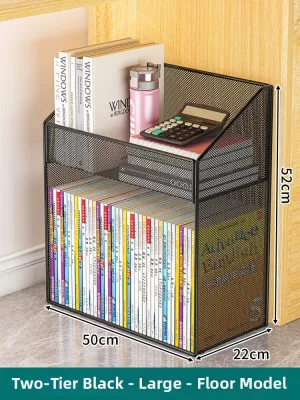
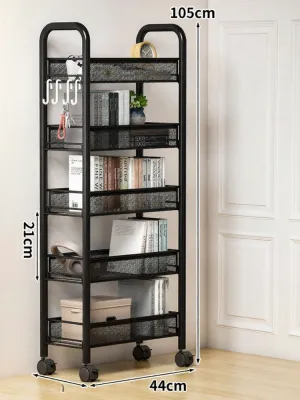
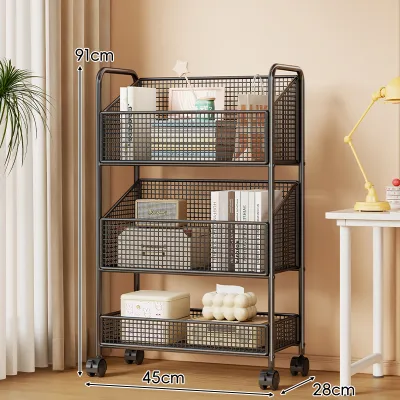
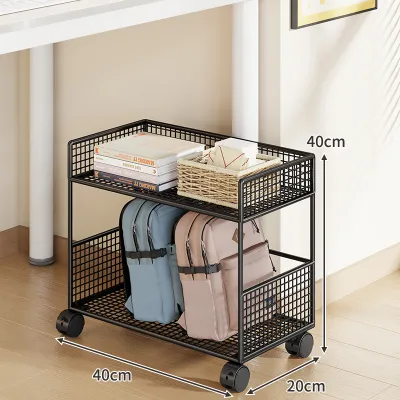
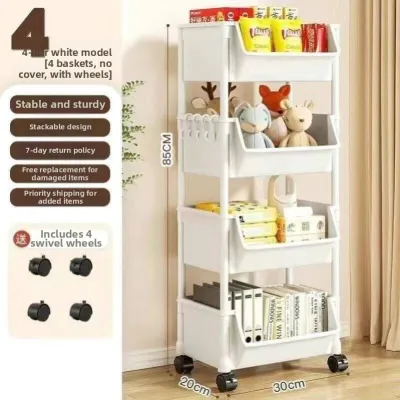
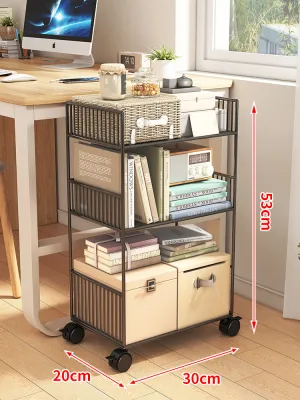
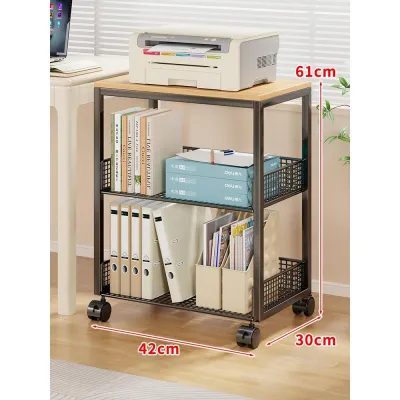
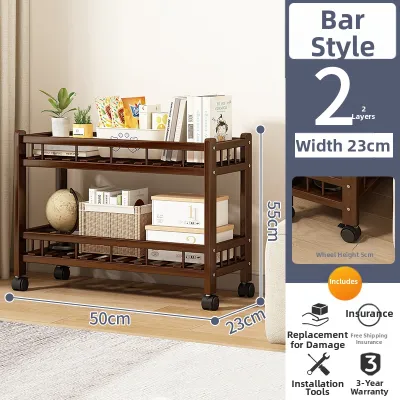
Prices are valid at publication and may change. Please refer to the product page for the latest price.
Next, map out the movement path. Because these units roll, verify that the path is clear of obstructions. Measure bedroom door frames, hallway corners, and gaps between existing furniture like your bed or study desk. Tight corners can wedge a wide bookshelf during transport, defeating its mobile design.
Finally, reserve operational clearance around the parking spot. Leave at least 10 cm of clearance on either side to allow your hands to grip the frame comfortably when pulling it out. Ensure there is enough open floor space in front of the bookshelf to stand and retrieve books safely.
Assess Your Storage Needs and Book Collection
The size of your mobile bookshelf must align with your book collection. Standard paperbacks require a shelf depth of only 15 cm to 20 cm, while larger textbooks and hardcovers need 25 cm to 30 cm. If you plan to store oversized art books or binders, you will need a shelf depth of 35 cm or more.

Weight is another critical factor. Books are heavy, and a fully loaded shelf can bow if it exceeds load limits. Check the specification sheet for the maximum weight capacity per shelf and for the entire unit. Heavy-duty metal or solid wood frames support more weight than thin particleboard, but they also make the unit harder to roll.
To ensure your investment lasts, look for flexible design features. A mobile bookshelf with fixed shelves limits your storage options. Instead, look for units with adjustable shelf heights or modular configurations. This flexibility allows you to customize the interior spacing to accommodate taller books, maximizing every centimeter of internal storage.
Match Bookshelf Dimensions to Room Layouts
Different room layouts require distinct strategies when selecting a mobile bookshelf size. In compact spaces, such as HDB study rooms or small bedrooms, prioritize narrow-depth or tall, slim designs that utilize vertical space. A tall, narrow unit takes up minimal floor area while offering multiple tiers of storage. However, you must balance height with stability, as taller mobile units are more susceptible to tipping when moved.
For larger, open-plan spaces, you can opt for wider or double-sided mobile bookshelves. These units can serve as temporary room dividers, allowing you to zone your space for different activities. Double-sided units offer excellent stability due to their wider footprint, but they require a larger turning radius and a completely level floor surface to roll smoothly.
Regardless of layout, always cross-check external dimensions against internal usable space. Manufacturers often list maximum external dimensions, which include protruding wheel casters, handles, and decorative frames. The actual usable shelf depth and width may be significantly smaller. Reviewing detailed specifications ensures your books will fit without overhanging.
Evaluate Mobility, Stability, and Safety Features
Mobility introduces unique safety and stability considerations. Inspect the type of casters installed on the unit. Swivel casters rotate 360 degrees, offering excellent maneuverability in tight spaces, while fixed casters only move in a straight line. For optimal control, look for units that feature a combination of swivel and locking casters. Ensure at least two wheels have robust locking brake mechanisms to keep the bookshelf securely in place when parked.
The base design and center of gravity are fundamental to safety. A unit with a narrow base and a tall frame has a high center of gravity, making it unstable when fully loaded. When moving a tall mobile bookshelf, always push from the middle or lower section of the frame rather than the top to prevent tipping. If you have safety concerns, check if the manufacturer offers anti-tip hardware or specialized anchoring systems.
Finally, understand how overloading affects safety and mobility. Exceeding the maximum weight capacity can deform the casters, scratch your flooring, and make the unit difficult to push. Before purchasing, verify that the wheels are rated for the total expected weight of the bookshelf and your collection. If rolling over thick rugs, you will need larger, heavy-duty casters.
Common Sizing and Placement Mistakes to Avoid
One common mistake is ignoring door and pathway limits during the purchasing process. Many buyers measure the final parking spot perfectly but forget to check if the fully assembled bookshelf can fit through the front door, bedroom door, or tight hallway corners. If you live in an apartment, ensure the unit can fit inside the building’s lift. Always verify delivery and assembly conditions before purchasing.
Another frequent oversight is focusing solely on external dimensions while neglecting internal shelf depth. If the internal shelves are too shallow, your books will overhang the edges. This looks untidy and can prevent the bookshelf from rolling flush against a wall, creating a tripping hazard. Overhanging books are also more likely to be knocked off when the unit is in motion.
Lastly, poor weight distribution is a major safety hazard. Placing heavy textbooks or binders on the top shelves raises the unit’s center of gravity, making it unstable during movement. To prevent this, always place your heaviest books on the bottom shelf and lighter paperbacks on the upper shelves. This simple loading strategy keeps the center of gravity low and ensures safe, smooth mobility.
Frequently Asked Questions (FAQ)
Do mobile bookshelves require assembly before moving them into the room?
Most mobile bookshelves purchased online are delivered as flat-pack items requiring self-assembly. Flat-pack boxes are convenient because they easily fit through narrow doorways, tight corridors, and passenger lifts. However, ensure you have a clear, flat area in your room to assemble the unit safely. If you purchase a pre-assembled mobile bookshelf, carefully measure your entire entry path—including lift doors, main gates, and bedroom doors—to ensure the finished unit can be wheeled directly into your room without getting stuck.
How much clearance should I leave around a mobile bookshelf?
When parking your mobile bookshelf, leave a minimum clearance of 5 cm to 10 cm between the unit and adjacent walls or furniture. This gap prevents the frame or casters from scuffing your walls and allows you to access the handles easily. For active use, ensure there is a clear pathway in front of the bookshelf that is at least as wide as the unit’s depth plus an additional 60 cm of standing space. This ensures you can comfortably stand, pull out the unit, and retrieve your books without hitting other furniture.

Community discussion
Share your experience or ask a question. Comments are reviewed before publication.