
To choose the right size hanging wall shelf, you must balance your available wall area, the physical dimensions of the items you plan to store, and the structural limits of your wall. For most homes, a standard shelf depth of 15 to 25 centimetres and a length that occupies roughly two-thirds of the empty wall width or the furniture below it will create a visually balanced and highly functional display. However, selecting the perfect dimensions requires analyzing physical constraints, installation clearances, and load-bearing capacities.
Failing to plan for these dimensions can lead to a shelf that looks awkwardly small, obstructs busy walkways, or sags under the weight of your items. By taking precise measurements of your wall space and understanding how different shelf materials and mounting systems perform, you can select a configuration that is both structurally safe and visually appealing.
Assess Your Wall Space for a Hanging Wall Shelf
Before purchasing any shelving unit, you must map out the physical boundaries of your target wall. Start by using a metal measuring tape to record the exact width and height of the wall section where you plan to install the shelf. Avoid relying on visual estimates, as wall areas often look larger or smaller than they are depending on the surrounding furniture and lighting conditions.
Products mentioned in this guide
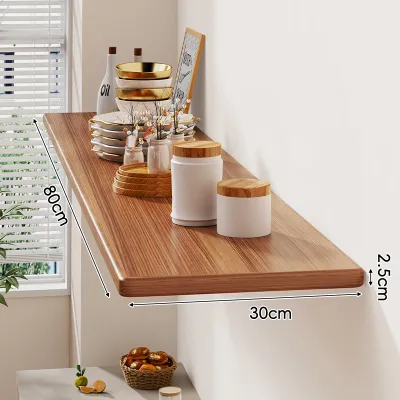
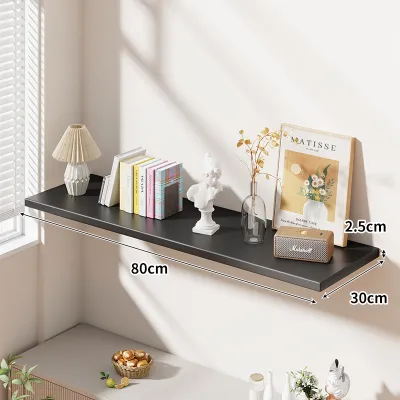
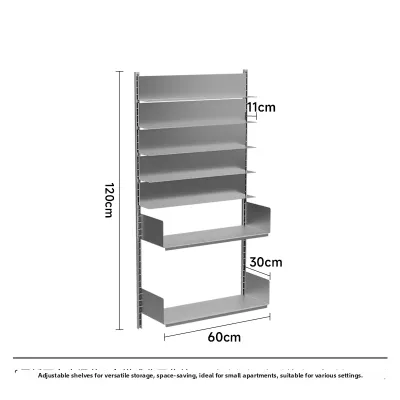
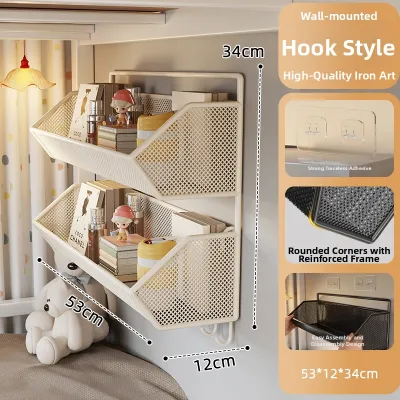
Prices are valid at publication and may change. Please refer to the product page for the latest price.
When measuring, you must identify and map out all physical obstacles that could interfere with the shelf or its mounting brackets. Look for power outlets, light switches, skirting boards, air conditioning trunking, and the swing paths of nearby doors or cabinet panels. In modern apartments, air conditioning copper pipes and electrical conduits are frequently encased in external plastic trunking that runs along the upper portions of walls; your shelf must clear these obstructions with a comfortable margin to avoid a cramped or misaligned installation.
Visual proportion is another critical factor in determining the ideal shelf size. If you are mounting a hanging wall shelf directly above a piece of furniture, such as a sofa, a console table, or a sideboard, aim for the shelf length to span approximately 60% to 75% of the furniture’s total width. Centering a shelf that is too short can make it look isolated and unfinished, while an overly long shelf can make the entire arrangement feel top-heavy and unbalanced. If the wall is completely blank, treat the entire wall width as your baseline and ensure the shelf setup leaves ample open space on both sides to serve as a visual frame.
Viewing distance and ceiling height also dictate how large or small a shelf will appear in a room. In rooms with standard 2.6-metre ceilings, thick or long shelves can feel imposing if mounted too close to eye level. Conversely, in spacious double-height rooms, thin or short shelves may get lost visually. Mocking up the proposed dimensions on your wall using blue painter’s tape is an excellent way to evaluate the scale, height, and overall proportion of the shelf from various seating and viewing angles before making a purchase.
Match Shelf Dimensions to Your Storage Needs
Your storage requirements directly dictate the physical dimensions of the shelf board. You must select a depth, length, and thickness that can safely support your items while keeping the shelf structurally stable over years of use.

Choosing the Right Depth
Shelf depth determines what types of items you can display and how far the shelf will protrude into your living space. Shallow shelves, measuring between 10 and 15 centimetres deep, are ideal for displaying picture frames, spice jars, small cosmetics, or shallow decorative objects. These compact depths keep the shelf’s center of gravity close to the wall, minimizing the pulling force exerted on the mounting hardware.
Medium shelves, measuring 20 to 30 centimetres deep, are the standard choice for general storage. This range comfortably accommodates standard novels, paperbacks, medium-sized potted plants, and decorative storage baskets. Deep shelves, measuring 35 centimetres or more, are designed for larger items such as heavy textbooks, art portfolios, storage boxes, or electronic equipment.
Be aware that deeper shelves require significantly more robust bracket systems and secure wall anchoring. As the depth of a shelf increases, the leverage exerted on the wall anchors multiplies, shifting the center of gravity outward and putting immense tension on the upper mounting screws. Before finalizing your shelf depth, physically measure the base of the largest item you plan to place on it to ensure it will not overhang the edge.
Determining the Ideal Length
Selecting the length of your shelf involves a trade-off between storage capacity, visual layout, and structural support. A single long shelf, spanning 90 to 120 centimetres, provides a clean, continuous line that works well in minimalist or modern interiors. However, longer shelves are highly susceptible to structural bowing or sagging in the middle if they are not supported by intermediate brackets.
Alternatively, you can install multiple shorter shelves, measuring 30 to 60 centimetres, arranged in a staggered, asymmetrical, or vertical gallery layout. Shorter shelves are inherently stiffer, less prone to sagging, and offer greater flexibility when arranging decor around existing wall features.
To prevent the installation from looking cluttered, always leave sufficient negative space. Ensure there is at least 15 to 20 centimetres of clear wall space between the ends of your shelves and any adjacent walls, window frames, or corners. This breathing room prevents the shelving from feeling squeezed into the space.
Selecting Shelf Thickness
Shelf thickness affects both the visual weight of the unit and its structural resistance to bending. Thicker shelves, ranging from 3 to 5 centimetres, present a substantial, high-end look often associated with premium floating shelves. This thickness is structurally necessary when you need to support heavy loads over longer spans without the shelf board bending under the weight.
Thinner shelves, measuring 1.5 to 2 centimetres, provide a sleek, lightweight, and minimalist aesthetic. However, these thin profiles are strictly limited to lightweight decorative items and require closely spaced support brackets if they are made of flexible materials like medium-density fibreboard (MDF) or plywood.
When choosing a thickness, you must also ensure compatibility with your mounting hardware. If you plan to use exposed metal brackets, clamp brackets, or slip-on floating brackets, verify that the shelf board’s thickness matches the maximum opening or slot capacity of the hardware. A mismatch can result in an unstable shelf that tilts forward or fails to lock securely into place.
Installation Clearances and Safety Margins
Safe installation requires careful planning of vertical clearances and a clear understanding of your home’s wall construction. You must ensure the shelf does not pose a physical hazard to occupants and can be accessed comfortably.
For shelves placed in high-traffic walkways, corridors, or entryways, the underside of the shelf should be mounted at least 1.8 metres above the floor to prevent taller individuals from bumping their heads. If you are mounting a shelf above a seating area, such as a sofa, or above a bed headboard, leave a safety margin of at least 60 to 75 centimetres between the top of the cushions or mattress and the bottom of the shelf. This clearance ensures that users can sit up, recline, or stand up without any risk of collision.
Additionally, you must account for retrieval clearance. Leave at least 20 to 30 centimetres of open vertical space above the top surface of the shelf. This space is necessary to allow you to comfortably lift, tilt, and place tall items on the shelf without scraping the ceiling or the underside of an upper shelf.
Your wall’s construction material is the single most critical factor in determining the maximum safe size and load capacity of your hanging wall shelf. In Singapore, residential properties present two primary wall types:
- Solid Concrete or Brick Walls: Standard in HDB flats and structural walls of private condominiums. These walls are exceptionally dense and strong, making them capable of supporting heavy, deep shelves and substantial weight loads. However, installation requires a rotary hammer drill, masonry drill bits, and high-quality nylon expansion plugs or metal sleeve anchors.
- Hollow Drywall Partitions: Common for internal room dividers in newer condominiums and landed properties. Drywall has limited load-bearing capacity. To mount a shelf securely, you must use a stud finder to locate the internal timber or metal studs and screw the brackets directly into them. If stud alignment is not possible, you must use heavy-duty steel toggle bolts, but you must strictly limit the shelf depth and overall weight to prevent the drywall from tearing.
Before drilling any holes, you must check for hidden utility lines. Use a reliable digital multi-scanner to detect live electrical wiring and water pipes running behind the wall surface. This precaution is especially vital on walls shared with bathrooms, kitchens, or utility yards, where water lines and electrical conduits are densely packed.
Common Sizing Mistakes to Avoid
Avoid these frequent planning and installation errors to ensure your shelving remains safe, functional, and visually appealing over time:
- Installing deep shelves in narrow pathways: Mounting a deep shelf in a tight hallway or near a doorway creates a constant bump hazard. Keep shelf depths under 15 centimetres in high-traffic zones to maintain clear walkways.
- Ignoring the bracket footprint: Many homeowners select a shelf board but fail to measure the brackets. Heavy-duty brackets often feature long vertical support arms that extend far below the shelf, which can unexpectedly block light switches, cover power outlets, or overlap with lower furniture.
- Forgetting lift clearance in tight alcoves: If you size a shelf to fit snugly inside a recessed wall alcove or directly beneath an overhead cabinet, you must leave enough vertical space to slide and lift items onto the shelf. Without this clearance, the shelf becomes virtually unusable for taller books or decorative vases.
- Overestimating span capacity without center supports: A common mistake is installing a long shelf (such as 150 centimetres) using only two brackets at the far ends. Over time, gravity and the weight of your items will cause the center of the shelf to sag. Always refer to the manufacturer's guidelines and add intermediate support brackets every 40 to 60 centimetres for engineered wood or MDF shelves.
Frequently Asked Questions (FAQ)
How much weight can a standard hanging wall shelf hold?
A shelf’s weight capacity is determined by the weakest link in the entire installation system, rather than a single fixed rating. A solid wood shelf mounted securely into a concrete wall using heavy-duty steel brackets and expansion plugs can easily support 20 to 30 kilograms. However, the exact same shelf mounted on a hollow drywall partition using standard plastic self-drilling anchors might fail under a load of less than 5 kilograms. To ensure safety, always check the manufacturer’s specified load limits for both the shelf board and the brackets, use the appropriate wall anchors for your specific wall type, and never exceed the lowest rated component in your setup.
What is the ideal depth for storing standard books?
For standard books, paperbacks, and novels, a shelf depth of 20 to 25 centimetres is ideal. This depth allows the books to sit completely on the shelf surface without hanging over the front edge, while leaving a small 2-to-3-centimetre margin at the front to prevent dust accumulation and allow you to easily grasp the spine of a book when retrieving it. If you have a collection of oversized coffee table books, heavy textbooks, or art portfolios, you should measure the widest book beforehand, as these larger volumes typically require a deeper shelf of 30 to 35 centimetres to prevent tipping.

Community discussion
Share your experience or ask a question. Comments are reviewed before publication.