
Determining whether an Urban Echo sofa bed is the right fit for your compact Singapore home requires a methodical approach to verifying space-saving mechanisms, storage capabilities, and exact physical dimensions against your specific floor plan. Singapore’s high-density housing, such as Housing & Development Board (HDB) flats and modern condominiums, demands furniture that works twice as hard without cluttering your living areas. By utilizing a structured evaluation framework—assessing spatial limits, analyzing mechanical features, balancing ergonomics, and verifying safety specifications—you can make an informed decision that ensures your multi-functional sofa bed delivers both comfort and utility.
Assessing Space and Functional Needs in Compact Singapore Homes
Before browsing any furniture catalog, you must establish a clear understanding of your physical space and functional requirements. Singapore apartments often feature tight entryways, narrow corridors, and compact passenger lifts. Your evaluation must begin at the very entry point of your home. Measure the width and height of your front door, any hallway turning angles, and the internal dimensions of your building’s elevator. If a bulky sofa bed frame cannot clear these entry points during delivery, you may face costly return fees or delivery complications.
Once inside the room, map out the exact floor space where the sofa bed will sit. You must account for two distinct footprints: the sofa mode and the fully extended bed mode. Use masking tape on the floor to visualize both configurations. When the bed is fully deployed, you must verify that there is still a clear walking path of at least 50 to 60 centimeters around the perimeter. This ensures you do not trap yourself in the room or block access to other essential areas.
Products mentioned in this guide

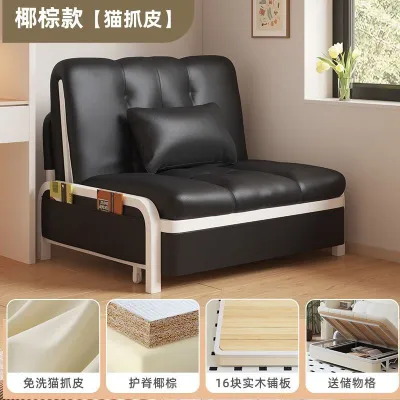
Prices are valid at publication and may change. Please refer to the product page for the latest price.
Additionally, inspect your room’s layout for potential architectural obstacles. Take note of wall recesses, structural pillars, electrical outlets, and window swing paths. A sofa bed placed directly beneath a window must not block the window’s opening mechanism when the backrest is raised. Similarly, ensure the extended bed does not obstruct built-in wardrobe doors or bedroom entryways.
Finally, define the primary use case for the furniture. If the sofa bed will serve as a daily sleeping surface in a studio apartment, you must prioritize heavy-duty folding mechanisms and high-quality mattress support. Conversely, if the piece is intended for occasional guest hosting in a study or home office, you can place greater emphasis on seating comfort, aesthetic integration, and built-in storage solutions.
Key Multi-Functional Features to Verify in Urban Echo Sofa Beds
When evaluating the Urban Echo product range, look closely at the specific mechanical designs and multi-functional features detailed in the manufacturer’s official product descriptions or showroom displays. Not all sofa beds operate the same way, and choosing the wrong mechanism can severely limit usability in a tight room.

First, evaluate the fold-out mechanism. Common designs include pull-out frames, click-clack backrests, and classic fold-down futons. A click-clack mechanism is often simple to operate but typically requires you to leave a gap between the back of the sofa and the wall so the backrest can fold flat. In a small room, this gap represents wasted space. A pull-out mechanism, on the other hand, allows the sofa to sit flush against the wall but requires significant clearance space in front of the unit. Verify these operational clearance requirements on the official product specification sheets before making a choice.
Second, check for integrated storage compartments. To maximize utility in a compact home, look for models that feature under-seat storage drawers or hidden compartments within a chaise lounge. This built-in storage is invaluable for stowing away extra pillows, bedsheets, blankets, and seasonal items, eliminating the need for an additional bulky chest of drawers in the room. Ensure that these storage compartments are easily accessible and do not require complex disassembly to open.
Third, look for modular or adjustable components that allow the furniture to adapt to different room shapes. Some models offer reversible chaises that can be positioned on either the left or right side of the main frame. This flexibility is incredibly useful if you decide to rearrange your living room layout or move to a new apartment in the future. Other adjustable features to verify include multi-angle armrests that can fold down to extend the seating area, or detachable back cushions that can be removed to maximize the sleeping surface width.
Balancing Dimensions and Ergonomics for Dual Use
A common challenge with multi-functional furniture is finding a piece that does not compromise on comfort in either of its roles. To ensure your sofa bed is comfortable for both daytime lounging and nighttime sleeping, you must carefully analyze the physical dimensions and material composition.
Start by evaluating the seating ergonomics. Compare the seated depth—the distance from the front edge of the cushion to the backrest—against standard ergonomic guidelines. For comfortable daily sitting, a seat depth of 50 to 60 centimeters is ideal, allowing your back to be supported while your feet rest flat on the floor. If the seat depth is too deep, you may find yourself slouching, which can cause back discomfort over time. Also, check the height and angle of the backrest to ensure it provides adequate lumbar support during long periods of sitting.
Next, verify the unfolded mattress dimensions against standard Singapore bed sizes, such as Single, Super Single, or Queen. Ensure the total length of the sleeping surface accommodates the height of the primary user. A standard adult mattress length is typically 190 centimeters; any sleeping surface shorter than this may cause discomfort for taller individuals. Pay attention to the width as well, especially if the bed is intended to accommodate two adults comfortably.
Finally, inspect the mattress thickness and core material composition. This information can usually be found on official product tags, specification sheets, or by asking a showroom representative. A mattress that is too thin—such as those under 10 centimeters—may allow sleepers to feel the underlying metal or wooden support slats. Look for high-density foam, pocketed coil springs, or memory foam layers that offer proper spinal alignment and pressure relief. If you plan to use the sofa bed daily, investing in a model with a thicker, high-density core is essential for preventing premature sagging and ensuring restful sleep.
Pre-Purchase Verification and Safety Checklist
Before finalizing your purchase of an Urban Echo sofa bed, it is crucial to run through a comprehensive safety and durability checklist. Because sofa beds contain moving parts and undergo regular transitions, they are subject to more wear and tear than standard stationary sofas.
Begin by reviewing the manufacturer’s stated weight capacity limits. A high-quality sofa bed should clearly specify the maximum weight it can safely support in both its seating and sleeping configurations. Verify that the frame is constructed from durable materials, such as kiln-dried hardwood or reinforced steel, which provide the structural integrity needed to withstand daily use. Avoid models that do not provide clear weight capacity specifications, as this can be a sign of substandard construction.
Next, examine the fabric properties and maintenance requirements. Singapore’s warm, humid climate means that upholstery fabric must be highly breathable and easy to clean. Check the product care labels to see if the fabric has been treated for stain resistance or if the covers are fully removable and machine-washable. Removable covers are highly recommended for households with pets or young children, as they make maintaining hygiene much simpler. If the covers are fixed, verify the recommended cleaning methods and ensure you are comfortable with the required upkeep.
Lastly, confirm the warranty terms, assembly requirements, and return policies. A reliable warranty should cover both the frame and the folding mechanism for a reasonable period. Because sofa beds are heavy and mechanically complex, professional assembly is highly recommended to ensure all parts are aligned correctly and safely. Verify whether assembly services are included in your purchase or if they incur an extra fee. Additionally, read the return policy carefully: make sure you understand the terms, restocking fees, and transport costs associated with returning a bulky furniture item if it does not fit your space or meet your expectations.
Spatial Planning and Layout Integration
Successfully integrating a sofa bed into a small Singapore home goes beyond simply finding a model that fits the physical dimensions of your room. It requires thoughtful spatial planning to maintain a balanced, functional, and comfortable living environment.
First, position the sofa bed to optimize traffic flow. Even when the bed is fully extended, key pathways through the room must remain unobstructed. Avoid placing the unit in a way that blocks access to built-in wardrobes, bedroom doors, or electrical switches. If the model features under-seat storage drawers, ensure there is enough clearance space in front of the sofa to pull the drawers out fully without having to lift or move heavy area rugs.
Second, pair the sofa bed with flexible, lightweight secondary furniture. Instead of a heavy, solid wood coffee table, opt for lightweight nesting tables, C-shaped side tables, or fabric ottomans that can easily be moved to the side when it is time to unfold the bed. This allows you to transition the room from a living space to a sleeping space in minutes with minimal physical effort.
Third, manage ventilation and moisture prevention to protect your furniture from Singapore’s high humidity. Avoid placing the sofa bed completely flush against cold exterior walls, as the lack of airflow can trap moisture and encourage mold growth. Leave a small gap of 5 to 10 centimeters behind the sofa to allow air to circulate freely. Furthermore, ensure the sofa bed is not positioned directly beneath an air conditioning unit where condensation might drip onto the fabric, or in a spot that completely blocks natural ventilation from windows and balcony doors.
Frequently Asked Questions (FAQ)
How often should the folding mechanism be lubricated or checked?
To ensure smooth and safe operation, you should conduct a visual inspection of the folding mechanism every six months. Look for loose bolts, misaligned hinges, or signs of wear on the moving metal parts. Listen for any squeaking or grinding noises when transitioning the sofa into a bed. If the mechanism feels stiff or noisy, consult the manufacturer’s manual for approved lubricant types—typically a light silicone-based spray—and apply it sparingly to the pivot points. Avoid using heavy household oils or WD-40 unless specified, as these can attract dust and clog the mechanism over time.
Can a sofa bed mattress be replaced if it loses support?
Whether you can replace the mattress depends entirely on the design of your specific Urban Echo model. Some traditional pull-out sofa beds use standard-sized, independent mattresses that can be easily replaced when they lose support, provided the replacement matches the original dimensions and thickness required to fold into the frame. However, many modern modular or click-clack designs use integrated cushions that serve as both the seat and the sleeping surface. For these integrated models, standard mattress replacements are not possible, and you will need to contact the manufacturer directly to inquire about proprietary replacement parts or professional reupholstery and foam replacement services.
What are the best practices for preventing mold under the sofa bed?
Preventing mold in Singapore’s humid climate requires consistent moisture management and air circulation. Choose a sofa bed design with raised legs rather than a solid base that sits flat on the floor, as this allows air to flow underneath the unit. Keep the room well-ventilated by opening windows or using a dehumidifier during the wet monsoon seasons. Avoid placing damp items, such as wet towels or un-ironed laundry, on the upholstery. Regularly vacuum underneath the sofa bed to remove dust, which can harbor mold spores, and periodically pull the unit away from the wall to check the backing and floor for any signs of moisture buildup.

Community discussion
Share your experience or ask a question. Comments are reviewed before publication.