
The decision to bring the Unica stool into your dining or counter space hinges on how its specific design language aligns with your home’s aesthetic, spatial constraints, and daily comfort needs. While the Unica stool offers a distinct visual profile, determining whether it fits your lifestyle requires comparing its verified dimensions, materials, and ergonomic features against common market alternatives. This guide breaks down the key design and functional differences to help you decide if this specific style is the right fit for your layout.
Understanding the Unica Stool's Design Baseline
To make an accurate comparison, you must first establish the exact specifications of the Unica stool variant you are considering. Because furniture designs can evolve or feature regional variations, always verify the stool’s official materials, exact dimensions, and silhouette directly from the manufacturer’s specification sheet or product label. The Unica stool is generally recognized for its clean, contemporary lines, often leaning toward a minimalist or modern industrial aesthetic. Its structural profile typically features a molded seat shell paired with a streamlined leg frame, creating a sleek silhouette that avoids unnecessary ornamentation.
Before comparing it to other seating options, clarify which height variant matches your furniture. Stools are generally produced in three primary heights: dining height (typically matching standard tables), counter height (designed for kitchen islands), and bar height (for elevated bars or high counters). Measuring your existing table or counter height is an essential first step, as a mismatch of even a few centimeters can significantly impact seating comfort and posture. Check the manufacturer’s documentation to confirm whether the specific Unica model you are viewing is configured as a low dining stool or an elevated counter-height option.
Products mentioned in this guide
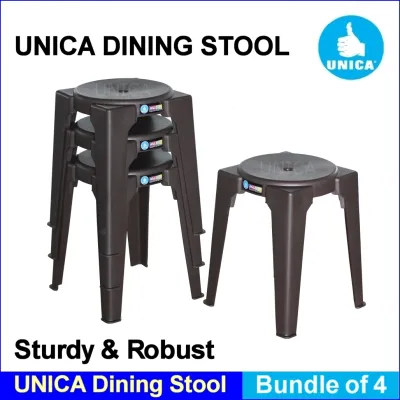
![[TheGoodFurniture] Plastic stool stackable unica chair Lightweight Sturdy Durable Colorful chairs.塑料椅头 🌟Can Mixed Colors 🌟](https://img.lazcdn.com/g/p/3fad4242655387f8d40e94ad8a16bd4d.jpg_400x400q80.jpg_.webp)
Prices are valid at publication and may change. Please refer to the product page for the latest price.
Aesthetic Comparison: Unica Stool vs. Common Dining Styles
When integrating new seating into a dining area, the visual weight of the furniture plays a critical role in the overall room design. The Unica stool, with its slender leg profile and molded seat, presents a relatively light visual footprint compared to traditional solid wood dining chairs or fully upholstered high-back chairs. Traditional wooden chairs often feature heavy, solid frames that command significant visual attention, making them ideal for formal, spacious dining rooms but potentially overwhelming in compact layouts. In contrast, the Unica stool’s minimalist frame allows light to pass through, which can make a dining zone feel more open and airy.

The seat shape and material finishes also dictate how well the stool blends with your existing decor. Standard dining stools often fall into distinct stylistic archetypes: rustic solid wood with visible grain, plush upholstered designs with fabric or leather covers, or industrial wire-frame metal structures. The Unica stool typically bridges the gap between modern minimalism and practical utility, utilizing smooth, molded surfaces that offer a clean, uniform color palette. If your home features a Scandinavian, contemporary, or industrial theme, the sleek lines of the Unica stool will likely complement the space. However, if your dining room relies on classic, ornate, or highly traditional elements, a standard wooden chair with detailed carvings or a rich fabric-upholstered chair might provide a more cohesive aesthetic.
Rather than searching for a universally superior style, focus on how the stool’s finishes interact with your room’s existing textures. For instance, if your dining area already features dominant wood tones, introducing a molded or metal-framed stool like the Unica can create an appealing material contrast. Conversely, if your space is dominated by cold surfaces like polished concrete or quartz, you may want to verify if the Unica stool’s color options can introduce a softer, warmer tone to balance the environment.
Comfort and Ergonomics for Daily Seating
Daily comfort is a primary consideration for any dining seating, especially if your table doubles as a workspace or a gathering spot for long family meals. One of the most significant differences between the Unica stool and standard dining chairs is the approach to backrest support. Many stool designs, including low-backed or backless variants, prioritize a compact footprint over full-body support. If the Unica stool variant you are considering features a low backrest or a backless design, it will encourage an upright posture but may not offer the relaxed, slouch-friendly support of a traditional high-back dining chair.
Footrest placement is another ergonomic factor that varies widely between stools and standard chairs. For elevated counter or bar-height stools, a built-in footrest is essential to prevent leg fatigue. When evaluating the Unica stool, check the height and position of its footrest stretchers. A well-positioned footrest allows your feet to rest flat, taking pressure off the back of your thighs. Compare this to standard dining chairs, where your feet naturally rest on the floor, eliminating the need for integrated foot support.
Seat depth, contouring, and padding also influence how long you can comfortably sit. Molded seats, like those often found on the Unica stool, rely on anatomical contouring to distribute weight evenly without the need for thick foam. While this creates a sleek look and is highly durable, users accustomed to plush, upholstered dining chairs might find molded surfaces firmer over extended periods. If you prefer a softer seat, verify whether the manufacturer offers upholstered seat pads or if the stool’s design accommodates aftermarket cushions without sliding.
Space Planning and Visual Weight in Your Layout
In modern homes, particularly compact apartments or open-plan layouts where space is at a premium, the physical footprint of your furniture is just as important as its style. To assess how the Unica stool will affect room flow, analyze its base dimensions and leg splay. Some stool designs feature legs that flare outward for stability, which can actually consume more floor space than the seat itself. Compare the Unica stool’s footprint against standard four-leg vertical stools to ensure it does not create a tripping hazard in high-traffic walkways.
Visual transparency is another key concept in space planning. A solid, high-backed wooden or upholstered chair acts as a visual barrier, cutting off sightlines and making a small dining area feel cramped. Because the Unica stool typically features an open frame and a lower profile, it allows the eye to travel through the furniture, preserving the perception of space. This makes it an excellent candidate for kitchen islands or dining counters that face into a living room, as the stools can be tucked neatly out of sight when not in use.
Before making a decision, perform standard clearance checks to ensure comfortable seating. For proper legroom, aim for a clearance of approximately 25 to 30 centimeters between the top of the stool seat and the underside of your dining table or counter. Additionally, calculate the horizontal spacing: each person requires about 60 to 75 centimeters of width at the table to dine comfortably without bumping elbows. Compare these requirements against the width of the Unica stool to determine exactly how many units can fit along your counter or table without crowding.
Care and Maintenance Based on Verified Materials
Long-term satisfaction with your dining seating depends heavily on how easy it is to clean and maintain. Because dining areas are prone to spills, crumbs, and daily wear, you should always consult the product’s official care label for approved cleaning methods. The Unica stool’s specific materials—whether molded polymers, powder-coated metals, or treated woods—will dictate its maintenance routine. Generally, molded and metal surfaces are highly practical for busy households, requiring only a quick wipe with a damp, soft cloth to remove spills.
Compare this to the maintenance demands of alternative seating materials. Raw or minimally finished wood can absorb liquids quickly, leading to staining or warping if spills are not addressed immediately. Heavy fabrics and upholstered chairs are susceptible to deep stains, dust accumulation, and odors, often requiring specialized fabric cleaners or professional steam cleaning. If you have young children or pets, the low-maintenance surfaces of a molded stool like the Unica offer a distinct practical advantage over delicate textiles.
However, even durable materials have limits. Avoid using harsh chemical solvents, abrasive scrubbing pads, or bleach, as these can permanently dull or scratch the stool’s finish. Establish clear stop conditions for DIY maintenance: if you notice structural looseness in the joints, deep scratches that expose raw metal or wood, or severe finish degradation, stop using standard household cleaners and consult the manufacturer or a qualified furniture restoration professional to prevent further damage.
Final Decision: Is the Unica Stool Right for Your Home?
Choosing between the Unica stool and other dining stools comes down to balancing your aesthetic preferences with the practical realities of your living space. To make your final decision, apply a conditional framework based on your household’s specific needs and budget considerations, keeping in mind that high-quality seating typically ranges from S$100 to S$300 per unit depending on the materials and finishes selected.
Choose the Unica stool if you prefer a modern, minimalist aesthetic with a light visual footprint that keeps your dining or kitchen area looking open and spacious. It is an excellent fit if you prioritize easy-to-clean surfaces, straightforward maintenance, and a design that can easily tuck under a counter to maximize floor space in a compact layout.
Choose alternative dining stools if your household requires robust, high-back ergonomic support for long hours of sitting, or if your interior design leans heavily toward classic, traditional, or rustic themes that demand the warmth of solid wood or the plush comfort of deep upholstery.
Verify first before purchasing by measuring your exact table or counter height to ensure a comfortable clearance of 25 to 30 centimeters. Additionally, check the manufacturer’s specifications for weight capacity limits, frame stability, and material compatibility with your local climate, ensuring the stool will perform safely and durably in your specific home environment.

Community discussion
Share your experience or ask a question. Comments are reviewed before publication.