
Selecting the right storage unit for a compact Built-To-Order (BTO) or resale HDB bedroom requires balancing tight floor space with daily accessibility. The twin dolphin drawer serves as an efficient solution if you need a specialized dual-compartment configuration to sort lightweight items like clothing accessories, baby supplies, or toiletries within a narrow footprint. By offering split-drawer options on its upper levels, this style of organizer allows you to categorize smaller items without occupying the substantial floor area demanded by traditional wide dressers.
Alternative storage solutions may serve your space better under specific room conditions. If floor space in your bedroom is virtually non-existent, utilizing the empty zone beneath your bed frame with dedicated under-bed drawers is often a superior strategy. Similarly, if you need to store heavy, dense items like textbooks, tools, or heavy electronics, solid wood or steel modular towers are far safer and more durable than lightweight plastic units.
Before making a final purchase, you must verify the manufacturer’s exact external dimensions against your specific room clearances. This includes measuring walking paths, door swing radiuses, wardrobe door clearances, and any gaps between your bed and the wall. Taking these precise physical measurements ensures your new storage unit fits seamlessly into your home layout without creating physical bottlenecks.
Products mentioned in this guide
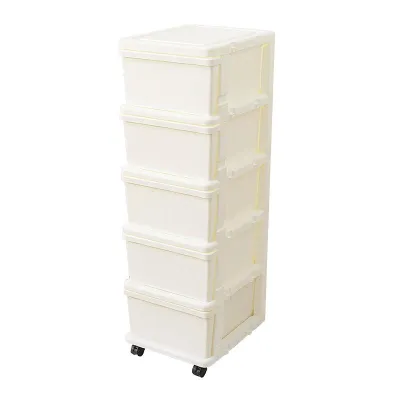
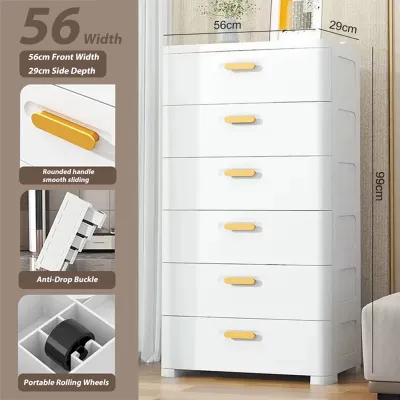
![[Household]Twin Dolphin 4/5 Tiers Premium Storage Cabinet Plastic Storage Box Drawer Organizer](https://img.lazcdn.com/g/p/83ddeaf02eb483240f807cd77ec0e5e4.jpg_400x400q80.jpg_.webp)
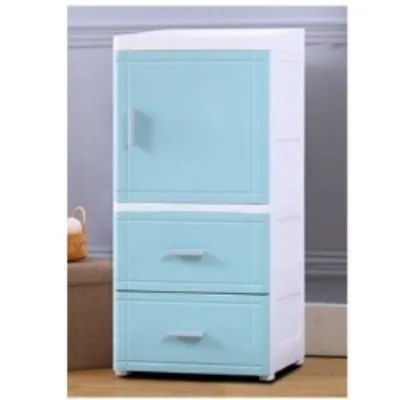
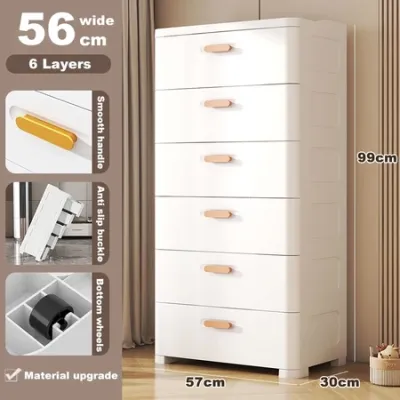
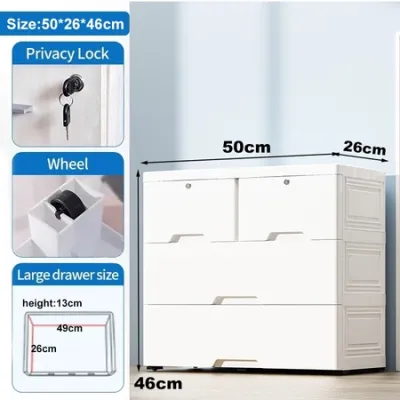
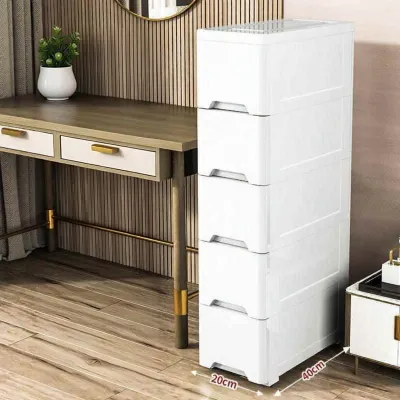
Prices are valid at publication and may change. Please refer to the product page for the latest price.
Evaluating the Twin Dolphin Drawer for Small Spaces
The twin dolphin drawer is a popular utility storage design characterized by its multi-tiered vertical stack and a distinct split-top drawer configuration. Typically, the uppermost tier consists of two smaller, side-by-side drawers, while the lower tiers feature full-width drawers. This hybrid layout is highly functional for HDB bedrooms where a single user needs to store both small, easily misplaced accessories—such as socks, keys, or cosmetics—and larger folded garments like t-shirts or towels in a single, space-saving unit.
Because various manufacturers produce units under this design style, you should never assume uniform dimensions or material compositions. Always verify the exact width, depth, height, and specific polymer or resin formulation from the official product packaging or retailer listing before purchasing. Some models are constructed from high-impact polypropylene, which offers excellent resistance to moisture and cracking, while budget alternatives might use thinner plastics that flex under moderate weight.
Measuring your HDB bedroom for this specific unit requires looking beyond the static floor footprint. You must account for the drawer extension depth, which is the total distance the drawers protrude when fully pulled open. In a tight bedroom walkway, an extended drawer can easily block your path or strike adjacent furniture, leading to physical damage or daily frustration.
Additionally, check that the unit does not obstruct the swing radius of your bedroom doors or built-in wardrobe doors. Standard HDB bedroom doors swing inward and require a completely clear arc to function safely. If you place a drawer unit directly behind a door, even a slight misalignment can cause collisions that scratch the furniture or damage the door hinges over time.
Another critical factor is the presence of baseboard skirting along your bedroom walls. In Singapore, HDB skirting boards typically project 10mm to 15mm from the plaster wall. If your chosen drawer unit has a completely flat back without a bottom recess, the skirting board will prevent the unit from sitting flush against the wall. This creates a small rear gap that can collect dust, harbor pests, or cause the unit to tilt forward slightly, increasing the risk of a tip-over when drawers are pulled open.
How It Compares to Other Compact Drawer Units
Space Efficiency and Footprint
When comparing the twin dolphin drawer to standard slim storage towers or wide, low-profile chests, the primary difference lies in how they utilize vertical versus horizontal space. A standard slim tower typically features a single column of uniform drawers, maximizing vertical space but offering less organizational versatility for tiny items. Wide, low-profile chests provide ample flat top surface area, but they consume valuable floor space that could otherwise accommodate a study desk or a bedside table.

To determine the true spatial value of any drawer unit, calculate its usable storage volume against its actual floor footprint. You can find this by multiplying the internal width, depth, and height of the drawers, then comparing that total to the external floor area the unit occupies. The twin dolphin design excels in this calculation because its split-top drawers eliminate the need for internal dividers or organizing bins, allowing you to utilize every cubic centimeter of internal space for small items.
Vertical clearance is another essential consideration in HDB rooms, particularly when placing furniture near windows, air-conditioning ledges, or low-hanging wall fixtures. Standard HDB window sills sit between 50cm and 90cm from the floor. A tall, five-tier plastic drawer unit may block natural light or obstruct access to window latches if placed directly in front of them. Ensure you measure the height of your window sills and compare them to the unit’s height to maintain proper ventilation and light flow.
Mobility and Layout Flexibility
In Singapore’s humid tropical climate, dust mites, mold, and pet dander can rapidly accumulate behind stationary furniture. This makes the mobility of your storage units a significant factor for home hygiene. Many twin dolphin drawer units come equipped with built-in casters or lightweight frames that allow you to slide the unit away from the wall easily during your weekly cleaning routine.
However, the ease of moving a drawer unit changes dramatically once it is fully loaded. While an empty plastic unit is exceptionally light and simple to reposition, a fully loaded unit can become unstable during transit. You must evaluate the design of the integrated handles or grip points; shallow, slippery plastic ridges can make it difficult to maintain a secure hold when steering a heavy unit across the room.
Safety is a paramount concern when moving tall, narrow drawer units. Before attempting to roll or slide any unit, verify its center of gravity. Tall units loaded with heavy items in the upper drawers are highly prone to tipping over when pushed. Always check whether the built-in casters feature locking mechanisms. On slightly uneven HDB floor tiles or vinyl planks, unlocked casters can cause the drawer unit to drift or roll unexpectedly when you pull a drawer open.
Load Capacity and Material Durability
Material composition plays a decisive role in both the longevity of your storage furniture and its overall safety. Lightweight plastic or resin compact drawers offer excellent resistance to moisture, making them immune to the warping, swelling, and mold issues that often plague cheap engineered wood in humid environments. They are also easy to wipe clean with a damp cloth and mild detergent.
Despite these benefits, plastic units generally have much lower load capacities than engineered wood or steel-framed alternatives. You should never assume the weight capacity of a drawer based on its visual thickness or sturdy appearance. Always refer strictly to the manufacturer-stated load limits per drawer. Exceeding these limits can cause the plastic runners to sag, preventing the drawers from opening smoothly or causing the entire frame to warp permanently.
Overloading the upper drawers of a tall, lightweight unit creates a severe tipping hazard, especially in high-traffic HDB bedrooms or homes with young children and pets. If a heavy item is placed in a top drawer and that drawer is pulled out fully, the center of gravity shifts past the unit’s base support, causing it to fall forward. To mitigate this risk, always store your heaviest items—such as bed linens or heavy jeans—in the bottom drawers, and reserve the upper split drawers for lightweight accessories.
Top Alternative Storage Solutions for HDB Bedrooms
Under-Bed Drawer Units
When floor space in a small HDB bedroom is entirely occupied by a bed frame, wardrobe, and desk, under-bed drawer units offer an excellent way to reclaim unused space. These low-profile storage containers slide directly beneath your bed frame, effectively turning an empty dust-gathering zone into a highly functional storage compartment. This setup is ideal for storing seasonal clothing, extra bedding, or items that you do not need to access multiple times a day.
To successfully implement under-bed storage, you must carefully measure your bed frame clearances. First, measure the vertical distance from the floor to the lowest edge of the bed frame side rails to ensure the drawers can slide underneath without scraping. Next, account for any mattress sag; a heavy mattress can compress the bed slats downward, reducing your vertical clearance by several centimeters over time.
Finally, verify the wheel clearance and the type of flooring in your bedroom. Under-bed drawers with small plastic wheels can roll smoothly on hard, flat surfaces like ceramic tiles or vinyl planks, but they may struggle or scratch delicate parquet wood floors. If you have a plush rug next to your bed, ensure the wheels are large enough to transition over the pile without getting stuck or dragging the drawer base across the floor.
Slim Rolling Carts and Modular Towers
Slim rolling carts and modular storage towers are specifically engineered to utilize narrow, irregular gaps that are often left vacant in standard HDB layouts. These gaps typically occur between a built-in wardrobe and the bedroom wall, or between a study desk and the bed frame. Ranging from 15cm to 30cm in width, these ultra-slim units can slide deep into these tight spaces, providing vertical storage without occupying usable walking paths.
One of the primary benefits of modular towers is their adjustability. Many designs allow you to add or remove tiers to match the exact height of your desk or window sill, creating a cohesive, built-in look. Because they are designed to fit into tight gaps, they are often supported on two sides by existing furniture or walls, which naturally helps prevent them from tipping over.
However, you must evaluate their stability when they are pulled out of their protective gaps. Because these units are exceptionally narrow, they have a very small footprint base, making them inherently less stable than wider drawer units when standing independently. When a drawer is fully extended on an ultra-slim tower, ensure you support the frame with one hand to prevent it from tipping sideways. Opt for models with high-quality, smooth-gliding runners to minimize the physical pulling force required to open them.
Final Verdict: Choosing the Best Fit for Your Room
To make an informed decision for your HDB bedroom, evaluate your storage needs against the physical constraints of your space using this practical decision framework:
- Choose the Twin Dolphin drawer if: You need to organize a mix of small personal accessories and folded clothing in a single, compact unit, and you have a designated floor corner that accommodates the unit's width, depth, and full drawer extension path.
- Choose under-bed alternatives if: Your bedroom floor space is at an absolute premium, your bed frame offers at least 15cm to 20cm of clear vertical clearance, and you want to store seasonal items or extra linens out of sight.
- Choose slim modular towers if: You have narrow, unused gaps (15cm to 30cm wide) between your existing furniture and walls, and you require a highly flexible, mobile unit to store lightweight items.
- Verify first if: You plan to store heavy books, tools, or electronics, or if the unit will be placed in a room accessed by young children or pets. In these scenarios, prioritize heavy-duty wood or metal units that feature reliable anti-tip wall anchoring hardware and stable, wide-base designs.
Regardless of the style you choose, always prioritize safety and physical verification. Never rely on visual estimates when planning furniture layouts in small rooms. Take the time to measure your space, check manufacturer specifications, and distribute weight evenly to ensure a safe, organized, and functional HDB living environment.
Frequently Asked Questions (FAQ)
How do I accurately measure my HDB room for a new drawer unit?
To measure your space accurately, use a metal measuring tape to record the maximum width, depth, and height of the designated area. Next, measure the extension depth of the drawers by adding the depth of the unit’s frame to the length of the drawer when fully opened; this total must be less than the available clearance to the nearest obstacle or walking path. Finally, inspect the area for HDB-specific obstructions such as baseboard skirting, wall-mounted power sockets, light switches, window sills, and the swing paths of bedroom and wardrobe doors.
Can plastic compact drawers support heavy books or electronics?
No, standard plastic compact drawers are not designed to support heavy books or electronics. A material name alone does not guarantee load capacity, and you must always check the manufacturer’s specified weight limit per drawer. Storing heavy items in lightweight plastic drawers can cause the plastic runners to sag, warp the frame, and prevent the drawers from opening. Furthermore, placing heavy items in the upper drawers of a lightweight unit creates a severe tipping hazard; if you must store heavier items, choose a low-profile, reinforced wood or metal unit and place the heaviest objects in the bottom drawers.

Community discussion
Share your experience or ask a question. Comments are reviewed before publication.