
Selecting the ideal office leather chair for a home workspace in Singapore depends on balancing ergonomic adjustability, aesthetic preference, and budget. There is no single brand that suits everyone. Premium ergonomic specialist brands are best for users prioritizing long-term physical health, as they combine adaptive lumbar support with high-grade leather upholstery. Traditional executive furniture brands are ideal for those who prefer classic, plush aesthetics and the luxurious feel of genuine top-grain leather, though they offer fewer micro-adjustments. Value-oriented online retail brands provide accessible price points using synthetic leather, making them suitable for casual use or tighter budgets. Matching your daily sitting duration and physical workspace constraints to these brand categories is the most effective way to ensure long-term comfort.
Core Comparison Dimensions for an Office Leather Chair
Evaluating an office leather chair requires looking beyond surface aesthetics. For a home office setup, where a chair often serves multiple purposes and undergoes extended daily use, four core dimensions dictate the value and longevity of your investment: build quality, ergonomic adjustability, material authenticity, and local after-sales support.
Build quality focuses on the structural integrity of the chair’s foundation. This includes the material of the five-star base (cast aluminum versus nylon), the classification of the gas lift cylinder (Class 4 is the industry standard for durability), and the robustness of the tilt mechanism. A sturdy frame prevents wobbling and structural fatigue over years of use.
Products mentioned in this guide
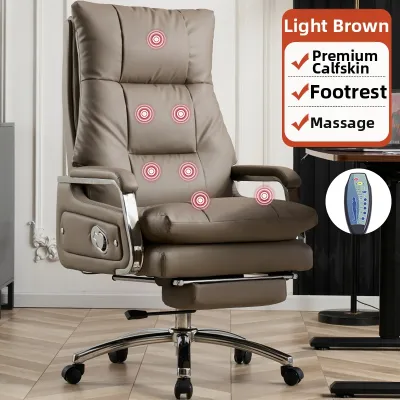
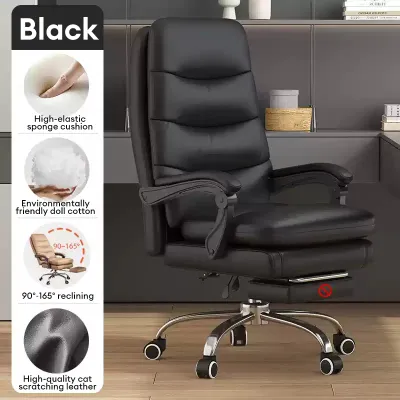
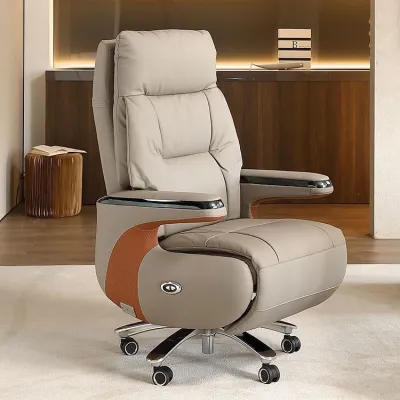
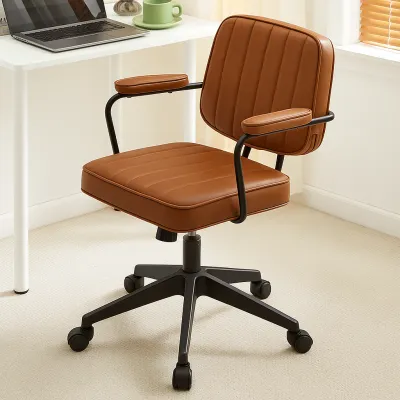
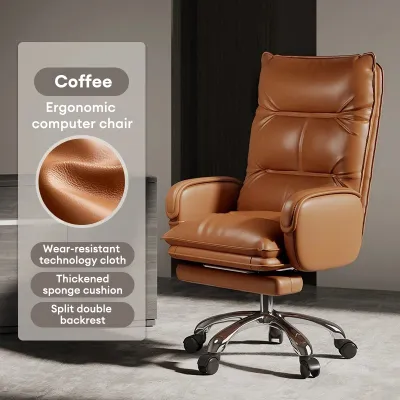
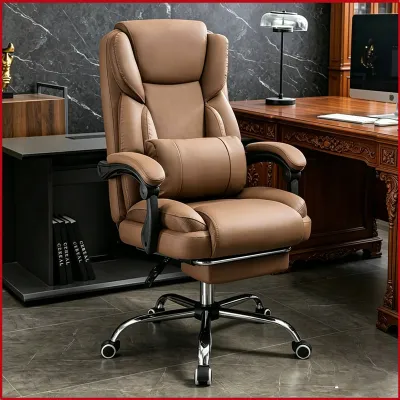
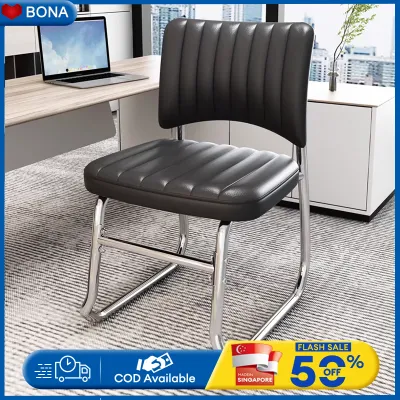
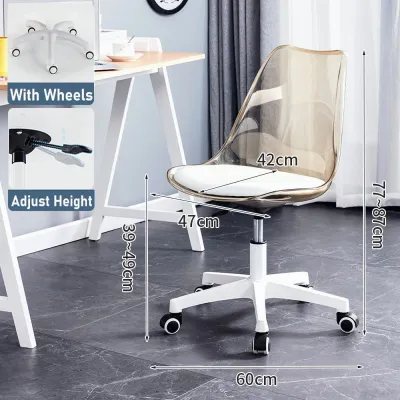
Prices are valid at publication and may change. Please refer to the product page for the latest price.
Ergonomic adjustability determines how well the chair adapts to your unique body proportions. Essential adjustments include seat depth, backrest tension, and multi-directional armrests. Without these, even the most expensive leather chair can cause discomfort during long working sessions.
Material authenticity directly impacts both tactile comfort and durability. Genuine top-grain leather offers breathability and a natural patina over time, whereas synthetic alternatives like polyurethane (PU) or bonded leather vary widely in quality and lifespan.
Lastly, local after-sales support is critical in Singapore. Because shipping large furniture items back to international manufacturers is impractical, having a local distributor or service center that honors warranties, provides replacement parts, and handles on-site repairs is a major differentiator between premium and budget brands.
How Leading Brand Categories Compare
To make an informed decision, it is helpful to categorize the market into three distinct brand philosophies. Each category approaches design, materials, and price points differently, catering to distinct user profiles.

Premium Ergonomic Specialists
Premium ergonomic specialists prioritize active seating biomechanics and long-term musculoskeletal health. Established global manufacturers lead this category, offering high-end office leather chair configurations of their flagship models. Instead of thick, static foam padding, these brands utilize advanced polymer frames, flexible backrests, and sophisticated synchro-tilt mechanisms that mimic the natural movement of the human body.
The leather used by these manufacturers is typically premium top-grain or specialized leather wraps designed to maintain breathability. These chairs feature extensive adjustability options, including 4D armrests (adjustable in height, width, depth, and angle) and precise lumbar tension controls. They also boast high load capacities, often certified up to 136 kg or more, and are backed by robust warranties spanning 10 to 12 years. The primary trade-off is the substantial upfront cost, which positions these brands as long-term investments in physical wellness.
Traditional Executive Furniture Brands
Traditional executive furniture brands, represented in Singapore by established commercial suppliers and premium office importers, focus on classic luxury, presence, and deep comfort. These chairs are characterized by high backrests, substantial padding, and extensive use of genuine top-grain or aniline leather.
The structural foundations of these chairs typically feature heavy-duty steel or polished aluminum frames, providing excellent stability and a commanding aesthetic. The tactile experience of genuine leather in this category is unmatched, offering a soft, cool touch initially and adapting to the user over time. However, these chairs present clear trade-offs for home office use. They generally offer fewer ergonomic micro-adjustments, relying on thicker foam rather than active frame flexibility to provide support. Additionally, the dense padding and solid leather backrests can retain heat, which may lead to discomfort in home offices that are not continuously air-conditioned.
Value-Oriented and Online Retail Brands
Value-oriented and online retail brands dominate local e-commerce platforms and budget furniture warehouses. These brands cater to remote workers seeking the look of a premium office leather chair without the high price tag. They rely on cost-effective manufacturing processes, utilizing synthetic materials such as PU leather, microfibre leather, or bonded leather over engineered wood frames.
While these chairs often feature modern, appealing designs and basic tilt-and-lock functions, their structural components are lighter. Nylon bases and lower-class gas lifts are common in this tier. Warranties are typically limited to 1 to 3 years and may only cover specific mechanical parts rather than the upholstery. When considering these brands, it is crucial to verify build quality by checking customer reviews for long-term durability reports and inspecting the manufacturer’s return policies, as synthetic materials in budget chairs are more prone to early wear.
Evaluating Build Quality and Leather Materials
Understanding the hierarchy of leather materials is essential to avoiding premature wear and ensuring your chair survives the local climate. Marketing terms can be misleading, so verifying the exact material composition on the product label or manufacturer specification sheet is a critical step before buying.
Full-grain and top-grain leathers represent the highest tier of natural materials. Full-grain leather retains the outer layer of the hide, offering maximum durability and breathability, while top-grain leather is slightly sanded to remove imperfections, resulting in a softer, more uniform texture. Both materials contain natural pores that allow air circulation, making them highly resilient and comfortable over long periods.
“Genuine leather” is a broad commercial term that often refers to lower-grade split leather that has been corrected and embossed. While still real leather, it lacks the strength and breathability of top-grain varieties.
Bonded leather consists of shredded leather scraps glued together with polyurethane binders onto a fiber backing. In Singapore’s high humidity, bonded leather is highly susceptible to hydrolysis—a process where moisture breaks down the chemical bonds in the synthetic binders, leading to rapid cracking and peeling.
High-quality PU (polyurethane) and microfibre leathers are engineered synthetic alternatives. Premium PU can mimic the feel of genuine leather and offers excellent spill resistance, but lower-quality versions will degrade quickly under sweat and humidity.
Beyond the upholstery, inspect the structural components. Look for die-cast aluminum or heavy-duty steel bases rather than lightweight nylon, as metal bases offer superior stability and prevent tipping when reclining. Ensure the gas lift cylinder carries a Class 4 certification, indicating it has been tested for safety and high load capacity. Always check the manufacturer’s care instructions and product labels to confirm the exact materials used rather than relying on generic retail descriptions.
Comfort and Ergonomic Adjustability
A common misconception is that a thick, plush leather chair is inherently comfortable for long working hours. In reality, static cushioning can lead to poor posture and muscle fatigue. True ergonomic comfort relies on structural adjustability that supports natural spinal alignment.
When comparing brands, evaluate the range of adjustments available. Seat height adjustment is standard, but seat depth adjustment is equally critical. A proper seat depth allows you to sit fully back against the lumbar support while leaving a two-to-three-finger gap between the edge of the seat and the back of your knees, preventing restricted blood circulation.
Armrest adjustability is another key factor. Basic chairs offer fixed or 1D (height-only) armrests, which can force your shoulders to shrug or sag. Premium chairs offer 3D or 4D armrests, allowing you to position them to support your forearms at a natural 90-degree angle, reducing strain on your neck and shoulders.
The tilt mechanism determines how the chair reclines. A synchro-tilt mechanism, where the backrest reclines at a faster rate than the seat pan (typically a 2:1 ratio), is highly recommended. This keeps your feet flat on the floor and maintains proper spinal support as you shift positions.
Lumbar support should be adjustable both vertically and in depth. Because everyone’s lumbar curve sits at a different height, a fixed lumbar pad can cause discomfort if it does not align with your lower back. Before purchasing, verify that the chair’s adjustability range matches your desk height and physical proportions, ensuring a healthy posture throughout the day.
Pricing, Warranties, and Buying Considerations in Singapore
Navigating the financial aspect of purchasing an office leather chair requires looking at the total cost of ownership rather than just the initial price tag. In Singapore, the market is broadly divided into three pricing tiers.
Entry-level chairs typically cost under S$300. These are almost exclusively upholstered in synthetic or bonded leather, feature basic tilt mechanisms, and offer short warranties. Mid-range options, priced between S$300 and S$800, often feature high-quality PU leather or hybrid upholstery, improved ergonomic adjustments, and better frame materials. Premium chairs, costing above S$800 and often exceeding S$1,500, offer genuine top-grain leather, advanced ergonomic mechanisms, highly durable metal frames, and extensive warranties.
When comparing options, factor in additional costs such as delivery fees, assembly services, and GST. A chair that requires self-assembly may save money upfront, but heavy executive or premium ergonomic chairs can be challenging to assemble without proper tools and assistance.
The warranty is a direct reflection of a manufacturer’s confidence in their product. Ensure the warranty explicitly covers moving parts, the gas lift cylinder, and the tilt mechanism, as these are the components most likely to experience wear.
Given the subjective nature of comfort and the tactile differences between leather grades, visiting physical showrooms in Singapore—commonly located in industrial estates like Ubi, Tai Seng, or central design hubs—is highly recommended. Testing the seat depth, backrest tension, and leather texture in person helps prevent the hassle of returning an unsuitable product.
Final Decision Framework: Choosing Your Home Office Chair
To select the right office leather chair for your home workspace, apply this structured decision framework based on your specific daily habits, aesthetic preferences, and space constraints:
- Choose Premium Ergonomic Brands if you sit for more than 8 hours a day, require precise postural support to manage back strain, and view the purchase as a long-term investment in your physical health.
- Choose Traditional Executive Brands if your daily sitting time is moderate, you prioritize a prestigious aesthetic for video calls, have a dedicated air-conditioned workspace, and prefer the plush comfort of genuine top-grain leather.
- Choose Value-Oriented Brands if you have budget constraints, use the chair occasionally (less than 4 hours a day), or need a secondary seating solution for a guest study.
- Verify first if… you have measured your home office space, doorway widths, and lift dimensions. Large, heavy executive chairs with wide five-star bases require ample clearance and may not fit comfortably through narrow home entryways or within compact study corners.
Frequently Asked Questions (FAQ)
Is genuine leather suitable for Singapore's humid climate?
Yes, genuine top-grain leather is suitable for Singapore’s climate because its natural pores allow it to breathe, unlike cheap synthetic alternatives. However, it performs best in air-conditioned or well-ventilated rooms. Continuous exposure to high humidity and sweat can degrade the leather over time, so regular maintenance is required to prevent moisture damage and mold growth.
How do I maintain and clean a leather office chair?
To maintain your chair, dust it weekly with a dry microfiber cloth to remove debris. For deeper cleaning, wipe the surface with a damp cloth and a mild, pH-neutral leather cleaner, then dry it immediately with a soft towel. Always check the manufacturer’s care label and instructions before applying any cleaning products, and test any cleaner on a small, hidden area first to ensure it does not discolor the material.

Community discussion
Share your experience or ask a question. Comments are reviewed before publication.