
Selecting the right office chair for a home office is one of the most critical decisions for anyone transitioning to or maintaining a daily work-from-home (WFH) routine. The ideal brand and model depend on your daily sitting hours, physical proportions, and budget, meaning there is no single universal option that works for everyone. Instead, the market is divided into distinct tiers—premium global manufacturers, mid-range regional direct-to-consumer (DTC) brands, and entry-level budget brands—each targeting different usage profiles, longevity expectations, and price points.
Quick Answer: Matching Office Chair Brand Tiers to Your WFH Needs
Finding the right office chair requires matching your daily sitting habits and physical needs to the appropriate brand tier. Premium global brands are engineered for long-term durability and advanced, highly responsive ergonomics, making them ideal for intensive use. Mid-range regional or direct-to-consumer brands provide a practical balance of essential adjustability and reasonable pricing for typical eight-hour workdays. Budget brands are suitable for light, occasional use but generally lack the comprehensive support mechanisms required for prolonged sitting.
- Choose Premium Global Brands if: You sit for eight to twelve hours daily, view your chair as a ten-to-fifteen-year health investment, require highly responsive dynamic ergonomics, and have a budget of S$1,200 to S$2,500 or more.
- Choose Mid-Range Regional/DTC Brands if: You work standard eight-hour days, require essential adjustable support (such as lumbar height and seat depth), seek a balance between features and cost, and plan to spend between S$400 and S$900.
- Choose Budget/Entry-Level Brands if: You use your home office occasionally (two to four hours a day), have a strict budget under S$250, and do not require advanced customization or long-term structural warranties.
Core Criteria for Evaluating WFH Office Chairs
To make an objective comparison between different office chair brands, you must evaluate them across three primary pillars: build quality, ergonomic adjustability, and long-term value. In a home environment, these metrics are particularly critical because residential setups often lack the space, uniform lighting, and auxiliary ergonomic support found in corporate offices.
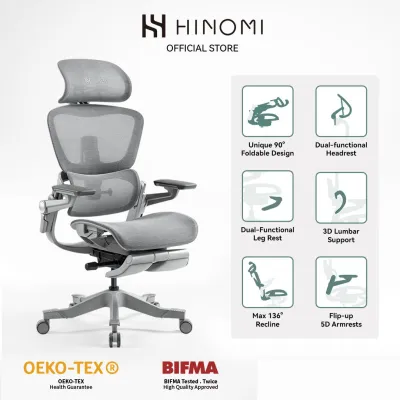
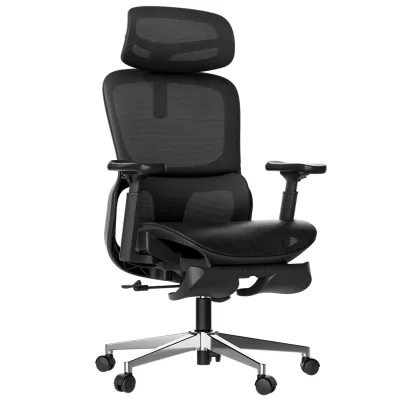
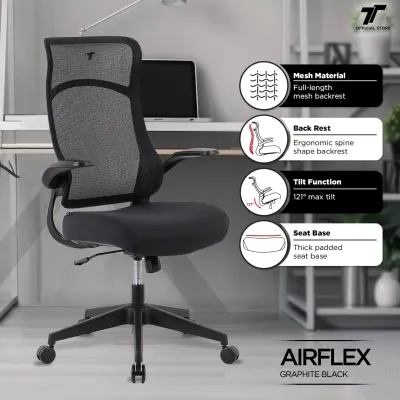
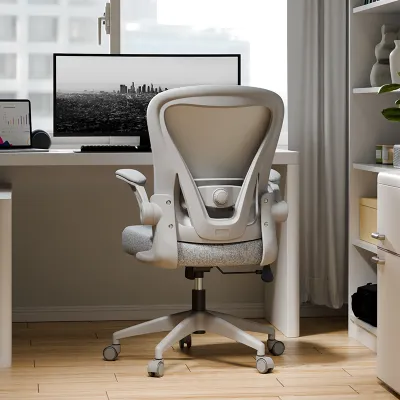
Products mentioned in this guide
![[NEW LAUNCH] Hinomi Q2 Pro Ergonomic Office Chair Adjustable Lumbar Support Memory Foam Headrest Armrest Legrest](https://img.lazcdn.com/g/p/2511c0cbd726c874804f10dec73624a5.jpg_400x400q80.jpg_.webp)
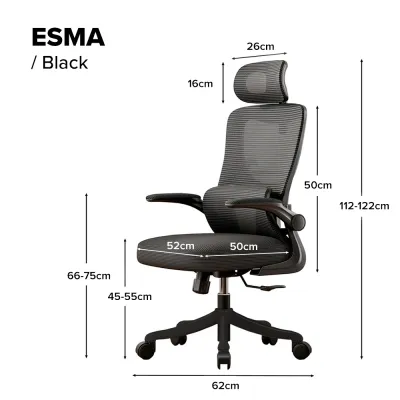
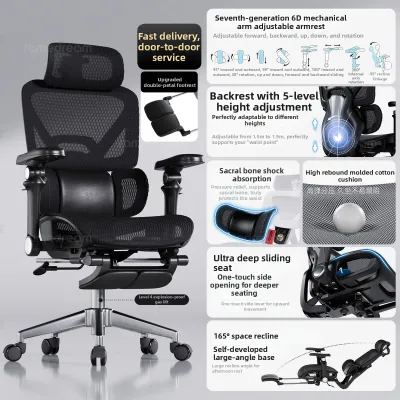
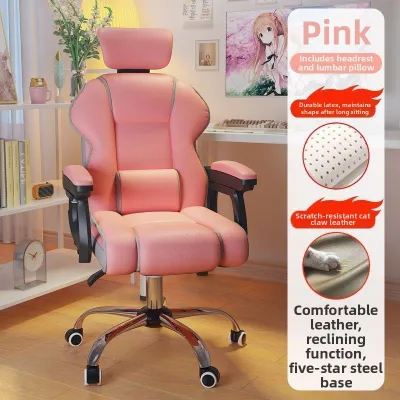
Prices are valid at publication and may change. Please refer to the product page for the latest price.

Build quality focuses on the structural integrity of the chair. This includes the frame materials, the stability of the five-star base, the quality of the casters, and the certified weight capacity limits. A stable base prevents tipping when reclining, while robust frame materials ensure the chair does not develop squeaks or structural play over time.
Ergonomic adjustability determines how well the chair adapts to your unique body proportions. Key adjustments include lumbar support mechanisms, armrest positioning, seat depth sliders, and recline tension. Proper adjustability ensures that the chair supports a neutral posture, reducing strain on the spine, neck, and shoulders during long sessions.
Pricing and value analyze the upfront cost in relation to the warranty length and coverage. A cheap chair that needs replacement every two years often costs more over a decade than a premium chair with a twelve-year comprehensive warranty. Understanding these metrics helps you look past marketing terminology and focus on verifiable specifications.
Build Quality and Material Durability Across Brand Tiers
Office chair brands construct their products differently depending on their target market tier, which directly impacts the lifespan of the chair and how well it performs in daily use.
Premium global brands typically construct their frames from die-cast aluminum or fiberglass-reinforced nylon. Their bases are heavy, wide, and exceptionally stable, often utilizing specialized casters designed to glide smoothly without damaging flooring. For upholstery, these brands use proprietary elastomeric mesh weaves that retain their tension and shape over a decade of continuous use, or high-density molded polyurethane foam that resists bottoming out.
Mid-range regional and direct-to-consumer brands often utilize reinforced polyamide (nylon) frames with steel-reinforced mounting plates. Their five-star bases are usually made of aluminum alloy or heavy-duty nylon. The mesh used in this tier is typically a polyester blend, which offers good initial comfort but may require tension checks or show slight sagging after several years of heavy use. The seat cushions generally feature medium-density molded foam, which provides adequate support but may soften gradually over time.
Budget and entry-level brands rely heavily on lower-grade polypropylene plastics and thin steel stampings for their structural components. Their bases are often lightweight plastic, which can flex under load. Upholstery is typically basic nylon mesh or low-density cut foam covered in standard fabric. This foam tends to lose its cushioning properties quickly, leading to discomfort as the user begins to feel the hard seat pan underneath.
To verify build quality before buying, check the manufacturer’s specification sheets for industry certifications. Look for BIFMA (Bifma X5.1) compliance, which is the standard safety and performance test for office furniture. Additionally, verify the rated weight capacity; reputable manufacturers clearly state these limits, which typically range from 110 kg to 150 kg or more.
In Singapore’s humid climate, material selection is particularly important. High relative humidity accelerates the degradation of low-grade materials. Cheap bonded leather is highly susceptible to hydrolysis, which causes the surface to peel and flake off within one to two years. Low-density polyurethane foam can also absorb moisture from the air, accelerating its breakdown and causing it to lose resilience. For non-air-conditioned home offices, high-grade elastomeric mesh is highly recommended because it allows maximum airflow, prevents heat buildup, and is easy to wipe down and clean. If you prefer a foam cushion, ensure it has a breathable fabric cover and check the manufacturer’s care instructions for maintaining the material in humid environments.
Ergonomic Adjustability: What Different Brand Tiers Actually Offer
Ergonomic adjustability is not just about having more buttons and levers; it is about providing the precise movements necessary to support your body’s natural alignment. Different brand tiers offer varying levels of mechanical sophistication to achieve this.
Lumbar Support and Backrest Design
The backrest and lumbar support system are the foundation of any ergonomic chair. Premium brands often feature dynamic, self-adjusting lumbar systems that pivot and flex in response to your micro-movements, ensuring continuous support as you shift positions. Some premium models use a flexible spine-like frame that mimics the natural curvature of the human back, distributing pressure evenly across the entire torso.
Mid-range brands typically offer manual lumbar support systems, such as a height-adjustable pad or a tension dial that increases or decreases the curve of the lower backrest. While these require manual adjustment to set up, they provide effective, targetable support for the lumbar spine when properly positioned.
Budget brands often feature fixed lumbar support, consisting of a static plastic strip molded into the backrest frame. Because these systems cannot be adjusted for height or depth, they only provide support if your height matches the exact proportions the manufacturer used for the mold. If you are taller or shorter than average, a fixed lumbar support can press against the wrong part of your spine, leading to discomfort and poor posture.
Armrests, Seat Depth, and Tilt Mechanisms
Armrests, seat depth, and tilt mechanisms work together to protect your joints and maintain healthy blood circulation during long sitting sessions.
Armrests should ideally offer multidirectional adjustment, often referred to as 3D or 4D armrests. These allow you to adjust the height, width, depth, and pivot angle of the arm pads. Proper armrest alignment allows your shoulders to relax and your elbows to rest at a 90-degree angle, reducing strain on the trapezius muscles and neck. Budget chairs often feature fixed or height-only adjustable armrests, which can force your shoulders into a shrugged position or prevent you from pulling the chair close to your desk.
Seat depth adjustment, typically achieved via a sliding seat pan, is critical for proper leg circulation. The depth should be adjusted so that there is a gap of roughly two to three fingers between the front edge of the seat cushion and the back of your knees. If the seat is too deep, it presses against the blood vessels and nerves behind your knees (the popliteal area), restricting circulation and forcing you to slouch forward to reach the backrest. If the seat is too shallow, your thighs do not receive adequate support, which concentrates your body weight onto a smaller surface area of the sit bones (ischial tuberosities), leading to localized pain.
Tilt mechanisms dictate how the chair moves when you recline. Premium and quality mid-range chairs utilize synchro-tilt mechanisms, where the backrest reclines at a faster rate than the seat pan (typically a 2:1 or 3:1 ratio). This dynamic opens up your hip angle as you lean back, keeping your feet flat on the floor and maintaining proper spinal alignment. Budget chairs often use a simple tilt or tilt-tension mechanism, where the entire seat and backrest rock backward together like a bucket. This lifts your knees, places pressure on the backs of your thighs, and strains your lower back.
Pricing, Warranties, and Long-Term Value in Singapore
When evaluating office chairs, it is helpful to understand the typical price brackets in Singapore and how they correlate with warranty structures and long-term ownership costs.
- Premium Global Brands (S$1,200 to S$2,800+): These chairs represent a high upfront investment but are backed by comprehensive 10-to-12-year warranties. These warranties typically cover all structural components, mechanisms, gas lifts, and even the mesh or fabric. Many premium brands offer local onsite servicing in Singapore, meaning a technician will come to your home to repair or replace parts if a fault occurs.
- Mid-Range Regional/DTC Brands (S$350 to S$900): These brands offer a moderate price point and usually come with a 3-to-5-year warranty. It is common for these warranties to be tiered; for example, the structural frame and gas lift might be covered for five years, while the mesh, foam, and armrest pads are only covered for one to two years. Users may need to transport the chair to a local service center for repairs.
- Budget Brands (S$80 to S$250): These chairs have a low entry cost but carry minimal warranty protection, often ranging from six months to one year, or covering only the gas lift mechanism against catastrophic failure. Wear and tear on the mesh, foam degradation, and squeaking joints are rarely covered.
To calculate the true value of an office chair, consider the “cost per year” of ownership rather than just the initial purchase price. For example, a premium chair costing S$1,800 with a guaranteed 12-year warranty costs S$150 per year of hassle-free use. Conversely, a budget chair purchased for S$200 that lasts only two years before the foam bottoms out, the gas lift begins to sink, or the frame starts to wobble costs S$100 per year. When you factor in the potential physical toll of inadequate ergonomic support and the environmental impact of disposing of broken furniture, the premium or mid-range option often represents better long-term value.
Before finalizing a purchase, read the warranty terms carefully. Pay close attention to common exclusions, such as cosmetic wear on armrest pads, fading of materials, and whether shipping or labor costs are charged to the customer during a warranty claim.
Decision Framework: Choosing the Right Chair for Your Home Office
To choose the right chair, evaluate your daily routine, physical workspace, and specific body measurements against these common home office scenarios.
Scenario A: The Intensive 8+ Hour Professional
If you work full-time from home, spend long hours in virtual meetings, and prioritize long-term joint and spinal health, look toward premium global brands. Prioritize chairs with advanced synchro-tilt mechanisms, dynamic lumbar support, and highly adjustable 4D armrests. Ensure the chair’s mesh is highly breathable to stay comfortable during long working sessions.
Scenario B: The Standard HDB Home Office
If you work a standard hybrid or full-time schedule in a dedicated study corner of a typical Singapore HDB flat, a mid-range regional brand offers an excellent balance of ergonomics and space efficiency. Look for a model that features adjustable seat depth and height-adjustable lumbar support. Pay close attention to the footprint of the five-star base; some bases are exceptionally wide and may struggle to slide fully under compact 100 cm or 120 cm home desks.
Scenario C: The Occasional WFH User
If you only work from home one or two days a week, or use your desk primarily for personal admin and light browsing, an entry-level ergonomic chair or a well-reviewed budget model is sufficient. Focus on finding a chair with basic height adjustability, a breathable mesh backrest, and a comfortable seat cushion. Avoid chairs with fixed, non-adjustable lumbar supports that do not align with your spine.
Crucial Spatial and Physical Checks Before Buying
Before making your final decision, perform these essential physical checks to ensure the chair will fit both your body and your home:
- Desk Height Clearance: Measure the height of your desk (standard home desks are typically 74 to 76 cm high). Compare this to the maximum armrest height of the chair to ensure you can slide the chair fully under the desk when not in use, saving valuable floor space in tight rooms.
- Base Footprint and Floor Space: Check the diameter of the chair's five-star base (usually between 65 and 70 cm). Mark this footprint on your floor to ensure it does not block walkways or collide with nearby furniture, such as wardrobes or beds.
- Doorway and Lift Access: Many premium office chairs are delivered fully assembled in large, heavy boxes. Verify that your apartment's front door, internal corridors, and lift openings have sufficient clearance (typically at least 80 cm of clear width) to accommodate the delivery box without damage.
- User Weight and Height Limits: Cross-reference your height and weight with the manufacturer's recommended user profile. A chair designed for average heights may not offer sufficient backrest height or seat depth for a taller individual, while a petite user may find that the seat pan is too deep even at its shallowest setting.
Frequently Asked Questions (FAQ)
Are gaming chairs from popular brands better than office chairs for WFH?
Gaming chairs are generally designed with a focus on aesthetics and deep recline functions, often mimicking the bucket seats found in racing cars. These bucket seats feature high side bolsters that can restrict shoulder movement and curve your shoulders forward, which is not ideal for active typing and desk work. Additionally, gaming chairs frequently use thick polyurethane foam wrapped in synthetic leather, which traps heat and sweat in Singapore’s warm climate. Dedicated ergonomic office chairs are designed specifically to support active working postures, prioritizing dynamic spinal movement, open pelvic angles, adjustable lumbar support, and highly breathable mesh materials that keep you cool during long workdays.
How do I test an office chair's build quality before buying online?
To test an office chair’s build quality, visit local physical showrooms in Singapore, which are often located in central or industrial areas like Ubi, Tai Seng, or Henderson. When testing a chair, sit in it for at least fifteen to twenty minutes rather than just a few seconds. Operate every adjustment lever and dial; they should feel smooth and robust, without excessive play or resistance. Lean back fully to test the stability of the base and listen for any squeaks, clicks, or creaks in the frame. If you must buy online without visiting a showroom, carefully read the retailer’s return policy to see if they offer a home trial period, check if return shipping fees apply, and look for user reviews that specifically mention long-term structural stability and mesh tension retention.
Does a higher price always guarantee better ergonomic support?
A higher price does not automatically guarantee better comfort, as ergonomic fit is highly individual. Beyond a certain price point, you are often paying for premium materials (such as polished aluminum frames), extended structural warranties, designer aesthetics, and brand prestige rather than fundamental posture support. A mid-range chair that matches your specific body measurements—such as your torso length and thigh length—will provide significantly better daily comfort than an expensive, premium chair that is too large or too small for your frame. Always prioritize a chair with the specific adjustments your body requires, particularly seat depth and lumbar height, over brand name or price tag alone.
Community discussion
Share your experience or ask a question. Comments are reviewed before publication.