
Navigating the tight quarters of a modern Singaporean Housing & Development Board (HDB) flat requires smart, adaptable furniture. Selecting a high-quality shelf with wheels is one of the most effective ways to introduce flexible storage into a compact layout. These mobile units allow you to reconfigure your living room, kitchen, or service yard in seconds, transforming tight corners into highly productive zones.
The ideal choice depends on your specific spatial constraints: slim vertical units slide into neglected gaps, foldable designs expand only when needed, and convertible dividers help define distinct zones in open-plan BTO layouts. By matching the shelf’s dimensions, wheel material, and weight capacity to your flat’s specific floor plan, you can maximize every square centimeter of your home.
How to Choose the Right Shelf with Wheels for HDB Living
Selecting a shelf with wheels for a compact flat requires looking beyond mere aesthetics. Because space is at a premium, the physical dimensions, wheel engineering, and structural stability of the unit will directly dictate how useful it remains in your daily routine.
Products mentioned in this guide
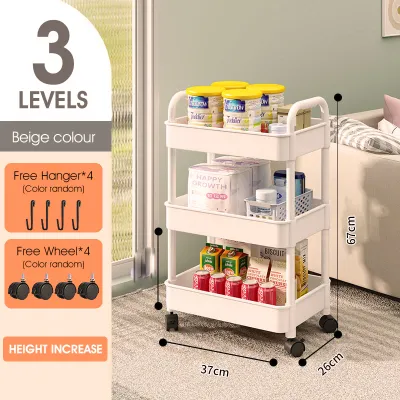
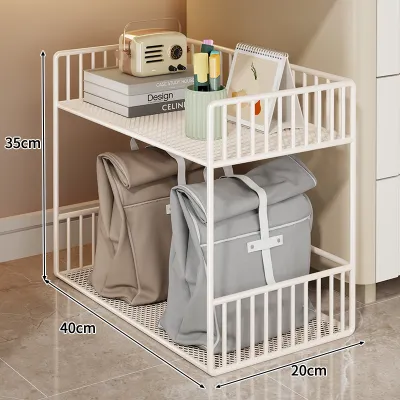
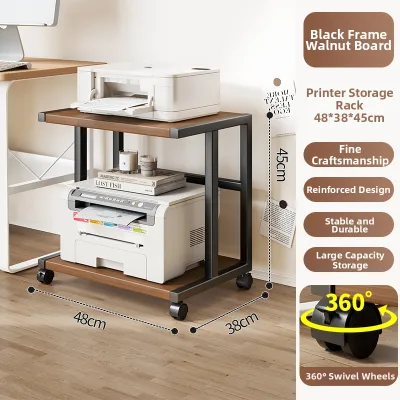
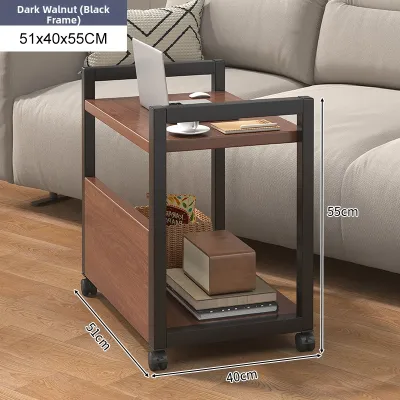
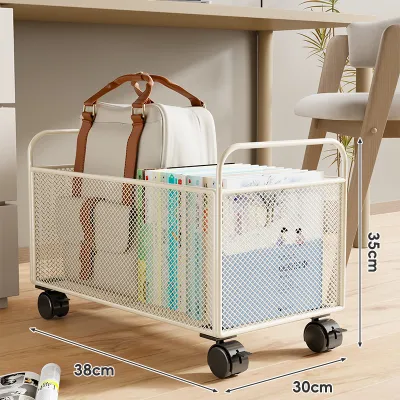
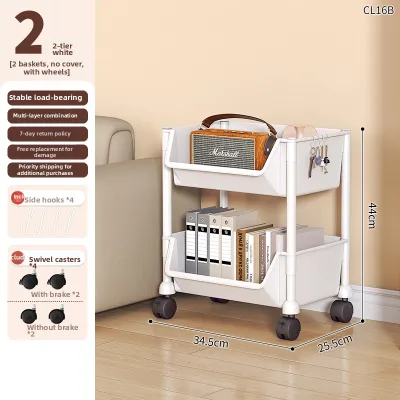
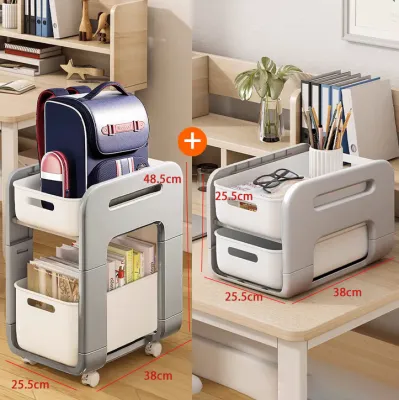
Prices are valid at publication and may change. Please refer to the product page for the latest price.
Dimensions and Clearance
Newer HDB flats have strict spatial limits that require precise planning before any furniture purchase. Measure the exact floor space where the unit will sit, but also calculate the clearance needed to roll the unit out, turn it around corners, and navigate it through narrow pathways. Standard HDB interior doors typically range from 800mm to 900mm in width, while service yard entries can be significantly narrower. If you plan to store the shelf inside a household shelter (bomb shelter), ensure the unit can clear the heavy steel door frame, which often features a raised threshold that can catch on low-clearance wheels.
Mobility and Caster Types
The performance of your mobile shelf hinges entirely on its casters. Wheels generally fall into two categories: hard plastic (such as nylon or polypropylene) and soft elastomers (such as polyurethane or rubber). Hard plastic wheels are highly durable and roll easily on hard, flat surfaces like ceramic or homogenous tiles, but they can be noisy and may scratch softer surfaces over time. Soft rubber or polyurethane wheels provide excellent shock absorption, roll quietly, and protect delicate flooring. Always check if the casters feature reliable locking brakes—ideally on at least two diagonal wheels—to keep the unit firmly in place when stationary.
Multi-Functional Features
In a small flat, a single-purpose piece of furniture is a luxury. Look for rolling shelves that offer adaptable configurations. Foldable frames allow you to collapse the unit and tuck it away behind a door or inside a wardrobe when not in use. Drop-leaf extensions can instantly convert a compact kitchen cart into a temporary dining table or food preparation station. Adjustable tiers are also highly beneficial, letting you customize the shelf heights to accommodate tall kitchen appliances, laundry detergent bottles, or storage boxes.
Weight Capacity and Stability
Mobile furniture is inherently more prone to tipping than fixed wall units. You must verify the manufacturer’s specified maximum load limits for both individual shelves and the overall frame. Pay close attention to the unit’s center of gravity; a top-heavy shelf can easily tip over when rolled across a floor transition or a door saddle. Look for models with a wider, heavier base and robust structural joints, particularly if you have young children or pets who might lean against or pull on the unit.
Top Multi-Functional Rolling Shelf Designs for Compact HDB Flats
Different HDB layouts present unique spatial challenges. To help you find the right fit, let’s explore three prominent design categories tailored for compact living, focusing on their ideal applications, key features, and practical limits.

Foldable and Drop-Leaf Rolling Carts
These versatile units are perfect for temporary needs. In a small HDB kitchen with limited countertop space, a drop-leaf rolling cart acts as an instant prep station that can be wheeled next to the stove. In the living room, it serves as a mobile beverage station or an extension for your dining table when hosting family gatherings. Once the event is over, the leaves drop down, or the entire frame folds flat to slide into a closet.
Examine the hinge mechanisms and support brackets closely before purchasing. High-quality steel hinges with spring-loaded locks ensure the extended leaves do not sag under weight. Look for models that fold down to a depth of 10 to 15 centimeters, allowing easy storage in tight gaps. The frame should feel rigid even when fully collapsed, preventing the wheels from splaying.
Drop-leaf extensions have significantly lower weight capacities than the central, fixed portion of the cart. Avoid placing heavy kitchen appliances, like stand mixers or microwave ovens, on the extended leaves. Always check the manufacturer’s instructions regarding the maximum weight allowed on the extensions to prevent structural bending or sudden collapse.
Slim Multi-Tier Utility Shelves with Wheels
These ultra-narrow shelves are designed to exploit underutilized gaps in your flat. They fit perfectly in the 15-to-20-centimeter gap between your refrigerator and kitchen cabinets, beside the washing machine in the service yard, or in tight corners of the bathroom. They are ideal for storing spices, cleaning supplies, toiletries, or laundry detergents that would otherwise clutter your countertops.
Because these units are tall and narrow, look for models with built-in guardrails or deep basket-style shelves to prevent items from falling off when the unit is pulled out. Adjustable tier heights are crucial for fitting taller bottles. A sturdy, ergonomic handle on the front panel makes pulling and pushing the shelf smooth and controlled.
Precision is vital when measuring for a slim utility cart. Measure the gap at multiple points (front, back, top, and bottom), as walls and cabinets in HDB flats are not always perfectly plumb. Ensure there is at least a 1-to-2-centimeter clearance on either side to prevent the shelf from scraping against appliances or walls. Keep the heaviest items on the bottom shelf to maintain a low center of gravity and prevent the narrow unit from tipping sideways.
Convertible Rolling Shelving Units and Room Dividers
For open-concept BTO flats or 2-room Flexi layouts, a larger rolling shelving unit can serve as a dynamic room divider. You can use it to partition the living room from the dining area, carve out a temporary home office nook, or shield your sleeping area from view. When you need a larger, open space for exercise or entertaining, simply unlock the wheels and roll the divider against the wall.
Look for units with dual-sided access, allowing you to reach stored items from both sides of the partition. Visual permeability is another key factor; open-backed shelves let natural light pass through, keeping the space feeling airy and bright, while semi-opaque or solid back panels offer more privacy. Ensure the frame is constructed from sturdy materials like powder-coated steel or solid wood joints to handle the lateral forces of being pushed.
Large rolling dividers must have exceptionally robust, heavy-duty casters with reliable locking mechanisms to prevent accidental movement. Verify the total height of the unit to ensure it does not interfere with ceiling fans, air-conditioning units, or overhead lighting fixtures. Additionally, avoid loading these tall units with fragile or loose items that could fall during transport.
Comparing Rolling Shelf Designs for Space-Saving Needs
To help you quickly identify the best mobile storage solution for your household, the table below summarizes the key differences among the three main rolling shelf designs.
| Shelf Type | Best Use Case | Space Required (Footprint) | Key Space-Saving Feature | Primary Limitation |
|---|---|---|---|---|
| Foldable and Drop-Leaf Carts | Temporary dining, kitchen prep, mobile hosting | Medium to large when open; minimal when folded | Collapsible frame and drop-leaf extensions | Reduced weight capacity on extended leaves |
| Slim Multi-Tier Utility Shelves | Kitchen gaps, service yards, bathroom corners | Very narrow (15-20 cm width); deep footprint | Vertical storage that fits into unused gaps | Prone to tipping if top-heavy; restricted to small items |
| Convertible Dividers | Partitioning open-plan living rooms or home offices | Large vertical presence; moderate floor footprint | Dual-sided storage and flexible room division | Obstructs light or airflow if too tall; harder to maneuver |
Safe Placement and Maintenance for Rolling Shelves
Safely operating a shelf with wheels requires a disciplined approach to loading. Always place your heaviest items—such as bulk detergent bottles, heavy pots, or storage crates—on the bottom shelf. Lighter items, like spices, towels, or decorative pieces, should occupy the upper tiers. This distribution keeps the center of gravity low, reducing the risk of tipping when you move the unit. Additionally, establish a habit of engaging the wheel locks immediately after moving the shelf to its stationary position. Never attempt to roll a loaded shelf over thick rugs, floor transition strips, or uneven thresholds without supporting the frame with both hands.
HDB flats commonly feature vinyl, laminate, or homogenous tile flooring. While tiles are highly resilient, vinyl and laminate can be susceptible to indentation and scratch marks from heavy, concentrated loads. Ensure your shelf is equipped with soft polyurethane (PU) or rubber casters, which distribute weight more evenly and roll smoothly without leaving scuff marks. If you must use hard nylon wheels on sensitive flooring, consider placing a protective clear mat under the unit’s stationary path, or replace the wheels with floor-friendly alternatives.
Regular upkeep ensures your mobile shelf remains safe and easy to operate. Over time, hair, dust, and clothing fibers can wrap around the wheel axles, causing the casters to drag or lock up. Periodically inspect the wheels and use a small brush or utility knife to clear away any debris. Check all structural screws and joints every few months, tightening any that have loosened from the vibrations of rolling. If your shelf features folding hinges or drop-leaf brackets, apply a drop of silicone-based lubricant to keep the mechanisms operating smoothly, always following the manufacturer’s care instructions.
Frequently Asked Questions (FAQ)
Can I use a rolling shelf on HDB vinyl flooring?
Yes, you can safely use a rolling shelf on HDB vinyl flooring, but you must choose the right wheel material. Avoid hard, cheap plastic or metal wheels, as they can scratch, scuff, or leave permanent indentations on vinyl over time, especially under heavy loads. Instead, opt for shelves equipped with soft rubber, polyurethane (PU), or thermoplastic rubber (TPR) casters. These materials cushion the contact point and glide quietly without damaging the floor. Always check your flooring manufacturer’s care guidelines, and avoid dragging a locked wheel across the floor.
How do I measure my HDB space for a shelf with wheels?
Measuring for a mobile shelf requires assessing both its stationary home and its path of travel. First, measure the width, depth, and height of the designated storage spot. Next, add a clearance margin of at least 2 to 5 centimeters on all sides to prevent the shelf from scraping against walls or adjacent furniture when you pull it out. Finally, map out the path the shelf will travel. Measure narrow corridors, doorway openings, and the turning radius around tight corners to ensure the unit can be maneuvered easily through your flat without getting stuck.
Are foldable rolling shelves stable enough for heavy appliances?
Foldable rolling shelves can support moderate weight, but they are generally less stable than fixed, solid-frame units. Before placing heavy appliances like microwave ovens, air fryers, or coffee machines on a foldable shelf, strictly check the manufacturer’s maximum weight rating for each tier. Ensure the frame’s locking mechanisms are fully engaged and secure. Never place heavy, vibrating appliances on drop-leaf extensions or the very top shelf, as the lateral movement can compromise the hinges or cause the entire unit to tip over.

Community discussion
Share your experience or ask a question. Comments are reviewed before publication.