
The ideal computer chair cover depends entirely on your chair’s specific shape, your daily work habits, and the environmental challenges your workspace presents. While stretch fabrics offer a snug, breathable fit for standard models, waterproof covers provide essential spill protection for busy desks, and leather or polyurethane (PU) options deliver a professional aesthetic. This guide compares these three primary materials, helping you evaluate their fit, maintenance requirements, and practical trade-offs to select the best protection for your office chair.
Assessing Your Office Chair and Daily Usage
Before choosing a computer chair cover, you must identify the physical architecture of your seating. Office chairs vary widely, from compact mid-back task chairs to high-back executive models and heavily contoured ergonomic designs. Note whether your chair features integrated, fixed armrests or adjustable ones that emerge from beneath the seat pan, as this determines whether you need a one-piece cover or a multi-piece set that leaves space for armrest mounts.
Your daily environment and work habits also dictate the ideal material. If you work long hours in a warm, humid climate without continuous air conditioning, heat dissipation and airflow will be your primary concerns. Conversely, if your desk doubles as a dining spot where coffee spills are a constant hazard, liquid resistance becomes a non-negotiable priority. For those who spend hours on video calls presenting to clients, a sleek, professional appearance may outweigh other factors.
Products mentioned in this guide
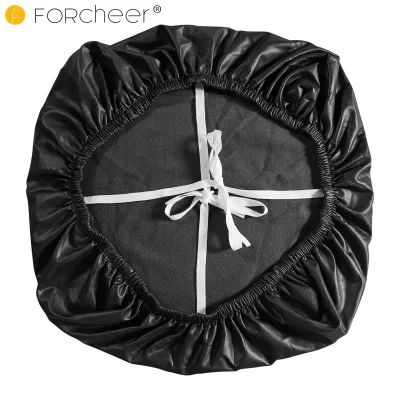
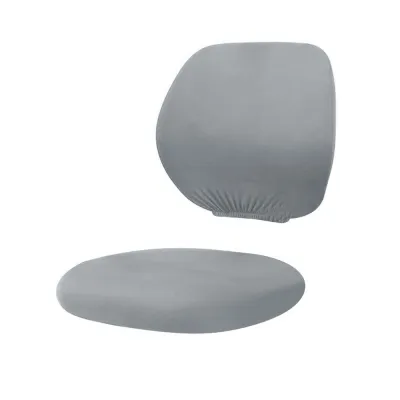
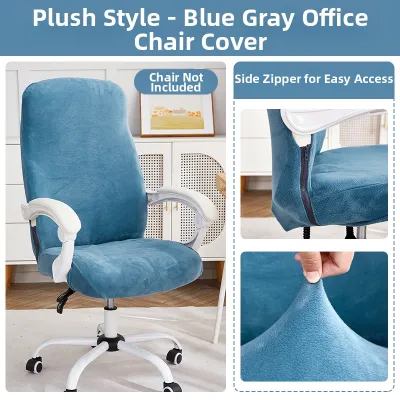
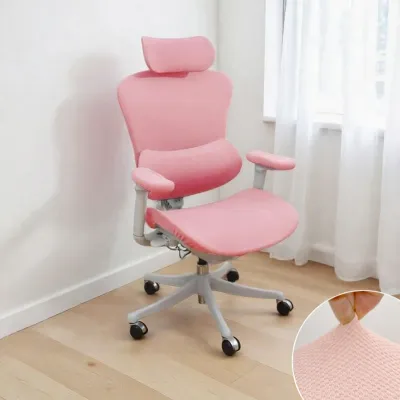
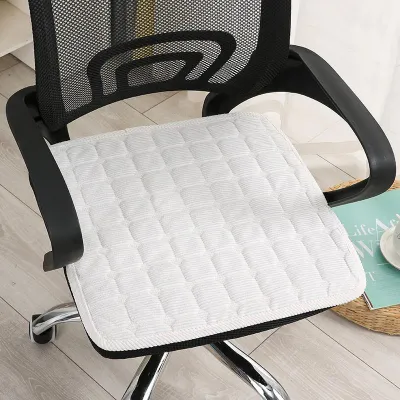
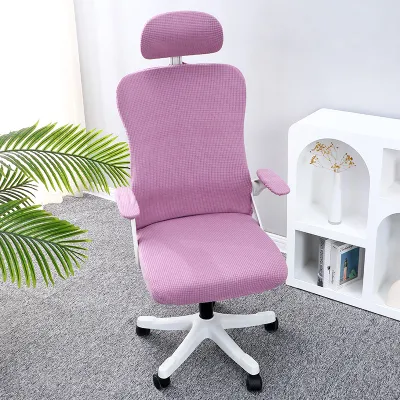
Prices are valid at publication and may change. Please refer to the product page for the latest price.
Finally, review the original chair manufacturer’s documentation. While adding a removable cover is generally safe, some high-end ergonomic chairs rely on specific mesh tension or open-frame ventilation to support your body and regulate temperature. Reviewing your warranty terms ensures that adding an aftermarket layer will not inadvertently cause wear on delicate mesh components or interfere with moving parts like adjustable lumbar supports and deep recline mechanisms.
Stretch Fabric Covers: Flexibility and Breathability
Stretch fabric covers, typically crafted from polyester and spandex blends, are highly popular due to their exceptional elasticity and forgiving fit. These covers act like a fitted sheet, stretching over the contours of your chair to provide a clean, unwrinkled appearance. However, to achieve this snug look, you must verify the manufacturer’s specified elasticity limits against your chair’s physical dimensions. Overstretching a fabric cover beyond its intended capacity leads to thin, translucent spots, strained seams, and eventual tearing, while an under-stretched cover will sag and bunch up uncomfortably under your thighs.

In warm or humid environments, the breathability of your chair cover is paramount. Standard foam-padded office chairs tend to trap body heat, and a dense, non-breathable cover will only exacerbate this issue. Look for stretch covers with a lightweight, open knit or waffle-weave texture, which promotes natural airflow and helps wick away moisture during long typing sessions. This breathability prevents that sticky, uncomfortable feeling that often develops after several hours of continuous sitting.
Maintenance is another major advantage of stretch fabrics, but it requires attention to care labels. Most spandex blends are machine washable, making them incredibly easy to keep fresh and free of dust or sweat buildup. To preserve the elasticity and prevent shrinkage, always wash these covers in cool water on a gentle cycle and air dry them. Avoid high heat in the dryer, as excessive thermal exposure degrades the synthetic elastane fibers, causing the cover to lose its recovery stretch and become permanently loose.
Waterproof Covers: Spill Resistance and Easy Cleaning
For those who regularly enjoy drinks, snacks, or meals at their desks, a waterproof computer chair cover offers invaluable peace of mind. When shopping, it is crucial to distinguish between fully waterproof membranes and water-resistant surface coatings. Fully waterproof covers typically feature a dual-layer design: a soft fabric top layer bonded to a polyurethane (PU) or thermoplastic polyurethane (TPU) backing that acts as an absolute barrier to liquids. Water-resistant covers, on the other hand, are treated with a durable water repellent (DWR) finish that causes liquids to bead up on the surface, giving you a brief window to wipe them away before they soak through.
While waterproof covers excel at protecting expensive upholstery from coffee, tea, or ink stains, they present a clear trade-off in terms of breathability. The very barrier that prevents liquids from penetrating the fabric also blocks airflow, which can lead to increased heat retention and sweating, particularly in warm rooms. If you choose a fully waterproof cover, consider using it in an air-conditioned space or selecting a model that limits the waterproof backing to the seat pan while leaving the backrest in a more breathable fabric.
Cleaning a waterproof cover is straightforward but requires care to avoid damaging the protective barrier. Many minor spills can be quickly resolved with a damp cloth and mild soap, eliminating the need for frequent laundering. If the cover is machine washable, always follow the manufacturer’s instructions closely, avoiding harsh detergents, bleach, and fabric softeners, which can strip away water-resistant coatings or delaminate the waterproof backing. Air drying is highly recommended to preserve the integrity of the protective layers over time.
Leather and PU Covers: Professional Look and Wear Care
Leather and polyurethane (PU) covers are the go-to choice for professionals seeking to elevate the aesthetic of their home office or executive workspace. Genuine leather covers offer unmatched durability, a rich natural scent, and a patina that develops beautifully over time, though they represent a significant investment. PU leather covers provide a highly convincing, cost-effective alternative with a uniform surface texture that is smooth to the touch and highly resistant to initial staining.
However, both materials require specific maintenance routines to withstand environmental factors like high humidity and temperature fluctuations. Without proper care, PU leather can begin to peel, crack, or feel sticky against bare skin, especially when exposed to body oils and sweat. Regular wiping with a soft, slightly damp microfiber cloth is essential to remove surface oils. For genuine leather, periodic application of a specialized leather conditioner keeps the material supple and prevents it from drying out and cracking under dry air-conditioned drafts.
Another critical factor to verify is the cover’s internal lining and securing mechanism. Because leather and PU are naturally smooth and slippery, a poorly designed cover can slide around on your chair’s original fabric or mesh. Look for covers equipped with a non-slip, textured inner lining—such as felt or rubberized micro-dots—and robust strap systems. This ensures the cover remains firmly anchored in place during movement, preventing friction that could otherwise abrade and damage the delicate original upholstery underneath.
Material Comparison and Decision Framework
To help you synthesize these options and make an informed decision, the following comparison table outlines how each material performs across key practical categories:
| Material Type | Fit Flexibility | Spill Protection | Breathability | Maintenance Effort |
|---|---|---|---|---|
| Stretch Fabric | High (conforms easily) | Low (absorbs liquids) | High (excellent airflow) | Low (machine washable) |
| Waterproof | Moderate (some stiffness) | High (blocks liquids) | Low (traps heat) | Low to Moderate (wipe-clean) |
| Leather / PU | Low (structured fit) | Moderate (wipes clean) | Low to Moderate | Moderate (requires conditioning) |
When applying this framework to your purchase, use these simple conditional rules to guide your final choice:
- Choose stretch fabric if your primary goals are maximum comfort, breathability in warm weather, and a snug, contoured fit on a standard office chair.
- Choose waterproof if you frequently eat or drink at your desk, have pets that climb on your furniture, or need absolute protection against liquid accidents.
- Choose leather or PU if you want to restore a peeling executive chair, require a formal and polished look for professional video meetings, and are willing to perform regular surface maintenance.
Keep in mind that highly specialized ergonomic chairs with complex, multi-segmented backrests, prominent external lumbar frames, or dynamic pivoting parts may not accommodate standard slipcovers. In these scenarios, attempting to force a generic cover over the frame can restrict the chair’s ergonomic benefits or damage the adjustment mechanisms. Instead of a full cover, consider targeted protection, such as a separate seat-only cushion cover or specialized armrest sleeves, to safeguard high-wear areas without compromising the chair’s structural integrity.
Measuring and Fitting Your Computer Chair Cover
Achieving a clean, professional look with your computer chair cover depends entirely on accurate measurements. Before ordering, grab a flexible measuring tape and record three essential dimensions: the backrest height (from the top of the backrest down to the seat joint), the backrest width (at its widest point), and the seat pan depth and width. Compare these exact figures against the manufacturer’s sizing chart rather than relying on generic labels like “medium” or “large,” as sizing standards vary significantly between brands.
When your cover arrives, follow a systematic installation process to ensure a secure, wrinkle-free fit. Start by draping the cover over the top of the backrest, aligning the top corners and seams carefully. Pull the fabric down evenly on both sides to avoid twisting, then stretch the seat portion over the seat pan. Locate the integrated fastening systems—which may include elastic hems, zippers, buckles, or tie straps—and secure them firmly underneath the seat. Finally, tuck any excess fabric into the crevice between the backrest and the seat pan to create a tailored, custom-fit appearance.
Once installed, perform a complete safety and functionality check. Sit in the chair and test all of its adjustment features, including the gas lift height adjustment, the tilt tension, and the recline lock. If you feel the cover pulling tightly, resisting your movements, or catching in the underlying levers and wheels, stop immediately. A cover that restricts your chair’s mechanical functions can cause premature wear on both the cover and the chair itself. If the fit is too tight, remove the cover and consult the manufacturer or seller for a larger size or a more compatible model.
Frequently Asked Questions (FAQ)
Can I use a standard computer chair cover on a gaming chair?
Standard computer chair covers rarely fit gaming chairs properly due to the distinct structural differences between the two styles. Gaming chairs typically feature high backrests, pronounced shoulder wings, deep side bolsters, and integrated headrest cushions that create a highly contoured silhouette. A standard rectangular office chair cover will stretch awkwardly over these wings, leaving large gaps of empty space and putting immense strain on the seams. To protect a gaming chair, look for covers specifically labeled for gaming models, which feature tailored pockets for the shoulder wings and accommodate the unique high-back design.
Will a chair cover void my office chair's warranty?
In most cases, using a removable, aftermarket chair cover will not void your office chair’s warranty, as warranties primarily cover structural, mechanical, and gas-lift defects. However, issues can arise if the cover physically interferes with the chair’s moving parts or traps excessive moisture that damages the underlying materials. For example, using a non-breathable waterproof cover over a delicate leather or high-end mesh chair in a humid environment could trap sweat and humidity, leading to premature degradation of the original upholstery. Always review your chair’s warranty terms regarding care and ventilation, and ensure the cover does not obstruct any adjustment levers or mechanical joints.

Community discussion
Share your experience or ask a question. Comments are reviewed before publication.