
A stone coffee table serves as a striking focal point in your living room, but natural and engineered stones vary significantly in porosity, weight, and care requirements. Selecting the ideal table involves evaluating how each material handles daily wear, fits your physical space, and aligns with your budget. By understanding the unique characteristics of marble, granite, travertine, and engineered alternatives, you can choose a piece that is both beautiful and practical for your household.
Identifying Common Stone Types and Their Visual Traits
Natural and engineered stones offer distinct visual profiles that dramatically influence the design aesthetic of your living room. Marble is highly celebrated for its elegant, flowing veining patterns. Each marble slab is entirely unique, featuring mineral lines that range from subtle grey wisps to bold, dramatic strokes of gold, green, or black against contrasting backgrounds.
Granite presents a starkly different visual character, known for its speckled, crystalline appearance. Composed of a dense mix of quartz, feldspar, and mica, granite offers a highly textured, granular pattern that is visually busy and excellent at concealing minor surface dust.
Products mentioned in this guide
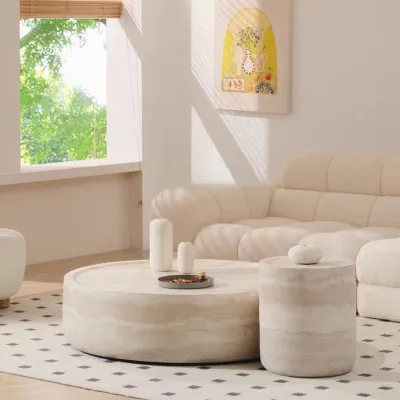
![[OKLIFE®]Stone Coffee Table Luxury Tea Table Small Living Room Table Small Apartment Tea Table Bedside Cabinet](https://img.lazcdn.com/g/p/72e5ec540ee50b0284b259d3d5fa6e52.jpg_400x400q80.jpg_.webp)
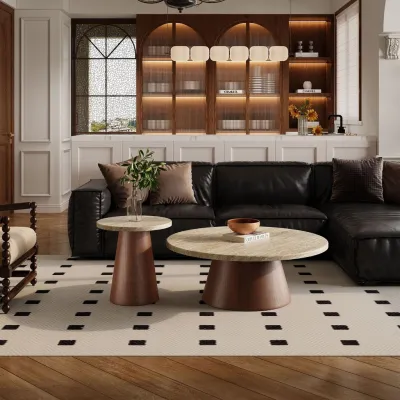
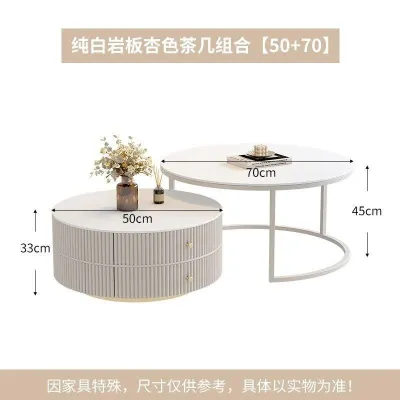
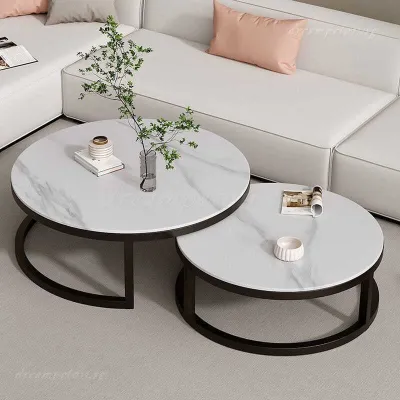
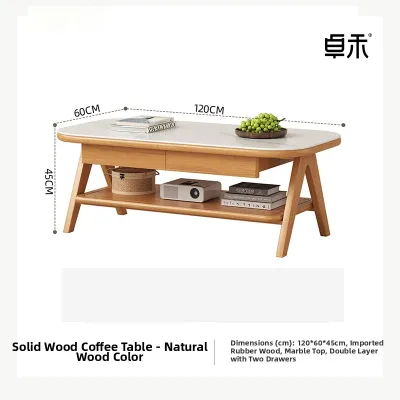
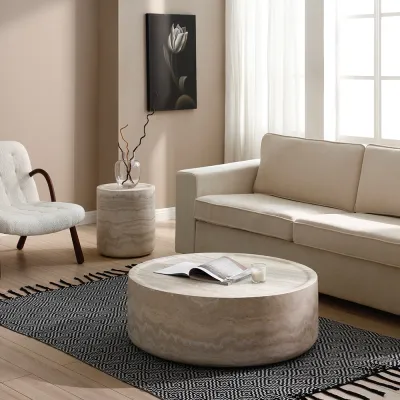
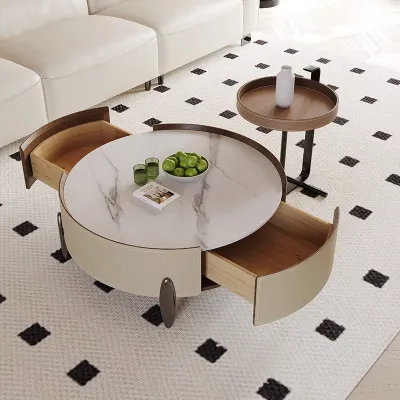
Prices are valid at publication and may change. Please refer to the product page for the latest price.
Travertine is easily identified by its warm, earthy tones—ranging from ivory and cream to rich beige and walnut—and its distinctively pitted, textured surface. These natural voids are formed by escaping geothermal gases during the stone’s geological creation, giving it a rustic, organic appeal.
When choosing between natural stone and engineered alternatives like quartz, pattern consistency is a major deciding factor. Natural stone slabs offer one-of-a-kind variations, meaning the table you receive will have its own unique markings. Engineered quartz, which is made from crushed stone bound with polymer resins, provides high pattern consistency and color uniformity across the entire surface.
Before purchasing, check the manufacturer’s specifications for the surface finish, as it alters both light reflection and tactile feel. A polished finish offers a high-gloss, reflective surface that intensifies the stone’s color but highlights scratches and fingerprints. A honed finish provides a smooth, matte, satin-like feel that hides wear better, while a leathered finish offers a textured, non-reflective surface that excels at concealing water spots.
Assessing Durability, Porosity, and Daily Care Needs
Evaluating how different stone types handle daily use is essential for preventing long-term damage. Natural stones are inherently porous, meaning they can absorb liquids and sustain permanent stains if left unprotected. Travertine is highly porous and is often filled with synthetic resins at the factory to create a smooth surface, while marble is moderately porous and highly sensitive to acidic substances.

Granite is relatively dense but still requires a protective barrier to prevent liquid absorption. Because porosity varies widely, always verify the factory sealing status of the coffee table before finalizing your purchase. Engineered quartz is virtually non-porous, making it highly resistant to staining without the need for periodic resealing.
Regardless of the stone type you choose, plan for the mandatory use of coasters, trivets, and felt pads. While stone is exceptionally hard, it is not immune to scratching, chipping, or thermal shock. Placing hot mugs directly on natural stone can cause discoloration, and sliding ceramic decorative items across the surface can leave permanent scratches.
To maintain the stone’s integrity, review the product care labels for approved cleaning agents. Acidic cleaners, such as those containing vinegar, lemon juice, or ammonia, will chemically etch natural stone, leaving dull, rough patches. Avoid abrasive scrubbing powders or unverified household chemicals, opting instead for pH-neutral stone cleaners or mild dish soap mixed with warm water.
Managing Weight, Space, and Delivery Logistics
Bringing a heavy stone coffee table into your home requires careful logistical planning. Begin by measuring your available floor space and checking clearance dimensions along the entire delivery path. Ensure that entryways, doorways, elevators, stairwells, and tight hallways can accommodate the finished dimensions and weight of the packaged table.
Because solid stone is exceptionally heavy, you must assess your floor’s load capacity, particularly in older properties or upper-floor apartments. Heavy stone bases can exert concentrated pressure on flooring materials. Verify rug compatibility, as a dense rug can help distribute the weight, and always use protective floor glides or heavy-duty felt pads under the table base to prevent scratching your floors during minor adjustments.
Take time to inspect the table’s base stability and joint construction. A top-heavy design with an inadequate base poses a significant safety hazard, especially if the table is bumped. Check whether the product requires professional assembly or specialized delivery services, as lifting and positioning a solid stone slab safely often requires multiple people and professional handling.
Understanding Price Drivers and Budget Alignment
The cost of a stone coffee table is influenced by several structural and material factors rather than simple retail markups. The primary cost drivers include the rarity of the specific stone variety, the thickness of the slab, and the geographic origin of the quarry. Thicker slabs require more raw material and more robust structural support, which naturally increases the price.
Additionally, the complexity of the base material plays a significant role in the overall cost. A stone top paired with a custom-welded metal frame or a solid premium hardwood base will command a higher price than one paired with basic composite materials. You must also factor in the long-term maintenance costs of natural stone, such as purchasing specialized sealants or hiring professional restoration services if the surface becomes etched.
To balance your aesthetic preferences with practical budget constraints, look for smart design compromises. Choosing a table with a thinner stone veneer supported by a sturdy sub-base can dramatically reduce both the weight and the cost. Alternatively, opting for more common stone variants or high-quality engineered alternatives can deliver the same luxurious visual impact while staying within your budget.
Creating Your Final Selection Checklist
To finalize your decision, match the stone’s porosity and maintenance demands with your household dynamics. If you have young children, active pets, or host frequent gatherings, a highly sensitive polished marble table may cause unnecessary stress. In these environments, a sealed granite, filled travertine, or low-maintenance engineered quartz table is often a more practical choice.
Synthesize your aesthetic goals, durability requirements, and spatial logistics into a cohesive shortlist. Ensure that the physical dimensions fit comfortably within your seating arrangement, leaving adequate clearance for walking paths, and confirm that your flooring can safely support the weight.
Before making your purchase, ask the retailer specific verification questions. Confirm the details of the warranty coverage regarding natural stone variations and structural joints. Ask whether the table comes pre-sealed from the factory, how often it will require resealing, and clarify the return policy in case the natural veining of the delivered piece differs significantly from the showroom display.
Frequently Asked Questions (FAQ)
Is engineered stone a good alternative to natural stone for coffee tables?
Engineered stone is an excellent alternative, particularly for high-traffic households seeking a low-maintenance option. It offers a non-porous surface that resists staining and provides highly consistent patterning. However, you should check the manufacturer’s specifications for heat resistance limits and UV stability, as prolonged exposure to direct sunlight can discolor the binding resins used in engineered materials.
How can I tell if a stone coffee table is properly sealed?
You can perform a simple water drop test on an inconspicuous area of the table surface. Place a few drops of water on the stone and wait approximately 10 to 15 minutes. If the water beads up on the surface, the seal is intact and functioning. If the stone darkens or absorbs the water, the surface is porous and requires sealing. If the seal status remains uncertain, consult the manufacturer or a stone care professional.

Community discussion
Share your experience or ask a question. Comments are reviewed before publication.