
Investing in a high-end ergonomic chair is a significant upgrade for any home workspace. When comparing Steelcase to other premium office chair brands, the decision hinges on your physical proportions, seating habits, and how you interact with your desk. Steelcase chairs are celebrated for dynamic backrests that mimic the natural movement of the spine and highly adjustable armrests, making them excellent for active sitters who shift positions throughout the day. Conversely, competing premium brands often lead in full-mesh suspension systems, minimalist design aesthetics, or specific synchronous tilt mechanisms.
To find the right fit for your home office in Singapore, you must look beyond brand reputation and evaluate how specific design philosophies align with your daily routine. Whether you prioritize the plush support of high-density foam or the breezy ventilation of mesh in a tropical climate, understanding these core differences ensures your investment delivers long-term comfort and physical support.
Core Ergonomic Features and Adjustability
Ergonomic design philosophies differ significantly between premium manufacturers. Steelcase focuses heavily on live back technology, where the backrest actively deforms and flexes to mirror the changing shape of your spine as you recline or sit upright. This dynamic support encourages micro-movements, which can help reduce fatigue during long working sessions. In contrast, some premium competitors utilize a tensioned mesh suspension system that cradles the body in a more fixed, structured posture, or rely on a synchronous tilt mechanism where the seat and backrest move in a fixed ratio to maintain a constant torso angle.
Products mentioned in this guide
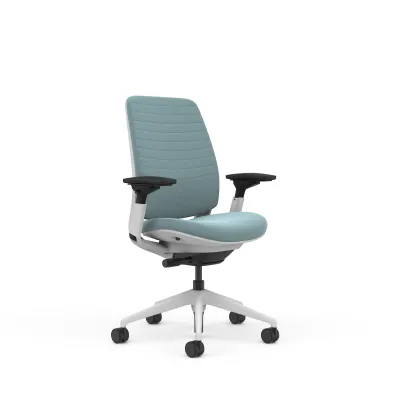
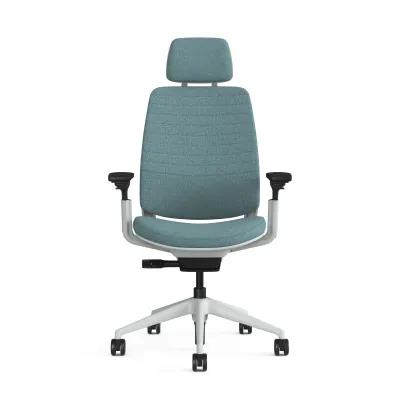
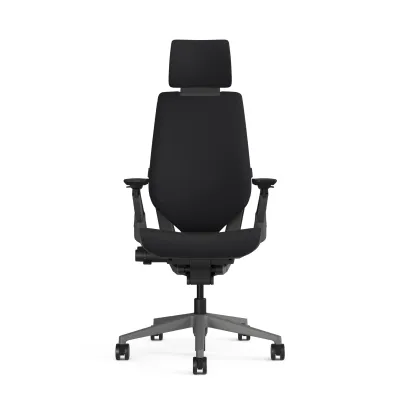
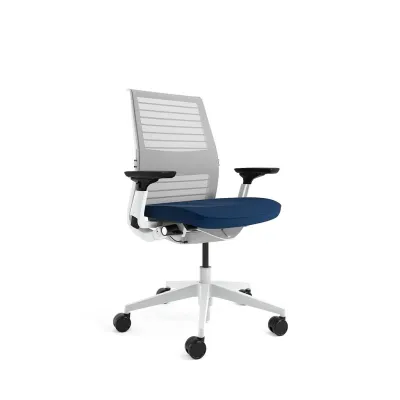
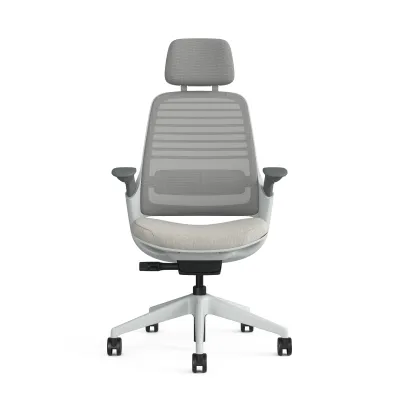
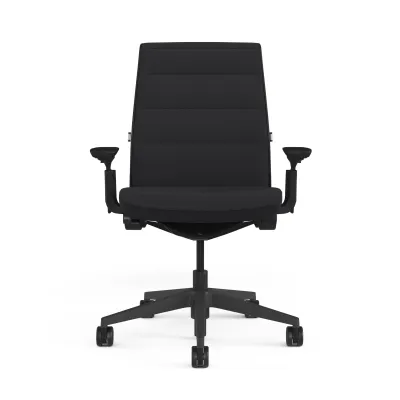
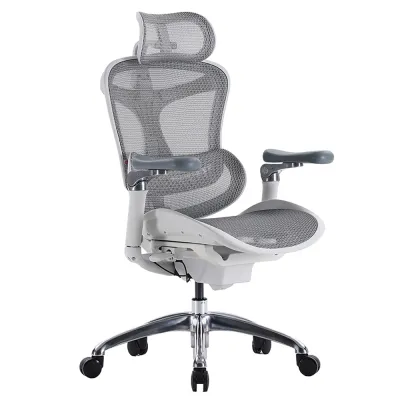
Prices are valid at publication and may change. Please refer to the product page for the latest price.
Armrest adjustability is another area where design choices diverge. Steelcase is highly regarded for its multi-directional armrests, which slide forward, backward, left, right, pivot inward and outward, and adjust in height. This range is particularly beneficial if you switch between typing on a keyboard, writing on a tablet, or reclining while reading. Other premium brands may offer more structured, less fluid armrests that lock firmly into place but lack the same range of lateral movement. Consider how much you move your arms and shoulders during your daily workflow.
To determine which mechanism suits you, check the product specification sheet for three critical adjustments: seat depth, tilt tension, and lumbar support. Seat depth adjustment ensures that the seat pan can slide forward or backward to support your thighs without pressing against the back of your knees. Tilt tension controls the resistance you feel when reclining; a highly adjustable tension system allows lighter or heavier users to find their perfect balance point. Finally, look at how the lumbar support is adjusted—some chairs use a sliding pad to target specific vertebrae, while others rely on the natural curve of the frame or a dial-in tension system to support the lower back.
Build Quality, Materials, and Comfort Profiles
The choice of seating material has a profound impact on daily comfort, especially in Singapore’s warm and humid climate. Steelcase traditionally favors high-density polyurethane foam cushions wrapped in durable upholstery. These cushions are engineered to distribute weight evenly and prevent bottoming out, offering a familiar, supportive feel that remains comfortable over years of use. However, foam can retain body heat over long hours. If your home office is not constantly air-conditioned, you might consider competing premium brands that specialize in full-mesh seats and backrests. Mesh suspension allows maximum airflow, keeping you cool, though some users find the firm frame edges of mesh chairs less forgiving than cushioned seats.

Beyond the seat itself, the structural materials of the frame and base dictate the chair’s stability and longevity. Premium chairs typically feature glass-reinforced nylon, die-cast aluminum, or steel frames. When evaluating a chair, check the base material; a heavy-duty aluminum or steel base provides a lower center of gravity and greater stability than a standard plastic base. Additionally, pay close attention to the caster wheels. Hard casters are designed for carpeted floors, whereas soft, polyurethane-rimmed casters are essential for protecting hardwood, vinyl, or laminate flooring in modern Singapore apartments from scratches and scuffs.
To ensure long-term durability, avoid relying on generic marketing claims about stain resistance or wear. Instead, review the manufacturer’s care labels and material specifications. Look for fabrics rated by double rubs (a measure of abrasion resistance) and check if the textiles are treated for soil resistance. If you opt for a fabric or leather model, verify the recommended cleaning protocols, as some high-end materials require specialized care products to maintain their appearance and structural integrity over time.
Sizing, Fit, and Home Office Space Considerations
Before purchasing a premium office chair, it is vital to measure your physical workspace to ensure a seamless fit. High-end ergonomic chairs can be surprisingly bulky, with wide bases and protruding armrests. Measure your available floor space, the clearance height under your desk, and the width of your doorways and lift access. In many Singapore apartments, compact study nooks or built-in desks may have limited clearance. Ensure the chair’s armrests can lower sufficiently to slide under your desk when not in use, saving valuable floor space.
Sizing philosophies vary widely across premium brands. Steelcase generally designs its chairs to be highly adjustable, aiming for a “one-size-fits-most” approach where a single chair model can accommodate a vast majority of body types through its extensive adjustment ranges. Conversely, some competitors offer distinct size variants (such as small, medium, and large models) of the same chair. While a sized approach can provide a highly tailored fit for very petite or very tall individuals, it requires precise measurements before buying and makes the chair less adaptable if multiple family members share the same home office.
To guarantee a safe and comfortable fit, always verify the chair’s physical limits directly from the manufacturer’s specifications. Check the maximum weight capacity, the minimum and maximum seat height, and the usable seat width. If you are on the taller or shorter side of the spectrum, standard cylinder heights may not allow your feet to rest flat on the floor while maintaining a 90-degree angle at your knees. In such cases, check if the manufacturer offers alternative gas cylinder options or if you will need to pair the chair with a footrest.
Value, Warranty, and Local Support
A premium office chair is a long-term investment, often carrying a price tag of S$1,000 to S$2,500 or more. To justify this initial outlay, you must evaluate the warranty structure and the availability of local support. Many top-tier brands, including Steelcase, offer robust warranties—often up to 12 years for structural components. However, it is crucial to read the fine print. Warranties are typically tiered; while the frame and mechanism may be covered for over a decade, moving parts, gas cylinders, arm pads, and upholstery fabrics often have shorter coverage periods, sometimes limited to three or five years.
In Singapore, purchasing through an authorized local dealer is essential for securing legitimate warranty coverage and after-sales service. Authorized dealers handle the logistics of importing, assembling, and delivering the chair to your home. More importantly, if a component fails, an authorized local partner can source genuine replacement parts and dispatch technicians to perform repairs. Buying from parallel importers or unauthorized online sellers may save you money upfront, but it often voids the manufacturer’s warranty, leaving you without recourse if the gas lift or tilt mechanism malfunctions.
When calculating the true value of a premium chair, amortize the retail price over its expected lifespan. A S$1,800 chair with a 12-year warranty costs approximately S$150 per year, which is highly competitive when compared to replacing a mid-range S$300 chair every two years. Furthermore, the ergonomic benefits—such as reduced back strain, improved posture, and increased focus—can lead to tangible productivity gains, making the upfront cost a worthwhile investment in your health and professional efficiency.
Decision Framework: Which Premium Brand Fits Your Workflow?
To finalize your choice, align the chair’s design strengths with your specific daily habits, physical preferences, and workspace constraints.
Choose Steelcase if:
- You prefer the plush, traditional feel of a high-density foam seat cushion over a mesh suspension.
- You frequently change postures, lean back, or sit in non-traditional positions, and want a backrest that actively flexes with your micro-movements.
- You require highly adjustable armrests that can slide, pivot, and shift to support your arms during varied tasks like typing, sketching, or using mobile devices.
Choose alternative premium brands if:
- You prioritize maximum breathability and cooling, making a full-mesh seat and backrest essential for your home environment.
- You prefer a highly structured, cradled sitting experience that encourages a disciplined, upright posture throughout the day.
- You want a specific minimalist or iconic aesthetic that complements a modern home interior design.
Verify first if:
- You have pre-existing spinal or musculoskeletal conditions; in this case, consult a qualified medical professional or physical therapist rather than relying solely on ergonomic marketing claims.
- Your home office has tight space constraints, requiring you to double-check the exact outer dimensions of the chair's base and armrests against your desk opening.
- You can visit a local showroom in Singapore to physically test the chair's adjustments and comfort before committing to a purchase.
Frequently Asked Questions (FAQ)
Is a premium office chair necessary for a home office setup?
A premium office chair is highly beneficial if you spend eight or more hours a day working at your desk and experience chronic back, neck, or shoulder discomfort. The advanced adjustability and dynamic support of high-end chairs help distribute your weight evenly and encourage movement, reducing physical strain over long periods. However, if your daily desk use is limited to light browsing or short tasks of one to two hours, a mid-range ergonomic chair with basic height and lumbar adjustments will generally suffice without the need for a major financial investment.
How can I test premium office chairs before purchasing?
To test a premium chair effectively, visit an authorized dealer showroom in Singapore. Sit in the chair for at least 10 to 15 minutes rather than just a few seconds. Take the time to adjust the seat height, seat depth, armrests, and lumbar support to your body dimensions. Pay attention to how the seat material feels and how the backrest responds when you recline. Additionally, verify the retailer’s return, exchange, and restocking fee policies before buying, as some dealers offer trial periods that allow you to test the chair in your actual home environment.

Community discussion
Share your experience or ask a question. Comments are reviewed before publication.