
Choosing between Steelcase and Herman Miller for a home office comes down to a choice between highly adjustable, active physical support and structured, passive suspension. Both brands represent the pinnacle of ergonomic engineering, but they approach sitting from entirely different philosophies. While one brand focuses on mimicking the natural movement of your spine through flexible materials and manual adjustments, the other prioritizes suspended mesh and a structured frame that guides your body into an optimal posture. Finding the right fit requires evaluating how you sit, the physical constraints of your residential workspace, and your willingness to adjust your chair throughout the day.
Core Differences in Design and Ergonomic Philosophy
The ergonomic philosophies of Steelcase and Herman Miller shape how their chairs feel from the moment you sit down. Steelcase typically designs chairs that encourage dynamic movement, allowing you to recline, shift, and change postures fluidly while maintaining continuous support. Their chairs often feature flexible backrests and seat edges that bend to accommodate your movements, making them highly forgiving if you like to sit in non-traditional positions, such as tucking one leg under. This active support philosophy relies on manual adjustments to dial in the perfect fit, ensuring the chair moves with you rather than forcing you into a single position.
In contrast, Herman Miller often emphasizes structured, passive support, which is most famously embodied in their suspended mesh designs. Instead of relying on thick foam padding, these chairs use proprietary elastomeric suspension materials stretched over a rigid frame to distribute weight evenly and eliminate pressure points. This design philosophy aims to guide your body into a healthy, upright posture, reducing fatigue over long hours of focused work. Because the support is built directly into the tension of the mesh and the curve of the frame, these chairs often require fewer manual adjustments once set up, but they also demand that you sit in a relatively disciplined, centered posture.
Products mentioned in this guide
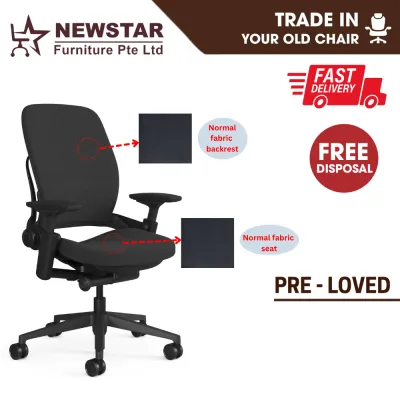
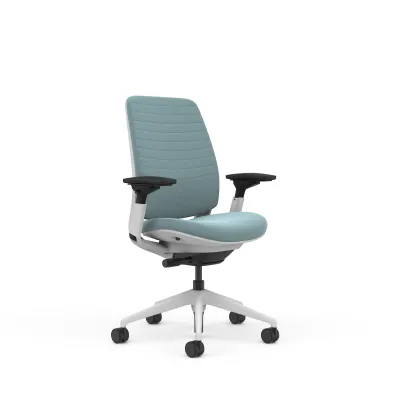
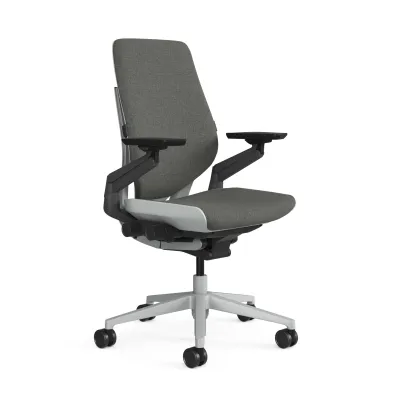
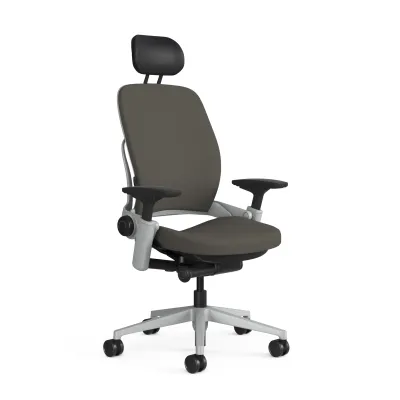
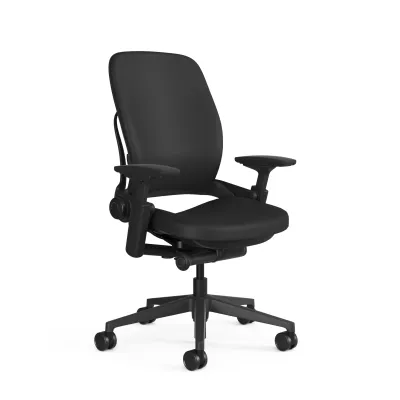
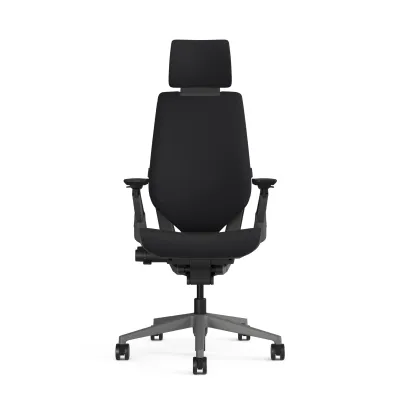
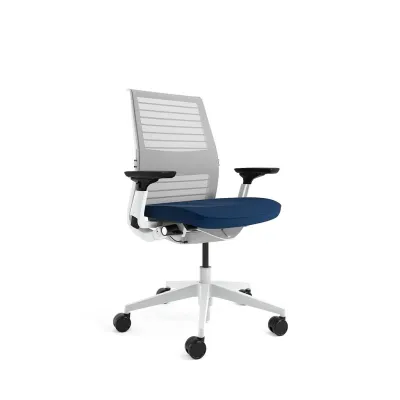
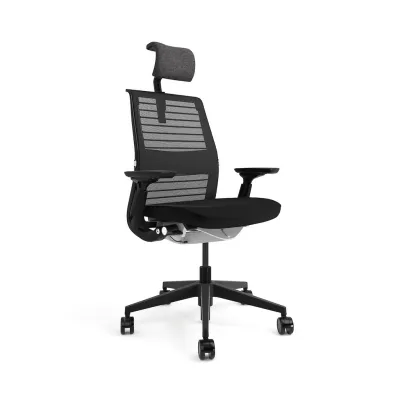
Prices are valid at publication and may change. Please refer to the product page for the latest price.
To understand how these differing philosophies will affect your daily comfort, check the manufacturer’s current specification sheets for specific mechanism names and adjustability ranges. For instance, look closely at how the tilt mechanism operates—whether it keeps your feet flat on the floor during recline or tilts the entire seat pan back. Understanding these mechanical differences helps you predict how a chair will behave during a long day of virtual meetings and focused tasks in your home office.
Key Features to Compare for Home Office Use
When comparing premium chairs for a residential workspace, the lumbar support mechanism is one of the most critical features to evaluate. Steelcase chairs often utilize adjustable physical pads that you can slide up and down to target the exact curve of your lower back, sometimes paired with a dial to adjust the firmness or depth of the support. Herman Miller chairs, on the other hand, frequently employ sophisticated, multi-part lumbar systems or built-in mesh tension zones that adapt to your spine automatically. When choosing, consider whether you prefer the direct, firm pressure of a physical pad or the broader, self-adjusting support of a tensioned mesh backrest.

Armrest adjustability is another area where the two brands diverge, directly impacting your comfort during keyboard and mouse use. Look for multi-dimensional armrests that adjust in height, width, depth, and pivot angle. Highly adjustable armrests allow you to bring the support close to your body, preventing shoulder strain and keeping your elbows at a comfortable 90-degree angle regardless of your desk height. While some models offer complete four-dimensional movement, others may feature more limited pivot options or fixed heights, so you must verify these specifications against your specific desk setup.
Seat depth and tilt tension controls are equally vital for maintaining proper circulation and spinal alignment. A seat depth adjustment allows you to slide the seat pan forward or backward, ensuring there is a small gap between the edge of the seat and the back of your knees to prevent pressure buildup. Tilt tension controls determine how much resistance you feel when reclining, allowing you to balance the chair so that it supports your weight effortlessly in any position. Before purchasing, verify these adjustment ranges on the manufacturer’s product sheets to ensure they can accommodate your height, leg length, and preferred working postures.
Material Durability and Maintenance in a Home Environment
The choice of upholstery material significantly affects both the daily comfort and the long-term maintenance of your chair in a residential setting. Traditional fabric upholstery, often paired with high-density foam seats, offers a plush, familiar feel that can make a home office feel cozy and inviting. However, fabric can trap heat over long sitting sessions and may require regular vacuuming or spot cleaning to manage dust, spills, and pet hair. If you opt for fabric, check the manufacturer’s labels for specific cleaning codes, rub-test ratings, and pet-hair resistance to ensure the material can withstand the realities of your household.
Mesh upholstery offers excellent breathability, making it a popular choice for warm climates or home offices without dedicated air conditioning. The open weave allows air to circulate freely around your back and thighs, keeping you cool throughout the day. Mesh is also exceptionally easy to clean, as it does not absorb liquids or trap dust in the same way fabric does. However, low-quality mesh can sometimes feel abrasive against delicate clothing or lose its tension over time, so it is crucial to verify that the manufacturer uses high-grade, resilient elastomeric fibers designed to retain their shape and support for years.
Beyond the seating surface, you must evaluate the frame finishes, base materials, and casters to ensure compatibility with your home environment. Heavy-duty nylon or polished aluminum bases provide excellent stability and load capacity, but the choice of casters is what protects your flooring. Standard hard casters are designed for carpets and may scratch or scuff hardwood, laminate, or vinyl floors. If your home office has hard flooring, verify if the chair comes with soft, polyurethane-coated casters or if you need to purchase them separately. Additionally, review the manufacturer’s warranty terms carefully, noting how coverage might differ between moving mechanical parts, structural frames, and upholstery fabrics.
Space, Aesthetics, and Home Office Integration
Integrating a commercial-grade office chair into a residential space requires careful consideration of both visual aesthetics and physical dimensions. Some premium chairs feature a bulkier, more traditional executive profile with thick padding and wide frames, which can dominate a small spare bedroom or a corner of your living room. If you prefer a minimalist aesthetic that blends seamlessly with modern home decor, look for chairs with slim profiles, clean lines, and mesh backs that allow light to pass through, making the room feel more open and less cluttered.
Physical clearance is another critical factor that is easily overlooked until the chair arrives at your home. Before making a decision, measure your available workspace, paying close attention to the chair’s maximum base diameter, armrest width, and the clearance required for a full recline. Ensure the chair can slide fully under your desk when not in use to save floor space, especially if your home office is located in a high-traffic area. You should also verify that the chair’s height range is compatible with your desk’s underside clearance, taking into account any drawers or keyboard trays.
Color and finish options allow you to customize the chair to match your home’s interior design palette. Both brands offer a wide range of frame colors, from classic black and mineral gray to warm neutrals and polished metals, alongside dozens of upholstery fabric options. However, custom configurations often come with longer lead times and different return policies compared to standard, quick-ship models. To avoid unexpected delays, check current authorized retailer inventories in Singapore to see which colorways and finishes are readily available for immediate delivery.
How to Make Your Final Decision
To choose the right premium chair for your home office, you must establish a clear decision framework based on your physical needs, sitting habits, and aesthetic preferences. If you prioritize deep physical adjustability, prefer the plush feel of a traditional foam seat, and find yourself constantly shifting, reclining, or sitting in various informal postures throughout the day, a Steelcase chair is often the more suitable choice. Their design philosophy excels at accommodating natural human movement, making it easy to stay comfortable without feeling restricted by the chair’s frame.
Conversely, if you struggle with maintaining good posture, prefer a cool and breathable seating surface, and want a chair that actively encourages an upright, ergonomically correct position, a Herman Miller chair may be the better option. The suspended mesh design and structured frame provide excellent passive support that keeps your spine aligned, making it ideal for long, focused typing sessions where you want to minimize slouching. This approach is particularly beneficial if you appreciate a sleek, iconic design that doubles as a statement piece in your home.
Before finalizing your purchase, always verify your physical compatibility with your chosen model by consulting the manufacturer’s official sizing guides, as some chairs are designed in multiple sizes to accommodate different height and weight ranges. If possible, visit a local authorized showroom in Singapore to test the models in person, paying close attention to how the lumbar support aligns with your spine and how easy the controls are to operate. Taking the time to verify these details ensures your investment will provide the comfort and support needed for a productive home office.
Frequently Asked Questions (FAQ)
Are premium office chairs worth the investment for part-time home office use?
Investing in a premium office chair can be highly beneficial even for part-time home office use, especially if you experience back pain, neck strain, or fatigue during your working hours. Unlike budget chairs that often use low-density foam that flattens within a year, premium chairs are engineered with high-grade materials designed to maintain their structural integrity and ergonomic support for over a decade. To evaluate the true cost-to-benefit ratio, calculate the cost per year by dividing the purchase price by the manufacturer’s warranty period, which is often a decade or more for these premium brands. When viewed as a long-term investment in your physical health and productivity, the cost per year of a premium chair is often comparable to or lower than replacing cheap chairs every few years.
How do I verify the authenticity and warranty when buying online?
To ensure you are purchasing an authentic chair with a valid manufacturer’s warranty, always cross-reference the seller’s details with the authorized dealer lists on the official brand websites. Premium chairs are highly sought after, which has led to a market for unauthorized refurbishers and counterfeit parts on various online marketplaces. Purchasing from an unauthorized seller often voids the manufacturer’s warranty, leaving you without coverage if a hydraulic cylinder, armrest, or tilt mechanism fails. When buying online, verify that the retailer provides an official invoice and that the chair retains its original serial number sticker, which is typically located on the underside of the seat pan or frame and is required for any future warranty claims.

Community discussion
Share your experience or ask a question. Comments are reviewed before publication.