
Finding the right ergonomic office chair for a home desk is not about chasing the most expensive brand or the trendiest design. Instead, it requires a systematic comparison of how different brands engineer their adjustability, material durability, and spatial footprints to match your unique physical dimensions and home environment. When you spend eight or more hours a day seated, a chair ceases to be mere furniture; it becomes a critical interface supporting your posture, circulation, and focus. By evaluating key ergonomic features, material specifications, and spatial compatibility, you can confidently select a chair that prevents fatigue and supports long-term well-being.
Core Adjustability Features to Compare Across Brands
Fixed lumbar supports offer a rigid, one-size-fits-all approach that rarely aligns with individual spinal curves. Adjustable height and depth mechanisms allow you to position the support precisely in the lumbar curve of your lower back. Dynamic, auto-adjusting lumbar systems react automatically to your movements, shifting support as you lean forward or recline. When comparing brands, check if the lumbar mechanism can be locked into place or if it relies entirely on passive tension, which may feel too soft or too aggressive depending on your body weight.
Armrests play a vital role in reducing strain on your shoulders, neck, and upper back. Brands categorize armrest adjustability from 1D to 4D. Basic 1D armrests only adjust vertically. Upgrading to 2D adds width adjustment, while 3D introduces depth (forward and backward movement). Premium 4D armrests add pivot adjustments, allowing you to angle the pads inward to support your forearms while typing or outward when using a mobile device. Proper armrest alignment ensures your elbows rest at a 90-degree angle, preventing your shoulders from hunching.
Products mentioned in this guide
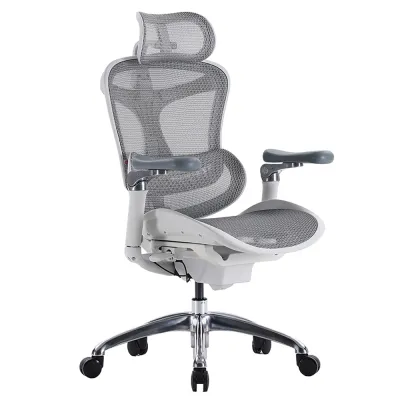
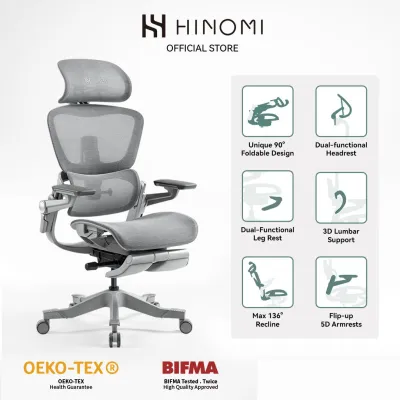
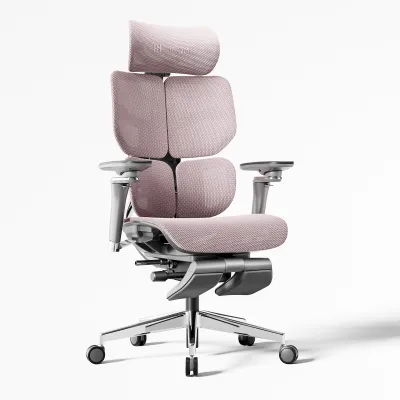
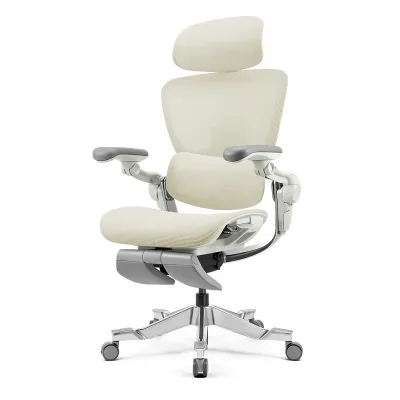
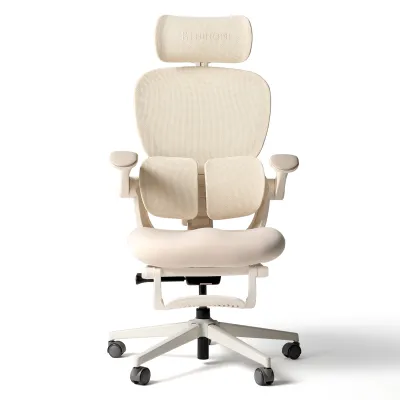
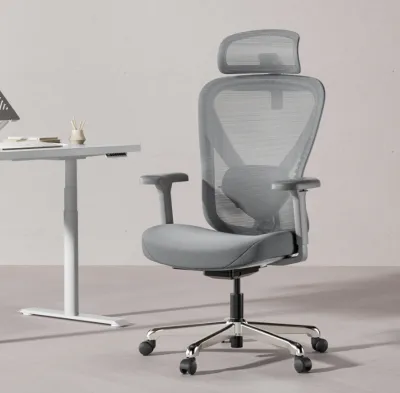
![[SG Ready Stocks] Ergonomic Office Chair - 8.5cm Thick Cushion + Antislip Surface Adjustable Backrest & Detachable Headrest Flip-Up Arms Rocking & Lock Function 15-Min Easy Assemble for Home/Office](https://img.lazcdn.com/g/p/056ecb65b2a442dd9a476ff654362085.jpg_400x400q80.jpg_.webp)
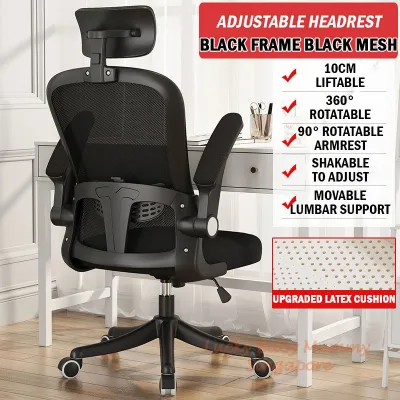
Prices are valid at publication and may change. Please refer to the product page for the latest price.
Seat depth adjustment is another critical feature that separates entry-level brands from high-performance ergonomic models. A seat slider mechanism allows you to adjust the distance between the front edge of the seat cushion and the backrest. To prevent restricted blood circulation in your legs, you should be able to sit fully back against the lumbar support while maintaining a gap of about two to three fingers between the back of your knees and the edge of the seat. Pair this with tilt tension controls, which adjust the resistance of the backrest when reclining, ensuring you do not feel like you are falling backward or struggling to push against a stiff spring.
Finally, compare the tilt mechanism itself. Standard tilt mechanisms keep the angle between the seat and backrest fixed, tilting the entire chair unit backward, which can lift your feet off the floor and put pressure on your thighs. In contrast, synchro-tilt mechanisms tilt the backrest and seat at a synchronized ratio (typically 2:1). This keeps your feet flat on the floor and your pelvis in an optimal position, maintaining a healthy spinal alignment even when you stretch or recline during a long call.
Evaluating Build Quality and Materials for Extended Use
The choice between a mesh backrest and a high-density foam seat is one of the most significant decisions you will make. Mesh offers exceptional breathability, which is highly beneficial in warm, humid climates like Singapore, where heat retention can lead to discomfort. However, not all mesh is created equal; look for woven elastomeric mesh that retains its tension over time rather than cheap nylon mesh that sags after a few months. High-density molded foam seats, on the other hand, provide superior pressure distribution by contouring to your body shape. They excel at reducing pressure points on your sit bones, though they can retain body heat if the chair lacks breathable upholstery.

Examine the structural frame and base materials. Entry-level brands often use standard plastics for their frames and bases, which can flex excessively or crack under continuous load. Premium brands utilize polished aluminum, die-cast steel, or glass-filled reinforced nylon. A heavy-duty aluminum base provides a lower center of gravity, significantly improving stability when you recline or swivel. Check the joints and connection points; seamless welds and heavy-duty bolts indicate a frame built to withstand years of daily adjustments.
Manufacturer specifications offer reliable clues about long-term durability. Always verify the stated weight capacity limit, which should comfortably exceed your body weight to ensure the gas lift cylinder and tilt mechanisms operate within safe parameters. Additionally, look at the warranty length. A brand offering a comprehensive 5-year to 12-year warranty on the frame, cylinder, and mechanisms demonstrates high confidence in their build quality, whereas a 1-year warranty often signals a shorter product lifespan.
Consider the maintenance and care requirements of different upholstery types. Mesh can be vacuumed with a brush attachment to remove dust, but spills can be difficult to clean if they penetrate the weave. High-density foam seats covered in fabric require periodic spot cleaning with mild upholstery cleaners. If you choose synthetic leather, check for polyurethane (PU) rather than cheap polyvinyl chloride (PVC), as PU is more breathable and less prone to peeling, though it still requires protection from direct sunlight and high humidity to prevent premature degradation.
Adapting the Chair to Your Home Desk and Space
Before purchasing any ergonomic chair, you must measure your workspace to ensure a seamless physical fit. Start by measuring the clearance under your desk. Compare this to the maximum height of the chair’s armrests when fully raised and lowered. If the armrests cannot slide under your desk, you will be forced to sit too far back from your keyboard, leading to forward leaning and severe neck strain. Also, check the width of the desk opening to ensure the chair’s base and armrests can glide in and out without scraping your furniture.
Next, verify the chair’s seat height range against your desk height and leg length. For proper ergonomic alignment, your feet must rest flat on the floor while your knees form a 90-degree angle, and your forearms rest parallel to the desk surface. If you are petite, some chairs may not lower enough, requiring you to use a footrest. Conversely, taller users must ensure the gas lift cylinder extends high enough to prevent their knees from sitting higher than their hips, which tilts the pelvis backward and flattens the natural lumbar curve.
In compact home offices or multi-purpose rooms—common in Singapore apartments—the overall footprint of the chair is a crucial factor. Measure the diameter of the five-star caster base, which typically ranges from 65 to 75 centimeters. Ensure you have sufficient swivel clearance and room to push the chair back when standing up without colliding with walls, cabinets, or nearby household items. A bulky executive-style ergonomic chair can quickly overwhelm a small study nook.
Finally, assess your flooring material to select the correct caster type. Standard hard nylon casters are designed for carpeted floors and can scratch, scuff, or gouge hardwood, laminate, or vinyl flooring. If your home office has hard flooring, look for chairs equipped with soft polyurethane or rubber-coated casters, which roll quietly and protect the surface. Alternatively, plan to use a high-quality protective floor mat to safeguard your flooring and ensure smooth, controlled movement.
Decision Framework: Choosing the Right Brand Profile
To finalize your choice, align your selection with your specific environment and physical needs. Choose a mesh-focused premium brand if you prioritize maximum breathability, appreciate dynamic micro-movements, and work in a naturally ventilated room where heat buildup is a constant concern. These brands design their chairs to flex with your body, promoting active sitting and keeping you cool throughout the day.
Choose a cushion-focused or hybrid brand if you prefer a plush, traditional seating feel and require firm, even pressure distribution across your thighs and glutes. This profile is ideal if you work in a consistently cool, air-conditioned room where heat retention is not an issue, or if you find the firm suspension of full-mesh chairs uncomfortable during long, uninterrupted focus sessions.
Choose a mid-range adjustable brand if you need essential ergonomic features—such as adjustable seat height, depth, and basic lumbar support—but are working within a stricter budget. Many mid-range brands offer excellent value by focusing on robust mechanical adjustments while using simpler materials like reinforced nylon instead of polished aluminum.
Before making a final decision, verify if you have specific physical requirements, chronic back pain, or a non-standard desk height. In these cases, a generic chair may not suffice. You may need to seek specialized ergonomic fittings, choose a brand that offers multiple frame sizes, or consult a physical therapist to identify the exact support mechanisms required for your body.
Frequently Asked Questions (FAQ)
How often should I replace an ergonomic office chair used for long hours?
An ergonomic chair typically requires replacement or professional servicing every five to ten years, depending on the build quality and daily usage. Inspect the seat cushion regularly; if the high-density foam has compressed to the point where you feel the hard pan underneath, it can no longer distribute your weight properly. For mesh chairs, check for sagging, fraying, or a noticeable loss of tension that allows your pelvis to sink too deep. Additionally, look out for mechanical wear, such as a sinking gas cylinder, loose or wobbly armrests, or a squeaky, unstable tilt mechanism. If you experience new physical fatigue or backaches during your usual work sessions, it is a strong indicator that the chair’s supportive properties have degraded.
Are expensive ergonomic chair brands always better for home use?
While premium ergonomic brands command higher prices due to advanced engineering, superior materials, and extensive warranties, a higher price tag does not guarantee a perfect fit for your body. An expensive chair with limited adjustability or an incorrect frame size will perform worse than a well-fitted, highly adjustable mid-range model. Your primary focus should be on how well the chair’s dimensions and adjustment ranges match your physical height, weight, and existing desk setup. If you are on a budget, prioritize essential adjustments like seat depth and lumbar height over luxury finishes like polished chrome or genuine leather. Whenever possible, test the chair in person or purchase from a retailer that offers a flexible home trial and return policy to ensure the chair supports you comfortably over extended hours.
Community discussion
Share your experience or ask a question. Comments are reviewed before publication.