
Selecting the ideal seating for a home workspace involves balancing physical comfort with the practical constraints of residential environments. The Steelcase Series 2 represents a prominent entry in the premium task chair category, often compared against other high-end ergonomic models to determine which best supports long hours of remote work. Rather than declaring a single universal winner, identifying the right chair requires analyzing how specific design features align with your unique physical proportions and daily habits.
In a home setting, a chair cannot be evaluated in isolation. It must interact seamlessly with your existing desk height, floor type, and available room clearance. This comparison evaluates the Steelcase Series 2 alongside competing premium alternatives across three primary pillars: ergonomic adjustability, spatial practicality, and long-term ownership value.
By focusing on verifiable specifications and diagnostic checks, you can bypass marketing claims and select a chair that actively prevents discomfort. Whether you prioritize highly customizable armrests, breathable mesh backrests for warm climates, or a compact footprint for a multi-purpose room, this guide provides the framework to make an informed investment.
Products mentioned in this guide
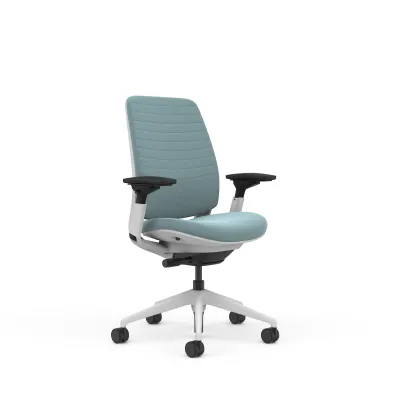
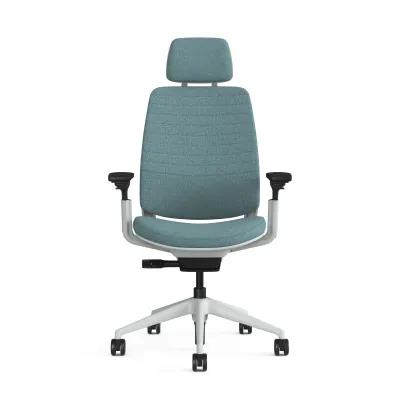
Prices are valid at publication and may change. Please refer to the product page for the latest price.
Key Ergonomic Adjustments to Compare
Ergonomic adjustability is the foundation of any premium office chair, determining how well the frame adapts to your natural posture rather than forcing your body to conform to a rigid structure. When comparing the Steelcase Series 2 with other premium models, the mechanism and range of adjustments serve as the primary points of differentiation.
Lumbar support is a critical area where premium chairs vary significantly. Some models utilize a passive, flexible backrest design that relies on material tension to support the lower back, while others feature dedicated, height-adjustable lumbar pads. The Steelcase Series 2 incorporates a built-in lumbar support system that can be adjusted vertically, but users should compare this with chairs offering independent depth adjustment. If you require pronounced lower-back pressure, verify whether a candidate chair allows you to control how firmly the support presses against your spine, or if it relies solely on vertical positioning.
Seat depth and height adjustment ranges must be verified against both your leg length and your desk height. A proper seat depth adjustment allows you to slide the seat pan forward or backward, ensuring there is a small gap—roughly the width of three fingers—between the edge of the seat and the back of your knees. This prevents pressure accumulation behind the knees while maintaining full contact with the backrest. Measure your desk height and compare it to the chair’s maximum and minimum cylinder heights to ensure your elbows can rest at a comfortable 90-degree angle without your shoulders shrugging.
Armrest adjustability, often categorized from 1D to 4D, directly impacts neck and shoulder strain. Basic height-adjustable armrests (1D) only move up and down, whereas highly adjustable 4D armrests slide forward, backward, pivot inward or outward, and adjust in width. The Steelcase Series 2 is widely recognized for its highly articulating armrests, which allow users to bring the support close to their body while typing or reading. When evaluating alternative premium chairs, check if the armrests lock into place or slide freely, as loose armrests can shift unexpectedly when you push yourself up from the seat.
The recline mechanism and tension control dictate how the chair supports dynamic movement throughout the day. Most premium chairs utilize a synchro-tilt mechanism, where the backrest reclines at a faster rate than the seat pan, keeping your feet flat on the floor and maintaining a consistent torso-to-thigh angle. Compare how different models handle recline tension: some feature weight-activated systems that automatically calibrate resistance based on your body weight, while others use manual tension knobs. If you prefer to lock your chair in a specific reclined angle for focused tasks or reading, verify whether the model offers multiple tilt-lock positions or only an upright lock.
Home Office Practicality: Space and Daily Use
While ergonomic features support your body, the physical dimensions and materials of a chair must suit your home environment. Unlike spacious corporate offices, home workspaces are often integrated into bedrooms, living areas, or compact study rooms where space is at a premium.

The overall footprint and clearance of the chair are vital considerations for tight layouts. Measure the width of your desk opening to ensure the chair’s base and armrests can slide completely underneath when not in use. Some premium chairs feature wide, sweeping bases that require significant floor clearance, making them difficult to turn or tuck away in narrow corridors. Additionally, calculate the space needed behind the desk to accommodate a full recline without striking walls, bookshelves, or nearby furniture.
Material breathability and maintenance are especially important in residential settings, particularly in warm or humid climates where air conditioning may not run continuously. The Steelcase Series 2 offers a choice between a mesh-like backrest and fully upholstered options. When comparing materials, consider that open-weave mesh backrests promote maximum airflow, keeping you cool during long working sessions. However, mesh can sometimes be more abrasive to delicate clothing fabrics and harder to clean if dust accumulates in the weave. Fully upholstered chairs provide a softer, more traditional feel but may retain body heat and require specialized fabric cleaners to address spills.
Caster selection directly affects both floor preservation and acoustic comfort in a home. Standard hard casters are designed for carpeted floors and will slide too quickly or scratch hardwood, laminate, or vinyl flooring. Soft, polyurethane-coated casters are essential for hard floors, as they provide grip, prevent surface damage, and dampen rolling noise that could disturb other household members. When purchasing a premium chair, check whether the manufacturer includes hard-floor casters as standard or requires them to be ordered as an add-on.
Base stability and weight capacity must be verified to ensure safety on various residential flooring types. Premium chairs typically feature five-star bases made of reinforced nylon or polished aluminum. If your home office flooring is slightly uneven, such as older tiling or thick carpeting, a heavier aluminum base can lower the chair’s center of gravity, reducing the risk of tipping when leaning forward or reaching for items. Always check the manufacturer’s certified weight capacity on the product label to ensure long-term structural integrity under daily use.
Evaluating Long-Term Value and Warranty Terms
Investing in a premium office chair like the Steelcase Series 2 involves a higher upfront cost, often ranging from several hundred to over a thousand S$. To justify this expenditure, you must evaluate the total cost of ownership by examining warranty terms, parts availability, and long-term durability.
Warranty coverage is a primary differentiator between entry-level furniture and premium ergonomic seating. Leading manufacturers often provide extensive warranties, sometimes spanning up to 12 years, covering structural components, mechanisms, and cylinders. However, you must carefully read the manufacturer’s warranty label for specific exclusions. For instance, foam padding, armrest pads, and upholstery fabrics may carry shorter coverage periods than the steel frame or pneumatic cylinder. Verify whether the warranty covers both parts and on-site labor, or if you are responsible for shipping the chair to a service center.
The availability of replacement parts is crucial for extending the lifespan of your chair beyond the warranty period. High-quality chairs are designed modularly, allowing you to swap out worn components rather than replacing the entire unit. Before finalizing your purchase, research how easily you can source replacement casters, armrest pads, and gas cylinders. Brands with established local distribution networks make it much simpler to obtain official parts, whereas lesser-known import brands may leave you with an unusable chair if a single small component fails.
Resale value and brand reputation in the secondary market offer an additional layer of financial security. Premium brands tend to retain a significant portion of their value, making them easier to sell if your working arrangements change or if you decide to upgrade. A well-maintained Steelcase or similar high-end chair often commands a strong price on local classified platforms, whereas generic office chairs have virtually no resale market.
To ensure your warranty remains valid, always verify that you are purchasing from an authorized retailer or directly from the manufacturer’s official store. Buying from unauthorized parallel importers or third-party online marketplace sellers may void your warranty entirely, leaving you without recourse if a defect arises. Request confirmation of authorized status from the seller and retain your original purchase receipt in a secure digital format.
Decision Framework: Which Chair Fits Your Setup?
To finalize your decision, you must synthesize your physical requirements, spatial limitations, and budget into a clear action plan. No single chair fits every individual, making a structured decision framework essential.
Consider the Steelcase Series 2 if you have a compact home office space and require highly adjustable armrests to support your typing posture. Its relatively slim profile and versatile adjustment options make it highly suitable for standard-sized users who want premium build quality without the massive footprint of larger executive chairs. It serves as an excellent baseline for users who prioritize dynamic arm movement and reliable, weight-activated recline support.
Opt for an alternative premium chair if you have highly specific ergonomic needs that the Series 2 does not address. For example, if you require deep, highly pronounced lumbar support with adjustable firmness, or if you prefer a fully suspended mesh seat pan rather than a foam cushion, other high-end models may be more appropriate. Additionally, if your budget is strictly capped or if you prefer a highly stylized aesthetic to match your home decor, exploring competing brands will help you find a better match.
Before purchasing, perform a physical check of your workspace. Measure your desk height, check the clearance under the desk drawer units, and test the floor surface. If you have pre-existing back conditions or specific medical seating requirements, consult a physical therapist or occupational health professional to identify the exact adjustments your body needs before investing in high-end furniture.
Keep in mind that neither the Steelcase Series 2 nor its premium competitors will perform optimally if your home office setup lacks fundamental structural support. A high-quality chair cannot compensate for a desk that is too high, a monitor placed at an incorrect viewing angle, or a workspace with insufficient legroom. Ensure your entire workstation is configured cohesively to maximize the ergonomic benefits of your new chair.

Community discussion
Share your experience or ask a question. Comments are reviewed before publication.