
Selecting a premium ergonomic chair for a home office is a significant investment in your long-term physical well-being. The Steelcase Leap V2 and the Herman Miller Aeron represent two distinct schools of thought in ergonomic design. Rather than offering a one-size-fits-all solution, each chair addresses the challenges of prolonged sitting through different structural materials and mechanical systems. The ideal choice for your workspace depends on your personal posture habits, thermal preferences, and how you interact with your desk throughout the day.
To make an informed decision, you must look beyond brand reputation and evaluate how each chair’s design aligns with your daily routine. While one user might thrive on the firm, suspended support of a mesh seat, another may find the adaptive cushioning of a traditional foam seat far more forgiving during long workdays. By analyzing their structural differences, adjustability ranges, and practical home office compatibility, you can identify the chair that will best support your body and enhance your productivity.
Structural Design: Mesh Suspension vs. Cushioned Flexibility
The most immediate difference between these two chairs lies in their primary seating surfaces. The Herman Miller Aeron features a proprietary pellicle mesh suspension system that stretches across a rigid composite frame. This design eliminates traditional foam padding entirely, relying instead on the tension of the woven material to distribute your body weight evenly. The mesh allows for constant airflow, which prevents heat buildup and keeps the seating surface cool. However, the rigid outer frame of the Aeron is highly structured; if you tend to sit cross-legged, tuck one foot under your thigh, or shift away from a centered posture, your legs may press against the hard plastic edges, causing discomfort over time.
Products mentioned in this guide
![[Ready Stock] Refurnished Steelcase Leap V2 with Headrest Solution Ergonomic Chair from USA](https://img.lazcdn.com/g/p/19b660e5c39e14c2ea1eb7afcc3aed99.jpg_400x400q80.jpg_.webp)
Prices are valid at publication and may change. Please refer to the product page for the latest price.
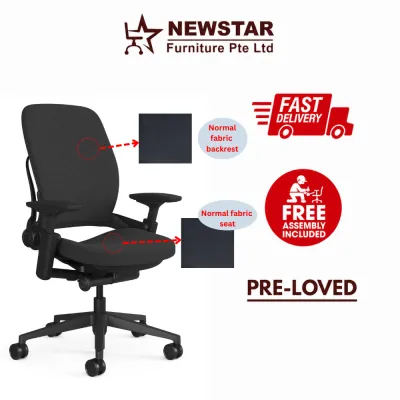
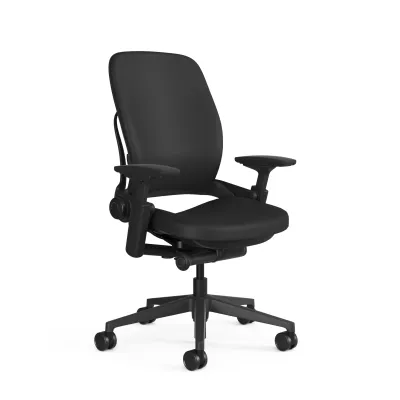
In contrast, the Steelcase Leap V2 utilizes a more traditional cushioned seat and a highly flexible backrest. The seat pan consists of a contoured foam pad wrapped in fabric, designed to relieve pressure on the sit bones while allowing for a wider variety of seating positions. The Leap V2’s backrest is engineered to mimic the natural movement of the human spine, flexing and changing shape as you shift your weight or lean back. This flexible construction provides continuous support without the hard boundaries of a rigid frame. When evaluating these materials, it is essential to check the manufacturer’s specifications and care labels. Fabric cushions may require more frequent vacuuming or spot cleaning to manage dust and spills, whereas mesh surfaces can be easily wiped down but may accumulate dust underneath the seat mechanism over time.
Adjustability: Matching the Chair to Your Body Mechanics
Ergonomic support is highly dependent on how precisely a chair can be tailored to your individual proportions. The Steelcase Leap V2 is widely celebrated for its highly tactile and granular adjustment controls. Its lumbar support system includes both a height-adjustable pad and a lower back firmness dial, allowing you to customize the depth of the curve against your lumbar spine. The Leap V2 also features an adjustable seat depth slider, which is crucial for ensuring your thighs are fully supported without the front edge of the seat pressing into the back of your knees. The armrests on the Leap V2 offer four-dimensional adjustment—moving up and down, forward and backward, side to side, and pivoting inward or outward—making it exceptionally easy to align them with your desk height or keyboard tray.

The Herman Miller Aeron takes a different approach to adjustability, relying heavily on its frame sizing (typically offered in three distinct sizes: A, B, and C) to establish the baseline fit. Because the seat depth on the Aeron is fixed, choosing the correct frame size is critical to achieving proper leg support. Its lumbar support options, such as the PostureFit SL system, focus on stabilizing the sacrum and supporting the lumbar region using adjustable pads that press against the back of the mesh. While the Aeron’s armrests offer height, depth, and pivot adjustments, they lack the lateral width adjustment found on the Leap V2. When comparing these mechanisms, review the product spec sheets carefully to measure the armrest and seat height ranges against your existing desk setup to ensure a seamless ergonomic fit.
Long-Hour Comfort: Thermal Regulation and Posture Support
Extended home office sessions place unique demands on your body, making thermal regulation and dynamic posture support critical factors for daily comfort. In warm, humid environments like Singapore, heat retention can quickly lead to discomfort and fatigue. The Aeron’s mesh suspension excels in these conditions, facilitating maximum breathability and keeping you cool without the need for constant air conditioning. The Leap V2’s foam cushion, while highly comfortable, naturally retains more body heat, which may be a consideration if your home office lacks dedicated climate control or consistent airflow.
However, comfort over long hours also depends on how a chair supports your natural movements. The Aeron is designed to encourage an active, upright posture, keeping your pelvis tilted correctly and discouraging slouching. Its sophisticated tilt mechanism keeps the seat and back moving in unison, providing a smooth recline that maintains your line of sight with your monitor. The Leap V2, on the other hand, is built for movement and posture variation. Its backrest technology allows you to recline while the seat pan glides forward, keeping your feet planted on the floor and your hands within reach of your desk. Before making a final decision, always verify the chair’s stated weight capacity and user height range on the official product label to ensure the internal tension springs and gas cylinders are rated to support your body safely over years of daily use.
Home Office Fit: Footprint, Casters, and Visual Profile
Beyond physical comfort, your ergonomic chair must fit seamlessly into your physical living space. The visual footprint and base dimensions of both chairs should be measured against your desk’s under-cabinet clearance and the surrounding walkways. The Aeron’s wide, star-shaped base and distinct industrial silhouette make it a prominent visual element in any room. If your home office is situated in a shared living area or a compact bedroom, the Leap V2’s slightly more compact frame and traditional executive profile may blend more naturally with residential decor.
Floor compatibility is another practical consideration that impacts both the chair’s mobility and the preservation of your flooring. Standard hard casters are designed for carpeted floors and can easily scratch or gouge hardwood, vinyl, or engineered flooring over time. When purchasing either model, check the caster specifications to ensure you select soft, polyurethane-coated casters for hard surfaces, or plan to use a high-quality protective floor mat. Additionally, ensure that the chair’s overall height, including the armrests at their lowest setting, allows it to slide fully under your desk when not in use, preserving valuable floor space in smaller rooms.
Evaluating Value: S$ Pricing, Warranties, and Servicing in Singapore
Investing in a high-end ergonomic chair involves a significant financial commitment, making it essential to evaluate the total cost of ownership, warranty terms, and local support options. S$ retail prices for both the Steelcase Leap V2 and Herman Miller Aeron can vary widely depending on the configuration, material choices, and current promotions offered by authorized local dealers and official brand showrooms in Singapore. It is highly recommended to visit these showrooms to physically test both chairs, as experiencing the tension of the Aeron’s mesh versus the contour of the Leap V2’s cushion is the most reliable way to gauge personal compatibility.
When purchasing, pay close attention to the warranty details provided by the authorized distributor. A comprehensive warranty should cover the structural frame, tilt mechanism, gas cylinder, and armrests, but the duration and terms for fabric, mesh, and foam components may differ. Verify the local claim process, including whether servicing is performed on-site at your home or requires transporting the chair to a local service center. Choosing a brand with an established local presence in Singapore ensures that replacement parts, such as replacement casters or fresh arm pads, will be readily available if components wear out over years of intensive use.
Final Verdict: How to Choose Between the Two
To finalize your decision, consider how your daily habits, physical preferences, and workspace environment align with the strengths of each model.
Choose the Herman Miller Aeron if:
- You prioritize maximum airflow and want to stay cool in warm or humid environments without relying heavily on air conditioning.
- You prefer a highly structured, firm seating surface that guides you into a disciplined, ergonomically correct posture.
- You prefer to sit in a centered, forward-facing position and do not typically tuck your legs or sit cross-legged.
Choose the Steelcase Leap V2 if:
- You prefer the familiar, pressure-relieving comfort of a traditional foam cushion over a suspended mesh surface.
- You frequently shift your seating positions, lean back to read or take calls, or require a highly flexible backrest that mimics your spine's natural movements.
- You need highly adjustable, four-dimensional armrests to accommodate a specific desk height, keyboard tray, or unique arm positioning.
Verify first if:
- Your desk height and under-desk clearance can comfortably accommodate the armrests and base dimensions of your chosen chair size.
- The local authorized dealer in Singapore offers a comprehensive warranty that covers both the mechanical components and the seating materials.
- You have the opportunity to visit a local showroom to physically sit in both models, as personal comfort remains the ultimate deciding factor.
Frequently Asked Questions (FAQ)
Is it worth buying a refurbished or second-hand ergonomic chair?
Purchasing a refurbished or second-hand ergonomic chair can offer substantial savings, but it requires careful inspection to ensure you are getting a reliable product. When evaluating a pre-owned Aeron or Leap V2, inspect the mesh for any signs of sagging, fraying, or loss of tension, and check the Leap V2’s foam cushion for permanent compression or uneven wear. Test the gas cylinder by sitting in the chair and adjusting the height multiple times; if the chair sinks slowly on its own, the cylinder will need to be replaced. Additionally, be aware that original manufacturer warranties in Singapore typically do not transfer to second-hand buyers, meaning any future repairs or replacement parts will need to be sourced and paid for out of pocket.
Do I need a headrest for long home office sessions?
Whether you need a headrest depends largely on your primary working postures and personal comfort preferences. If you spend a significant portion of your day reclined—such as during virtual meetings, reading documents, or taking phone calls—a headrest can provide valuable neck support and reduce muscle strain. However, if your work primarily involves upright typing, data entry, or active tasking, your head will naturally remain forward of the backrest, making a headrest largely redundant. Both the Steelcase Leap V2 and Herman Miller Aeron are designed to support proper spinal alignment without a headrest, but various official and third-party headrest attachments are available if you decide you need the additional neck support later on.

Community discussion
Share your experience or ask a question. Comments are reviewed before publication.