
Selecting the right stackable wooden stool depends heavily on the spatial dynamics of your home. While compact apartments require space-saving proportions and visual lightness, landed homes can accommodate sturdier, more substantial designs. This guide provides a framework to evaluate stool designs, stacking mechanisms, and proportions based on your specific living environment in Singapore, helping you make a practical and aesthetically pleasing choice.
Assessing Your Space: Compact Apartments vs. Landed Homes
Living in a compact apartment, such as a typical HDB flat or a modern condominium, requires careful management of floor space and traffic flow. Every piece of furniture must justify its footprint, and bulky items can quickly make a room feel crowded. In these environments, stackable stools serve as flexible seating that can be tucked away when not in use, keeping walkways clear.
Conversely, landed homes offer generous floor areas and open-plan layouts that can easily accommodate larger furniture footprints. In these expansive spaces, lightweight or overly minimalist stools can look lost or visually insignificant. Instead, these homes benefit from seating with more presence to anchor dining tables or transition zones.
Products mentioned in this guide
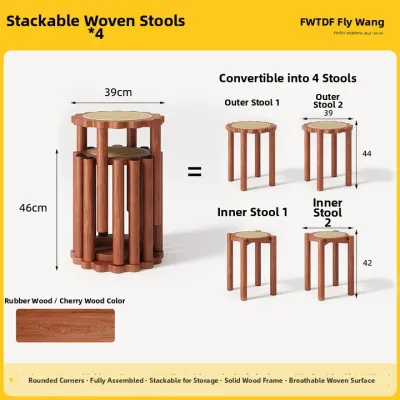
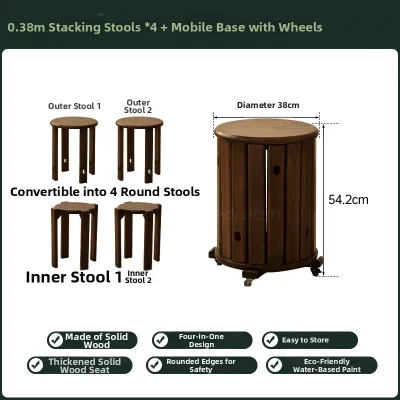
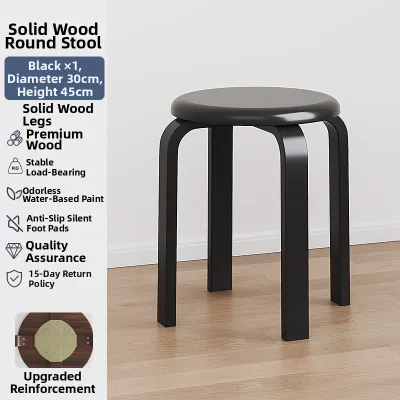
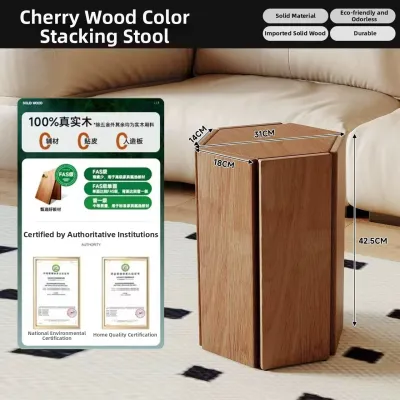
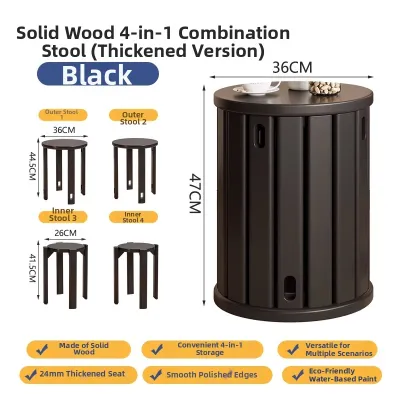
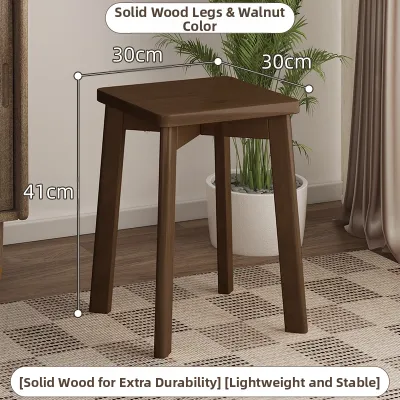
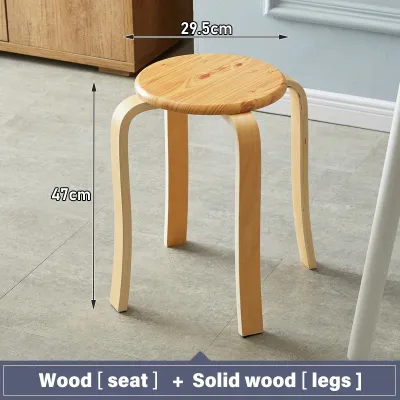
Prices are valid at publication and may change. Please refer to the product page for the latest price.
Before choosing a stool style, measure your available floor area, the clearance under your dining table or kitchen counter, and the dimensions of your intended storage nook. Knowing these physical limits ensures your new seating integrates smoothly into your daily routine without creating physical or visual obstacles.
Design and Proportion Guidelines for Compact Apartments
In smaller living spaces, prioritizing visual lightness is key to maintaining an airy, uncluttered atmosphere. Look for stackable wooden stools with slender, tapered legs and backless profiles. These design elements allow light to pass through and keep sightlines open, making the room feel larger than it is.

The physical footprint of the stool base is equally critical. Evaluate the base dimensions to ensure the stools can tuck completely underneath your dining table or kitchen island when stacked or placed individually. Stools with a flared base may offer stability but can protrude into narrow walkways, creating tripping hazards.
Wood tones and finishes also play a significant role in how space is perceived. Lighter wood species, such as ash, beech, or light oak, reflect more natural light and blend seamlessly with neutral interior palettes. Selecting a matte or low-sheen finish can further soften the furniture’s visual impact in a cozy dining area.
Design and Proportion Guidelines for Landed Homes
Landed properties allow you to embrace substantial proportions and bolder design statements. Stools with wider seats, thicker legs, or contoured low backs provide the necessary visual weight to complement large, solid wood dining tables. These robust designs feel grounded and proportional within high-ceilinged rooms or expansive open-plan layouts.
You can also experiment with richer material presence and deeper wood tones. Darker woods like walnut or teak, especially those featuring pronounced grain patterns, can serve as elegant design focal points. These richer tones add warmth and sophistication to well-lit, spacious dining and living zones.
Additionally, landed homes often feature transitions between indoor dining areas and covered outdoor patios. If you plan to move your stools between these zones, check the manufacturer’s care instructions regarding humidity and temperature exposure. Even sturdy wooden stools require specific finishes to withstand the ambient moisture of semi-outdoor environments.
Evaluating the Stacking Mechanism and Storage
Not all stackable stools stack the same way, and the mechanism directly affects both storage footprint and ease of use. Vertical stacking designs pile directly on top of one another, minimizing floor space but increasing height. Nested or staggered designs stack at a slight angle, which may require a slightly larger floor footprint but offers greater stability at lower heights.
To protect your investment, inspect the stools for built-in protective features. Look for integrated felt pads, rubber glides, or protective buffers on the underside of the seats. These features prevent wood-on-wood friction, protecting the finish from scratches and wear during repeated stacking and unstacking.
Safety should always be a primary consideration when storing stacked furniture. Check the manufacturer’s specifications for the maximum recommended stacking height and weight limits. Exceeding these guidelines can compromise the stability of the stack, creating a tipping hazard in your home.
Cross-Scenario Versatility and Multi-Use Checks
A well-designed wooden stool can easily transition into a temporary side table, bedside companion, or plant stand. To assess a stool’s suitability for these secondary roles, check that the seat surface is completely flat rather than deeply contoured. You should also verify the manufacturer’s load-bearing specifications to ensure it can safely support heavy objects.
Portability is another factor that influences how often you will use the stools across different rooms. Consider the physical weight of the wood species; lighter woods are much easier to carry from a storage closet to the living room when hosting guests. Ergonomic features, such as built-in hand grips or finger slots under the seat, also make transport effortless.
Finally, review the durability of the finish if you plan to use the stool in high-moisture areas like bathrooms or near entryways. Ensure the surface treatment is rated for varied indoor conditions by consulting the product care guide, as standard dining finishes may water-spot or degrade when exposed to wet items.
Frequently Asked Questions (FAQ)
How many stackable stools should I buy for a small dining area?
To determine the ideal number of stools, start by measuring the perimeter of your dining table. Allow at least 60 to 70 centimeters of width per person to ensure comfortable elbow room and standard seating clearance. Next, measure your designated storage nook or closet to confirm how many stacked stools can fit safely without blocking walkways. Balancing your typical guest count with your actual storage capacity will help you find the right number without cluttering your home.
Can I use indoor wooden stools in a landed home's patio?
Indoor wooden stools are generally finished with lacquers or oils that are not formulated to withstand high humidity, temperature fluctuations, or indirect sunlight. Placing them on a covered patio can lead to wood warping, joint separation, or finish degradation over time. Always consult the manufacturer’s warranty and care guidelines before using indoor furniture in semi-outdoor spaces, and opt for stools specifically rated for outdoor use if exposure to the elements is likely.

Community discussion
Share your experience or ask a question. Comments are reviewed before publication.