
Quick Answer: Which Design Fits Your Closet Routine?
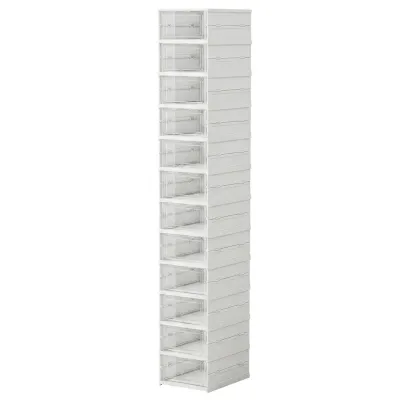
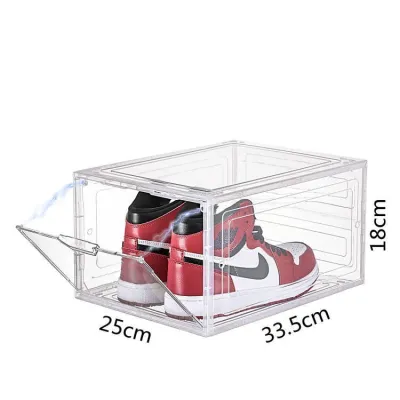
If you need quick, daily access to your footwear collection without the hassle of unstacking multiple containers, drop-front shoe boxes are the ideal choice. They feature a front-opening door that lets you slide shoes out instantly, making them perfect for high vertical stacks and active daily routines.
Conversely, standard stackable shoe boxes with top-opening lids or simple interlocking rims are highly effective for long-term storage, seasonal rotation, or organizing infrequently worn pairs. They excel at maximizing vertical space on deep closet shelves where you do not need to retrieve items constantly.
Ultimately, your decision hinges on three primary constraints: your daily retrieval routine, the physical dimensions of your closet shelves, and the height of your planned stack.
Products mentioned in this guide
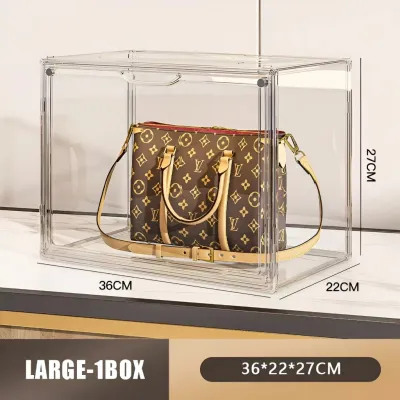
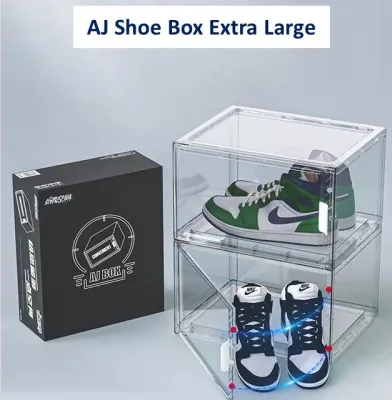
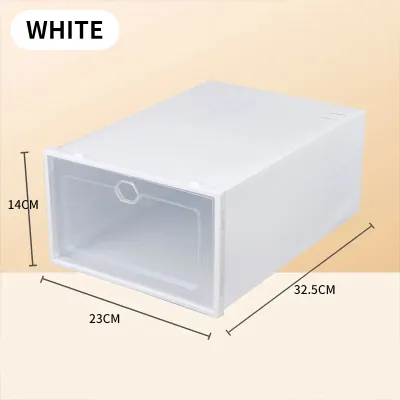
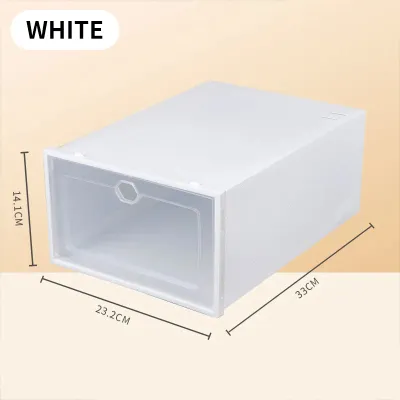
Prices are valid at publication and may change. Please refer to the product page for the latest price.
Understanding the Mechanics of Stackable and Drop-Front Boxes
To make an informed choice, it is essential to look at how these two storage systems are engineered. Standard stackable shoe boxes typically rely on a top-lid design or a nested interlocking rim. To open a top-lid box, you must physically remove the lid from the base, which requires clear overhead space. Interlocking rims allow the bottom of one box to slot securely into the top groove of another, creating a unified column that resists sliding but still requires unstacking to access the contents of lower units.

Drop-front shoe boxes utilize a completely different mechanical approach. These units feature a rigid frame with a hinged or magnetic front panel that swings downward or outward. The structural integrity of a drop-front box is concentrated in its outer shell, which is designed to support the weight of multiple stacked units above it without transferring that load directly to the shoes inside.
This structural difference changes how weight distribution and physical stress affect the containers. In a standard stackable setup, the weight of the upper boxes rests heavily on the lids of the lower boxes. If the plastic is flexible or thin, this constant downward pressure can cause the lower boxes to bow, warp, or crack over time, potentially pinching the shoes inside. Drop-front boxes, especially those made from rigid acrylic or reinforced polymers, distribute the vertical load through their reinforced side panels and front frames, maintaining their shape even when stacked several units high.
Comparing Daily Accessibility and Retrieval Effort
The primary differentiator in daily use is the physical effort required to retrieve a single pair of shoes. Imagine a scenario where you have stacked six shoe boxes vertically inside your wardrobe. If you are using standard stackable boxes and want to wear the pair stored in the bottom box, you must lift the top five boxes off the stack, set them aside, remove the lid of the bottom box, retrieve your shoes, replace the lid, and then restack the five boxes back in order. This multi-step process can quickly become tedious, often leading to cluttered closets when users bypass the system out of convenience.
With a drop-front shoe box, retrieving that same bottom pair requires only a single motion. You simply pull open the magnetic or hinged front door, slide the shoes out, and close the door. The rest of the stack remains completely undisturbed. This ease of access encourages consistent organization, as putting shoes away is just as effortless as taking them out.
However, you must also consider the physical clearance required to operate these doors. A drop-front panel needs sufficient clearance in front of the box to swing open fully. If your closet has sliding doors, narrow walkways, or limited floor space, a front-opening panel might strike the wardrobe door or block your path. In contrast, top-lid stackable boxes do not require front clearance to open, though they do require ample vertical clearance or physical space nearby to set aside the upper boxes during retrieval.
Evaluating Space Efficiency and Stacking Stability
Maximizing the physical footprint of your closet requires a careful look at stacking stability and space efficiency. Stackable boxes with deep interlocking grooves offer excellent lateral stability. Because the boxes lock into one another, they are less likely to slide sideways or shift when bumped. This makes them highly efficient for deep shelves where you can place multiple rows of boxes front-to-back.
Drop-front boxes also stack vertically, but their stability depends heavily on the quality of their interlocking tabs or connectors. Because these boxes are designed to remain in place permanently, many manufacturers include specialized clips or slot-and-groove systems to lock the units together both vertically and horizontally.
Regardless of the design you choose, tall vertical columns present an inherent tip-over risk. If you plan to stack shoe boxes higher than chest level, especially on carpeted floors or inside deep wardrobes, you must evaluate the need for anchoring. Using anti-tip straps, securing the stack to a wall stud, or placing the columns within a tight-fitting closet niche can prevent accidental tipping.
Closet depth and width are critical constraints. Standard wardrobes in Singapore often feature fixed shelving with specific depth limits. If your shelves are shallow, a drop-front box must fit entirely within the shelf boundary so that the wardrobe doors can close completely. If the box protrudes even slightly, the front door may not open, or the wardrobe door will remain ajar.
Balancing Visibility, Ventilation, and Dust Protection
Protecting your footwear investment involves balancing visibility with environmental protection. Drop-front shoe boxes are highly favored by collectors because they typically feature crystal-clear front panels made of high-grade acrylic. This allows you to view your collection at eye level, making it easy to select the perfect pair without opening a single box. Standard stackable boxes are often semi-translucent or frosted, which diffuses light and makes it harder to identify specific colors or details from a distance.
In humid climates like Singapore’s, ventilation is a critical factor in preventing mold, mildew, and material degradation, particularly for leather, suede, and canvas shoes. Many drop-front boxes incorporate rear ventilation holes or small gaps around the door frame to promote air circulation. While this airflow is beneficial for moisture control, it does allow a small amount of dust to enter over time.
Standard stackable boxes with tight-fitting lids offer superior dust and pest protection. If you are storing delicate shoes for several months or years, a well-sealed stackable box will keep out dust, silverfish, and other pests. However, without regular air circulation, trapped moisture can damage organic shoe materials. For long-term storage in humid environments, it is wise to place silica gel packets or moisture absorbers inside sealed stackable boxes and inspect them periodically.
Decision Framework: Match the Box to Your Closet Setup
To determine the best option for your home, use this structured decision framework to match the box design to your specific closet environment and lifestyle.
When to Choose Drop-Front Boxes:
- You have a large collection of daily-wear shoes that you need to access quickly every morning.
- You plan to stack your shoe boxes more than three units high, making unstacking impractical.
- Your closet shelves have sufficient depth to accommodate the box dimensions and the front door's swing radius.
- You want to display your footwear as a visual feature in your room or walk-in wardrobe.
When to Choose Stackable Boxes:
- You are organizing seasonal footwear, formal shoes, or pairs that you only wear occasionally.
- Your closet has deep, low shelves or under-bed space where vertical clearance is limited but floor area is abundant.
- You are working with a tighter budget and need to organize a large volume of shoes without a significant financial investment.
- You require maximum protection against dust and pests for long-term storage.
Before making a final purchase, always verify that your closet’s physical dimensions, shelf weight limits, and your specific shoe sizes align with the internal capacity of the boxes you are considering.
Essential Measurements to Verify Before Purchasing
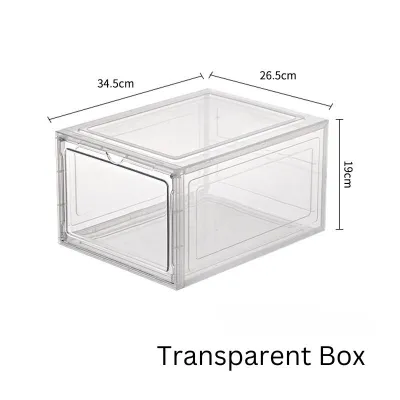
Avoid the common mistake of purchasing shoe boxes based on generic size labels like “medium” or “large.” Instead, take precise measurements of both your footwear and your closet space.
First, measure the physical dimensions of your largest shoes. High-top sneakers, platform heels, and ankle boots require significantly more vertical and horizontal clearance than flat sandals or running shoes. Measure the length, width, and height of these larger pairs together, and compare them against the internal dimensions of the shoe box, not the external product dimensions.
Second, measure your closet shelves. Note the exact depth, width, and the vertical clearance between shelves. If you plan to stack boxes from the floor to the ceiling, measure the total height of the space, taking into account any baseboards, light fixtures, or door tracks that might obstruct the stack.
Finally, check the manufacturer’s specifications for the maximum stack limit and weight capacity per box. Stacking boxes beyond their structural limits can cause the lower units to buckle, risking damage to your shoes and creating a safety hazard in your home.
Frequently Asked Questions (FAQ)
Can I mix stackable and drop-front boxes in the same stack?
It is generally not recommended to mix different brands or styles of shoe boxes within a single vertical stack. Different manufacturers use unique interlocking mechanisms, tab placements, and outer dimensions. Attempting to stack a drop-front box on top of a standard stackable box—or vice versa—can compromise the structural integrity of the column, leading to wobbling, slipping, or a complete collapse.
If you want to use both types of boxes in your closet, organize them into separate zones. For example, place your daily-wear shoes in a dedicated column of drop-front boxes on an accessible shelf, and store your seasonal shoes in a separate stack of top-lid boxes on a higher shelf or under the bed. This maintains both safety and visual consistency.
Do I need to assemble these shoe boxes before placing them on shelves?
Yes, most modular shoe boxes are shipped flat-packed to reduce shipping costs and prevent damage during transit. They typically require basic assembly, which involves snapping plastic panels together, folding out the main body, and securing the front door frame or lid.
Before you begin, check the assembly instructions to see if you need extra physical space to work. It is usually much easier to assemble the boxes on a flat floor or large table outside of your closet. Once assembled, verify that the interlocking tabs are fully engaged before placing the boxes onto your closet shelves and loading them with shoes.

Community discussion
Share your experience or ask a question. Comments are reviewed before publication.