
Quick Answer: Which Shoe Box Style Fits Your Closet?
Choosing between stackable and drop-front shoe boxes depends on how often you access your footwear and the physical limits of your wardrobe. If your primary goal is to maximize vertical space on deep, high shelves for seasonal or rarely worn footwear, traditional stackable designs are highly effective. These systems require you to unstack the containers to access lower pairs, making them ideal for long-term storage where space efficiency outweighs daily convenience.
Conversely, if you need quick, daily access to your shoes without disrupting your entire storage setup, drop-front designs are the superior choice. Their front-opening panels allow you to slide pairs in and out while the boxes remain stacked. Before purchasing either style, verify your closet’s shelf weight capacities and measure your tallest or heaviest footwear to ensure the boxes can support the load and accommodate the physical dimensions of your collection.
Core Design Differences: Stackable vs Drop-Front Shoe Boxes
Understanding the structural mechanics of both shoe box designs is essential for planning an organized closet. Traditional stackable shoe boxes utilize a classic lid-on-top mechanism. To retrieve a pair of shoes, you must physically lift the box out of the stack, remove the lid, and then replace it. To maintain stability when stacked, these boxes typically feature molded interlocking grooves or tabs on the top lids and bottom bases, which nest together to prevent the column from shifting or sliding.
Products mentioned in this guide
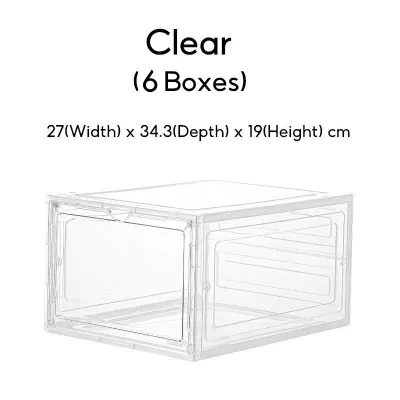
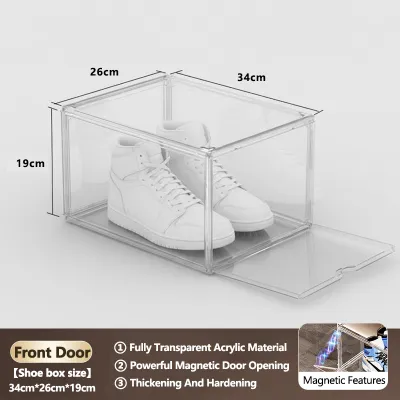
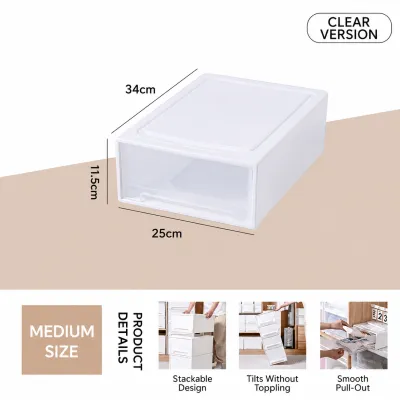
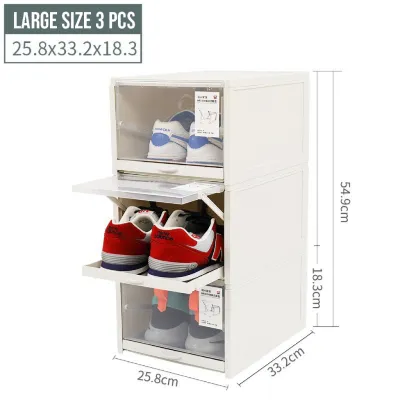
Prices are valid at publication and may change. Please refer to the product page for the latest price.

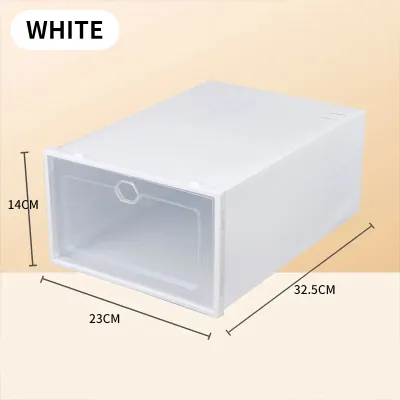
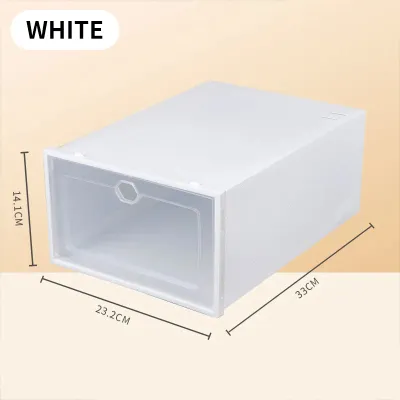
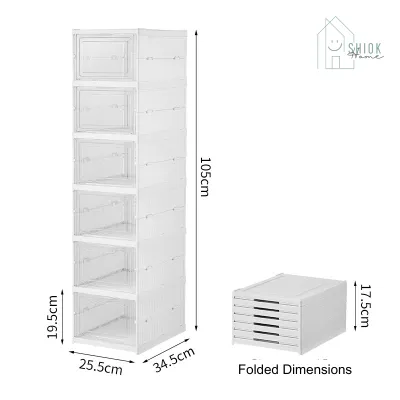
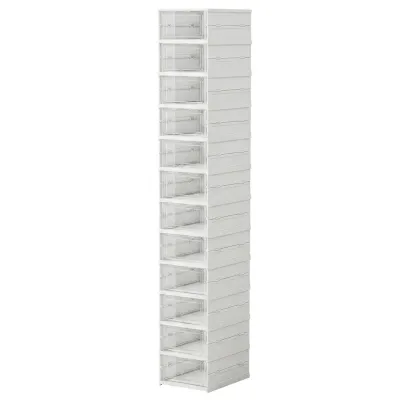
Drop-front shoe boxes employ a rigid outer frame with a hinged or magnetic front panel. This design allows the front door to swing downward or outward, providing direct access to the interior while the box remains integrated into the stack. Because the structural load of the upper boxes is carried by the reinforced side walls and frame rather than the door, the front panel can open freely without compromising the stability of the entire column.
Visual transparency varies significantly across both styles and directly impacts how easily you can identify your footwear. Fully transparent clear plastic options offer maximum visibility, allowing you to spot specific colors and styles instantly, though they also put any interior clutter on display. Frosted or semi-transparent plastics soften the visual impact for a cleaner aesthetic, while solid-colored boxes with clear front windows offer a compromise between a uniform look and quick identification.
Space Efficiency and Closet Compatibility
Evaluating how each box type fits your specific closet dimensions prevents wasted space and awkward layouts. Standard wardrobe shelves, particularly in compact urban apartments or built-in HDB wardrobes, often have fixed depths ranging from 50 to 60 centimeters. Traditional stackable boxes, which are often tapered slightly toward the base to allow nesting when empty, may leave small gaps between units, slightly reducing overall horizontal space efficiency.
Drop-front boxes typically feature straight, rectangular outer walls that sit flush against one another, maximizing the usable footprint on flat shelves. However, their vertical stacking limits depend heavily on the rigidity of the frame material. While high-quality, reinforced drop-front units can be stacked several tiers high, cheaper, flexible plastic versions may bow under the weight of heavy shoes, causing the front doors to bind or stick.
Closet door clearance is a critical factor that many homeowners overlook. Drop-front doors require outward clearance to swing open. If your closet features sliding doors or narrow walk-in pathways, you must ensure the boxes are recessed deep enough so the open panels do not strike the sliding tracks or wardrobe doors. Stackable boxes, which you pull completely out of the shelf before opening, do not require front clearance but do need sufficient vertical clearance above the stack to allow easy removal.
Accessibility and Daily Convenience
Daily routines dictate whether a storage system remains organized or falls into disarray. Retrieving a pair of shoes from the bottom of a six-tier stack of traditional boxes requires significant physical effort. You must lift and set aside the top five boxes, open the bottom box, retrieve your shoes, replace the lid, and restack the heavy containers. This repetitive friction often leads to shoes being left on the floor or stacks left unlidded.
Drop-front mechanisms eliminate this friction by enabling simple, one-handed operation. Magnetic closures or snap-fit latches allow you to open the door, slide your shoes out, and close the panel in a single motion. This convenience is particularly valuable during busy mornings when time is limited, helping you maintain a tidy closet floor with minimal effort.
Footwear dimensions also influence how well each box functions. Taller items, such as high-top sneakers, ankle boots, or high heels, require vertical clearance that standard shoe boxes may not provide. When using drop-front boxes, you must ensure the door opening itself is tall and wide enough to insert these shoes without scraping the sides. Stackable boxes offer slightly more flexibility for oversized footwear, as the top-down opening allows you to angle and place larger shoes more easily before securing the lid.
Material, Build Quality, and Maintenance Checks
To ensure long-term durability and safety, always verify the physical specifications on product labels rather than relying on visual appearance alone. Look for the manufacturer’s specified maximum stacking height and weight limits. Heavy leather boots or platform heels can put substantial stress on lower boxes, making reinforced frames or high-impact polystyrene structures necessary for tall stacks.
In humid climates, enclosed plastic storage can trap moisture, creating an environment prone to mold and mildew growth on leather and canvas shoes. When selecting boxes, check the packaging for built-in ventilation features, such as rear air vents, mesh panels, or small gaps around the door frame that promote air circulation. Avoid completely airtight containers for daily-use footwear unless you plan to use silica gel packets inside each box.
Maintenance requirements should also guide your purchase. Clear acrylic and polycarbonate boxes are susceptible to scratching and can yellow over time if exposed to indirect sunlight. Check product labels for UV-resistant ratings or stabilizers. For cleaning, look for care instructions that recommend mild soap and water; avoid using harsh chemical glass cleaners or alcohol-based sprays, which can permanently cloud or crack clear plastics.
Step-by-Step: Measuring Your Closet and Planning the Layout
To build a functional shoe storage system, follow this systematic approach to measure your space and plan your layout:
- Measure Usable Shelf Dimensions: Use a metal measuring tape to find the exact depth, width, and height of your closet shelves. Subtract two centimeters from the depth to account for door hinges, sliding tracks, or wardrobe door clearance.
- Measure Your Footwear: Group your shoes by height and measure the tallest pair in each category (such as boots, heels, and flat shoes) to determine the minimum box height you require.
- Calculate Box Capacity: Divide your shelf width by the external width of your chosen shoe box to see how many units fit side-by-side. Divide the vertical shelf clearance by the box height to determine your maximum safe stacking height.
- Map the Layout: Plan to place your most frequently worn shoes in drop-front boxes at eye level or waist height for easy access. Store seasonal, formal, or rarely worn shoes in stackable boxes on the highest or lowest shelves to optimize your daily workflow.
Frequently Asked Questions (FAQ)
Can I mix stackable and drop-front boxes in the same closet?
Mixing different shoe box designs is possible, but it requires careful structural planning. You should avoid placing heavy drop-front boxes on top of traditional, flexible stackable boxes, as this can crush the lower lids and make them impossible to open. For safety and visual neatness, organize your closet by dedicating specific shelves or vertical columns to one style of box, ensuring that interlocking mechanisms align correctly within each stack.
How do I prevent clear plastic shoe boxes from yellowing over time?
To preserve the clarity of transparent plastic shoe boxes, keep them out of direct sunlight and away from windows that let in UV rays. When purchasing, check the product specifications for UV-resistant materials like high-grade acrylic or polypropylene. Clean the boxes regularly using a soft microfiber cloth and warm, soapy water, avoiding abrasive scrubbers or chemical solvents that can scratch the surface and accelerate discoloration.
Are shoe boxes suitable for storing items other than footwear?
Yes, both stackable and drop-front boxes are highly versatile closet organizers. They are excellent for storing accessories such as belts, scarves, small handbags, and seasonal clothing items like hats or gloves. Before using them for non-footwear storage, verify the weight capacity of the boxes, especially if you plan to stack heavier items like electronic accessories or tools, to prevent the frames from bowing.

Community discussion
Share your experience or ask a question. Comments are reviewed before publication.