
To maximize the limited floor area of a compact Singapore apartment, choosing the right stackable shoe organizer is a highly effective strategy. By utilizing vertical wall space, these modular systems keep entryways clear, protect footwear from dust, and maintain an organized home environment. Whether you live in a cozy HDB flat or a modern condominium, selecting a system that fits your specific layout and lifestyle is key to long-term storage success.
Key Dimensions to Measure Before Buying
In Singapore’s high-density residential developments, entryway layouts vary significantly. Many HDB flats feature a recessed entrance or a narrow foyer directly adjacent to the household shelter door. Before purchasing any shoe storage system, you must measure the available floor width, depth, and height of your designated storage zone. If you plan to place the organizer behind an inward-opening main door, measure the clearance gap when the door is swung fully open to ensure the unit does not block entry.
For those planning to place shoe organizers along common corridors, keep in mind the Singapore Civil Defence Force fire safety guidelines. These regulations require maintaining a clear escape path of at least 1.2 meters in common corridors. Measuring your corridor width beforehand ensures your stackable units do not infringe on these safety limits or cause neighborly disputes.
Products mentioned in this guide
![[2021 NEW] Premium Ultimate Big Capacity Full Acrylic Stackable Magnetic Side Open Display Sneakers Shoes Boxes Sneaker Storage Shoe Rack](https://img.lazcdn.com/g/p/42ac334d1dc8510716de63969699994d.jpg_400x400q80.jpg_.webp)
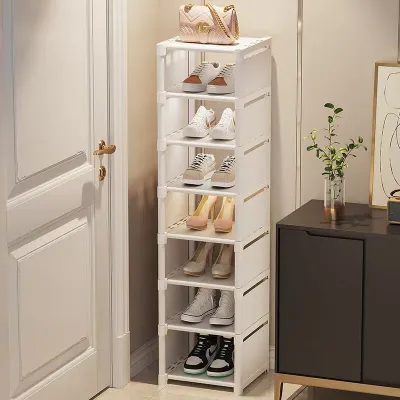
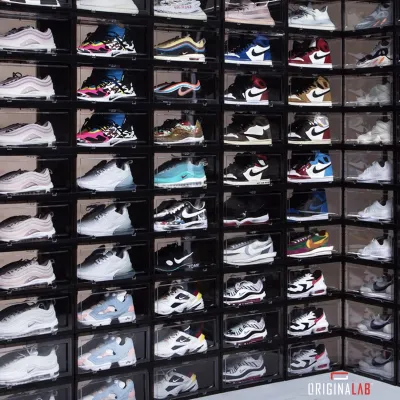
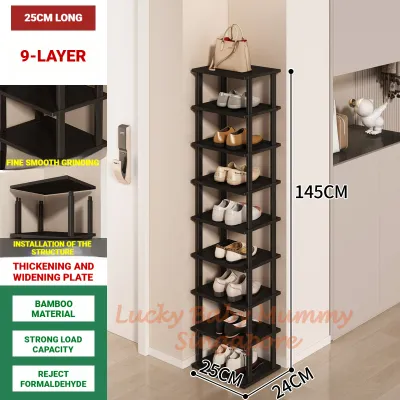
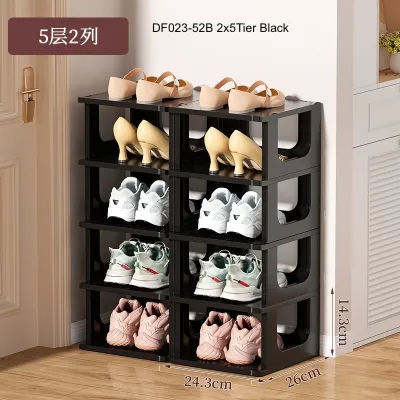
Prices are valid at publication and may change. Please refer to the product page for the latest price.
Do not forget to measure the physical path from your building’s drop-off point to your front door. Verify the dimensions of your estate’s passenger lifts, stairwells, and apartment door frames. While individual stackable boxes are typically delivered flat-packed, larger pre-assembled modular towers require sufficient clearance to be carried into your home without damaging the walls or the unit itself.
Finally, measure your footwear collection to determine the internal dimensions required for each tier. Standard shoe boxes often accommodate shoes up to US size 10, but larger men’s sneakers, high-top basketball shoes, and platform heels require extra height and depth. Measure the height of your tallest heels and the length of your longest shoes to ensure they will fit comfortably without bending or pressing against the doors.
Material and Structural Stability Checks
Singapore’s tropical climate presents unique challenges for furniture preservation, with relative humidity levels often hovering around 80% or higher. This moisture-rich environment makes material selection a primary consideration for shoe storage. Choosing materials that resist warping, mold, and rust will extend the lifespan of your organizer and protect your footwear.

Molded plastics, such as polypropylene and high-impact ABS, are highly popular for stackable shoe boxes due to their complete moisture resistance. They are easy to wipe clean with a damp cloth and do not harbor mold spores. However, you must check the thickness and rigidity of the plastic frames; thin, flexible plastic can bow under the weight of multiple stacked units, leading to misaligned doors and structural instability.
Metal organizers, including powder-coated steel and iron wire racks, offer excellent structural integrity and high weight capacities. When selecting metal, verify that the surface treatment is rated as rust-resistant or epoxy-coated. Unprotected metal can quickly corrode when exposed to wet umbrellas, damp shoes, or the humid air flowing through open windows.
Wooden organizers, such as those made from bamboo, solid timber, or engineered wood, bring a warm, natural aesthetic to your entryway. If you prefer wood, check that the surface has been treated with a water-resistant sealant or polyurethane coating. Unsealed engineered wood, like medium-density fibreboard, can absorb atmospheric moisture, causing the panels to swell, sag, and eventually split at the joints.
Structural stability relies heavily on the connection mechanisms between individual units. Look for organizers that feature physical interlocking grooves, snap-fit joints, or dowel pins that lock the top and bottom frames together. Avoid simply stacking flat-bottomed boxes on top of one another without a locking mechanism, as minor vibrations from closing the main door can cause the stack to shift and slide.
Types of Stackable Shoe Organizers for Compact Spaces
Freestanding stackable shoe boxes offer the greatest flexibility for custom configurations. These individual containers can be stacked vertically to fit narrow niches or arranged side-by-side to form a low credenza. When choosing these, prioritize drop-front doors over top-opening lids. Drop-front designs allow you to retrieve a pair of shoes from the bottom box without disturbing the units stacked above it, whereas top-opening boxes require complete unstacking for daily access.
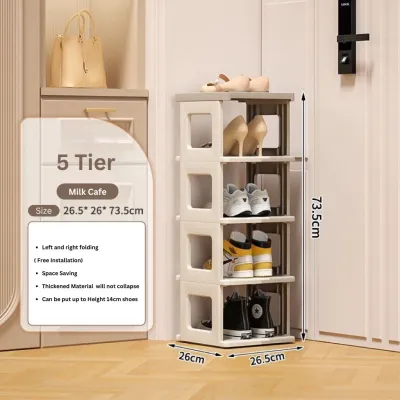
Vertical tiered towers are designed with an exceptionally small footprint, making them ideal for tight corners, walk-in wardrobes, or the space behind a bedroom door. These towers stack shoes vertically on open shelves or slanted racks. Because they have a high center of gravity, they are more prone to swaying; always check the manufacturer’s specifications regarding the maximum safe height and whether the unit includes wall-anchoring hardware.
Over-the-door or wall-mounted hanging pockets are excellent space-savers for lightweight footwear such as house slippers, sandals, and canvas plimsolls. They utilize vertical surfaces that would otherwise remain empty. If choosing an over-the-door model, measure the gap between the top of your door and the frame; standard hanging brackets require a clearance of at least 2 to 3 millimeters to prevent the door from jamming.
Under-bed rolling flat bins utilize the often-wasted space beneath your bed frame. This is an ideal solution for storing seasonal footwear, formal dress shoes, or boots that are not worn daily. Before purchasing, measure the vertical clearance under your bed frame to ensure the bins can slide in smoothly. Look for models equipped with multi-directional caster wheels and secure latching lids to keep floor dust and lint away from your shoes.
Building Your Shortlist: Features to Compare
When comparing different stackable shoe organizers on local e-commerce platforms or in physical home goods stores, several practical features should guide your final decision.
First, prioritize ventilation. Enclosed shoe boxes must feature built-in ventilation holes, mesh back panels, or louvered doors to facilitate continuous airflow. In Singapore’s humid climate, trapping damp shoes inside an airtight plastic box creates a breeding ground for mold, mildew, and unpleasant odors. Proper ventilation allows residual moisture to evaporate, keeping your shoes fresh and dry.
Second, consider the ease of assembly and disassembly. Many stackable systems are sold flat-packed to reduce shipping costs. Check the product specifications to see if assembly requires specialized tools, hammers, or complex hardware. Tool-free snap-together designs are highly convenient, especially if you plan to reconfigure or expand your storage layout in the future.
Third, evaluate the level of transparency. Fully transparent acrylic boxes turn your shoe collection into a visual display, allowing you to locate specific pairs instantly. Frosted or semi-transparent plastics offer a compromise, softening the visual clutter of mismatched shoes while still allowing you to identify the contents. Opaque organizers provide the cleanest, most uniform look but may require labeling if you have a large collection.
Fourth, check the expandability of the system. Opt for brands that sell individual units or small modular sets rather than fixed, non-expandable structures. This ensures that if your shoe collection grows, you can seamlessly purchase matching units that lock perfectly into your existing setup.
To help you evaluate your options, consider this comparison of common stackable organizer types:
| Organizer Type | Common Materials | Max Recommended Stack | Ventilation Level | Best Suited For |
|---|---|---|---|---|
| Drop-Front Boxes | Polypropylene, Acrylic | 8 to 10 Tiers | Medium (via rear vents) | Sneaker collectors, daily footwear |
| Vertical Towers | Powder-coated Steel, Bamboo | 6 to 8 Tiers | High (open-air design) | Narrow entryways, high-traffic areas |
| Hanging Pockets | Canvas, Oxford Fabric, Mesh | Single hanging unit | High (breathable fabric) | Slippers, sandals, kids' shoes |
| Under-Bed Bins | Rigid Plastic, Fabric | 1 to 2 Tiers | Low (sealed for dust) | Seasonal shoes, formal wear |
Installation and Safety Guidelines
Proper installation is critical to ensure your stacked shoe storage remains safe and functional over years of daily use. Stacking units too high without proper support can lead to structural failure, warping, or dangerous tip-over accidents.
Always adhere strictly to the manufacturer’s maximum recommended stack height. Even if the interlocking joints feel secure, the cumulative weight of multiple shoe pairs can compress the lower units, causing the entire structure to lean. If you need to stack plastic boxes higher than eight tiers, consider splitting them into two side-by-side columns instead.
For tall vertical towers or stacks exceeding 1.2 meters in height, utilizing anti-tip safety kits is highly recommended. These kits secure the top of the organizer directly to the wall. Because most Singapore HDB flats feature solid concrete walls, you will need a masonry drill, appropriate wall plugs, and screws to establish a secure anchor. If you are renting a condo with drywall partitions, ensure you use specialized toggle bolts or locate the wall studs before mounting.
Maintain a low center of gravity by distributing the weight of your footwear strategically. Always place your heaviest shoes, such as steel-toed boots, thick-soled sneakers, and heavy leather dress shoes, on the bottom two tiers of the organizer. Reserve the upper tiers for lightweight items like running shoes, sandals, and house slippers. This simple practice significantly reduces the risk of the unit tipping forward when a door is opened.
Frequently Asked Questions (FAQ)
Can I mix different brands of stackable shoe boxes?
It is generally not recommended to mix different brands of stackable shoe boxes. Even if the external dimensions appear identical, the interlocking ridges, snap-fit tabs, and corner grooves vary significantly between manufacturers. Attempting to stack mismatched brands can result in an unstable structure that easily slides or collapses. To ensure a secure, seamless fit, it is best to purchase all your modular boxes from a single product line or brand.
How do I prevent odors in enclosed stackable shoe boxes?
To prevent odors and mold in enclosed boxes, never store shoes while they are damp from rain or sweat. Allow your footwear to air out completely in a well-ventilated area before placing them inside. Additionally, place moisture-absorbing silica gel packets, activated charcoal bags, or cedar blocks inside each box to absorb residual humidity and neutralize odors. Periodically opening the box doors on dry days also helps refresh the internal air.
Are stackable shoe organizers suitable for heavy boots?
Yes, but you must verify the weight capacity and internal height of the organizer before purchasing. Standard stackable boxes are often too short for ankle boots or knee-high boots, which can cause the shafts to crease or bend. Look for specialized extra-tall boot boxes, or choose modular wire towers where shelves can be adjusted or removed to accommodate taller footwear. Always place these heavier items on the bottom tier to maintain stability.

Community discussion
Share your experience or ask a question. Comments are reviewed before publication.