
Maximizing the usable floor space in a typical Singapore Housing & Development Board (HDB) flat requires a strategic approach to furniture selection, particularly when choosing a storage cabinet drawer. Because HDB layouts often feature compact bedrooms, narrow corridors, and multi-functional living areas, the ideal drawer system must balance storage capacity with physical clearance. Selecting the right drawer cabinet involves evaluating how the unit opens, its physical footprint, and how its materials withstand local environmental conditions like high humidity. By matching specific drawer configurations to the unique spatial constraints of each room, homeowners can eliminate clutter while keeping walkways completely unobstructed.
Assessing Your HDB Floor Plan for Drawer Cabinets
Before purchasing any storage cabinet drawer, precise physical measurements of your proposed layout are essential to avoid blocking vital pathways. Start by measuring the available floor depth and height limits, accounting for protruding skirting boards, wall switches, and power outlets. Skirting boards can prevent a freestanding cabinet from sitting flush against the wall, creating an unstable gap or wasting floor space. If a cabinet cannot sit flush, factor the depth of the skirting board into your calculations. Walkway clearance is another critical factor. A drawer cabinet requires sufficient clearance for the drawers to extend fully. Measure the door swing radius of nearby doors to ensure they do not collide with an open drawer. Maintain a clear walkway of at least 60 to 90 centimeters in front of the cabinet when the drawers are fully extended to allow comfortable passage. Finally, evaluate floor levelness. Minor slopes can cause tall units to tilt forward, affecting slide alignment. When placing freestanding cabinets, check stability and verify if the unit includes adjustable leveling feet. For taller units, plan for secure wall anchoring to prevent tipping.
Living Room: Low-Profile and Concealed Drawer Cabinets
The living room serves as the social hub of an HDB flat, making visual openness a primary design goal. To maintain an airy feel in compact living areas, opt for low-profile storage cabinet drawer units, such as extended TV consoles or low sideboards. These designs keep sightlines open across the room, making the ceiling appear higher while providing ample storage beneath eye level. Shallow-depth cabinets are particularly beneficial in narrow living room layouts. Standard walkways can quickly feel cramped if a sideboard protrudes too far. Choosing a cabinet with a depth of 35 to 40 centimeters preserves precious floor space while still offering sufficient room for organizing documents, electronics, and household accessories. Verify that the internal drawer dimensions can accommodate your intended storage items. To enhance the minimalist aesthetic and prevent physical obstructions in tight walkways, consider handle-less or push-to-open drawer fronts. Protruding handles can catch on clothing in narrow paths. Push-to-open mechanisms or integrated J-pull handles create a completely flat, seamless facade. This design choice reduces visual clutter and minimizes the risk of accidental bumps, contributing to a safer and more streamlined living environment.
Products mentioned in this guide
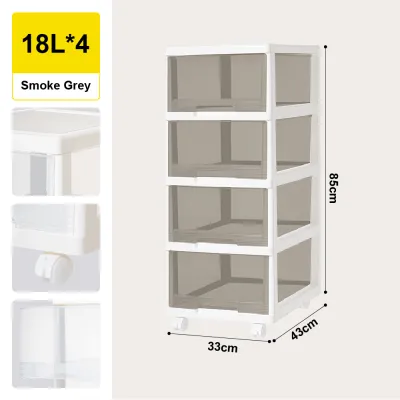
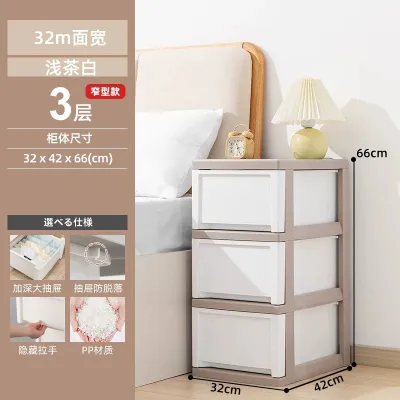
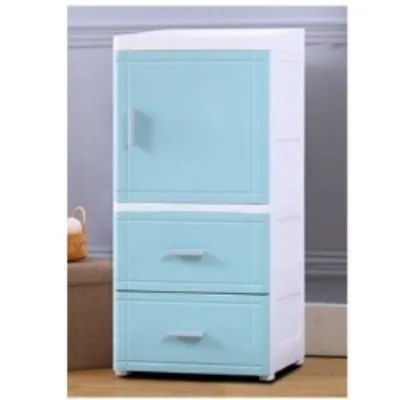
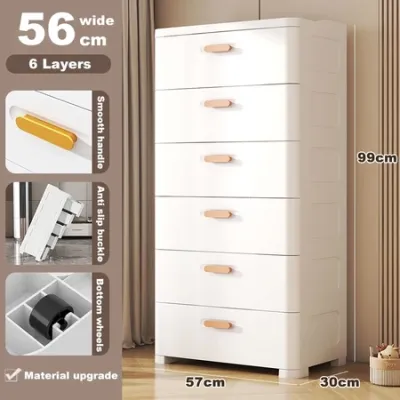
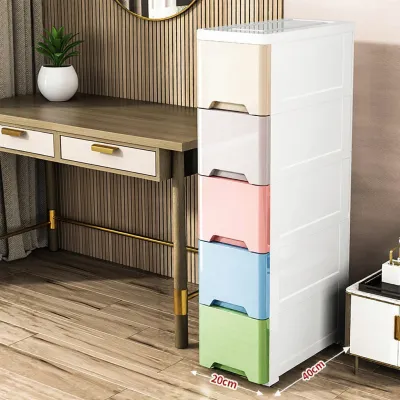
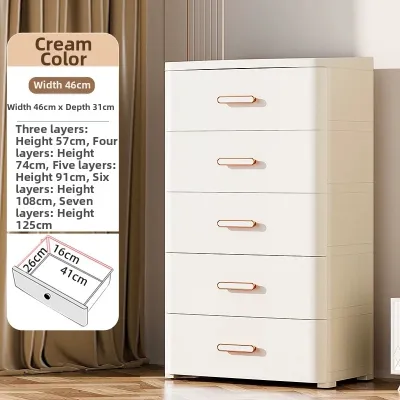
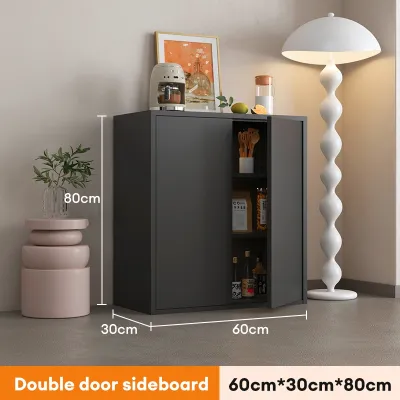
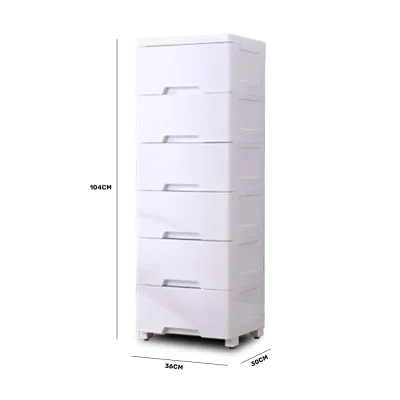
Prices are valid at publication and may change. Please refer to the product page for the latest price.

Bedroom: High-Capacity and Vertical Drawer Storage
HDB bedrooms must accommodate sleeping, dressing, and sometimes working areas, leaving limited floor space for storage. To maximize capacity without crowding the bed, utilize vertical space by choosing tallboy drawer cabinets. A tallboy unit features a narrow footprint but extends upward, typically offering five to seven drawers stacked vertically. This configuration stores a significant volume of clothing while occupying minimal floor area, making it ideal for compact bedrooms. Under-bed storage is another highly effective method for reclaiming unused space. If you are using freestanding under-bed drawer units, measure the vertical clearance between the floor and the bed frame carefully before purchasing. Additionally, consider your flooring material; drawers on small caster wheels glide smoothly on hard surfaces like vinyl or laminate but can drag on thick rugs or carpets. For carpeted areas, look for drawers with larger, high-quality wheels or those designed to slide on runners attached directly to the bed frame. Because bedroom drawers often hold heavy items like winter wear or extra bed linens, checking the weight capacity and hardware durability is crucial. Inspect the drawer slide specifications to ensure they can support the anticipated load without bending. Look for full-extension ball-bearing slides, which allow the drawer to open completely so you can access items at the very back easily.
Kitchen: Narrow and Utility-Focused Drawer Cabinets
Kitchens in HDB flats are high-traffic zones where efficiency and accessibility are paramount. To make use of every available inch, consider installing slim pull-out drawer cabinets in narrow gaps, such as the spaces between major appliances or between a refrigerator and the wall. These narrow utility drawers, often measuring just 15 to 20 centimeters in width, can house spice jars, bottled condiments, or cleaning supplies. This converts awkward gaps into functional storage, keeping countertops clear. A well-organized kitchen drawer system typically utilizes a tiered configuration to match different culinary tools. Configure shallow top drawers for daily-use items like cutlery and small gadgets, which benefit from modular tray organizers. Deeper bottom drawers are better suited for heavy pots, pans, and small kitchen appliances. When planning deep drawers, verify that the drawer slides are rated for heavy-duty loads, as a stack of cookware can easily exceed the weight limits of standard residential hardware. Given the high-moisture and high-heat environment of a kitchen, material selection is critical for long-term durability. Verify that the storage cabinet drawer features moisture-resistant finishes, such as high-pressure laminates or treated wood. Avoid untreated particleboard, which can swell and warp rapidly when exposed to steam or spills. Easy-clean surfaces are also essential near cooking zones, as grease splatters must be wiped away regularly without damaging the protective outer layer.
Cross-Room Flexibility and Drawer Maintenance
As your household needs evolve, having flexible furniture solutions can save you the cost of buying new pieces. Modular drawer units or freestanding stacks offer excellent cross-room adaptability, allowing you to reposition them as storage demands shift. For instance, an office drawer unit can easily transition into a bedside table. Selecting units equipped with lockable caster wheels enhances this mobility, making it simple to roll the cabinet to a new location and lock it securely in place once positioned. To ensure your drawer cabinets remain functional and safe over time, establish a routine inspection of the slide mechanisms, tracks, and joints. Overloading drawers or pulling them unevenly can cause the slides to misalign, leading to sticking or scraping. Periodically check that all screws securing the tracks to the cabinet walls are tight, and inspect the drawer boxes for any signs of joint separation. If you notice a drawer beginning to sag or drag, adjust the mounting screws or realign the tracks immediately to prevent permanent damage. Singapore’s humid tropical climate can also affect how smoothly drawers operate, particularly those made of solid wood. Wood naturally expands and contracts with changes in atmospheric moisture, which can cause wooden drawer runners to stick during wetter seasons. To prevent sticking, apply a thin layer of paraffin wax to the wooden tracks or metal slides. Keeping the indoor environment well-ventilated will also help preserve the structural integrity of your drawer cabinets.
Frequently Asked Questions (FAQ)
Can I install soft-close drawer slides on existing built-in cabinets?
Upgrading existing built-in cabinets with soft-close drawer slides is highly feasible, but it requires careful verification of your current cabinet dimensions. First, measure the internal clearance and side gaps between the drawer box and the cabinet carcass. Standard side-mount soft-close slides typically require exactly 12.7 millimeters of clearance on each side to operate correctly. If your existing clearance is too narrow or too wide, standard slides will not fit, and you may need to modify the drawer box or seek alternative hardware. Additionally, compare the compatibility of side-mount versus under-mount slides with your existing drawer boxes. Under-mount slides offer a clean, hidden look and excellent support, but they require specific drawer bottom recesses and locking clips that may not be present on older built-in units. Side-mount slides are generally easier to retrofit but remain visible when the drawer is open. If your cabinet structure lacks standard dimensions, consult a professional carpenter to ensure a precise installation.
Are rattan or woven drawer fronts suitable for humid kitchens?
Natural rattan and woven drawer fronts are highly popular for their organic, textured aesthetic, but they present distinct practical challenges in humid kitchen environments. Natural fibers are highly porous and prone to absorbing moisture, airborne grease, and cooking odors. Over time, high humidity can lead to mold or mildew growth within the tight weaves, while grease accumulation can discolor the material and make it difficult to clean. If you prefer this look, synthetic woven materials made from durable polymers are a more practical alternative, as they resist moisture absorption and can be wiped down easily. Cleaning textured drawer fronts near cooking zones requires more effort than maintaining flat, smooth surfaces. Dust and grease can settle into the crevices of the weave, requiring regular vacuuming with a brush attachment or detailed wiping with a damp cloth and mild detergent. If you decide to use natural rattan, ensure the drawer fronts are treated with a high-quality protective sealant or lacquer to barrier against moisture and stains. Additionally, place these cabinets away from high-splatter areas like the stove or sink.

Community discussion
Share your experience or ask a question. Comments are reviewed before publication.