
Finding the right balance between storage and space in a small Singapore entryway is a common challenge. In compact HDB flats and condominiums, the foyer must serve multiple purposes without obstructing the main thoroughfare. A slim shoe rack bench solves this dilemma by combining a comfortable seat with a narrow storage footprint. By selecting a unit with a depth of 15 cm to 30 cm, you can keep your daily footwear organized and secure a convenient spot to put on shoes, all while keeping your entryway safe and accessible.
How to Choose a Slim Shoe Bench for Compact HDB and Condo Foyers
To find the ideal shoe bench for a tight foyer, you must first understand what constitutes a “slim” profile in Singapore’s residential layouts. Standard shoe cabinets often exceed 35 cm in depth, which can severely restrict the narrow corridors typical of local homes. A truly slim shoe bench prioritizes a depth of 15 cm to 30 cm. This compact range ensures that the furniture sits flush against the wall, leaving ample clearance for household members to walk past comfortably without bumping into corners.
Dual-functionality is the core appeal of these pieces, but it requires careful structural evaluation. The unit must serve as a reliable seat while holding several pairs of shoes. When assessing a bench, look for reinforced frames and check the manufacturer’s specified weight capacity to ensure it can safely support an adult. A flimsy bench not only compromises safety but also wears out quickly under daily use.
Products mentioned in this guide
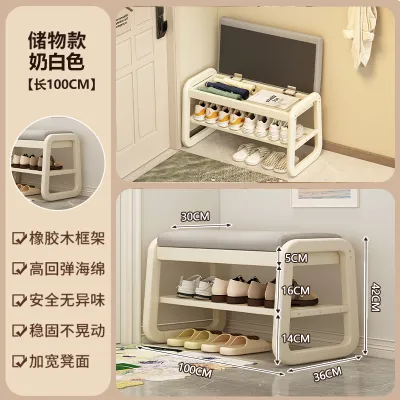
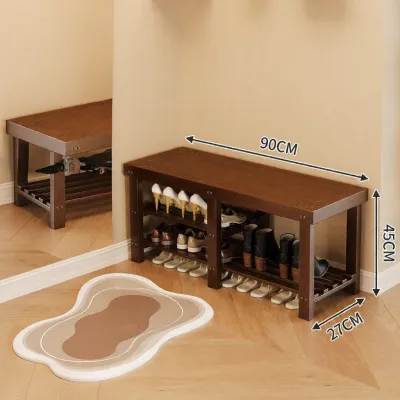
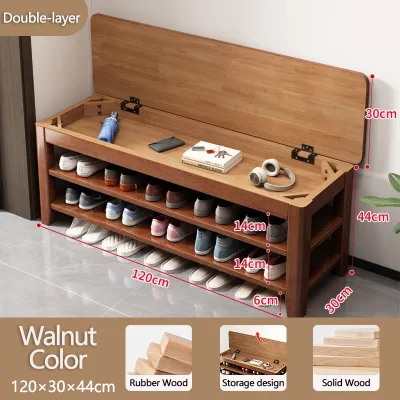
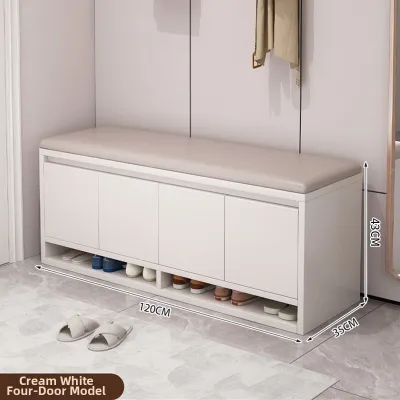
Prices are valid at publication and may change. Please refer to the product page for the latest price.
Singapore’s tropical climate brings high humidity, which can take a heavy toll on entryway furniture. Rather than assuming that solid wood, engineered wood, or metal are inherently resistant to warping or rusting, you must inspect the product specifications for protective treatments. Check for moisture-resistant finishes, powder-coated metal frames, or sealed bamboo joints. Unsealed materials can absorb atmospheric moisture, leading to mold growth, veneer peeling, or structural weakening over time.
Finally, spatial planning must extend beyond the static footprint of the bench. You must measure the exact swing radius of your main door and any adjacent gate. A bench that fits perfectly when the door is closed might block the door from opening fully, or worse, get struck by the door handle. Ensure there is at least a few centimeters of clearance between the fully opened door and the edge of the bench.
Recommended Slim Shoe Rack Bench Styles for Small Entryways
Selecting the right style of slim shoe bench depends on your storage priorities, aesthetic preferences, and the exact dimensions of your entryway. Different designs solve the space-saving puzzle in unique ways, balancing concealment with ease of access. By understanding the structural mechanics and limitations of each style, you can choose a piece that aligns perfectly with your household’s daily routines.

Flip-Down Slim Shoe Cabinets with a Padded Top
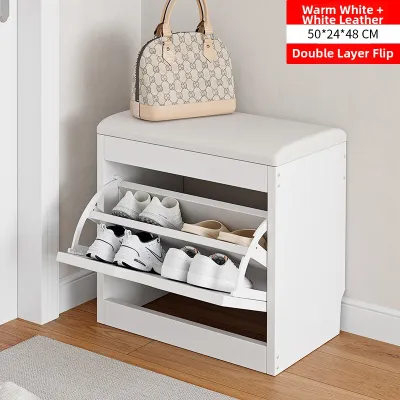
For exceptionally narrow HDB foyers where every millimeter counts, a flip-down shoe cabinet with a padded top offers an incredibly space-efficient configuration. These units feature an ultra-slim profile, often measuring under 20 cm in depth. Instead of traditional shelves that require deep cabinets to store shoes flat, these designs utilize tilt-out drawers where shoes are inserted vertically. This clever orientation allows the cabinet to remain thin while still providing a functional surface to sit on.
The primary benefit of this design is its clean, uncluttered appearance. All footwear is hidden behind sleek panels, and the top is typically fitted with a cushioned seat. However, this mechanical design comes with distinct storage limitations. Because the compartments are narrow, they generally cannot accommodate high heels, ankle boots, or bulky high-top sneakers without bending the collars. They are best suited for flat shoes, sandals, and standard low-profile trainers.
Safety is a critical consideration for any ultra-slim, front-heavy furniture. When you open multiple tilt-out drawers simultaneously, the center of gravity shifts forward, creating a significant tip-over risk. This is especially dangerous in households with young children or pets. Therefore, wall anchoring is an absolute necessity for these units. Before purchasing, verify that the product includes heavy-duty wall-anchoring brackets and check that your entryway wall is suitable for drilling. Additionally, measure the exact depth of the unit when the drawers are fully extended to ensure it does not block the corridor during use.
Lift-Top Storage Benches with a Narrow Footprint
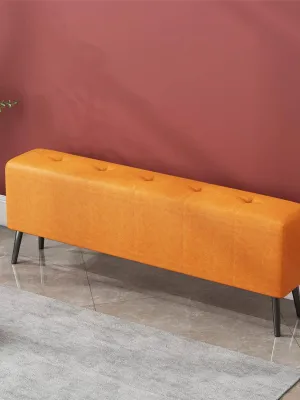
If your condo or HDB entryway requires a mix of hidden storage and a highly comfortable seating area, a lift-top storage bench is an excellent candidate. These benches typically feature a hinged top seat that lifts up to reveal a deep, continuous internal compartment. With depths usually ranging between 30 cm and 35 cm, they occupy a slightly larger footprint than flip-down cabinets but offer unparalleled versatility for storing items out of sight.
The internal compartment is ideal for items that do not fit into standard shoe slots, such as boxed footwear, seasonal shoes, umbrellas, or even shopping bags. Because the storage is entirely enclosed, it keeps your entryway looking pristine and organized. The solid structure of these benches also tends to offer a more stable and spacious seating platform compared to ultra-slim alternatives.
However, the lift-top mechanism introduces specific operational constraints. Because the seat itself serves as the lid, you must have complete overhead clearance to open the bench fully. Any decorative items, key bowls, or wall-mounted coat racks placed directly above the bench must be positioned high enough to avoid interfering with the open lid. Furthermore, because the footprint is slightly deeper, you must double-check that the unit does not infringe on the door’s swing path or narrow the entryway corridor beyond a comfortable walking width.
When shopping for a lift-top bench, prioritize safety and durability. Look for units equipped with safety gas struts or soft-close hinges. These mechanisms prevent the heavy lid from slamming down unexpectedly, protecting fingers from getting pinched—a vital feature for families. Also, check the interior lining material to ensure it is easy to wipe clean, as shoes can transfer dirt and moisture to the bottom of the compartment.
Open-Tier Minimalist Shoe Benches
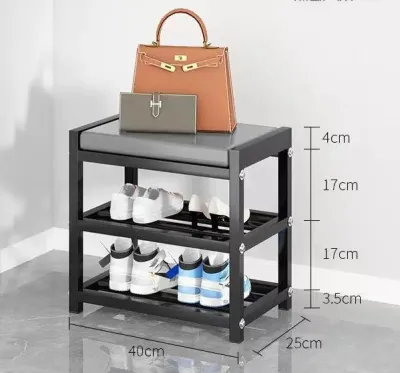
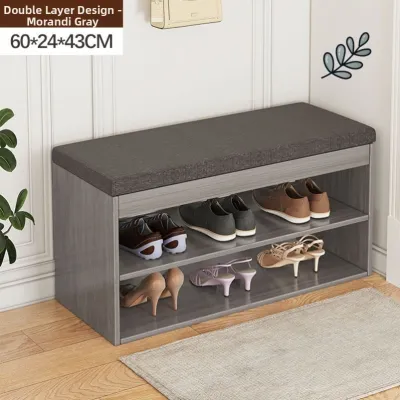
For homeowners who prioritize quick access, maximum ventilation, and a lightweight aesthetic, open-tier minimalist shoe benches are the ideal choice. These structures generally consist of a sturdy top seat—made of solid wood, bamboo, or metal—supported by two or three open wire or slatted shelves underneath. This design keeps the overall depth around 25 cm to 30 cm, making it highly compatible with narrow entryways.
The standout advantage of an open-tier design is excellent air circulation. In Singapore’s hot and humid climate, damp or sweaty shoes need to dry out quickly to prevent bacterial growth and unpleasant odors. Open shelves allow air to flow freely around the footwear, significantly reducing moisture retention. Additionally, the open structure makes it incredibly easy to clean the floor underneath the bench, as you can easily run a vacuum or mop beneath the bottom shelf.
The primary trade-off with open-tier benches is visual clutter. Because there are no doors or panels, all your shoes remain fully visible to anyone entering your home. If your household struggles to keep shoes neatly lined up, this style can make the entryway look disorganized. Furthermore, because these benches focus on a minimalist profile, the seating height can sometimes be slightly lower than standard dining chairs, which might be less comfortable for older adults.
When evaluating an open-tier bench, verify the structural integrity of the frame. Ensure the seat has a high weight capacity, particularly if multiple people might use it at once. Check the vertical clearance between the shelves; you want to ensure there is enough height to accommodate your tallest daily-wear sneakers or mid-top shoes without squeezing them.
Quick Comparison of Slim Shoe Bench Profiles
To help you decide which style best fits your home, the table below outlines the key characteristics, typical dimensions, and physical requirements of each slim shoe bench profile.
| Bench Style | Typical Depth Range | Best Use Case | Estimated Shoe Capacity | Ventilation Quality | Key Clearance Check |
|---|---|---|---|---|---|
| Flip-Down Cabinet | 15 cm – 20 cm | Extremely narrow corridors requiring hidden storage | 6 – 12 pairs (low-profile shoes) | Moderate (requires ventilation holes) | Drawer extension depth and wall-anchoring stability |
| Lift-Top Bench | 30 cm – 35 cm | Entryways needing versatile storage for bulky items | 4 – 8 pairs (or boxed items) | Low (enclosed compartment) | Overhead clearance for lid and wall fixtures |
| Open-Tier Bench | 25 cm – 30 cm | High-traffic entryways prioritizing quick access | 6 – 10 pairs (all shoe types) | High (fully open structure) | Vertical shelf spacing and seat weight capacity |
Essential Space and Safety Checks Before Buying
Before finalizing your purchase of a slim shoe bench, you must perform several critical physical measurements and safety assessments. Taking these steps prevents costly return shipping fees, installation headaches, and potential hazards in your home.
- Door Swing and Corridor Width: Begin by measuring the precise path of your main door and security gate. Open both fully and mark their sweep on the floor. Your chosen bench must sit completely outside this zone to prevent collisions. Additionally, if you live in an HDB flat, you must remain mindful of the common corridor fire safety regulations. Singapore's Civil Defence Force mandates that common escape routes must maintain a minimum clear width of 1.2 meters. While your bench sits inside your home, ensuring that your internal entryway remains unobstructed is equally vital for safe evacuation during an emergency.
- Weight Capacity and Anchoring: A shoe bench is a piece of load-bearing furniture. Always check the manufacturer's maximum weight limit before buying. If the bench is intended for older adults or multiple family members, a robust frame is essential. For flip-down and ultra-slim units, wall anchoring is non-negotiable. Ensure the product comes with appropriate wall brackets. If you are mounting the unit to a drywall partition rather than a concrete wall, you must use specialized toggle bolts or anchor plugs designed for hollow walls to prevent the screws from pulling out under tension.
- Baseboard and Skirting Clearance: Many homeowners overlook the skirting boards running along the base of their entryway walls. If a slim shoe bench has a completely flat back panel with no bottom cutout, the skirting board will prevent the unit from sitting flush against the wall. This leaves a gap of 1 to 2 cm at the top, which compromises the stability of the bench and wastes precious floor space in a narrow corridor. Look for benches that feature a pre-cut skirting recess at the back, or choose open-frame metal designs that naturally clear the baseboards.
Frequently Asked Questions (FAQ)
How do I prevent shoes from smelling in an enclosed slim bench?
To maintain a fresh entryway, always check if your enclosed bench or flip-down cabinet features pre-drilled ventilation cutouts on the back panel. If it does not, consider drilling small air holes yourself or leaving the cabinet doors slightly ajar during the day. Place moisture-absorbing sachets, activated charcoal bags, or silica gel packets inside the compartments to trap humidity. Most importantly, establish a rule that damp or wet shoes must dry completely on an open mat before they are stored inside an enclosed wooden cabinet.
Can I assemble and anchor a slim shoe rack bench myself in an HDB flat?
Yes, most flat-packed slim shoe benches can be assembled using basic hand tools like a screwdriver and hex key. However, secure wall anchoring typically requires a power drill. When drilling into HDB walls, identify whether you are working with a structural concrete wall or a non-structural partition wall. Concrete walls require a rotary hammer drill and masonry drill bits, along with plastic wall plugs. Always use a stud finder or wall scanner before drilling to avoid damaging concealed electrical wiring or water pipes running near the entryway.

Community discussion
Share your experience or ask a question. Comments are reviewed before publication.