
Maximising storage in a compact Singapore HDB bedroom requires a strategic approach to furniture selection. With standard Build-To-Order (BTO) bedroom sizes often hovering around 9 to 11 square meters, every square centimeter of floor space is premium real estate. A standard bed and wardrobe can quickly consume the layout, leaving little room for additional storage units. Choosing a suitable drawer cabinet is one of the most effective ways to expand your storage capacity without making your bedroom feel cramped or cluttered. By selecting a design that balances physical footprint with vertical volume, you can keep your personal sanctuary organized, functional, and visually spacious.
How to Evaluate Space-Saving Drawer Cabinets for HDB Bedrooms
When shopping for a drawer cabinet for a compact HDB bedroom, the term “space-saving” must be defined by how efficiently the piece utilizes the room’s unique geometry. Rather than simply looking for the smallest cabinet available, you should focus on designs that maximize internal storage while minimizing the impact on your physical floor space. This means looking upward to utilize vertical height, identifying underused areas like dead corners, or reclaiming the empty space beneath your bed frame. A well-designed cabinet should offer a high footprint-to-volume ratio, ensuring that every square centimeter of floor it occupies translates into maximum usable storage.
Visual weight is another critical factor when selecting furniture for tight quarters. A bulky, dark-colored chest of drawers can dominate a small room, making it feel dark and claustrophobic. To maintain an airy, open feel, look for drawer cabinets with clean, minimalist lines and light or neutral finishes, such as matte white, soft grey, or light oak. Handleless designs—utilizing push-to-open mechanisms or recessed finger pulls—further reduce visual clutter and prevent you from accidentally catching your clothes on protruding hardware as you navigate narrow walkways.
Products mentioned in this guide
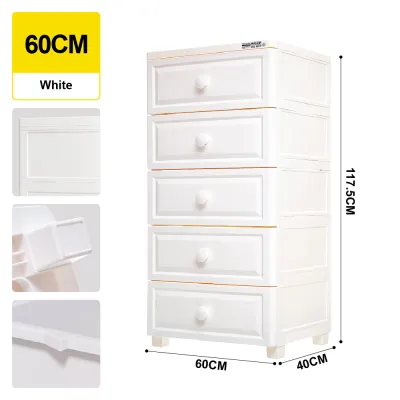
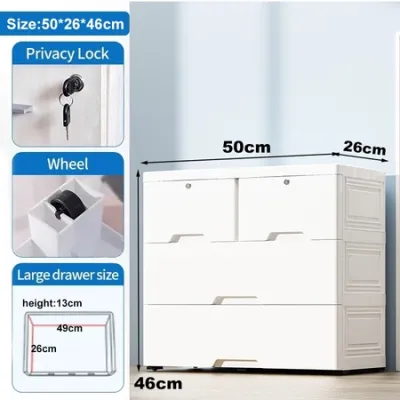
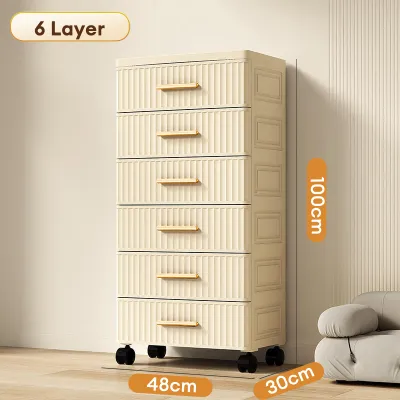
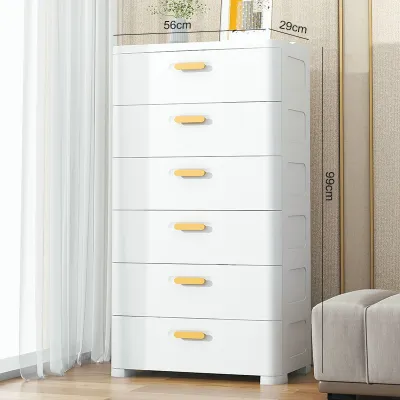
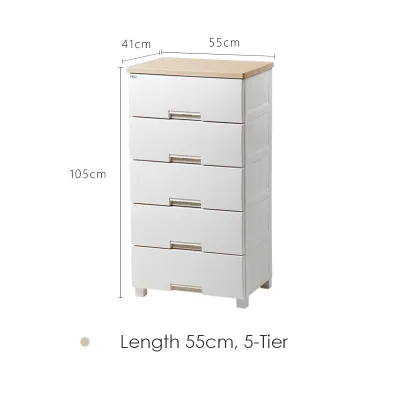
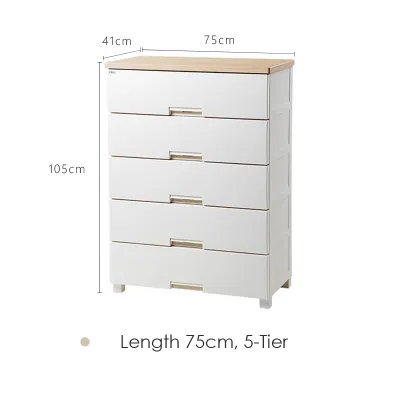
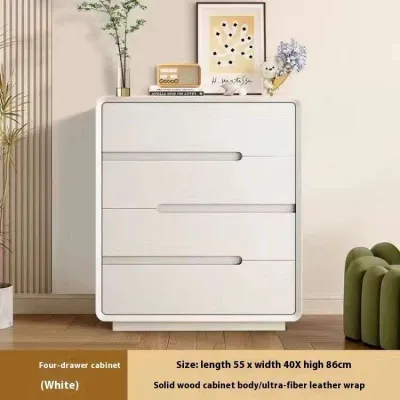
Prices are valid at publication and may change. Please refer to the product page for the latest price.
The functional mechanics of the cabinet are just as important as its aesthetics. In a tight HDB bedroom layout, you may only have 60 to 70 centimeters of clearance between your bed and the cabinet. If the drawers do not slide smoothly or require excessive force to pull open, accessing your belongings becomes a daily frustration. Look for high-quality drawer glides, such as full-extension ball-bearing runners, which allow you to pull the drawer out completely to access items at the very back without the drawer sagging or falling out. Soft-close mechanisms are also highly beneficial, preventing loud slamming in quiet sleeping environments.
Finally, always compare the external dimensions of the cabinet with its internal drawer dimensions. Some cabinets feature thick decorative frames, wide side panels, or deep structural gaps that significantly reduce the actual storage space inside the drawers. To ensure the unit is truly practical, check the manufacturer’s specifications for internal drawer depth, width, and height. This ensures you can comfortably fit standard clothing organizers, folded t-shirts, bulky jeans, or accessories without wasting space.
Best Space-Saving Drawer Cabinet Designs for Compact Bedrooms
Standard HDB bedroom floor plans present unique spatial challenges, from awkward structural pillars to narrow pathways beside the bed. Fortunately, furniture manufacturers have developed specialized drawer cabinet designs tailored to solve these specific layout limitations. By understanding how different structural configurations function, you can select a cabinet that integrates seamlessly into your bedroom layout while fulfilling your storage needs.

Vertical Slim Drawer Cabinets
Vertical slim drawer cabinets, often referred to as tallboys, are designed to maximize vertical wall space while occupying a minimal footprint on the floor. These units typically feature five to seven drawers stacked vertically, often occupying a floor footprint of only 40 centimeters by 40 centimeters. This makes them exceptionally well-suited for narrow wall strips, tight spaces beside a bed where they can double as a tall nightstand, or the small gap between a built-in wardrobe and the bedroom door.
While vertical slim cabinets are highly efficient, they come with a distinct physical trade-off: a high center of gravity. Because these units are tall and narrow, they can become unstable, especially when multiple drawers are pulled open simultaneously or when heavy items are stored in the upper drawers. To prevent dangerous tip-over accidents, it is a mandatory safety requirement to check for and install anti-tip wall anchoring kits. This is particularly crucial in households with children or pets who might attempt to climb or pull on the drawers. Always ensure the cabinet is securely fastened to a solid wall or stud.
Under-Bed Drawer Storage Units
The empty space beneath your bed is one of the most underutilized areas in a compact bedroom. Under-bed drawer storage units capitalize on this dead space, providing deep, easily accessible storage without taking up any additional floor space in the room. When evaluating these systems, you can choose between integrated bed-frame drawers, which are built directly into the bed structure, and standalone rolling under-bed drawer cabinets that glide independently on wheels or casters.
To ensure standalone rolling drawers function properly, you must take precise clearance measurements before purchasing. Measure the exact height from the floor to the bottom edge of your bed frame to ensure the drawers can slide underneath without scraping. You must also check the clearance between the bed legs and ensure that your bedroom rug or flooring material will not impede the smooth movement of the caster wheels. Under-bed drawers are ideal for storing seasonal clothing, extra bedding, bulky blankets, or travel gear that you do not need to access on a daily basis.
Multi-Functional and Fold-Down Drawer Cabinets
Multi-functional furniture is a cornerstone of efficient small-space living, and drawer cabinets are no exception. These versatile designs combine traditional drawer storage with secondary functional features that can be hidden away when not in use. Popular configurations include drawer cabinets with fold-down desk tops that create an instant home office nook, pull-out vanity mirrors with hidden jewelry compartments, or integrated fold-out ironing boards.
When planning for a multi-functional cabinet, you must account for the operational clearance required when these extra features are fully deployed. For instance, a fold-down desk surface or a pull-out vanity must not block the swing of your bedroom door or prevent you from walking around the bed. Additionally, pay close attention to the quality of the hardware. Because these units feature moving parts that undergo daily wear and tear, verify the durability of the hinges, gas struts, and weight limits of the folding mechanisms to ensure long-term reliability.
Corner and Gap-Filler Drawer Cabinets
Awkward corners and narrow gaps between existing furniture often end up as wasted space in HDB bedrooms. Corner and gap-filler drawer cabinets are engineered specifically to reclaim these challenging zones. Triangular corner drawer cabinets fit flush into 90-degree corners, turning an otherwise unusable area into a functional storage feature. Meanwhile, ultra-slim gap-filler cabinets on casters—some measuring as narrow as 15 to 20 centimeters—can slide easily into the tight space between your wardrobe and the wall.
However, these specialized designs do come with storage limitations. Because of their unique shapes, triangular corner drawers have less usable internal volume and awkward angles, making them less suitable for bulky folded garments like sweaters. Instead, these units are best utilized for organizing smaller items, such as socks, undergarments, ties, belts, or cosmetics. Before purchasing, take precise measurements of the corner or gap, accounting for any wall irregularities or skirting boards, to ensure a flush and seamless fit.
Crucial Dimensions and HDB Delivery Clearance Checks
Avoiding spatial mistakes requires meticulous measuring before making a purchase. To ensure your new drawer cabinet fits your bedroom perfectly and can be successfully delivered to your HDB flat, follow a systematic measurement process.
Room Measurements Begin by measuring the exact footprint where the cabinet will stand. Use a metal measuring tape to record the width, depth, and height of the space. Do not forget to account for skirting boards along the bottom of your walls. Standard HDB skirting boards typically project about 1.5 to 2 centimeters from the wall. If a drawer cabinet does not feature a skirting board cutout at its base, it will be pushed away from the wall, leaving an unsightly gap where dust can accumulate and reducing the available floor space in front of the unit. Also, verify that the height of the cabinet will not block wall sockets, light switches, or the airflow from your air-conditioning unit.
Operational Clearance A cabinet may fit perfectly when its drawers are closed, but it can quickly block your room when opened. You must measure the “drawer extension depth,” which is the total depth of the cabinet plus the length of the drawer when it is fully pulled out. Ensure that when the drawers are fully extended, there is still enough clearance for you to stand comfortably in front of the unit and that the drawers do not collide with your bed frame, wardrobe doors, or the bedroom entryway.
HDB Delivery Logistics Many homeowners overlook the logistics of getting furniture into their flats. Before ordering, verify the dimensions of your HDB block’s lift cabin, including the door opening width, interior height, and diagonal depth, to ensure the delivery team can transport the item to your floor. Next, check your corridor width, any tight stairwell turns, and the clearance of your bedroom door frame. Standard HDB bedroom door frames are typically 80 to 85 centimeters wide; if your cabinet arrives fully assembled and its smallest dimension exceeds this width, it will not fit into your room. Confirm whether the cabinet will be delivered flat-packed or fully assembled so you can prepare the necessary pathway.
Evaluating Materials and Finishes for Singapore's Tropical Climate
Singapore’s tropical climate, characterized by high relative humidity and consistent warmth, presents a challenging environment for bedroom furniture. The frequent temperature fluctuations caused by turning bedroom air-conditioning units on and off can lead to moisture buildup, condensation, and material degradation. Selecting the right materials and finishes is essential to ensure your drawer cabinet remains durable and free from warp or mold.
Engineered wood products, such as particleboard and standard Medium-Density Fiberboard (MDF), are highly susceptible to moisture absorption. If humid air penetrates the core, the fibers can swell, causing the laminate or veneer to peel and the drawers to warp. When choosing engineered wood, look for moisture-resistant (MR) core materials or High-Density Fiberboard (HDF), which offer superior stability in humid conditions. Ensure the cabinet features high-quality, professionally applied edge banding (such as ABS or PVC edge banding sealed with polyurethane glue) to completely seal the raw edges of the board from moisture.
Natural solid wood is beautiful but naturally expands and contracts with changes in humidity. If you prefer solid wood, ensure it has been properly kiln-dried and sealed with a high-quality, moisture-resistant protective lacquer or polyurethane finish. For metal components, such as drawer glides, handles, and frames, verify that they feature rust-resistant coatings or are made of stainless steel or powder-coated aluminum to prevent corrosion over time. Lightweight plastic drawer cabinets made from polypropylene (PP) or ABS are completely impervious to moisture and mold, making them highly practical, though they typically offer lower load capacities and a less premium aesthetic.
To protect your drawer cabinet, avoid placing it directly against damp external walls where moisture can transfer to the back panel. Instead, leave a small gap of 1 to 2 centimeters to allow for proper air circulation. Additionally, avoid placing the cabinet directly in the path of cold air-conditioning drafts, as the rapid temperature change can cause localized condensation to form on the surface, potentially damaging the finish over time. Always refer to the manufacturer’s care instructions for recommended cleaning agents, and avoid using excessively wet cloths or harsh chemicals that can strip away protective coatings.
Placement and Styling Tips to Maximize Visual Space
Once you have selected a functional drawer cabinet, strategic placement and thoughtful styling can help maintain a bright, spacious, and uncluttered atmosphere in your small HDB bedroom.
Color Strategy To minimize the visual bulk of a drawer cabinet, try to match its color to your bedroom walls. For example, placing a matte white or light cream cabinet against a similarly colored wall allows the furniture to blend into the background, creating a seamless look that makes the room feel larger. If you prefer a wood finish, opt for light-colored timbers like birch, ash, or light oak. These tones add natural warmth and texture without absorbing light or making the space feel heavy.
Surface Management The top surface of a medium-height drawer cabinet is valuable space that can serve multiple purposes. To prevent it from becoming a cluttered catch-all, practice strict surface management. You can use the top of the cabinet as a nightstand, a charging station, or a small vanity area. Use decorative trays or small organizers to keep daily essentials neat, and avoid placing large, heavy objects on top, which can create visual noise and make the entire room feel disorganized.
Lighting and Mirrors You can enhance the perception of space by hanging a mirror on the wall directly above your drawer cabinet. The mirror will reflect natural light from your window, instantly making the bedroom feel brighter and more open. To improve functionality inside the cabinet, consider adding small, wireless, motion-activated LED puck lights inside deep or dark drawers. These lights illuminate the contents clearly, allowing you to find what you need quickly without cluttering the top of the cabinet with task lighting.
Frequently Asked Questions (FAQ)
Do I need an HDB permit to install built-in drawer cabinets in my bedroom?
Freestanding drawer cabinets do not require any HDB permits or approvals, making them a flexible and hassle-free option for homeowners. However, if you plan to install custom built-in carpentry, such as a floor-to-ceiling wardrobe with integrated drawers, an HDB permit is generally not required unless the installation involves structural modifications, hacking of existing walls, or complex electrical rewiring. All renovation works must comply with HDB’s guidelines, and you should always engage an HDB-registered renovation contractor to ensure compliance and safety.
How much weight can a typical rolling under-bed drawer cabinet hold?
The weight capacity of a rolling under-bed drawer cabinet depends on the quality of its caster wheels, the thickness of the drawer base, and the overall construction materials. Typically, a standard under-bed drawer can support between 10 to 20 kilograms of evenly distributed weight. To prevent the drawer base from sagging or the caster wheels from buckling, always check the manufacturer’s specification label for the exact load limit. Additionally, distribute the weight evenly by placing heavier items, like thick winter coats or books, flat along the bottom and lighter items on top to ensure smooth rolling and prevent scratches on your flooring.

Community discussion
Share your experience or ask a question. Comments are reviewed before publication.