
Finding the right clothes rack organiser for a compact HDB flat or condo requires balancing hanging capacity with a minimal floor footprint. In Singapore’s compact residential layouts, where bedrooms are often cozy and built-in wardrobe space is limited, a well-chosen clothes rack organiser acts as an essential extension of your storage system. By focusing on smart structural designs—such as vertical tension poles, corner-hugging frames, and wall-mounted fold-down brackets—you can dramatically increase your storage capacity without making your living space feel cramped or cluttered. The key is to match the physical layout of your room with a rack that offers high structural stability, appropriate weight distribution, and a finish that can withstand local humidity.
Key Features to Look for in Small-Space Clothes Racks
When floor space is at a premium in a compact home, every square centimetre must be justified. The primary trade-off you will encounter is between the physical footprint of the organiser and its total hanging capacity. A bulky, wide rack might hold dozens of garments, but it can quickly overwhelm a small bedroom or narrow hallway, disrupting the flow of your home. To avoid this, look for designs that prioritise verticality, allowing you to hang clothes in multiple tiers rather than a single long horizontal row. This approach maximises the use of overhead space, which is often left completely empty in standard room layouts.
Adjustability is another critical feature that can make or break a small-space storage solution. Organisers with telescopic poles, modular shelves, or extendable side arms allow you to customise the unit to your specific room dimensions and wardrobe needs. For instance, a rack that can be adjusted in height can accommodate long dresses on one side and double-tiered shirts on the other. Modular shelving inserts let you switch between folded storage and hanging space as your wardrobe changes throughout the seasons, ensuring that no space is wasted on empty hangers or unused shelves.
Products mentioned in this guide
![[Flash Deal] Three-layer Clothing Storage Racks Clothes Drying Folding Wing Adjustable Wardrobe](https://img.lazcdn.com/g/p/78c2c812c23c8463a1f48feb1b415bec.jpg_400x400q80.jpg_.webp)
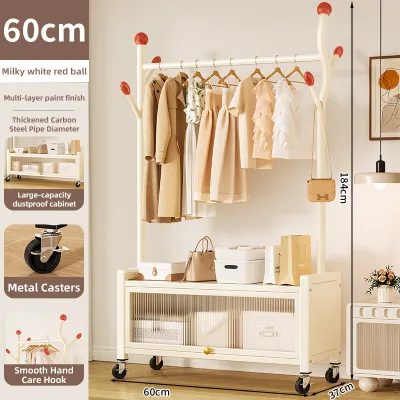
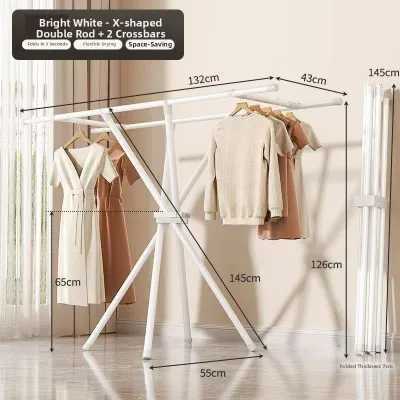
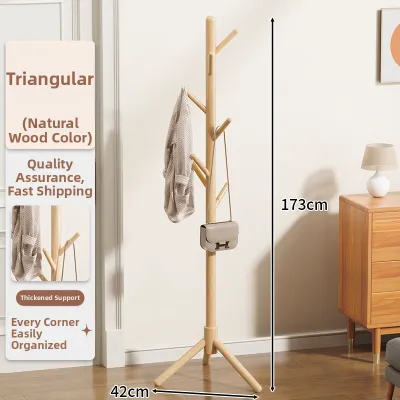
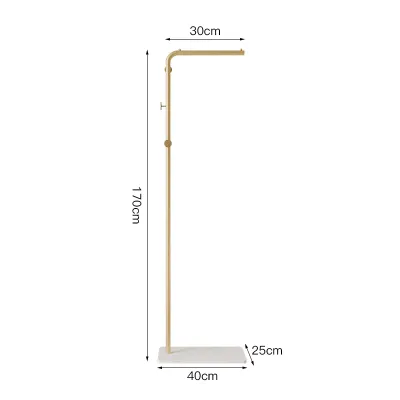
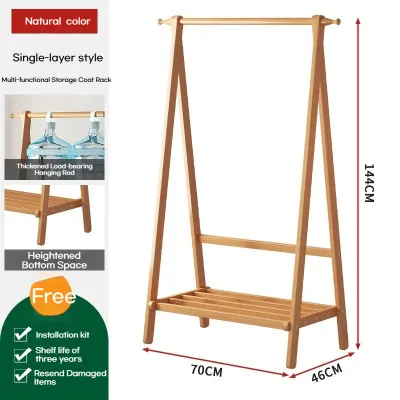
Prices are valid at publication and may change. Please refer to the product page for the latest price.
Mobility versus fixed stability is a final key consideration for compact layouts. Racks equipped with lockable casters offer excellent flexibility, allowing you to roll the unit out of the way when cleaning, vacuuming, or accessing hidden storage areas behind the rack. However, mobile units often have a slightly wider base to maintain balance while in motion, which might not fit into tight alcoves. Fixed racks, on the other hand, offer superior stability and can often support heavier loads, but they require a permanent commitment to a specific spot in your room. Choosing between them depends on whether you value daily flexibility or maximum weight capacity.
Best Clothes Rack Designs for Maximising Vertical and Corner Space
To make the most of limited square footage, you must look beyond traditional freestanding single-bar racks. Modern space-saving designs are engineered to exploit areas of the home that are typically left empty, such as high vertical zones, tight 90-degree corners, and bare wall surfaces. By selecting a design tailored to these specific spatial opportunities, you can create a highly functional wardrobe extension without sacrificing valuable floor space.

Vertical Tension Poles and Over-Door Racks
Floor-to-ceiling vertical tension poles offer an exceptionally high storage-to-footprint ratio, making them ideal for tight corners or narrow dressing areas. These systems use a spring-loaded or screw-tightened mechanism to secure a central pole between the floor and the ceiling, requiring no drilling or permanent installation. Before purchasing, it is vital to verify your ceiling type; tension systems are highly effective on solid concrete ceilings but can cause serious damage to fragile false ceilings, plasterboard panels, or suspended ceiling boards. Always check the manufacturer’s instructions regarding the maximum height limit and load capacity to ensure the pole remains secure under the weight of your clothes.
Over-door racks provide another zero-footprint storage alternative, utilising the unused vertical surface of bedroom, bathroom, or bomb shelter doors. These organisers simply hook over the top edge of the door, providing instant hanging space for daily outfits, bags, or accessories. When choosing an over-door model, measure the top clearance of your door frame to ensure the door can still open and close smoothly without scraping. Additionally, check the weight restrictions of both the rack and your door hinges, as overloading an over-door organiser can warp the door frame or damage the hinges over time.
Corner and L-Shaped Freestanding Racks
Corners are often treated as dead space in small bedrooms, but a dedicated corner or L-shaped clothes rack can turn these awkward angles into highly efficient storage zones. These racks are specifically shaped to fit snugly into a 90-degree corner, hugging the walls and keeping the centre of the room clear. This design is particularly useful in entryways for hanging daily jackets or in bedroom corners that are too small for a standard wardrobe.
When planning for a corner rack, accurate depth measurements are essential to prevent the unit from blocking adjacent furniture or window frames. Because corner racks have a unique triangular or L-shaped footprint, you must also pay close attention to base stability. Ensure the weight is distributed evenly across the frame, as loading heavy items exclusively on one side can create a tipping hazard, especially on carpeted or slightly uneven flooring.
Wall-Mounted and Fold-Down Options
For rooms where floor space must be kept completely clear, wall-mounted and fold-down clothes racks offer an elegant, semi-permanent solution. These fixtures are anchored directly to the wall and can be folded flat against the surface when not in use, virtually disappearing from sight. This makes them perfect for narrow corridors, laundry areas, or guest rooms that double as home offices.
Before installing a wall-mounted rack, you must verify your wall type to ensure it can support the intended weight. Solid concrete walls, common in HDB flats, provide excellent support when paired with the correct masonry plugs and screws, whereas drywall partitions require specialised anchors and should ideally be mounted directly into the wall studs. Additionally, inspect the durability of the folding hinges and joints, ensuring there is sufficient physical clearance in front of the wall when the rack is fully extended and loaded with garments.
How to Measure and Plan Your Space Before Buying
Successful small-space organisation relies entirely on precise planning and measurement. Before browsing online marketplaces or visiting furniture showrooms, grab a measuring tape and map out the exact zone where you plan to place your clothes rack. Start by measuring the available floor width and depth, but do not stop there; you must also measure the vertical clearance up to the ceiling. Be sure to note the locations of any ceiling fans, light fixtures, air conditioning units, or wall-mounted switches that could obstruct a tall rack or prevent you from accessing your clothes.
Next, consider the spatial dynamics of the room when it is in active use. A clothes rack might fit perfectly on paper, but it can become a major nuisance if it blocks the swing of a bedroom door, a built-in wardrobe door, or a window. Walk through your daily paths and ensure there is at least 60 to 80 centimetres of clear walkway space around the rack so you can move comfortably without bumping into hanging garments. If you are opting for a model with drawers or pull-out baskets, factor in the extra depth required to open these compartments fully.
Finally, do not forget to plan for the delivery and assembly process. Measure the dimensions of your building’s lift, the width of your main entrance door, and any tight turns in your corridors or staircases to ensure the packaged product can safely reach your unit. If the rack is a large, pre-assembled piece, these clearance checks are critical. For flat-packed items, ensure you have enough open floor space within your home to lay out the parts and assemble the unit safely without damaging your existing furniture or walls.
Material and Stability Checks for Daily Use
When you cannot rely on brand names or marketing claims, you must know how to evaluate the physical quality of a clothes rack yourself. The structural integrity of a rack is determined primarily by its joints, connections, and base design. Inspect the welding points on metal frames; they should be smooth, continuous, and free of cracks or gaps. For modular or adjustable racks, examine the locking mechanisms—such as screw clamps, push-buttons, or collar sleeves—to ensure they grip tightly and do not slip when downward pressure is applied.
The width and shape of the base are directly linked to the rack’s overall stability. A wider, heavier base lowers the centre of gravity, making the unit much less likely to wobble or tip over when fully loaded. If you are looking at a tall vertical rack, check if the manufacturer provides wall-anchoring hardware, which is highly recommended for securing units taller than 150 centimetres. Always consult the product manual or specification label to verify the maximum weight capacity, paying close attention to how that weight should be distributed across different shelves and hanging rails.
In humid climates, the surface finish of your clothes rack is just as important as its structural strength. Untreated metal can quickly develop rust when exposed to moisture, especially if placed near a window, balcony, or service yard. Look for racks with durable surface treatments, such as powder-coated steel, chrome plating, or rust-resistant paint, which provide a protective barrier against moisture. For wooden or bamboo racks, ensure the material is sealed with a clear, water-resistant varnish to prevent warping, mould growth, or splintering over time.
Frequently Asked Questions (FAQ)
Can a freestanding clothes rack hold heavy winter coats?
Yes, a freestanding clothes rack can hold heavy winter coats, provided you strictly adhere to the manufacturer’s stated weight limits and distribute the load correctly. Heavy garments should always be placed on the lower shelves or concentrated toward the centre of the hanging rail rather than on the outer edges. This keeps the centre of gravity low and balanced, preventing the frame from bending or tipping sideways under uneven weight.
How do I prevent a tall clothes rack from tipping over?
To prevent a tall clothes rack from tipping over, always secure units taller than 150 centimetres to the wall using the supplied wall-anchoring brackets or safety straps. Ensure the rack is placed on a flat, level hard floor rather than on thick, plush rugs or uneven surfaces that can compromise its base stability. Additionally, place heavier items like shoes, storage boxes, or bags on the bottom shelves to create a heavy base, keeping lighter shirts and jackets on the upper hanging rails.

Community discussion
Share your experience or ask a question. Comments are reviewed before publication.