
Selecting the right furniture for a compact home requires balancing utility, safety, and physical dimensions. A clothes rack mirror—which combines a hanging rail, shelving, and a full-length mirror into a single footprint—is an excellent space-saving solution for small bedrooms, narrow entryways, and walk-in wardrobes. To make the most of this multi-functional piece, you must prioritize a compact physical footprint that does not compromise your daily movement or hanging capacity.
Safety is equally critical when integrating a tall, heavy item into a high-traffic or limited-space area. You should look for high-quality mirror glass equipped with safety backing to prevent hazardous shattering if an accident occurs. Additionally, robust stability features such as weighted bases, wide support frames, or reliable wall-anchoring hardware are essential to keep the unit secure when fully loaded with garments.
By focusing on precise measurements, structural integrity, and moisture-resistant materials, you can find a clothes rack mirror that enhances your home’s organization while keeping your living space open and safe.
Products mentioned in this guide
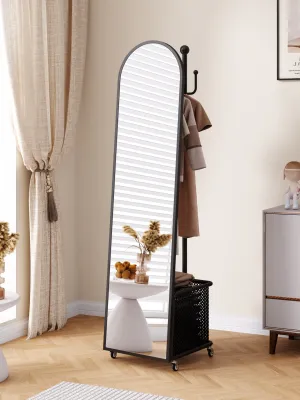




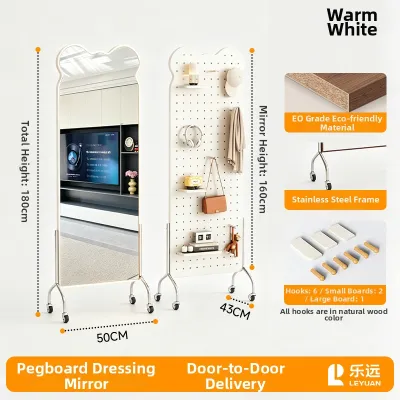
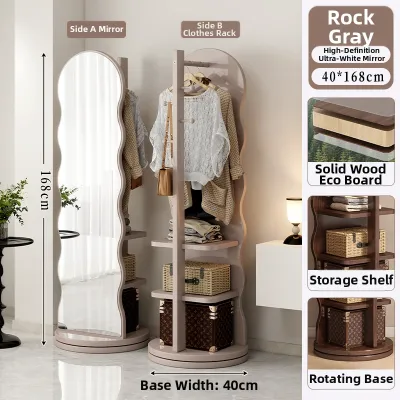

Prices are valid at publication and may change. Please refer to the product page for the latest price.
Space and Dimension Checks for Compact Rooms
Before browsing online marketplaces or visiting local furniture showrooms, you must establish the exact physical limits of your designated room. In typical Singapore apartments, such as Housing & Development Board (HDB) flats or compact condominiums, every centimeter of floor space impacts the flow of traffic. Begin by measuring the available floor area, taking care to account for the swing paths of bedroom doors, wardrobe doors, and nearby windows. A clothes rack mirror that blocks a walkway or prevents a door from opening fully will quickly become a daily frustration.
Vertical clearance is another critical factor that is often overlooked. Measure the height of your ceiling, keeping in mind the location of ceiling fans, light fixtures, and wall-mounted air-conditioning units. A tall clothes rack must stand clear of any rotating fan blades to prevent catastrophic collisions during dressing. Furthermore, placing a rack directly beneath an air-conditioner is highly discouraged, as any condensation leaks or routine servicing access could damage your clothing or cloud the mirror surface.
To ensure the rack remains fully functional, you must calculate the operational depth of the unit rather than just its static frame dimensions. Standard adult clothes hangers measure between 40cm and 45cm in width. When clothes are hung on the rail, they will extend beyond the frame of the rack. If the unit is placed too close to a wall, the garments will brush against the wall surface, leading to friction wear, dust accumulation, and restricted airflow. Ensure there is at least 50cm of depth clearance so your clothes can hang freely without pressing against the wall or blocking your view of the mirror.
Finally, consider the viewing distance required to use the mirror comfortably. To view your entire body in a full-length mirror, you generally need to stand back at least 1 to 1.5 meters. If your bedroom layout forces you to stand too close, the mirror’s utility is severely diminished. Measure the clear floor space directly in front of where the mirror will face to ensure you have an unobstructed line of sight.
Stability, Weight Capacity, and Safety
A clothes rack mirror is inherently top-heavy due to the weight of the glass mirror panel. When you add heavy garments, bags, and accessories, the center of gravity shifts upward, increasing the risk of tipping. To prevent accidents, you must verify the manufacturer’s specified weight capacity for both the hanging rail and any integrated shelves. Never assume that a metal frame can automatically support unlimited weight; structural limits vary widely based on joint design and material thickness.

Analyze the base design of the rack to determine its stability. Models with a wide A-frame or T-frame base offer a lower center of gravity and are less prone to tipping than those with narrow, flush bases. If you select a model with caster wheels for mobility, ensure that at least two of the wheels feature robust locking mechanisms to keep the unit stationary during use. For stationary models, look for adjustable leveling feet that can compensate for minor floor unevenness, which is common along tiled or vinyl flooring joints.
Wall anchoring is the most reliable way to secure a tall clothes rack mirror, especially in households with young children or active pets. Many manufacturers include anti-tip kits consisting of straps, brackets, or wall anchors. Before installation, identify your wall type to ensure you use the correct hardware. Concrete or brick walls require masonry drills and expansion plugs, while drywall partitions require specialized toggle bolts or stud-mounting screws. If a product does not include anchoring hardware, you should purchase compatible heavy-duty wall anchors separately.
Weight distribution also plays a major role in maintaining stability over time. When organizing your clothes, place heavier items like coats, bags, or storage boxes on the lowest shelves or closest to the vertical support posts. Avoid overloading the center of the hanging rail, as this can cause the metal or wood to bow, weakening the joints and compromising the overall structural integrity of the frame.
Mirror Quality and Functional Design
The quality of the mirror glass directly affects both your safety and the visual appeal of your room. In tight quarters, accidental bumps are inevitable. You should exclusively look for mirrors featuring safety-backed or shatterproof glass. This design utilizes an adhesive film applied to the back of the glass panel. If the mirror breaks, the film holds the fragments in place, preventing sharp shards from scattering across your floor and causing injuries.
When evaluating mirror size and placement, consider your household’s specific needs. A full-length mirror integrated into the side of a clothes rack is ideal for outfit checks, but it requires a clear vertical span. If floor space is exceptionally tight, a rotating or swivel clothes rack mirror can be highly beneficial. These units feature a 360-degree rotating base, allowing you to keep the mirror facing forward when needed, and then spin the unit to access hanging space or shelves behind it. Note that rotating models require a circular clearance zone, so you must measure the diagonal rotation path to ensure it does not hit nearby walls or furniture.
Adjustable tilt angles are another valuable feature for small rooms. A mirror that can tilt slightly upward or downward allows you to capture a full-body view even when standing close to the unit, effectively solving the problem of limited viewing distance. Additionally, look for models that incorporate integrated hooks on the sides of the frame. These hooks provide convenient storage for daily accessories like hats, belts, or bags, keeping them off the floor without taking up valuable rail space.
For darker corners of a bedroom or entryway, consider a clothes rack mirror with built-in LED lighting or space to mount stick-on wireless lights. Proper illumination ensures you can see your outfits clearly without needing to turn on bright overhead lights, which is particularly useful if you share a bedroom and have a different schedule than your partner.
Material, Finish, and Daily Maintenance
Singapore’s tropical climate is characterized by high relative humidity, which can accelerate the deterioration of furniture materials. When choosing a clothes rack mirror, you must look closely at the surface treatments and finishes rather than relying solely on generic material names like “metal” or “wood.” Unprotected materials can quickly succumb to rust, mold, or warping in humid conditions.
If you prefer a metal frame, prioritize powder-coated steel or rust-resistant aluminum. Powder coating involves applying a dry powder that is cured under heat to create a thick, protective barrier. This finish is highly resistant to scratching, chipping, and moisture damage compared to standard liquid paint. Inspect the joint connections and welding points; smooth, continuous welds are less likely to trap moisture and develop rust than rough, spot-welded joints.
For wooden frames, solid hardwoods or high-grade engineered woods with moisture-resistant sealants are preferred. If selecting engineered wood like MDF or particleboard, verify that all edges are completely sealed with PVC or ABS edge banding. Unsealed edges can absorb airborne moisture, causing the wood fibers to swell, warp, and split over time. Additionally, check the quality of the assembly hardware; high-grade steel screws and dowels ensure the frame remains rigid and does not wobble after repeated use.
Proper maintenance is essential to preserve both the frame and the mirror surface. When cleaning the mirror, never spray liquid glass cleaner directly onto the glass. The liquid can run down the pane and seep behind the frame, where it can attack the silver backing of the mirror, leading to unsightly black edges or “silvering rot.” Instead, spray a small amount of cleaner onto a microfiber cloth and gently wipe the glass. For the frame, follow the manufacturer’s specific care instructions, avoiding harsh chemical solvents or abrasive pads that could strip away protective powder coatings or wood sealants.
Building Your Shortlist: A Pre-Purchase Checklist
To ensure you make a successful purchase, compile a shortlist of potential clothes rack mirrors and evaluate them against this practical checklist:
- Verify Dimensions: Double-check the manufacturer's finished dimensions (height, width, and depth) against your measured room clearances, leaving a buffer for door swings and ceiling fans.
- Confirm Assembly Requirements: Determine if the unit requires complex assembly. Check if you have the necessary tools, or if the retailer offers professional assembly services upon delivery.
- Assess Delivery Access: Measure your building's lift doors, lift interior height, and apartment doorway clearance. Large flat-pack boxes or pre-assembled units must fit through these spaces without risking damage to the fragile mirror glass.
- Check Weight Limits: Ensure the stated weight capacity of the hanging rail and shelves matches the volume of clothing you plan to store.
- Review Safety Features: Confirm the mirror features safety-backed glass and that the unit includes an anti-tip wall-anchoring kit.
- Inspect Warranty and Return Policies: Read the retailer's terms carefully. Ensure there is clear coverage for transit damage, specifically mirror breakage, and structural defects that may appear shortly after assembly.
Frequently Asked Questions (FAQ)
Can a freestanding clothes rack mirror support heavy winter coats?
A freestanding clothes rack mirror can support heavy garments, but its capacity depends entirely on the manufacturer’s specified weight limits and the structural design of the frame. Metal frames with welded joints and wide bases generally handle heavier loads better than lightweight wooden frames. To prevent the rack from bowing or tipping, you must distribute the weight of heavy coats evenly across the rail, placing the heaviest items closest to the vertical support posts. Always secure the unit to the wall using the provided anti-tip hardware if you plan to store dense, heavy clothing.
How do I clean the mirror without damaging the metal or wood frame?
To protect both the mirror backing and the surrounding frame, you should avoid spraying any cleaning liquids directly onto the mirror surface. Liquid can easily pool at the bottom edge of the frame, seeping into the joints and causing wood to swell or metal to rust. Instead, spray a mild glass cleaner or a mixture of water and white vinegar onto a clean microfiber cloth, then wipe the glass surface. For the frame itself, use a separate dry or slightly damp cloth to remove dust, and always refer to the manufacturer’s care label before applying any wood polishes or metal cleaners.
Is it better to buy a flat-pack or pre-assembled clothes rack mirror?
Both options have distinct logistical trade-offs. Flat-pack units are much easier to transport through narrow HDB corridors, tight stairwells, and passenger lifts, reducing the risk of accidental mirror breakage during transit. However, they require careful, patient assembly to ensure all joints are perfectly tight and stable. Pre-assembled units eliminate assembly errors and save time, but they require strict measurement of your doorways and lift dimensions prior to ordering to ensure the delivery team can safely bring the fully formed, fragile unit into your home.

Community discussion
Share your experience or ask a question. Comments are reviewed before publication.