
Finding the right bedroom rack for a compact Singapore home requires balancing daily convenience with strict spatial limits. In typical HDB flats and condominium bedrooms, floor space is highly contested, making a standard bulky wardrobe addition impractical. The most effective solution is a dedicated, small-footprint bedroom rack designed to hold active wear, bags, and semi-clean clothes without overwhelming the room’s layout.
By focusing on vertical storage and utilizing underused areas like corners, walls, or the backs of doors, you can keep your bedroom organized and visually open. Selecting the ideal rack involves measuring your space accurately, understanding the structural limits of different designs, and establishing a practical routine to prevent clutter from accumulating.
Assessing Your Bedroom's Available Space
Before browsing online marketplaces or visiting local furniture showrooms, you must establish the exact physical boundaries of your bedroom. Start by measuring the floor area where you plan to position the bedroom rack. Use a metal measuring tape for accuracy, and remember to account for baseboards, skirting boards, and wall plugs, which can prevent a rack from sitting completely flush against the wall.
Products mentioned in this guide
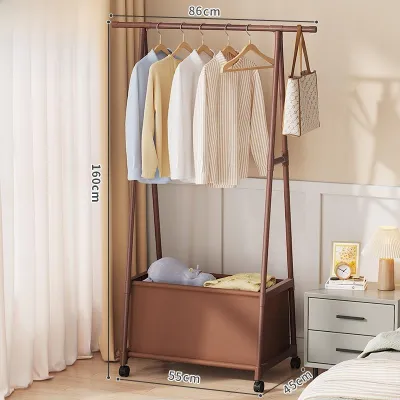

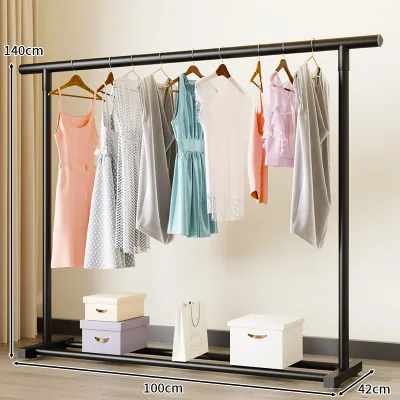
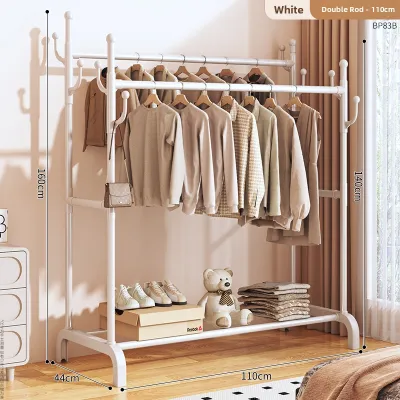
Prices are valid at publication and may change. Please refer to the product page for the latest price.
Next, calculate the necessary clearance zones for daily movement and existing furniture. A bedroom rack should never obstruct the swing path of built-in wardrobe doors, bedroom doors, or nearby drawers. Measure the distance from the edge of your bed frame to the proposed rack location to ensure you have a comfortable walking path of at least 60 centimeters.
Finally, evaluate the vertical space and ceiling clearance. Note the height of any wall-mounted air conditioning units, ceiling fans, or light fixtures that could interfere with a tall freestanding rack or high wall hooks. If you plan to place the rack beneath a sloped ceiling or a low beam, verify that the highest point of the rack leaves enough clearance to hang garments without them dragging on the floor or bunching up against the ceiling.
Evaluating Compact Bedroom Rack Designs
Choosing between a floor-standing bedroom rack and a zero-footprint alternative depends heavily on your room’s layout and structural flexibility. While freestanding units offer the convenience of mobility, wall-mounted and over-the-door options utilize vertical surfaces that would otherwise go unused, freeing up valuable floor space.

Freestanding Corner and Slim Racks
Freestanding corner racks and slim pole designs are excellent for utilizing awkward, unused gaps between wardrobes and walls. Because they stand on the floor, they can be easily repositioned when you decide to rearrange your bedroom layout. However, their small bases mean you must pay close attention to stability and weight distribution.
To ensure a freestanding rack works in your space, perform the following checks:
- Base Footprint: Verify the manufacturer's listed base dimensions against your measured floor space to ensure the legs or pedestal do not extend into walking paths.
- Center of Gravity: Look for designs with a heavy, stable base—such as solid wood or weighted metal—to prevent the rack from tipping when loaded with heavy bags or damp towels.
- Load Capacity: Review the manufacturer's stated maximum weight limit to ensure the frame can support your typical daily items without bending or wobbling.
Wall-Mounted and Over-the-Door Options
If floor space is virtually non-existent, wall-mounted rails and over-the-door hooks offer a practical way to keep garments off the floor. These options are particularly useful in small rental rooms where permanent furniture additions are restricted, or in highly compact BTO bedrooms.
When evaluating these zero-footprint designs, consider these essential factors:
- Wall Type and Mounting: Identify whether your bedroom walls are concrete, brick, or drywall. Concrete walls require drilling and appropriate wall plugs for a secure hold, while drywall requires locating studs or using specialized anchors.
- Door Clearance: For over-the-door hooks, measure the thickness of your bedroom door and check the clearance gap at the top of the door frame. Most over-the-door brackets require a gap of at least 2 millimeters to allow the door to close smoothly without scraping.
- Reachability and Height: Ensure wall-mounted hooks are installed at a height that is comfortable for all household members to reach, while keeping long garments like dresses or trousers from touching the floor.
Essential Sizing and Safety Checks Before Purchase
A successful bedroom rack purchase relies on verifying product specifications against your actual living conditions rather than relying on promotional photos. Always compare the product’s listed assembled dimensions—not just the packaging dimensions—with your measured space, leaving a practical safety margin of at least 5 centimeters on all sides.
Safety is a critical consideration, especially in compact spaces where a falling rack can cause injury or damage nearby furniture. If you share your home with children or pets, prioritize racks that include anti-tip hardware or wall-anchoring kits. Even slim freestanding racks can become top-heavy quickly when loaded with winter coats or heavy backpacks, making physical wall anchoring a sensible precaution.
Additionally, inspect the material and joint construction specifications provided by the manufacturer. Look for sturdy connection methods, such as threaded metal inserts or heavy-duty bolts, rather than simple push-fit plastic joints. A rack with robust joints is far less likely to develop a lean or wobble over time under the weight of daily laundry.
Maximizing Space and Maintaining Visual Order
An open bedroom rack can easily become a visual distraction if it is allowed to accumulate too many items. To maintain a clean, minimalist aesthetic in a small bedroom, establish a strict garment rotation system. Use the rack only for active items—such as the jacket you wear daily, your work bag, or clothes that can be worn again before washing—and return clean laundry to your main wardrobe promptly.
Using uniform, slim hangers is another highly effective way to maximize horizontal rail space while keeping the rack looking organized. Slim velvet or metal hangers take up a fraction of the space of bulky plastic or wooden hangers, allowing you to hang more items neatly without overcrowding the rail.
Finally, incorporate structural maintenance into your regular cleaning routine. Periodically check the tightness of all screws, bolts, and joint connections on your bedroom rack. Daily use and shifting weight can gradually loosen these fasteners, and a quick tightening every few months will ensure your rack remains stable, safe, and upright for years to come.
Frequently Asked Questions (FAQ)
Are adhesive wall-mounted racks safe for heavy winter coats?
Adhesive wall-mounted racks are generally not recommended for heavy winter coats or heavy bags. The load-bearing capacity of adhesive mounts depends heavily on the texture of the wall surface, the quality of the paint, and whether the adhesive was allowed to cure fully according to the manufacturer’s instructions. Over time, the constant downward pull of heavy garments can cause the adhesive to fail, potentially peeling away paint or plaster. For heavy items, it is always safer to use screw-mounted racks anchored directly into wall studs or concrete. Reserve adhesive hooks for lightweight items like hats, scarves, or light summer jackets.
How do I prevent a tall, slim freestanding rack from tipping over?
To prevent a tall, slim freestanding rack from tipping, always place the heaviest items on the lowest hooks or shelves to keep the center of gravity as low as possible. Distribute weight evenly around the rack rather than hanging all your bags and jackets on one side. If the manufacturer provides an anti-tip wall strap or anchoring kit, install it immediately to secure the top of the rack to the wall. Additionally, avoid placing freestanding racks on thick, plush rugs or uneven flooring surfaces, as any slight tilt at the base will be amplified at the top, significantly increasing the risk of a tip-over.

Community discussion
Share your experience or ask a question. Comments are reviewed before publication.