
To optimize a compact HDB bedroom, the ideal aluminium wardrobe is not a pre-fabricated, off-the-shelf unit, but a custom-fabricated solution. Key space-saving features include sliding door mechanisms that eliminate swing clearance and floor-to-ceiling configurations that maximize vertical volume. Because space-saving efficiency depends heavily on precise wall-to-wall fit, selecting the right provider requires evaluating local custom fabricators based on their HDB project experience and material transparency rather than relying on generic brand names. Homeowners should begin by taking preliminary wall measurements and consulting qualified local contractors to assess structural feasibility.
Why Aluminium for Compact HDB Bedrooms?
Traditional wood or MDF wardrobes typically require thicker side panels—often 18mm to 25mm—to maintain structural integrity, especially for tall units. Aluminium profiles can achieve high structural rigidity with much thinner frames, often ranging from 10mm to 15mm. This difference saves valuable horizontal centimeters across the width of the wardrobe, which is crucial in tight HDB bedrooms where every millimeter counts.
Singapore’s tropical climate brings high relative humidity, which often leads to warping, swelling, and mold growth in traditional engineered wood wardrobes. Aluminium is inherently resistant to moisture, rust, and termite infestations, making it a highly durable alternative. To ensure long-term durability, homeowners should check manufacturer specifications for high-quality surface treatments, such as powder coating or anodizing, which protect the metal from oxidation and wear.
Products mentioned in this guide
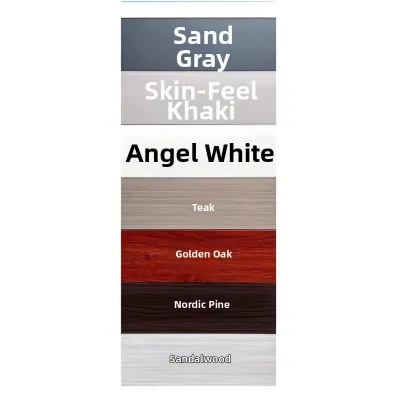
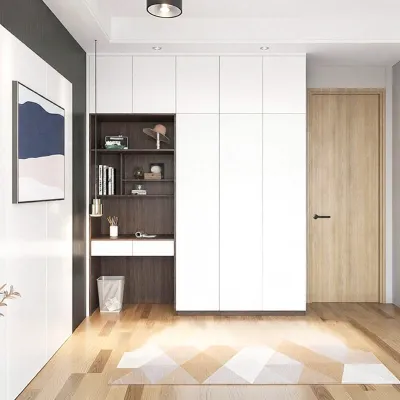
![[INNDESIGN.SG] Rusha Sliding Wardrobe(Fully Assembled and Free Delivery) Aluminum sliding door track Hollow plywood material / Wardrobe Storage Organizer](https://img.lazcdn.com/g/p/8ccf73e3e7ef6d684365766b692b2f3a.jpg_400x400q80.jpg_.webp)
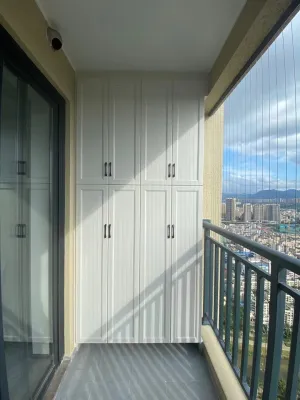
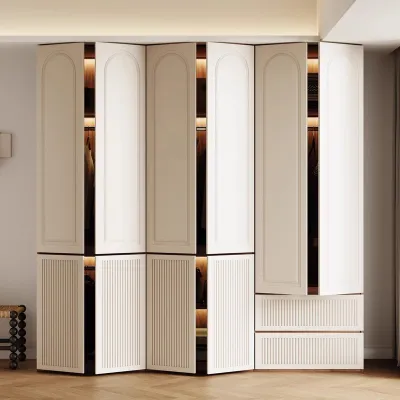
Prices are valid at publication and may change. Please refer to the product page for the latest price.
While aluminium offers excellent durability and space efficiency, it has distinct trade-offs that homeowners must consider. Acoustically, aluminium doors and drawers can produce a sharper, metallic sound when closed compared to the dampening effect of wood; this can be mitigated by high-quality soft-close mechanisms and rubber gaskets. Additionally, the material has a modern, metallic aesthetic that may feel colder than natural wood grain, though many fabricators now offer powder-coated finishes that mimic wood textures. The overall weight of aluminium frames is lighter than solid wood but can be comparable to or heavier than thin MDF depending on the glass or acrylic panel inserts used, requiring careful assessment of the floor and wall support.
Key Space-Saving Design Features to Look For
In a compact HDB bedroom, door clearance is often the deciding factor in room layout. Hinged doors require a swing clearance zone of at least 50cm to 60cm in front of the wardrobe, severely limiting where you can place the bed or side tables. Sliding door mechanisms operate entirely within the wardrobe’s footprint, requiring zero external clearance. However, sliding tracks do add about 5cm to 10cm to the overall depth of the wardrobe frame, a factor that must be balanced against the external space saved.

Standard off-the-shelf wardrobes often stop at 2.1 or 2.4 meters, leaving an awkward, dust-gathering gap below typical HDB ceilings, which are usually around 2.6 meters. Floor-to-ceiling integration utilizes this vertical space for storing seasonal items, luggage, or extra bedding. When planning these tall structures, verify that the aluminium frame has sufficient vertical load-bearing capacity and that the top cabinets are securely anchored to prevent bowing or structural fatigue over time.
Standard wardrobe depths are typically 60cm to accommodate hanging clothes. In extremely tight bedrooms, reducing this depth to 45cm or 50cm can free up vital walkway space. To make a shallow wardrobe functional, look for specialized internal hardware such as pull-out hanging rods, where clothes hang facing forward rather than sideways, and adjustable shelving. Modular drawer units, wire baskets, and integrated lighting can also maximize every cubic centimeter of internal space, ensuring no dark corners go unused.
How to Evaluate and Shortlist Wardrobe Brands
Since off-the-shelf options rarely fit HDB niches perfectly, look for suppliers who specialize in bespoke fabrication. A reputable fabricator should be transparent about their material sourcing, specifying the grade of aluminium alloy used—such as 6063-T5, commonly used for architectural extrusions—and the origin of their hardware. Ask detailed questions about where the fabrication takes place and whether they handle the installation with their own in-house team or subcontract it to third parties.
HDB flats have unique structural rules, wall irregularities, and logistical constraints. Choose a brand or contractor with a proven track record of working within HDB guidelines. They should be familiar with common challenges like uneven screed floors, non-standard wall angles, and the placement of electrical points.
A high-quality aluminium wardrobe is a long-term investment. Evaluate the warranty terms carefully, distinguishing between the warranty on the aluminium structure, which should span several years, and the warranty on moving parts like sliding rollers, tracks, and soft-close hinges, which typically wear out faster. Ensure the contract explicitly outlines post-installation support, including response times for adjustments if doors become misaligned.
When comparing local suppliers, use a structured checklist to ensure you are comparing equivalent offers:
- Portfolio Review: Look for close-up photos of joints, track installations, and corner finishes in actual HDB projects rather than relying solely on 3D renders.
- Itemized Quotations: Request a detailed breakdown in S$ that separates material costs, fabrication, delivery, installation, and any dismantling fees for old cabinetry.
- Hardware Specifications: Ensure the quote specifies the exact brand and model of sliding tracks and soft-close hinges to avoid low-grade substitutes.
- Site Measurement Policy: Confirm if the initial site measurement is free of charge and whether the final price is locked in after physical measurements are taken.
Pre-Purchase Measurements and Installation Checks
Before finalizing any design, precise physical measurements are mandatory. Do not rely on HDB floor plans, as actual dimensions can vary by several centimeters due to plastering and tiling. Measure the width, height, and depth at multiple points—top, middle, and bottom—to account for uneven walls or sloping ceilings. Pay close attention to skirting boards, ceiling cornices, light switches, and air-conditioning trunking, as these obstructions will dictate where the wardrobe can sit and how filler panels must be cut.
The journey of the wardrobe panels from the delivery truck to your bedroom is a common bottleneck. Measure the dimensions of the HDB lift door and interior cabin to ensure long aluminium profiles or large glass door panels can fit inside. If the items must be carried up the stairs, check the stairwell turning radiuses and corridor clearances, as some older HDB estates have narrow common areas that restrict the transport of oversized components.
Aluminium wardrobes are structurally rigid but still require secure anchoring. If you plan to mount shelves or the wardrobe frame itself to a wall, identify the wall type. Concrete structural walls offer excellent support, but internal partition walls, such as drywall or lightweight concrete blocks, have strict load-bearing limits. Always verify the wall’s composition and use appropriate heavy-duty anchors or floor-supported frames to distribute the weight safely.
Maintenance and Care for Aluminium Wardrobes
Keeping your aluminium wardrobe in pristine condition requires minimal but specific care. Use a soft microfiber cloth dampened with warm water and a mild, non-abrasive detergent to wipe down the frames. Avoid harsh chemical cleaners, scouring pads, or acidic solutions, as these can strip the protective powder coating or anodized finish, leaving the metal vulnerable to scratching and dullness. For glass or acrylic door inserts, use a dedicated glass cleaner sprayed onto a cloth rather than directly onto the panel to prevent liquid from seeping into the frame joints.
The longevity of a sliding wardrobe depends entirely on the health of its tracks and rollers. Vacuum the bottom tracks weekly to remove dust, hair, and lint, which can clog the rollers and cause the doors to jump off the track. Periodically inspect the rollers and apply a small amount of dry silicone spray lubricant if you notice resistance or squeaking; avoid heavy grease or oil-based lubricants, as they attract dust and create a sticky residue.
Regularly check for early signs of wear or misalignment. If a door feels heavy to slide, scrapes against the bottom track, or does not close flush against the side wall, the rollers likely need adjustment. Most modern sliding doors have adjustment screws near the bottom corners; tightening or loosening these can realign the door. If you notice loose screws on hinges or brackets, tighten them immediately to prevent structural warping.
Frequently Asked Questions (FAQ)
Can aluminium wardrobes be installed on HDB partition walls?
Yes, but with specific structural precautions. Standard HDB partition walls, often made of drywall or lightweight concrete, cannot support heavy cantilevered loads without proper reinforcement. If you are anchoring a tall aluminium wardrobe to a partition wall, the weight should be primarily supported by the floor, with the wall anchors serving only to prevent tipping. Always consult a qualified contractor or structural engineer to locate the internal studs or framing members before drilling, and ensure compliance with HDB renovation guidelines.
How do I prevent condensation or moisture issues inside an aluminium wardrobe?
While aluminium itself does not absorb moisture or rot, temperature differentials can sometimes cause condensation to form on cold metal surfaces, especially in air-conditioned bedrooms. To prevent this, ensure your bedroom has adequate ventilation and avoid placing the wardrobe directly against an external wall without a small air gap—at least 2cm to 5cm—to allow air circulation. Check the manufacturer’s guidelines for integrated ventilation slots or grilles. Additionally, never store damp clothing inside the wardrobe, and consider using reusable moisture-absorbing sachets or dehumidifier tubs, performing regular visual checks for any signs of dampness on your clothes.

Community discussion
Share your experience or ask a question. Comments are reviewed before publication.