
Quick Answer: Matching Organiser Types to Apartment Layouts
Finding the right shoe organiser for a compact Singapore apartment is a balancing act between floor space, accessibility, and household layout. The most effective solution is never a one-size-fits-all product; instead, it depends entirely on your specific measured clearances, wall conditions, and daily access habits. By matching your home’s unique layout to the correct organiser type, you can keep your entryway clear and your footwear neatly arranged.
For narrow entryways and tight corridors, vertical wall-mounted racks or over-door hanging solutions are highly practical because they preserve critical walkway clearance. These options lift your footwear off the ground, ensuring you do not trip over stray soles when entering or leaving your home.
If you have unused floor space, recessed alcoves, or awkward corners near your main door, stackable or modular cubbies are highly effective. These units allow you to build upward or outward, customizing the storage footprint to match the exact dimensions of your available floor area.
Products mentioned in this guide
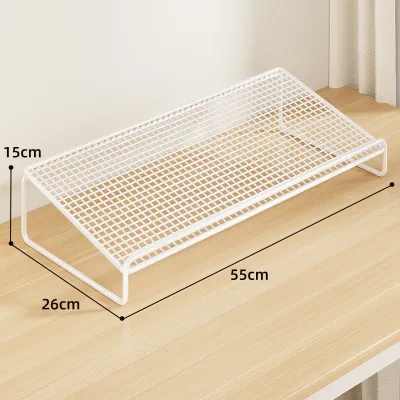
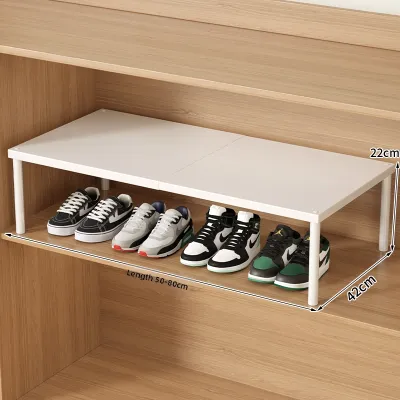
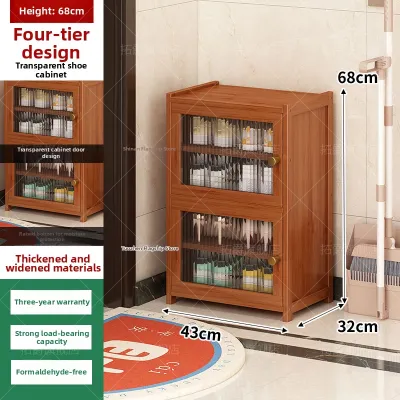
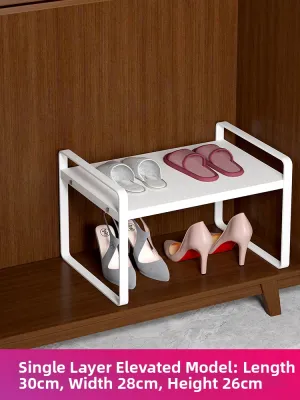
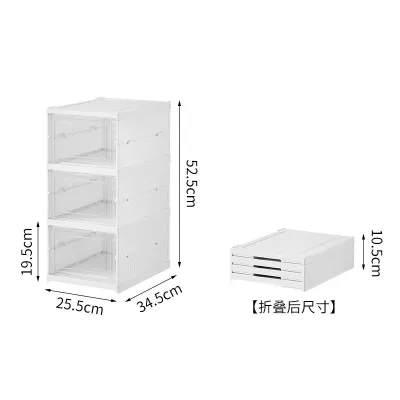
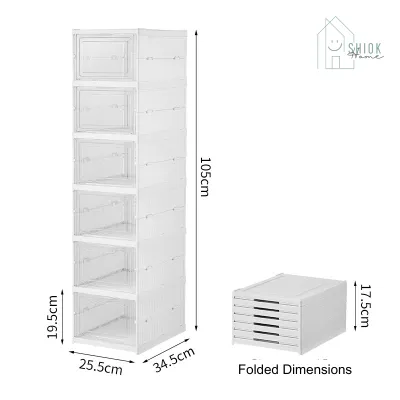
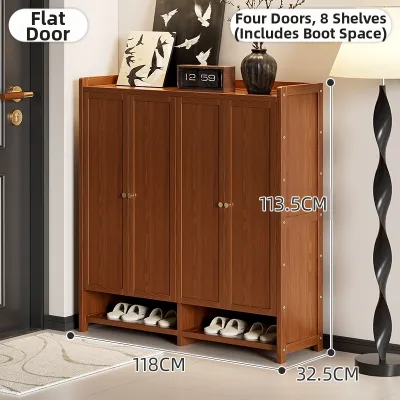
Prices are valid at publication and may change. Please refer to the product page for the latest price.
For bedroom storage or seasonal footwear that you do not need to access every day, under-bed low-profile storage bins are a highly suitable choice. They keep less frequently worn pairs completely out of sight, freeing up valuable real estate in your main living areas and keeping walkways entirely uncluttered.
Measuring Your Space Before Buying
Before purchasing any shoe organiser, taking precise physical measurements of your home is the most critical step to avoid buying a unit that blocks your daily paths. A few millimetres of miscalculation can turn a helpful storage accessory into an annoying physical obstacle.

Start by measuring your entryway width and calculating the remaining walkway clearance. If you plan to place a freestanding floor unit along a corridor, subtract the depth of the organiser from the total width of the hallway. Ensure the remaining passage space complies with local safety guidelines and allows household members to walk through comfortably without turning sideways.
For over-door options, you must inspect the door gaps and hinges. Measure the physical clearance between the top of the door panel and the door frame when closed. If this gap is too narrow, over-door hooks will scrape the frame, preventing the door from closing smoothly or causing long-term damage to your hinges.
If you are considering under-bed storage, measure the vertical height from the floor to the lowest point of your bed frame. Be sure to account for any protruding castors, low-hanging support slats, skirting boards, or existing storage drawers that might obstruct the path of a sliding bin.
Finally, evaluate your wall conditions before committing to wall-mounted shelves. Determine whether your walls are made of concrete, brick, or drywall, as this dictates the type of drilling, tools, and anchors required. You must also verify your tenancy agreement or condominium rules to ensure drilling is permitted in your specific unit.
Evaluating Space-Saving Shoe Organiser Types
To choose the right system, it helps to compare the four primary categories of space-saving shoe organisers. Each type offers distinct spatial advantages and requires specific home conditions to function safely and efficiently.
Wall-Mounted and Floating Racks
Wall-mounted and floating racks offer an excellent way to elevate your footwear collection, keeping the floor completely clear for easy sweeping and mopping. By lifting shoes off the ground, these racks create a visually spacious entryway that makes small apartments feel larger and less cluttered.
However, these systems have strict capacity limits that depend entirely on the strength of your wall anchors and brackets. Before loading your heaviest boots or sneakers onto a floating shelf, always check the manufacturer’s stated weight limit per shelf to prevent the unit from pulling away from the wall.
Installation constraints are also a major consideration for wall-mounted options. Because these systems require drilling, you must verify your tenancy agreements, HDB renovation guidelines, or condo alteration rules before proceeding. You must also ensure your wall material is structurally sound enough to support the intended load over time.
Over-Door and Hanging Organisers
Over-door and hanging organisers are highly practical for utilizing the dead space behind bedroom, closet, or utility doors. They require absolutely no floor footprint and do not demand permanent wall modifications, making them a practical choice for renters or those who prefer tool-free installation.
To ensure a successful setup, you must perform careful clearance checks. Measure the gap between the door and the frame to guarantee that the hanging hooks fit without causing friction or preventing the door from latching securely.
Stability and sway are common challenges with hanging organisers, as they tend to swing or slam when the door is opened or closed. To address this, look for models that include bottom straps, or use removable adhesive strips to secure the lower edge of the organiser directly to the door surface.
Stackable and Modular Cubbies
Stackable and modular cubbies provide high flexibility, allowing you to adapt your storage setup as your shoe collection grows or your household needs change. These freestanding units can be configured vertically to maximize tall, narrow alcoves, or horizontally to fit beneath low windows and benches.
Because these units can be built quite high, stability requirements are paramount. Tall stacked configurations must be securely anchored to the wall to prevent tipping, particularly in households with active children or curious pets who might try to climb the structure.
While modular cubbies are highly versatile, they do require dedicated floor space. You must carefully check the base dimensions of the bottom unit to ensure it does not obstruct your main walkway, block access to power outlets, or interfere with the swing of your entrance door.
Under-Bed and Low-Profile Storage
Under-bed and low-profile storage containers are designed to maximize the unused volume beneath your furniture, keeping your living areas visually clean and your walkways entirely clear. This hidden storage method is well-suited for maintaining a minimalist aesthetic in compact apartments.
The primary trade-off with under-bed storage is accessibility. Because retrieving these bins requires bending down and sliding them out, this solution is best suited for off-season footwear, formal shoes, or specialized sports gear rather than the pairs you wear for your daily commute.
To ensure a smooth fit, perform thorough dimension checks before buying. Compare the internal height and width of the storage bins against the exact clearance beneath your bed frame, taking care to avoid any low-hanging support beams or rug edges that could catch on the container.
Installation, Safety, and Maintenance Checks
Ensuring your shoe organiser remains secure and functional requires ongoing attention to installation safety and routine maintenance. Proper setup not only protects your footwear but also prevents accidental damage to your home’s walls and doors.
Load management is a fundamental safety practice for any vertical storage system. Always place your heaviest shoes, such as work boots or thick-soled sneakers, on the lowest shelves or sturdier bottom sections to maintain a low center of gravity and prevent the entire unit from tipping forward.
During installation, hardware verification is critical. Always use the specific wall anchors recommended for your wall type, whether you are mounting into solid concrete or hollow drywall. Refer closely to the product manual to ensure you are using the correct drill bit size and screw depth.
Perform routine checks on your storage systems every few months. Inspect wall brackets, hanging hooks, and stacking joints for any signs of stress, bending, or loosening screws, and tighten any hardware that has shifted due to daily use.
If you encounter unknown wall conditions, suspect structural issues, or find that the product instructions conflict with your physical space, stop the installation immediately. In these situations, it is always safest to consult a qualified professional to complete the mounting securely.
Frequently Asked Questions (FAQ)
How do I prevent an over-door organiser from damaging my door?
To protect your door surfaces and frames, check the hooks of your organiser for built-in padding. If they are bare metal or hard plastic, apply adhesive felt pads or rubber protectors to the inside of the hooks to prevent scratches. Additionally, ensure your door frame has adequate clearance so the hooks do not scrape against the header or cause the hinges to strain during daily opening and closing.
Can I use stackable shoe cubbies in a humid environment?
Yes, but you must select your materials carefully and check the manufacturer’s labels and care instructions for moisture resistance. To prevent trapped moisture and musty odours, ensure there is adequate air circulation around the unit. Avoid placing stackable cubbies directly flush against damp walls, and leave a small gap behind the organiser to allow air to flow freely.

Community discussion
Share your experience or ask a question. Comments are reviewed before publication.