
Maximising entryway storage in Singapore’s compact apartments requires smart, vertical solutions that do not obstruct daily foot traffic. A small rotating shoe rack offers an exceptionally efficient way to store footwear, utilising a 360-degree spinning mechanism to access multiple tiers of shoes within a minimal floor footprint. Unlike traditional wide shoe cabinets that demand significant wall length, these cylindrical or semi-circular towers capitalise on vertical space, making them ideal for tight HDB foyers, narrow condominium corridors, and awkward corners next to household shelters. Choosing the right model involves balancing rotational clearance, material stability, and tier configuration to ensure the unit remains safe, smooth, and highly functional in your specific home layout.
Measuring Your Space for a Rotating Shoe Rack
Before purchasing a rotating shoe rack, precise physical measurements of your entryway are essential to prevent clearance issues. Unlike static cabinets, a rotating rack requires a dynamic clearance zone that accounts for the entire rotational sweep of the unit. You must measure the absolute floor footprint, which is typically defined by the diameter of the circular base, and then add a buffer of at least two to five centimetres around the perimeter. This extra clearance ensures that as the rack spins, the edges of the shelves—and any protruding shoes—do not scrape against adjacent walls, baseboards, or nearby furniture.
Vertical clearance is equally critical, especially if you plan to place the rack beneath wall-mounted fixtures. Measure the height from the floor to the underside of any light switches, intercom units, distribution board (DB) boxes, or decorative wall sconces. A rotating rack that is too tall can block access to these essential utilities or cast shadows across your foyer. Additionally, if your HDB flat or condominium features a recessed entryway or a narrow corridor leading from the front door, verify that the fully loaded rack will not reduce the walking path to less than the standard comfortable width of one metre, ensuring smooth daily traffic and safe evacuation routes.
Products mentioned in this guide
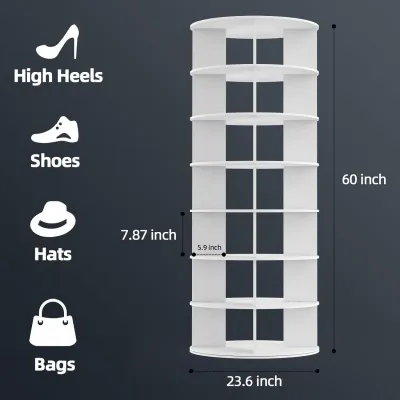
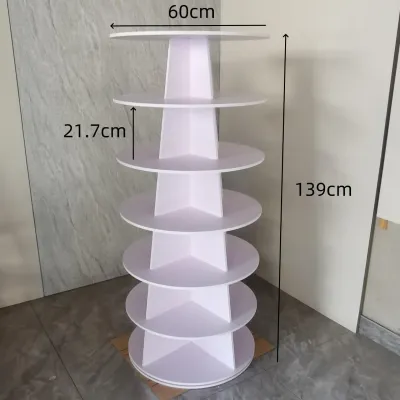
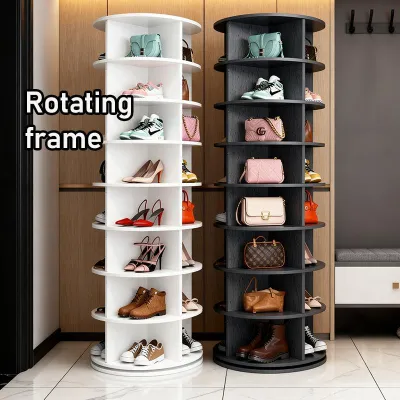
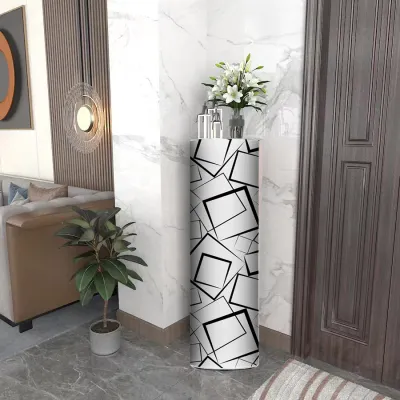
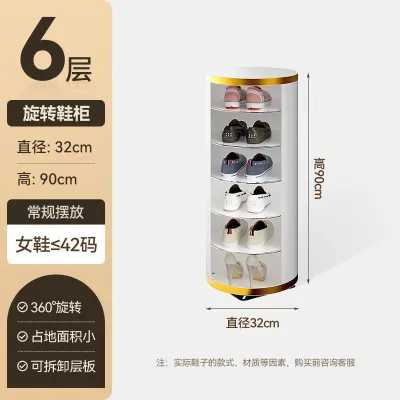
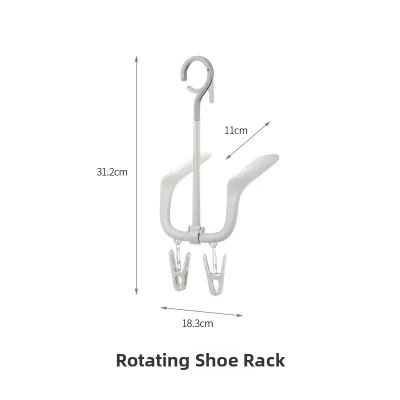
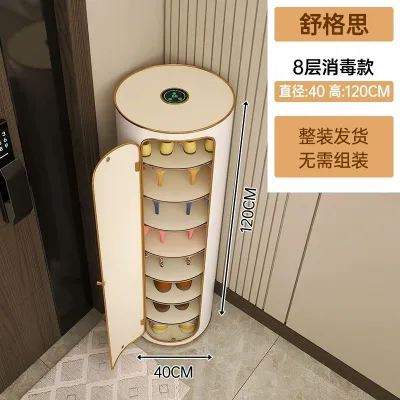
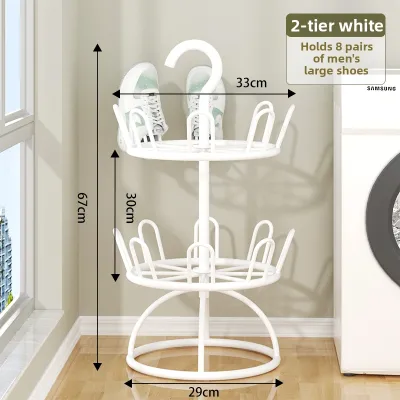
Prices are valid at publication and may change. Please refer to the product page for the latest price.
Finally, consider the swing path of your main entrance door and any security gates. Open your front door completely and measure the remaining clearance space behind or beside it. Many homeowners overlook the door handle or the door closer mechanism, which can collide with a tall rotating rack when the door is swung wide open. By mapping out these spatial boundaries on your floor with masking tape before buying, you can visualise the exact physical presence of the rack and select a diameter that integrates seamlessly into your home.
Checking Material Stability and Build Quality
The structural integrity of a rotating shoe rack determines its longevity and safety, particularly when fully loaded with heavy footwear like boots, leather dress shoes, or wet sneakers. Because these units rely on a single central axis or a rotating base, stability is paramount to prevent tipping. When evaluating different models, pay close attention to the base weight and the overall center of gravity. A high-quality rack should feature a heavy, widened base plate—often constructed from solid metal or weighted engineered stone—that acts as an anchor, keeping the unit steady even when the upper tiers are heavily populated.

Tier materials also play a vital role in the durability of the rack. Common options include powder-coated carbon steel, engineered wood, and high-density ABS plastic. Metal tiers offer excellent resistance to moisture and warping, which is particularly beneficial in Singapore’s humid climate where damp shoes are common. If you prefer engineered wood, check the manufacturer’s specifications to ensure the panels are treated with a moisture-resistant laminate or sealing coat. Avoid thin, unreinforced plastic shelves that may sag over time under the weight of multiple pairs of shoes, as this sagging can misalign the central column and compromise the rotation.
The heart of any rotating shoe rack is its bearing mechanism, which facilitates the spinning motion. Look for models that utilise steel ball-bearing swivels rather than simple plastic-on-plastic friction rings. Ball bearings distribute the load more evenly, resulting in a smoother, quieter spin that requires minimal effort to turn. When browsing options, check user feedback or product specifications regarding noise levels and rotational resistance. A high-quality bearing should operate silently and remain stable without wobbling, jamming, or requiring excessive force to rotate after months of daily use.
Choosing the Right Tier Configuration and Capacity
Selecting the appropriate tier configuration requires a clear understanding of your household’s footwear collection and daily habits. A common mistake is choosing a rack based solely on the total number of shoes it can hold, without considering the height profile of those shoes. Standard rotating racks often feature fixed shelf heights, which are perfectly suited for flat shoes, sneakers, and sandals but cannot accommodate high heels, mid-cut boots, or high-top trainers. To maximise utility, look for models that offer adjustable or removable tiers, allowing you to customise the vertical spacing to fit different shoe profiles.
Balancing single-tier capacity with the overall height of the rack is crucial for maintaining physical stability. A taller tower with many narrow tiers will naturally have a higher center of gravity, making it more prone to wobbling if not loaded correctly. If you have a large family, it is often safer to choose a slightly wider diameter with fewer, more spacious tiers rather than an ultra-tall, skinny column. When loading the rack, always place your heaviest footwear on the bottom tiers and lighter shoes, such as slippers or sandals, on the upper levels to keep the center of gravity as low as possible.
Additionally, look for built-in safety features on individual tiers to prevent shoes from slipping off during rotation. Because centrifugal force and slight wobbles can cause shoes to slide, effective designs incorporate subtle guardrails, raised outer rims, or a slight inward tilt on each shelf. These design details keep your footwear securely in place as you spin the rack, preventing shoes from falling behind the unit where they can jam the rotating mechanism or scratch your walls.
Maximizing Utility in Compact HDBs and Condos
In compact Singaporean apartments, every square centimetre of space must work double duty. To get the most out of your rotating shoe rack, look for multi-functional designs that offer storage beyond just footwear. Many modern models feature a flat top tray or an integrated organiser shelf at the very top of the column. This surface is incredibly convenient for holding daily essentials that you grab on your way out the door, such as keys, access cards, hand sanitiser, face masks, or small decorative items like potted plants to soften the look of your entryway.
The physical shape of the rotating rack also dictates how well it fits into specific apartment layouts. While full-circle cylindrical models are highly popular for open foyers, they can sometimes feel intrusive in narrow corridors. In such cases, semi-circular or wall-hugging rotating designs are an excellent alternative. These models feature a flat back that sits flush against the wall, while the front portion rotates outward to reveal the shoe shelves. This hybrid design provides the space-saving benefits of a rotating mechanism while maintaining a slim profile that does not encroach on your walking path.
Furthermore, consider whether the shoe rack supports modular expansion or customisation. Some manufacturers design their rotating systems to be stackable, allowing you to start with a shorter three-tier unit and add extra tiers later as your household grows or your storage needs change. This modularity is highly beneficial for young couples moving into new BTO flats who want a storage solution that can adapt to their changing lifestyle over time without requiring a completely new furniture purchase.
Building Your Shortlist Based on Space and Needs
To find the perfect rotating shoe rack, it helps to categorise your options based on your specific living arrangement and spatial constraints. For extremely tight foyers—such as those measuring under 0.5 square metres—your primary goal is minimising the physical footprint. In these scenarios, prioritise ultra-slim cylindrical models with a diameter of 30 to 35 centimetres, or opt for semi-circular, wall-mounted rotating racks. These compact designs fit neatly into awkward corners or behind doors, providing essential storage without overwhelming the limited entry space.
For larger households or families with a diverse range of footwear, a heavy-duty rotating rack is a necessity. Look for models with a widened base plate (at least 40 to 45 centimetres in diameter) and robust metal construction. These units can safely support the weight of 20 to 30 pairs of shoes without wobbling. Ensure the model you choose features adjustable shelves so you can accommodate children’s shoes, adult sneakers, and taller formal footwear on the same unit, keeping the entire family’s collection organised in one central location.
If you are renting your home or plan to move in the near future, flexibility and ease of transport should be your top priorities. Look for lightweight rotating racks that feature tool-free assembly or simple modular components that can be quickly disassembled and packed into boxes. Avoid models that require permanent wall anchoring or drilling into the floor, as these can damage rental property finishes. Instead, focus on freestanding units that achieve stability through a well-weighted base and include non-marking rubber feet to protect the landlord’s flooring.
Assembly and Safety Guidelines
Proper assembly and ongoing safety checks are vital to ensure your rotating shoe rack operates smoothly and safely over its lifespan. During the initial setup, pay close attention to the alignment of the central support column. If the central axis is even slightly tilted, the weight of the shoes will be distributed unevenly, leading to premature wear on the bearing mechanism, a noisy spin, and an increased risk of the unit tipping over. Use a spirit level during assembly to verify that the column is perfectly vertical before tightening any screws or locking mechanisms.
Protecting your flooring is another crucial step, especially on smooth surfaces like polished marble, ceramic tiles, or delicate vinyl and parquet wood. Always apply high-quality felt pads or non-slip rubber protectors to the underside of the base plate. These pads not only prevent the heavy base from scratching your floors during placement and rotation but also provide additional grip, preventing the entire unit from sliding or shifting out of position when spun quickly.
Finally, establish safe usage habits within your household. Adhere strictly to the manufacturer’s stated maximum weight capacity, and avoid overloading any single tier. When placing shoes on the rack, distribute the weight evenly around the circumference of each shelf rather than clustering heavy shoes on one side, which can cause the unit to lean. Regularly inspect the assembly joints and tighten any screws that may have loosened over time due to the constant rotational movement, ensuring the rack remains a safe and reliable fixture in your home.
Frequently Asked Questions (FAQ)
Do rotating shoe racks damage wooden floors?
Yes, rotating shoe racks can potentially scratch or scuff wooden floors if the base rotates directly against the floor surface or if the unit shifts during use. To prevent this damage, always install a protective barrier between the rack’s base and your flooring. High-density felt pads or a dedicated rubber anti-slip mat are highly effective solutions that absorb friction and prevent direct contact. Additionally, ensure that no small stones or grit from your shoes fall beneath the base, as these can act as abrasives when the rack is turned.
How do I clean and maintain the rotating mechanism?
Maintaining the rotating mechanism is straightforward but essential for long-term smoothness. Over time, dust, pet hair, and outdoor debris can accumulate in the base bearing area, causing the rotation to become stiff or noisy. Regularly vacuum around the base of the rack using a crevice tool to remove loose dirt. If the rotation begins to feel rough, consult the manufacturer’s manual to see if the bearings require lubrication; if permitted, a small application of silicone-based lubricant can restore silent, effortless spinning.
Can I assemble a rotating shoe rack alone?
Most small to medium-sized rotating shoe racks can be successfully assembled by a single person, provided you follow the instruction manual step-by-step and work on a flat, stable surface. However, aligning the central axis perfectly while attaching multiple tiers can sometimes be awkward. Having a second person assist you during the assembly of the main column and the top tiers is highly recommended, as they can help hold the components steady and ensure everything remains perfectly vertical while you secure the fasteners.

Community discussion
Share your experience or ask a question. Comments are reviewed before publication.