
A slim shoe rack cabinet typically holds between 6 and 24 pairs of shoes, but the actual capacity depends heavily on the intersection of your household size, the specific types of footwear you own, and the internal mechanisms of the cabinet itself. While a manufacturer might advertise a high capacity, a household of four with bulky running shoes and high heels will experience a very different storage reality than a single occupant who primarily wears flat sandals and loafers. Finding the right balance requires looking beyond the advertised numbers and analyzing how physical shoe dimensions interact with narrow storage designs.
Assessing Your Household's Shoe Storage Needs
To establish a realistic baseline for your entryway storage, start by conducting a thorough inventory of the shoes you actually wear on a regular basis. Footwear varies dramatically in its physical footprint. For instance, a pair of flat sandals or canvas slip-ons can easily be stacked or nested, occupying minimal vertical and horizontal space. In contrast, structured everyday sneakers, basketball shoes, and platform heels require significantly more height and width, meaning they will quickly consume the limited volume of a slim cabinet.
When calculating your household’s storage requirements, a practical framework is to allocate a specific number of pairs per person based on daily routines. For a typical household, this might mean designating space for three to four pairs of high-frequency shoes per resident—such as work shoes, school shoes, and daily casual wear—while keeping occasional or seasonal footwear in secondary storage. Additionally, it is wise to reserve at least two slots for guests’ footwear to keep the immediate entryway clear of clutter during social gatherings.
Products mentioned in this guide
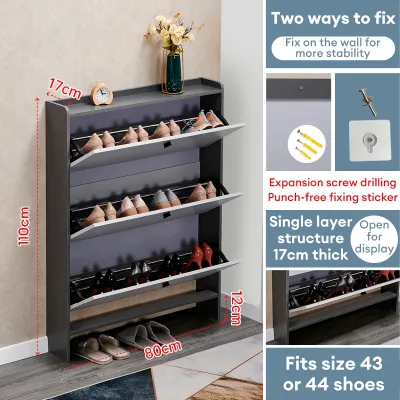
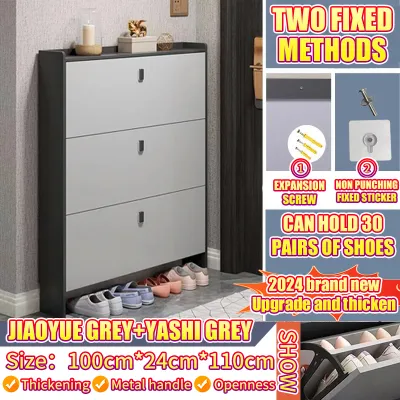
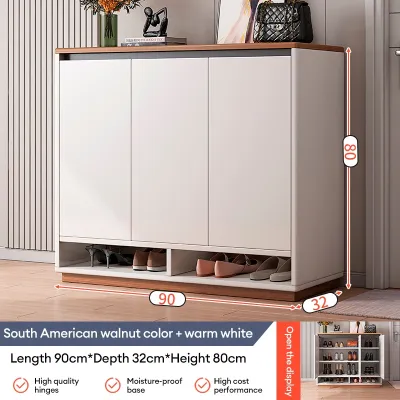
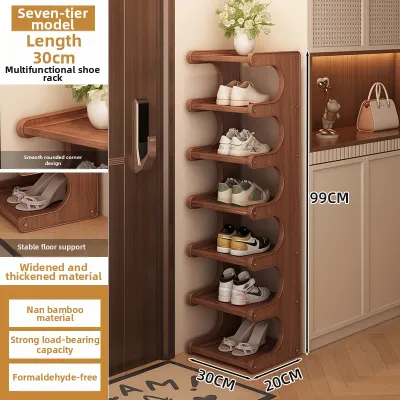
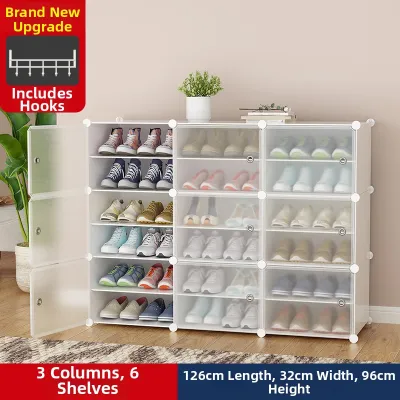
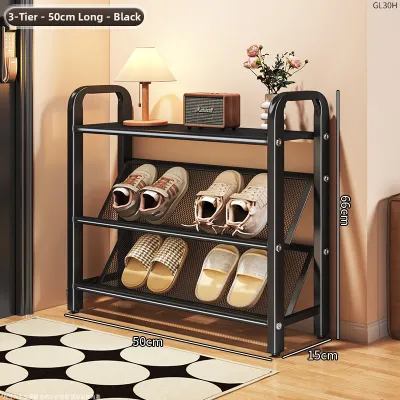
Prices are valid at publication and may change. Please refer to the product page for the latest price.
Another critical factor is planning for future collection growth. Selecting a cabinet that exactly matches your current inventory often leads to immediate overflow the moment you purchase a new pair of shoes or welcome a new family member. Aim to choose a storage solution that offers at least 20% to 30% more capacity than your current baseline. This buffer helps keep your entryway organized and prevents shoes from being piled haphazardly on top of the cabinet or on the floor.
Decoding Slim Shoe Rack Cabinet Dimensions and Capacity
Slim shoe cabinets are specifically engineered to minimize floor footprint, typically featuring depths ranging from a mere 15 cm to 24 cm. To achieve this ultra-thin profile, manufacturers rely on specialized internal mechanisms rather than traditional flat shelves. The most common design is the tilt-out compartment, where shoes are stored vertically or diagonally and swing outward when opened. While highly space-efficient, these compartments inherently limit the height and length of the shoes they can accommodate.

Traditional hinged-door cabinets with flat shelves require a depth of at least 30 cm to 35 cm to store adult shoes straight-on. When you drop down to a slim profile, standard shelves must either be slanted downward or replaced entirely with tilt-out drawers. If you choose a model with slanted shelves, check whether the shelves are adjustable or removable. Fixed dividers can severely restrict your options, preventing you from storing anything taller than a standard low-top sneaker, whereas adjustable or removable partitions allow you to customize the interior to fit ankle boots or high heels.
When shopping, it is essential to cross-reference manufacturer pair-capacity specifications with your actual shoe sizes. Marketing materials often base their capacity claims on smaller shoe sizes, typically around an EU size 36 or 37, and often assume very flat profiles like ballet flats or flip-flops. If members of your household wear larger sizes, such as EU 43 and above, you may find that shoes must be placed sideways or at an angle, which can cut the advertised capacity of a tilt-out drawer in half. Always verify the maximum shoe length and height supported by the internal compartments before purchasing.
Space Planning and Clearance Checks for Slim Cabinets
Before purchasing a slim shoe rack cabinet, precise physical measurements of your intended installation area are vital. Begin by measuring the available wall width and floor depth, taking into account nearby architectural features such as baseboards, light switches, electrical outlets, and door frames. Ensure that the cabinet will not obstruct the natural flow of traffic through the hallway or entryway, and verify that adjacent doors can swing fully open without striking the furniture.
Operational clearance is another critical factor that is easily overlooked. A tilt-out cabinet may only occupy 18 cm of depth when closed, but the drawers require significant front clearance when fully extended. Measure the walkway space in front of the cabinet to ensure that family members can comfortably open the compartments and retrieve their shoes without being forced to squeeze against the opposite wall. This is particularly important in narrow corridors or entryways where space is at a premium.
Due to their tall, shallow profiles, slim shoe cabinets have a high center of gravity and can easily become unstable when multiple drawers are opened simultaneously or when heavy shoes are stored in the upper compartments. To prevent tip-over accidents, especially in homes with active children or pets, these cabinets must be securely anchored to the wall. Check the manufacturer’s installation instructions to confirm the required mounting hardware and ensure your wall material—whether concrete, drywall, or brick—can safely support the anchored unit.
Strategies to Maximize Slim Cabinet Storage
To get the most out of a slim cabinet’s limited interior, you can employ several simple organization strategies. Utilizing adjustable internal shelves or adding aftermarket tiered shoe slots can double the usable vertical space for flat shoes, sandals, and slippers. These plastic inserts allow you to stack one shoe directly above the other without them touching, effectively reclaiming lost vertical space within a single compartment.
Another highly effective approach is to implement a strict rotation system. A slim entryway cabinet should be treated as prime real estate reserved exclusively for high-frequency footwear. Off-season shoes, formal wear, and bulky boots should be cleaned and stored in alternative locations, such as under-bed storage boxes, wardrobe organizers, or a secondary closet. By keeping only your daily essentials in the entryway, you prevent the slim cabinet from becoming overcrowded and difficult to use.
Enclosed, narrow cabinets are highly susceptible to trapping moisture and stagnant air, which can lead to unpleasant odors and mold growth, particularly in warm, humid climates. To maintain a fresh environment, look for cabinets with built-in ventilation slots, open backs, or slatted doors that promote natural airflow. Additionally, make it a habit to let your shoes air out completely after wearing them before placing them inside the enclosed cabinet, and place small moisture-absorbing sachets or charcoal deodorizers on the shelves to manage humidity levels.
Frequently Asked Questions (FAQ)
Can a slim shoe rack cabinet hold heavy boots?
Slim shoe cabinets are generally not designed for heavy or tall boots due to their shallow depth and limited vertical clearance. Standard tilt-out compartments usually cannot accommodate the height of ankle or knee-high boots without bending the shafts, which can damage the footwear. If you must store boots, look for a model with adjustable or removable internal dividers, and always check the manufacturer’s specified load capacity to ensure the shelves and hinges can support the extra weight without sagging or warping.
How do I prevent odors in an enclosed slim shoe cabinet?
Preventing odors in a narrow, enclosed cabinet requires active moisture management and routine care. Never place damp or freshly worn shoes directly into the cabinet; allow them to air dry completely in a well-ventilated area first. You can also place activated charcoal bags, silica gel packets, or cedar blocks inside the compartments to absorb excess moisture and neutralize odors. Regularly wiping down the interior shelves with a mild, damp cloth and leaving the cabinet doors open for a few hours every week will also help keep the storage space fresh.

Community discussion
Share your experience or ask a question. Comments are reviewed before publication.