
A slim shoe cabinet is an exceptional space-saving solution for tight entryways, but its actual storage capacity rarely matches the generous numbers printed on the packaging. While a manufacturer might advertise a capacity of 18 pairs, a realistic household mix of sneakers, heels, and boots often reduces that number to 10 or 12 pairs. Understanding how these cabinets are measured and how your specific footwear fits inside is the key to choosing a unit that keeps your entryway organized and free of clutter.
To avoid the frustration of buying a cabinet that cannot fit your shoes, you must look past the marketing headlines. By analyzing the internal dimensions, understanding the mechanics of different cabinet styles, and auditing your personal shoe collection, you can accurately predict exactly how many pairs will fit inside before making a purchase.
Understanding Advertised vs. Realistic Shoe Capacity
When furniture manufacturers calculate the shoe capacity of a slim cabinet, they almost always use a best-case scenario benchmark. This standard typically assumes small, low-profile, and flexible footwear, such as flat sandals, canvas plimsolls, or women’s ballet flats in smaller sizes. These shoes can be compressed slightly and have a very low vertical profile, allowing them to slide easily into tight compartments.
Products mentioned in this guide
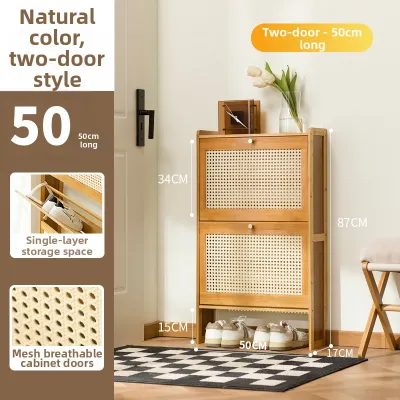
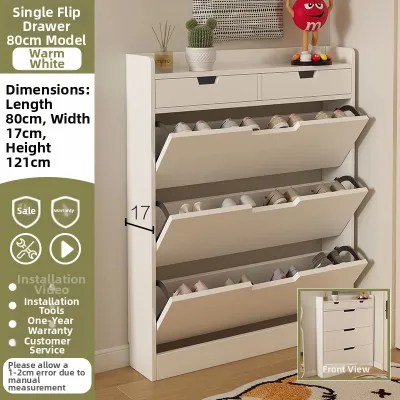
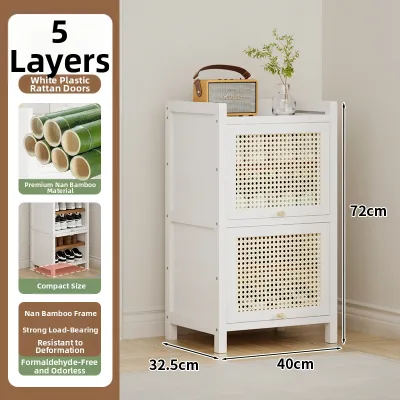
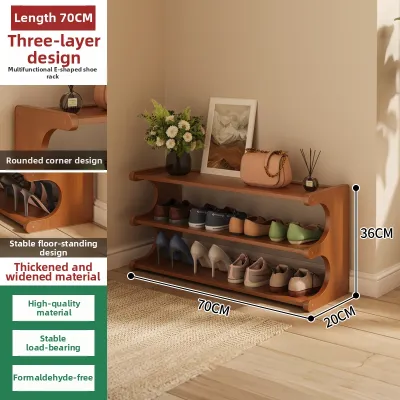
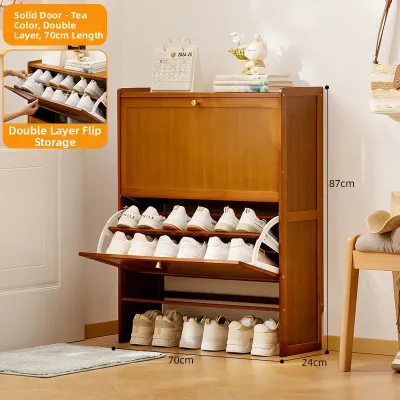
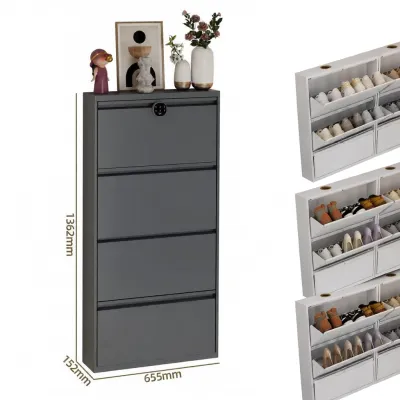
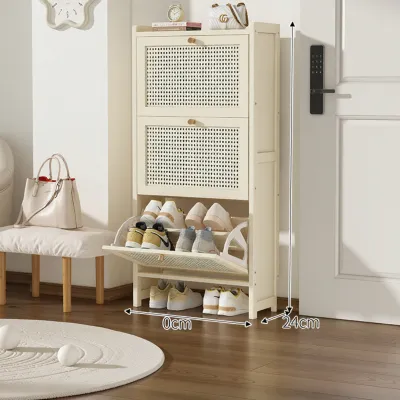
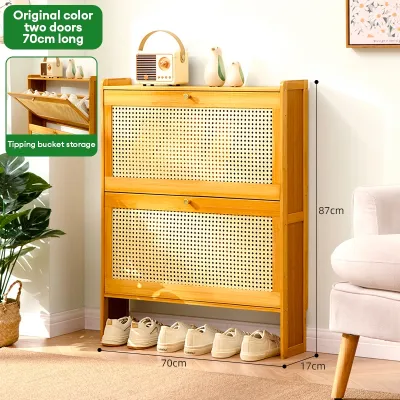
Prices are valid at publication and may change. Please refer to the product page for the latest price.
Real-world footwear collections are rarely so uniform. Bulky running shoes with thick cushioned soles, high-top basketball sneakers, wide-soled trainers, and structured leather dress shoes occupy significantly more physical volume. A single pair of wide running shoes can easily take up the horizontal space of one and a half pairs of standard flats, instantly throwing off the manufacturer’s advertised capacity.
Furthermore, shoe size plays a massive role in usability. Many slim cabinets are designed around average shoe sizes, often capping out at a European size 41 or 42. If anyone in your household wears larger sizes, their shoes may not fit straight inside the cabinet. You might have to place them at an angle, which immediately reduces the total number of pairs you can store on that shelf.
Instead of relying on the total pair count listed in product descriptions, make it a habit to look for the detailed internal schematics. Knowing the exact width, depth, and height of each individual compartment is the only reliable way to determine if your specific shoes will fit without being crushed or bent out of shape.
Key Dimensions That Dictate Storage Limits
To calculate your realistic storage capacity, you need to understand three critical physical measurements of any slim shoe cabinet: interior depth, shelf height clearance, and total interior width.

Interior Depth and Shoe Orientation
Standard flat-lay shelves require an interior depth of at least 30 to 33 centimeters to store adult shoes facing directly forward. True slim shoe cabinets, however, often feature an external depth of just 15 to 24 centimeters. To achieve this ultra-narrow footprint, these cabinets must alter how the shoes are oriented inside.
- Angled Shelves: Some slim cabinets use fixed shelves tilted downward at a 30- to 45-degree angle. This allows the cabinet to remain shallow while still accommodating longer shoes, though it reduces the vertical clearance available for the row below.
- Tilt-Out Compartments: Other designs use pivoting drawers where shoes are inserted vertically into pockets. When the drawer is closed, the shoes tilt upright. This is the slimmest option available, but it strictly limits the thickness and height of the shoes you can insert.
Shelf Height Clearance
Fixed shelves inside a narrow cabinet can be highly restrictive, often offering a clearance of only 12 to 15 centimeters. While this height is perfectly adequate for low-top sneakers and loafers, it will not accommodate ankle boots, high-top sneakers, or high heels.
When shopping, look for cabinets that feature adjustable or removable internal shelves. This flexibility allows you to customize the vertical space, though removing a shelf to accommodate taller shoes will naturally reduce the overall pair capacity of the unit.
Total Interior Width
To estimate how many pairs can sit side-by-side on a single shelf, you must compare the cabinet’s internal width with the width of your shoes. On average, a pair of men’s shoes requires about 20 to 24 centimeters of horizontal space, while a pair of women’s shoes requires roughly 18 to 22 centimeters.
If a cabinet has an internal shelf width of 60 centimeters, you can comfortably fit three pairs of average-sized shoes per row. If the width is 75 centimeters, you might manage three pairs of bulky sneakers or four pairs of slim sandals. Always divide the internal width by your average shoe pair width to get an accurate estimate.
Calculating Your Required Capacity Before Buying
Before browsing online marketplaces or visiting a furniture showroom, take a systematic inventory of the shoes you plan to store in the entryway. This prevents you from buying a cabinet that is either too small for your daily needs or too large for your space.
First, categorize your active shoe collection into three distinct groups based on their physical profiles:
- Low-Profile: Sandals, slippers, flip-flops, and flat slip-ons.
- Medium-Profile: Standard leather shoes, low-top sneakers, and loafers.
- High-Profile: High heels, high-top sneakers, platform shoes, and boots.
Next, measure a representative pair from each category. Note the maximum height of your tallest heels and the maximum length of your largest household shoe size. Compare these measurements directly against the internal compartment dimensions of the cabinet you are considering.
Finally, always plan for a capacity buffer. Do not buy a cabinet that fits your current collection exactly to the single pair. Aim for a unit that offers 15% to 20% more capacity than your current active collection. This extra space accommodates future purchases and provides temporary storage for guests’ shoes, preventing your entryway floor from becoming cluttered during social gatherings.
Space and Installation Checks for Slim Cabinets
Because slim shoe cabinets are designed for tight, high-traffic areas like corridors and entryways, physical installation checks are just as important as capacity calculations.
Start by measuring your entryway footprint carefully. Beyond the static width and depth of the cabinet, you must account for the clearance required to operate it. If you choose a tilt-out model, measure the distance the drawer extends outward when fully open. Ensure there is still ample walkway space for people to pass by comfortably without bumping into the open drawers.
Safety is a paramount consideration for any tall, narrow furniture piece. Because slim cabinets have a very shallow base (often under 24 centimeters) and a high center of gravity, they are highly susceptible to tipping over when multiple drawers are pulled open simultaneously.
To prevent tipping hazards, especially in homes with children or pets, these units must be securely anchored to the wall. Before purchasing, check the manufacturer’s anchoring specifications and inspect your walls. Concrete, brick, and drywall require different types of wall plugs and mounting hardware to ensure a stable, secure hold.
Additionally, check your baseboard dimensions. Many high-quality slim cabinets feature a recessed back cutout at the bottom, allowing the unit to sit completely flush against the wall over the baseboard. Measure the height and thickness of your baseboards to ensure the cabinet’s cutout will accommodate them.
Lastly, verify that your floor is perfectly level. Even a minor slope in an entryway can cause a tall, narrow cabinet to lean, which can misalign the doors or cause tilt-out drawers to bind during operation. Use a spirit level during installation and use shims or adjustable feet if necessary to keep the unit perfectly upright.
In humid climates, such as in Singapore, closed slim cabinets can trap moisture and sweat from worn shoes, leading to mold growth and unpleasant odors. When selecting a cabinet, prioritize models with built-in ventilation features, such as louvered doors, open backs, or dedicated ventilation metal grommets, to maintain consistent airflow around your footwear.
Frequently Asked Questions (FAQ)
Can I store high heels or boots in a standard slim shoe cabinet?
Storing high heels and boots in a standard slim cabinet is possible, but it requires careful planning. Standard tilt-out compartments and shallow, fixed shelves are generally designed for flat shoes and will not accommodate heels over 8 centimeters or boots with tall, stiff shafts.
To store these items successfully, look for a slim cabinet that features removable internal dividers or adjustable shelves. Removing a divider in a tilt-out drawer often creates a deeper pocket that can hold taller shoes, though this will reduce the total number of pairs you can store. Alternatively, you can store ankle boots sideways on their shafts, or reserve the bottom shelf of a ventilated cabinet specifically for taller footwear.
Does a tilt-out slim shoe cabinet hold fewer shoes than standard shelves?
Yes, a tilt-out slim shoe cabinet generally holds fewer shoes than a standard flat-shelf cabinet of the exact same external dimensions. The pivoting, angled brackets and internal dividers of a tilt-out mechanism occupy a significant amount of internal volume, leaving less usable space for the shoes themselves.
However, the primary advantage of a tilt-out design is its incredibly shallow depth footprint. While a standard flat-shelf cabinet requires at least 30 centimeters of depth to store shoes straight, a tilt-out cabinet can function in spaces as narrow as 17 centimeters. If your entryway is exceptionally tight, sacrificing a few pairs of capacity for a flush, walk-friendly profile is often the most practical compromise.

Community discussion
Share your experience or ask a question. Comments are reviewed before publication.