
When setting up a compact home workspace, choosing the right slim office chair requires balancing spatial efficiency with daily comfort. There is no single “best” brand for every setup; the ideal choice depends on whether your priority is maximum desk clearance, all-day ergonomic adjustability, or long-term structural durability. Evaluating popular slim office chair brands involves looking past aesthetic marketing and analyzing concrete specifications: the physical footprint, the adjustability of the lumbar support, the certification of the gas lift, and the adaptability of the armrests. By focusing on these verifiable design elements, you can find a chair that fits both your physical room constraints and your posture needs without compromising on quality.
In Singapore’s compact apartments, such as HDB flats or condominiums, study corners are often carved out of bedrooms or living room alcoves. A bulky executive chair can easily overwhelm these spaces, blocking walkways and preventing drawers from opening. A slim office chair solves this spatial puzzle, but only if you carefully measure your workspace and understand how different mechanical profiles affect your daily comfort.
Identifying Your Space Constraints and Posture Requirements
Before browsing online marketplaces or visiting local furniture showrooms, you must establish the exact physical boundaries of your home office. Start by measuring your desk’s clear width between the legs, as this determines the maximum width of the chair base and armrests. Many homeowners overlook the under-desk height limit; if your desk has a drawer unit or a thick support beam, you need to know the maximum height a chair’s armrests can reach while still sliding completely underneath.
Products mentioned in this guide
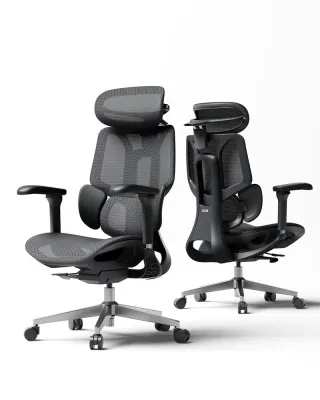
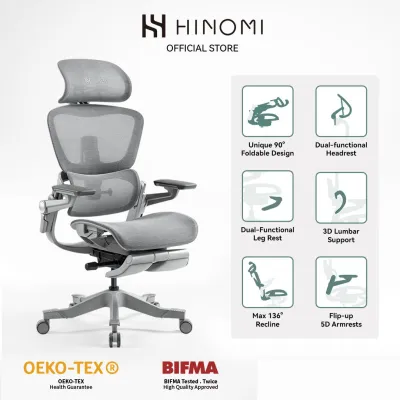
![[NEW LAUNCH] Hinomi Q2 Pro Ergonomic Office Chair Adjustable Lumbar Support Memory Foam Headrest Armrest Legrest](https://img.lazcdn.com/g/p/0b7241fcc12b459ca71f9ff200c641b3.jpg_400x400q80.jpg_.webp)
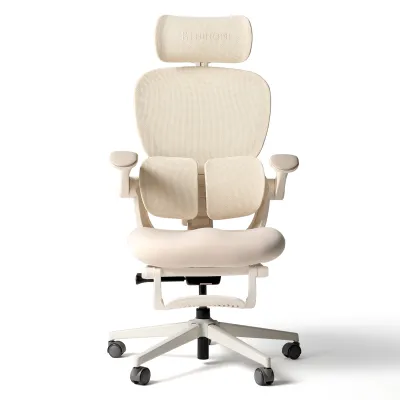
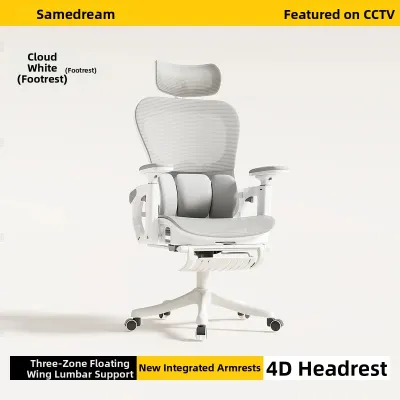
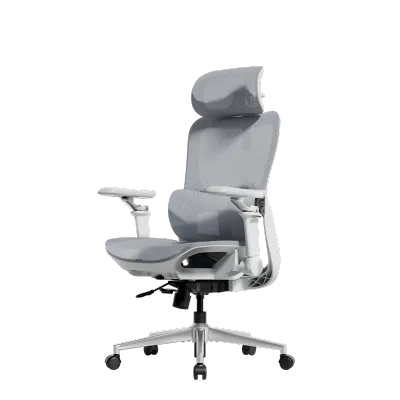
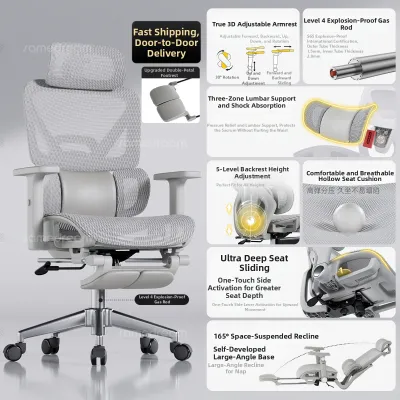
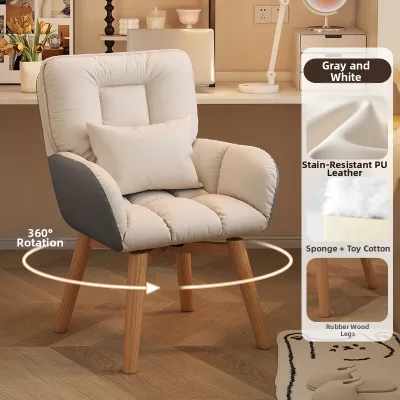
Prices are valid at publication and may change. Please refer to the product page for the latest price.
Walkway clearance is another critical factor in tight layouts. Measure the distance from the edge of your desk to the nearest wall, wardrobe, or bed behind you. A slim chair should allow you to push back comfortably to stand up without striking other furniture. If your workspace is located in a high-traffic corridor of your home, a chair with a smaller base diameter will prevent tripping hazards and keep the path clear for family members.
Do not forget to measure the entry path to your workspace. If a slim chair arrives fully assembled, it must pass through your front door, hallway, and bedroom door frame. In multi-story homes or apartment blocks, verify the elevator door clearance and cabin depth. While most flat-packed chairs are easy to transport, knowing these dimensions beforehand prevents delivery day complications.
Your daily sitting habits dictate the level of ergonomic support your slim chair must provide. If you only use the workspace for an hour or two of casual browsing or bill paying, a basic model with fixed support may suffice. However, if you work from home for eight or more hours a day, you require a highly adjustable slim chair that actively supports your spine, promotes dynamic movement, and prevents fatigue.
Comparing Space-Saving Footprints and Design Profiles
The design profile of a slim office chair is defined by how efficiently it occupies space while maintaining basic stability. Armrest configurations play a major role in this spatial footprint. Fixed slim arms offer consistent support but can prevent the chair from sliding under low desks, forcing the chair to protrude into the room when not in use.

Flip-up armrests provide an excellent compromise for compact study corners. These arms can be rotated upward and out of the way, allowing the chair to slide fully under the desk surface to maximize walkway space. Alternatively, armless designs offer the absolute minimum physical footprint, making them ideal for exceptionally narrow desks, though they offer less upper-body support during long typing sessions.
The base and caster spread of the chair determines its stability and floor footprint. A standard five-star base must have a wide enough diameter to prevent tipping, but some slim models optimize this by using flatter, low-profile base designs. When selecting casters, consider your flooring material; hard nylon casters are suitable for carpets, while soft polyurethane-coated casters are essential for protecting delicate vinyl, laminate, or parquet flooring in Singapore homes.
Backrest thickness and recline clearance are often ignored until the chair is placed against a wall. Some slim chairs feature ultra-thin mesh backrests that require very little clearance when upright. However, if the chair has a deep recline function, you must check how far the backrest tilts backward. If the pivot point is poorly designed, you may have to pull the entire chair far away from the wall, defeating the purpose of a space-saving design.
Evaluating Build Quality and Structural Stability
A slim profile should never mean flimsy construction. To ensure your safety and the longevity of your investment, you must verify the structural integrity of any chair you consider. Start by checking the frame materials listed in the manufacturer’s specifications. High-quality slim chairs typically utilize glass-fiber reinforced polymers or cast aluminum for their load-bearing components, which offer high strength without adding bulk.
Gas lift cylinders are the most critical safety component of any office chair. Look for industry-standard safety certifications on the product label or user manual, such as SGS or BIFMA compliance. A Class 3 or Class 4 gas lift indicates that the cylinder has undergone rigorous pressure and durability testing, ensuring it can safely support daily height adjustments over several years.
Inspect the joint and connection points of the chair, particularly where the seat pan connects to the gas lift mechanism. On cheaper models, this connection plate is often thin stamped steel, which can flex or squeak over time. Look for heavy-duty steel mounting plates and secure, multi-bolt fastening systems. The armrest mounting brackets should also be bolted directly into the internal steel frame of the seat pan rather than just the plastic underside.
Weight capacity ratings provide a clear indication of structural limits. While a slim chair is designed to look lightweight, a well-engineered model should still support a substantial load, often up to 120 kg or more. If a manufacturer does not clearly state the weight capacity or safety certifications of their chair, treat it as a warning sign of substandard build quality.
Assessing Ergonomic Adjustability in Compact Forms
Fitting ergonomic features into a slim frame is a significant engineering challenge. The most critical adjustment is seat height, which must align with both your inseam measurement and your desk height. When sitting, your feet should rest flat on the floor with your knees bent at a 90-degree angle, and your forearms should rest parallel to the desk surface without forcing your shoulders to shrug.
Seat depth adjustment is another vital feature that is often missing from basic slim chairs. A proper seat slider allows you to adjust the distance between the front edge of the seat and the backrest. This ensures that your thighs are fully supported without the seat pressing against the back of your knees, which can restrict blood circulation during long working hours.
Lumbar support mechanisms in slim chairs must be carefully evaluated. Some models rely on a fixed ergonomic curve molded into the backrest frame, which only works if your height matches the manufacturer’s target demographic. Adjustable lumbar pads, which can be moved vertically or adjusted for depth, are far superior because they allow you to position the support precisely in the curve of your lower spine.
Tilt tension and locking functions allow you to recline comfortably while maintaining balance. In a slim chair, the center of gravity is often tighter than in a bulky executive chair. A well-designed tilt mechanism will allow you to adjust the resistance of the recline to match your body weight, preventing a sudden backward drop while ensuring the chair remains stable and grounded.
Decision Framework: Choosing the Right Slim Chair Profile
To select the ideal slim office chair for your home, you must weigh your spatial limitations against your physical comfort requirements. If your primary goal is to keep your study corner as tidy and unobstructed as possible, prioritize an armless model or a chair with flip-up armrests. This configuration allows you to tuck the chair completely away, keeping your walkways clear when you are not working.
If you spend long hours at your desk and suffer from back or shoulder strain, do not sacrifice adjustability for a slightly smaller footprint. Choose a slim chair that features fully adjustable armrests, a seat depth slider, and dedicated lumbar support. While this profile may require a slightly larger footprint and may not slide fully under every desk, the ergonomic benefits during a long workday are essential for your physical well-being.
Always verify your flooring compatibility before finalizing your purchase. If your home has polished timber or delicate vinyl flooring, ensure the chair comes with soft casters or plan to purchase compatible aftermarket polyurethane wheels. Using the wrong casters can lead to permanent scratches and scuffs that are costly to repair.
Keep in mind that slim chairs have inherent design limitations. If your setup requires a heavy-duty weight capacity, an extra-wide seat pan, or a deep recline for napping, a slim profile will not meet your needs. In these cases, it is better to reconfigure your workspace layout to accommodate a standard-sized ergonomic chair rather than forcing a slim model to perform beyond its structural limits.
Frequently Asked Questions (FAQ)
How do I clean and maintain the mesh or fabric on a slim chair?
To maintain the appearance and hygiene of your slim chair, always start by checking the manufacturer’s care label for specific cleaning codes and restrictions. For regular maintenance, use a vacuum cleaner with a soft brush attachment to gently remove dust, skin flakes, and pet dander from the mesh pores or fabric weave. This prevents debris from becoming embedded in the fibers over time.
For spot cleaning spills or stains, mix a small amount of mild liquid detergent with lukewarm water. Dampen a clean microfiber cloth with the solution and gently blot the stained area; avoid rubbing vigorously, as this can fray the fabric or stretch the mesh. Once the stain is lifted, wipe the area with a damp cloth to remove soap residue, and allow the chair to air dry completely in a well-ventilated room before sitting on it again.
Can I add aftermarket armrests to an armless slim office chair?
Before attempting to add aftermarket armrests, inspect the underside of the seat pan to see if the manufacturer has provided pre-drilled holes or threaded metal inserts. Some brands use the same seat base for both armed and armless versions of their chairs, making it easy to bolt on official replacement armrests later. If these mounting points exist, you can safely purchase compatible armrests from the original manufacturer.
If there are no pre-drilled holes, do not attempt to drill into the plastic or wood seat base yourself. Doing so can severely compromise the structural integrity of the seat pan, risk cracking the frame, and will void any remaining manufacturer warranty. Instead, consider using clamp-on desk armrests that attach directly to your tabletop, providing the necessary forearm support without modifying your chair.

Community discussion
Share your experience or ask a question. Comments are reviewed before publication.