
Selecting the right sliding door storage cabinet or wardrobe for a Singapore HDB bedroom requires balancing tight floor areas with storage volume. Because standard HDB common rooms and master bedrooms have rigid structural layouts, choosing between modular retail brands and custom built-in carpentry depends on your specific room dimensions, budget, and long-term housing plans. A sliding door system is highly favored in these compact spaces because it eliminates the need for door-swing clearance, allowing you to place your bed or other furniture closer to the wardrobe. However, finding a brand that fits your specific layout requires a clear understanding of local spatial constraints, material durability, and hardware specifications.
To make an informed investment, you must evaluate how different brands design their systems to handle the unique challenges of Singapore’s climate and housing designs. From track mechanisms that resist humidity-induced warping to modular configurations that fit neatly under standard ceiling heights, the right wardrobe should optimize every square centimeter of your bedroom. This guide provides a comprehensive framework to help you measure your space, compare brand offerings, and select a sliding door wardrobe that delivers long-term functionality.
Understanding HDB Bedroom Dimensions and Sliding Door Clearances
Standard HDB bedroom dimensions have evolved over the years, with newer Build-To-Order (BTO) flats generally featuring more compact layouts than older estates. A typical modern HDB common room measures approximately 9 to 10 square meters, while master bedrooms usually range from 12 to 14 square meters. In these tight spaces, every centimeter of floor space is highly contested. A standard swing-door wardrobe requires at least 50cm to 60cm of clear space in front of it just to open the doors, which often forces homeowners to compromise on bed size or bedside table placement. A sliding door storage cabinet solves this issue by operating entirely within its own footprint.
Products mentioned in this guide
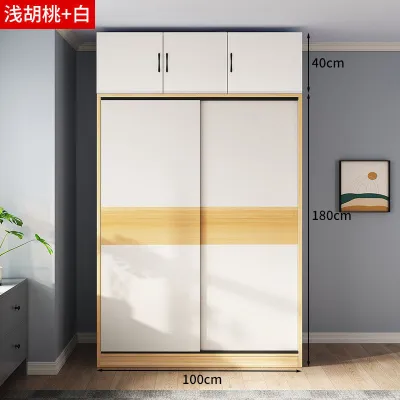

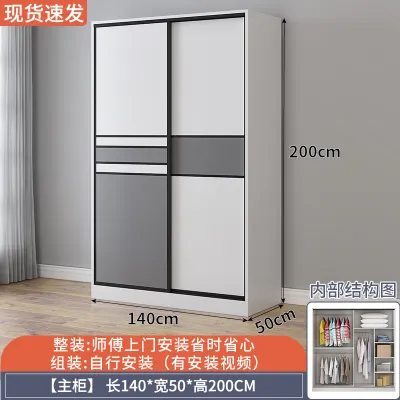
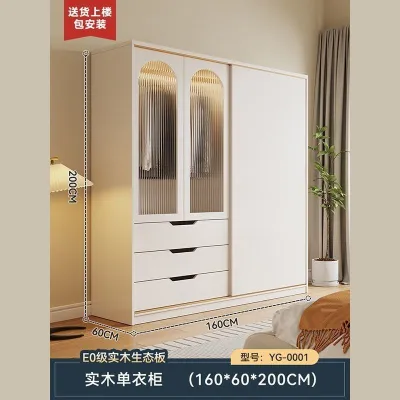
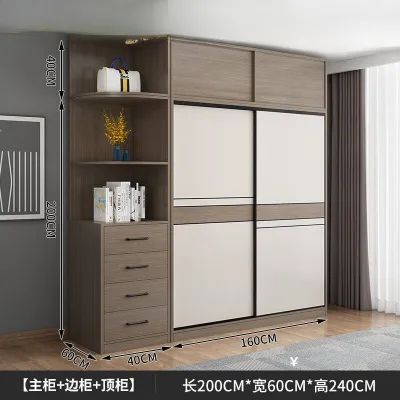
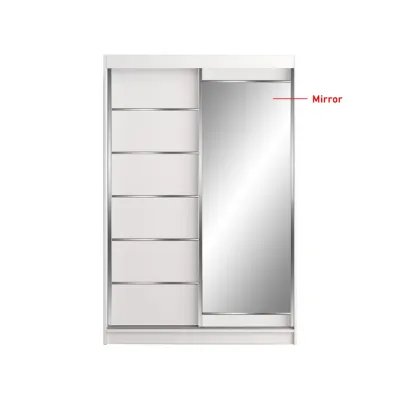
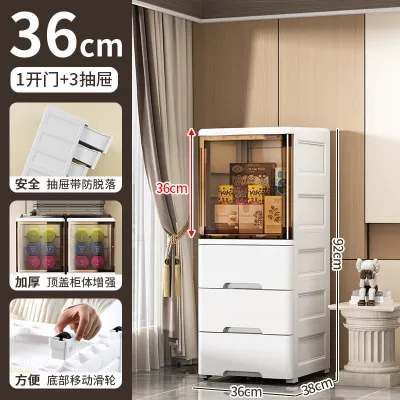
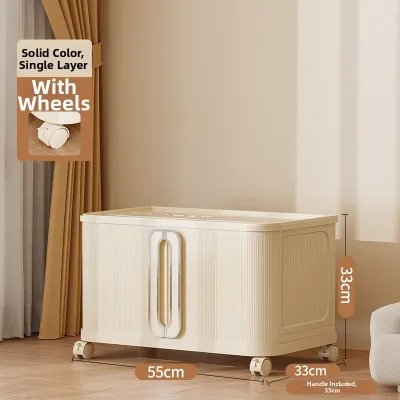
Prices are valid at publication and may change. Please refer to the product page for the latest price.
However, sliding door wardrobes have their own unique depth requirements that you must account for during planning. While a standard wardrobe interior requires a depth of at least 55cm to accommodate clothes hangers comfortably without creasing garments, the sliding door track system itself adds to the overall exterior depth. Most sliding door tracks require an additional 5cm to 10cm of depth to accommodate the overlapping door panels. Consequently, the total exterior depth of a sliding door wardrobe typically ranges from 60cm to 65cm. If your bedroom layout only allows for a shallower wardrobe, you may need to look for brands that offer pull-out transverse hanging rods, which allow clothes to hang facing forward rather than sideways.
Measuring your available wall space in an HDB bedroom is rarely as simple as running a tape measure from corner to corner. You must account for several structural obstacles that are common in local flats. Skirting boards along the base of the walls can prevent freestanding wardrobes from sitting completely flush, leaving a gap where dust can accumulate. Furthermore, you must identify the locations of power sockets, light switches, and internet ports to ensure they remain accessible or are properly relocated before installation. Air-conditioner trunking and ledges are another major consideration; if the copper pipes run along the wall where you plan to place your wardrobe, you will need a brand that can customize the back panel or top of the unit to bypass the trunking safely.
Key Criteria for Evaluating Wardrobe Brands in Singapore
When shopping for a sliding door wardrobe in Singapore, the first major decision is choosing between modular retail brands and custom carpentry providers. Modular brands offer pre-designed wardrobe systems with standardized widths (typically in increments of 50cm or 100cm) and heights. These systems are highly cost-effective and can be delivered and assembled quickly. On the other hand, custom carpentry brands build the wardrobe from scratch to fit your exact wall-to-wall and floor-to-ceiling dimensions. While custom options maximize every inch of space, they come with longer lead times and a higher price tag. Evaluating your budget against your storage needs will help you decide which brand category to focus on.

Hardware quality is the single most critical factor determining the lifespan of a sliding door wardrobe. Because these doors are opened and closed multiple times a day, the track and roller mechanisms experience significant wear and tear. When visiting showrooms, closely inspect the track materials and roller designs. High-quality brands use thick aluminum or steel tracks that resist bending under the weight of heavy doors. The rollers should feature sealed ball bearings made of durable nylon or steel, which ensure smooth, quiet gliding. Avoid brands that use cheap plastic rollers without bearings, as these are highly prone to cracking, flattening, and jumping off the tracks over time.
After-sales support and warranty coverage are essential indicators of a brand’s reliability. A wardrobe frame may last for decades, but the moving parts—such as the sliding tracks, soft-close dampers, and door alignment brackets—are much more vulnerable to failure. Before making a purchase, ask the brand about their specific warranty terms for moving hardware. Some reputable brands offer extended warranties on their sliding mechanisms, while others only cover structural defects in the wooden panels. Additionally, inquire about installation lead times and delivery fees. Flat-pack modular brands can often deliver within a week, whereas semi-custom or fully custom local brands may require two to six weeks for fabrication and installation.
Custom Built-In vs. Freestanding Sliding Door Storage Cabinets
Custom built-in sliding door wardrobes are highly effective at maximizing the vertical and horizontal space of an HDB bedroom. Because they are fabricated to fit your specific room, they can extend all the way to the ceiling (typically 2.6 meters in standard HDB flats), leaving no empty space at the top to collect dust. This full-height design is ideal for storing seasonal items, luggage, and extra bedding that you do not need daily access to. Furthermore, custom carpentry can be designed to wrap around structural pillars, fit into awkward alcoves, or integrate seamlessly with other bedroom furniture like study desks or dressing tables. However, this level of customization is permanent; you cannot take the wardrobe with you if you move, and modifying the layout later requires costly demolition.
Freestanding sliding door storage cabinets offer excellent flexibility and convenience, making them highly suitable for tenants, temporary layouts, or homeowners on a tighter budget. These units are fully finished on all sides, allowing you to move them to different walls or even transport them to a new home in the future. Because they are mass-produced, freestanding wardrobes are significantly more affordable than custom carpentry and are available for immediate delivery. The main trade-off is that they rarely fit your bedroom dimensions perfectly. You will likely end up with unused gaps at the sides and a significant space between the top of the wardrobe and the ceiling, which can make a small bedroom feel more cluttered and require regular cleaning.
| Feature | Custom Built-In Wardrobes | Freestanding Sliding Cabinets |
|---|---|---|
| Space Optimization | Excellent (floor-to-ceiling, wall-to-wall) | Moderate (standardized heights and widths) |
| Flexibility | Permanent (cannot be moved or relocated) | High (can be repositioned or transported) |
| Installation Time | 2 to 6 weeks (fabrication and on-site assembly) | 1 to 7 days (immediate delivery and quick setup) |
| Cost Profile | Higher initial investment (per foot run pricing) | Budget-friendly (fixed retail pricing) |
| Aesthetics | Seamless integration with room architecture | Visible gaps at top, sides, and back |
Space-Saving Features to Look for in Sliding Door Designs
To get the most utility out of a sliding door storage cabinet in a compact HDB bedroom, you should look for brands that offer highly customizable internal configurations. Standard hanging rods and fixed shelves often leave a lot of wasted vertical space. Instead, opt for brands that feature adjustable shelving systems, allowing you to change the shelf heights as your storage needs evolve. Specialized pull-out accessories, such as trouser racks, shallow jewelry drawers, and wire baskets, help keep smaller items organized and easily accessible without taking up excess depth. If you have a corner wardrobe layout, look for brands that offer specialized corner carousels or L-shaped hanging rails to utilize otherwise unreachable corner space.
External design add-ons can further enhance the space-saving capabilities of your sliding door wardrobe. Many modern brands offer integrated mirror panels on the exterior of the sliding doors. This eliminates the need for a separate full-length standing mirror, freeing up valuable floor space elsewhere in the bedroom. Another clever design feature is the integration of side shelving units or bedside table extensions directly into the wardrobe frame. This creates a cohesive, streamlined look while ensuring that bedside essentials are kept within arm’s reach without requiring a separate, bulky nightstand that might block the wardrobe doors.
When comparing sliding door designs, pay close attention to the type of track system used: top-hung versus bottom-rolling. Top-hung systems suspend the weight of the doors from a heavy-duty top rail, with guide tracks at the bottom to keep the doors aligned. This design is highly desirable because it keeps the bottom track very low-profile or completely flush with the floor, making it much easier to clean and preventing dust and hair from clogging the mechanism. However, top-hung systems require a highly rigid top frame to support the weight of the doors. Bottom-rolling systems, where the door weight rests entirely on the bottom track, are easier to install and highly stable, but the deep bottom tracks tend to accumulate debris quickly and require regular vacuuming to maintain smooth operation.
Step-by-Step Measurement and Pre-Purchase Checklist
Before finalizing your wardrobe purchase or signing a contract with a carpentry brand, you must conduct precise measurements of your bedroom to avoid costly installation errors. Do not rely on the floor plans provided by HDB, as actual built dimensions can vary by several centimeters due to plastering and wall finishes. Follow this step-by-step guide to verify your site conditions:
- Measure the Width at Three Heights: Use a laser measure or a high-quality steel tape measure to record the width of the target wall at three different points: near the floor, at midpoint, and near the ceiling. Walls in HDB flats are rarely perfectly plumb, and a variance of even 1cm can prevent a tight-fitting modular wardrobe from sliding into place.
- Measure the Ceiling Height at Multiple Points: Measure the distance from the floor to the ceiling at both the left and right ends of the planned wardrobe location. If you are buying a tall freestanding unit, ensure there is at least 5cm to 10cm of clearance below the lowest ceiling point to allow the installers to upright the wardrobe frame during assembly.
- Check Wall Plumbness and Corners: Use a spirit level to check if your walls are perfectly vertical. If you are planning a wall-to-wall installation, check if the corners are a true 90-degree angle. Significant wall tilt will require custom filler panels to hide the gaps.
- Map Out Existing Fixtures: Mark the exact locations of skirting boards, air-con trunking, light switches, power outlets, window frames, and curtain tracks. Ensure the wardrobe doors can slide fully open without hitting any of these elements.
In addition to measuring the bedroom itself, you must verify the logistics of getting the wardrobe into your home. Many homeowners purchase large, pre-assembled wardrobe panels only to find that they cannot fit into the HDB passenger lift or navigate the tight corners of the stairwell. Measure the height, width, and diagonal depth of your estate’s lift door and interior cabin. If you live on a high floor and the wardrobe components are too large for the lift, you may face hefty manual carrying charges or be forced to return the item. Always confirm these delivery constraints with the brand’s logistics team before placing your order.
Finally, check for physical conflicts with other fixtures in the room. A common mistake is installing a tall sliding door wardrobe too close to a ceiling fan. If the wardrobe doors extend high up, they can interfere with the air circulation of the fan or, worse, make physical contact with the spinning blades. Ensure there is a safe clearance zone between the top edge of the wardrobe and the lowest point of the fan blades. Similarly, check that the wardrobe does not block the swing path of your bedroom door or the entry door to the master bathroom, as this can create daily frustration and safety hazards.
Frequently Asked Questions (FAQ)
Can I install a sliding door wardrobe if my HDB bedroom has a ceiling fan?
Yes, you can install a sliding door wardrobe in a room with a ceiling fan, but you must maintain a safe clearance distance. Standard HDB ceilings are about 2.6 meters high, and a typical wardrobe stands between 2.0 and 2.4 meters tall. You must measure the drop length of your ceiling fan to ensure that the spinning blades have at least 50cm of horizontal clearance from the front face of the wardrobe. If the space is too tight, consider replacing the ceiling fan with a low-profile, hugger-style fan, or opt for a slightly shorter wardrobe model that leaves ample vertical clearance for air movement.
Are top-hung or bottom-rolling sliding doors better for HDB bedrooms?
Both systems have distinct advantages depending on your priorities. Top-hung sliding doors are generally preferred for modern HDB bedrooms because they do not require a deep bottom track, which minimizes dust accumulation and makes floor cleaning much easier. They also offer a sleeker, more seamless appearance. However, they require a very sturdy wardrobe frame or wall structure to support the suspended weight. Bottom-rolling systems are highly stable, less expensive, and put no structural load on the top frame, making them a reliable choice for budget-friendly freestanding wardrobes, though they do require regular track cleaning to prevent derailment.
How do I prevent sliding doors from derailing in a humid climate?
Singapore’s high humidity can cause wood-based door panels to absorb moisture and warp slightly over time, which is a primary cause of door derailment. To prevent this, choose brands that use high-density engineered wood, plywood, or aluminum-framed glass doors, as these materials are highly resistant to moisture-induced warping. Additionally, ensure the wardrobe is equipped with anti-jump blocks—small plastic or metal tabs on the rollers that lock them into the track. Regularly vacuum the bottom tracks to remove dust, hair, and debris, and apply a silicone-based lubricant to the rollers once a year to maintain smooth, effortless gliding.

Community discussion
Share your experience or ask a question. Comments are reviewed before publication.