
Determining how many pairs of shoes can fit inside your HDB wardrobe depends on matching your footwear collection to the precise dimensions of your storage setup. A standard built-in wardrobe compartment in Singapore typically measures between 80 cm and 100 cm in width and 50 cm to 60 cm in depth. Within this space, a well-planned layout using individual shoe cases can comfortably hold anywhere from 12 to 24 pairs of shoes, depending on the case sizes and how efficiently you stack them.
To achieve the highest storage density without damaging your footwear or your wardrobe, you must calculate capacity based on actual physical measurements rather than guesswork. Selecting the right shoes case involves analyzing the height, width, and depth of your wardrobe shelves, understanding the storage requirements of different shoe styles, and choosing compatible case designs. This guide provides a step-by-step framework to help you measure your space, select the ideal case sizes, and organize your collection for maximum accessibility.
Assessing Your HDB Wardrobe Dimensions
Before purchasing any shoe cases, you must obtain precise measurements of the internal compartments of your wardrobe. Use a metal measuring tape to record the exact width, depth, and height of each individual shelf. Built-in wardrobes often have slight structural variations, so measuring each compartment independently prevents fitting issues later.
Products mentioned in this guide
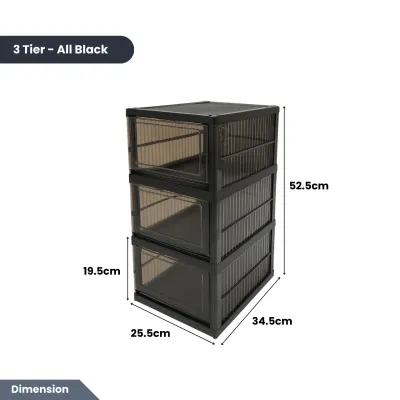
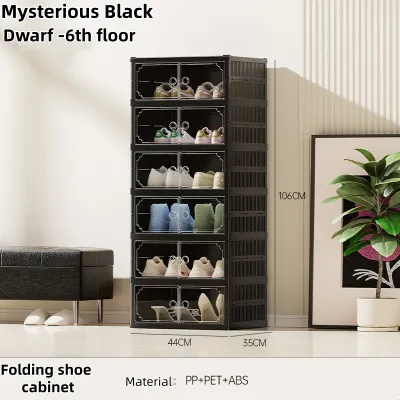
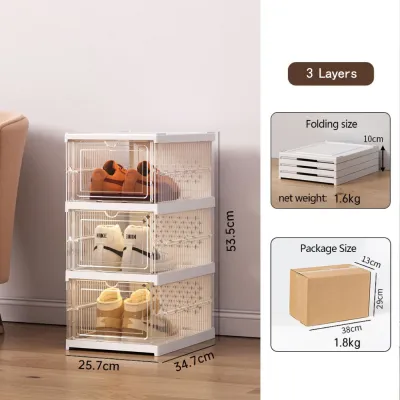
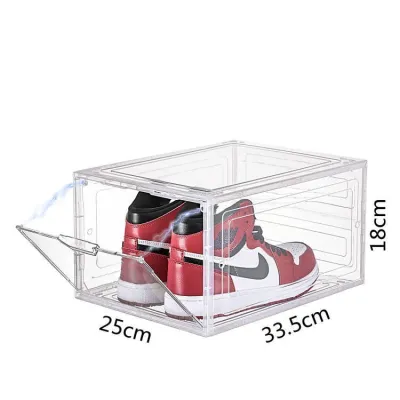
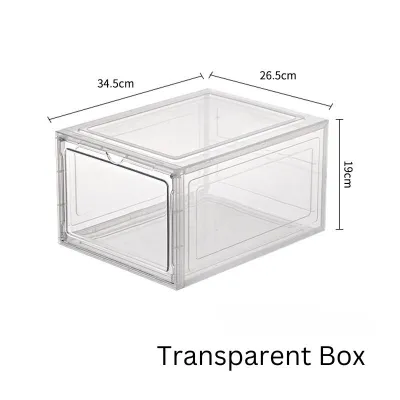
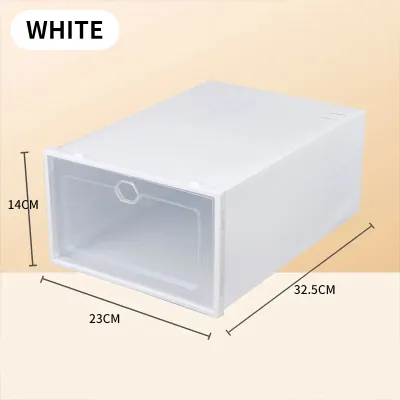
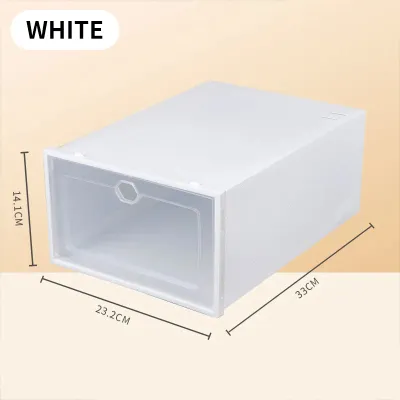
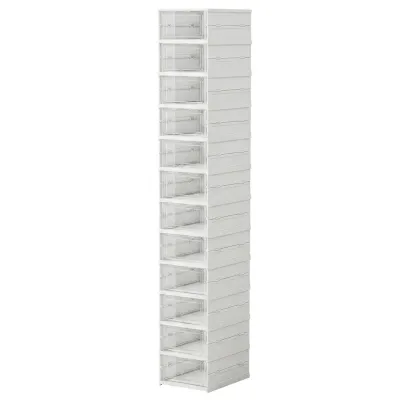
Prices are valid at publication and may change. Please refer to the product page for the latest price.
When calculating the usable width and depth, you must deduct any physical obstructions that could block a shoe case. Look closely at the placement of door hinges, protruding shelf support pins, and built-in drawer runners. If your wardrobe features sliding doors, measure the usable depth from the back wall to the inner edge of the sliding door track, as the doors require clear clearance to glide smoothly.
Vertical space also requires careful inspection. Check if your wardrobe utilizes adjustable shelf pins, which allow you to customize the height of each compartment. If the shelves are adjustable, you can reposition them to match the exact height of your stacked shoe cases, eliminating wasted vertical space. If the shelves are fixed, you must work within those rigid boundaries.
Finally, consider how the wardrobe doors operate. Hinged doors have a specific swing arc, and the hinges themselves often protrude into the front corners of the shelf space. If you place a shoe case too close to these hinges, the door may not close completely, or the case may block the door from sealing. For sliding doors, ensure that the overlap area where the doors meet does not restrict your ability to slide cases in and out.
Matching Shoe Case Sizes to Your Footwear
Footwear comes in vastly different shapes and sizes, meaning a single shoe case size rarely fits an entire collection. Standard shoe cases generally measure around 31 to 33 cm in length, 20 to 22 cm in width, and 13 to 15 cm in height. These dimensions are highly efficient for storing everyday flats, sandals, low-top sneakers, and standard dress shoes.

For larger or more structured footwear, you will need to select oversized or specialized cases. High-top sneakers, chunky platform shoes, high heels, and ankle boots require cases with extra height and width, often measuring up to 36 cm in length, 26 cm in width, and 18 to 22 cm in height. Attempting to force larger shoes into standard cases can bend the collars of high-tops, scuff leather heels, or deform the overall shape of the shoe.
The method of accessing your shoes is another critical factor when choosing a shoes case. Front-drop access designs feature a hinged front door that opens outward, allowing you to retrieve shoes from the bottom of a stack without moving the cases above. Top-lid designs require you to lift the cover from the top, making them unsuitable for tight vertical stacks unless they are placed on the very top shelf where overhead space is clear.
Always verify the external dimensions of the cases, including any interlocking lips, stacking ridges, or alignment pegs. Manufacturers often design cases to lock together for stability, but these interlocking features can add several millimeters to the overall height and width of a stack. Compare these cumulative external dimensions against your wardrobe measurements to ensure a seamless fit.
Calculating Capacity and Planning the Layout
To determine how many cases will fit horizontally across a single shelf, divide the usable shelf width by the external width of your chosen shoe case. For example, if your shelf has a usable width of 85 cm and you select standard cases that are 20 cm wide, you can fit exactly four cases side-by-side. This leaves a 5 cm margin, which is ideal for easy retrieval and finger clearance.
Vertical capacity depends on both the height of the compartment and the structural limits of the storage materials. To calculate vertical capacity, divide the usable height of the shelf compartment by the external height of a single case, factoring in any interlocking ridges. However, you must verify the rigidity of the case material; soft polypropylene cases may warp under heavy loads, whereas hard acrylic or reinforced plastic cases offer better structural integrity for taller stacks.
Organizing your wardrobe into functional zones improves daily efficiency. Place your most frequently worn shoes, such as daily work shoes or casual sneakers, at eye level or waist height where they are easiest to reach. Reserve the highest shelves for seasonal footwear, formal shoes, or specialty boots that you only wear occasionally, as these require more effort to retrieve.
Do not overlook the dead space at the bottom of your wardrobe, particularly the area directly beneath hanging clothes. This low-profile zone is often perfect for a single or double layer of shoe cases. By placing flat shoes or low-top sneakers in this area, you can utilize otherwise wasted floor space without interfering with the hemlines of your hanging garments.
Common Space-Matching Mistakes to Avoid
One of the most frequent errors when planning wardrobe storage is failing to account for the physical thickness of sliding door tracks or the swing path of hinged doors. A stack of shoe cases might seem to fit perfectly on paper, but if it protrudes even a half-centimeter too far forward, it will prevent the wardrobe doors from closing flush, leading to dust accumulation.
Another common mistake is overloading wardrobe shelves beyond their safe weight capacity. Many HDB built-in wardrobes use shelves made of particleboard or medium-density fibreboard (MDF), which can sag or bow over time under excessive weight. Stacking multiple layers of heavy leather boots or chunky sneakers in heavy acrylic cases can put immense stress on the shelf support pins, potentially causing the shelf to collapse.
Assuming that all shoe cases are universally compatible is another pitfall. Mixing different brands or styles of cases often results in unstable stacks because the interlocking mechanisms do not align. Unaligned cases can easily slide, tilt, or fall when you open a front door to retrieve a pair of shoes, risking damage to both your footwear and the wardrobe interior.
Lastly, avoid ignoring the necessary clearance space for top-opening cases. If you choose a top-lid design, you must leave a sufficient gap between the top of the case and the shelf above it. Failing to leave this finger-gap clearance means you will have to slide the entire case out of the wardrobe every single time you want to access your shoes, defeating the purpose of an organized system.
Frequently Asked Questions (FAQ)
Can I stack shoe cases all the way to the top of my wardrobe?
Stacking shoe cases to the very top of your wardrobe is generally not recommended due to safety and accessibility concerns. Extremely tall stacks are prone to toppling, especially if the cases are made of lightweight plastic or if the wardrobe is subjected to vibrations from closing doors. Additionally, retrieving shoes from cases near the ceiling is difficult and often requires a step stool, increasing the risk of accidents. Before attempting any high vertical stack, check the structural integrity and weight limit of the supporting shelf. It is best to leave a clear gap at the top for ventilation and to ensure you can safely lift and retrieve the upper cases when needed.
How should I arrange shoe cases if my wardrobe shelves are not adjustable?
If your wardrobe features fixed shelves, you can still maximize your storage by using a mix of case sizes and layout strategies. For shelves with limited vertical clearance, select low-profile cases designed specifically for flat shoes, sandals, or slippers. If you have a deep shelf with abundant vertical space but cannot stack cases due to their design, consider using independent shelf risers or tension rods to create custom sub-levels. This allows you to place one layer of cases on the shelf and another layer directly above them on the riser. For non-stackable, top-opening cases, place them on the highest fixed shelf where there is enough open overhead space to lift the lids comfortably.

Community discussion
Share your experience or ask a question. Comments are reviewed before publication.